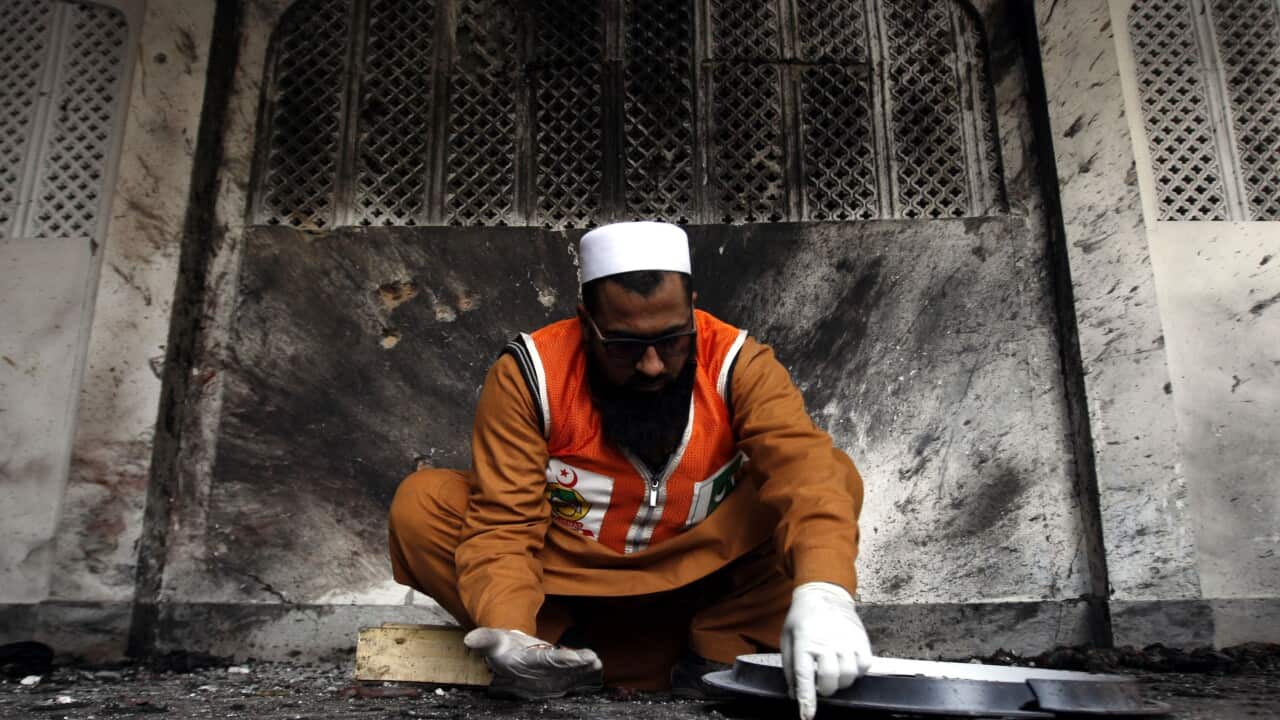
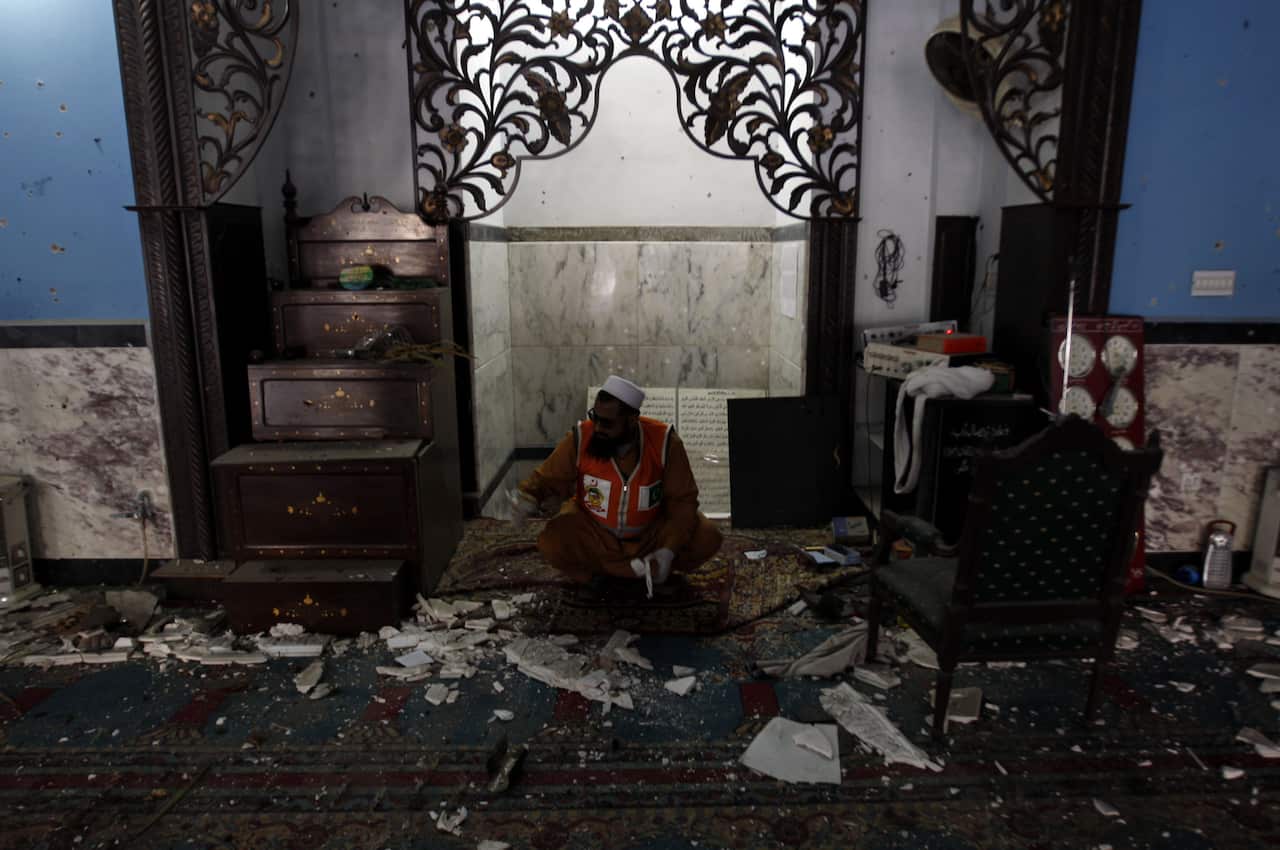
Three attackers with grenades, Kalashnikovs and explosive suicide vests struck at the Imamia mosque in Peshawar, the main city in Pakistan's restive northwest, around the time of the main Friday prayers.
The attack comes two weeks after a suicide bombing at a Shi'ite mosque in southern Pakistan killed 61 people, the deadliest sectarian incident to hit the country in nearly two years.
Nasir Durrani, the police chief of northwestern Khyber-Pakhtunkhwa province of which Peshawar is the capital, told AFP that at least 20 people were killed and 45 others were wounded.
Durrani said that three attackers were also killed in the attack.
News that makes sense
Your trusted source for staying up-to-date with the world around you. Get free daily news updates and analysis, straight to your inbox.
The Tehreek-e-Taliban Pakistan (TTP) claimed responsibility for the attack in an email statement, saying it was revenge for a militant known as Doctor Usman, who was hanged in December.
"This is a series of taking blood for blood, which will continue. The government should expect more and even harder responses," the statement said.
Police said the attack began when the militants entered from a nearby building site, cutting barbed wire to get into the mosque compound.
"One suicide bomber exploded himself in the verandah of the mosque while another was shot dead by police inside the main hall," Durrani said.
"The third was caught by people but was also killed later on."
Eyewitness Mohammad Khalil told AFP a "huge explosion" shook the main hall of the mosque as prayers were coming to an end, and then the gunmen started firing on worshippers.
TV footage in the immediate aftermath showed people running away from the scene, some carrying injured on their shoulders, others limping, as police fired shots and checked people at a barrier.
The country has stepped up its fight against militants since Taliban gunmen massacred more than 150 people, most of them children, at a school in Peshawar in December.
On Thursday the military said it had taken 12 Taliban members into custody over the school attack, including the imam of a mosque.
Following the massacre, Prime Minister Nawaz Sharif ended a six-year moratorium on the death penalty and Doctor Usman, also known as Aqil, was one of the first to go to the gallows.
He was convicted for an attack on the army headquarters in Rawalpindi in 2009 and was arrested after being injured.
AFP
14-02-15 0511







