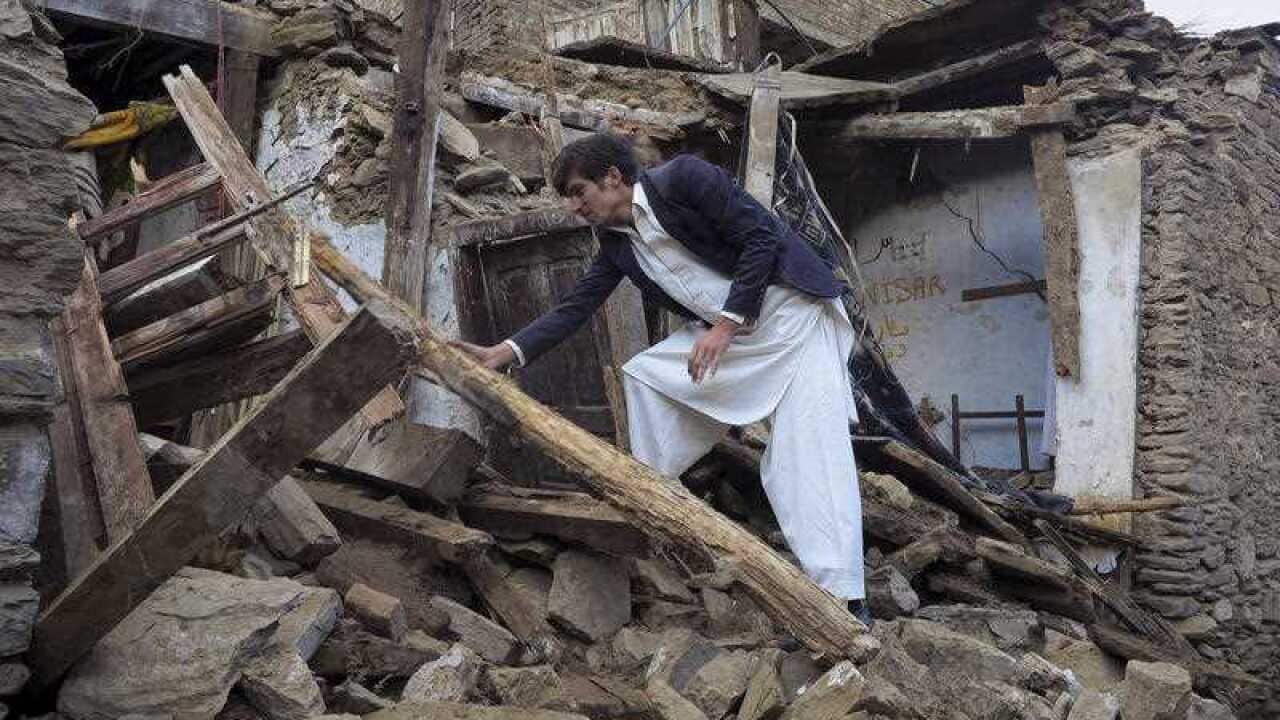
The Taliban urged aid agencies on Tuesday to push ahead in delivering emergency supplies to victims of the massive earthquake that hit remote mountainous regions of northern Afghanistan and Pakistan, killing at least 300 people.
With harsh winter weather setting in across the rugged Hindu Kush mountains where the earthquake struck, the plight of thousands of people left homeless by the earthquake was becoming increasingly serious.
"The Islamic Emirate calls on our good willed countrymen and charitable organizations to not hold back in providing shelter, food and medical supplies to the victims of this earthquake," the Taliban said in a message of condolence to quake victims, using their formal name.
"And it similarly orders its mujahideen in the affected areas to lend their complete help."
News that makes sense
Your trusted source for staying up-to-date with the world around you. Get free daily news updates and analysis, straight to your inbox.
However the relief effort is being complicated by unstable security caused by the Taliban insurgency, which has made large parts of the affected areas unsafe for international organisations and government troops.
"We have insufficient food and other aid," said Abdul Habib Sayed Khil, chief of police in Kunar, one of the worst-hit provinces, where 42 people were confirmed dead.
"It has been raining for four days and the weather is very cold. If we don't provide aid very soon it may turn to another disaster."
Roads and communications were cut off to many areas at the epicentre of the earthquake and authorities and international relief organizations were still trying to assess the extent of the damage.
In Pakistan, where landslides and heavy rain and snow over the weekend had already left thousands of tourists stranded in mountainous areas of the north, the country's well-equipped military was heavily involved in the relief effort.
Several helicopters had been dispatched to affected areas to assess damage and run rescue operations, the National Disaster Management Authority said.
"Rescue work is ongoing and tents, blankets and sleeping mats are being provided," Latif ur Rehman, a Pakistani disaster management official, told Reuters from the northwestern city of Peshawar.
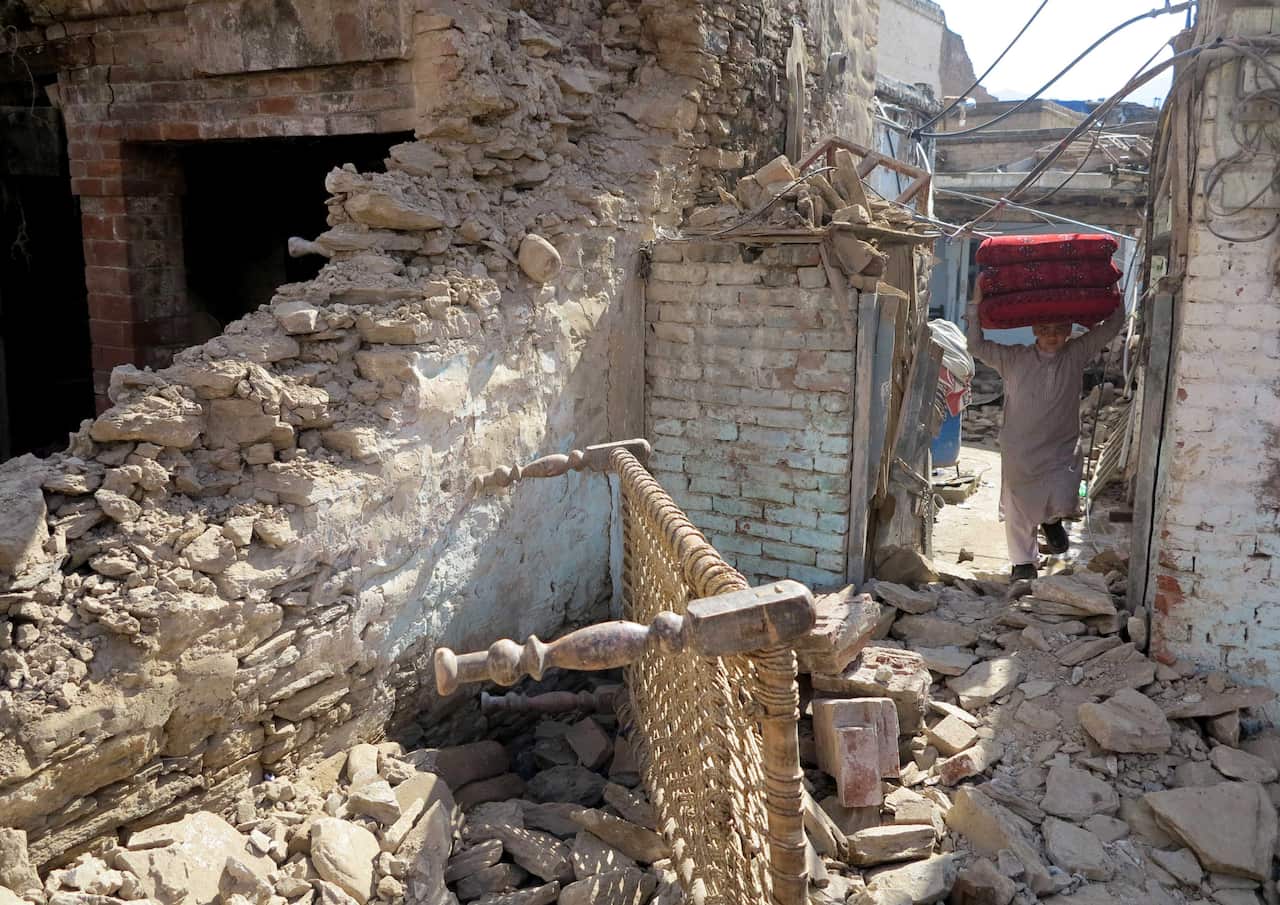
Authorities confirmed 228 deaths in Pakistan while in Afghanistan, the death toll had climbed to around 80. At least 4,000 houses and compounds had been destroyed or damaged, Afghan Chief Executive Abdullah Abdullah said.
However, the death toll could climb in coming days as communications to cut-off areas are restored.
The earthquake struck almost exactly six months after Nepal suffered its worst quake on record on April 25. Including the toll from a major aftershock in May, 9,000 people lost their lives there and 900,000 homes were damaged or destroyed.
The initial magnitude 7.5 quake on Monday afternoon was followed by seven aftershocks, measuring as high as magnitude 4.8, according to the U.S. Geological Survey. The latest aftershock came just before dawn on Tuesday.
The quake was 213 km (132 miles) deep and centred 254 km (158 miles) northeast of Kabul.

The United Nations Office for the Coordination of Humanitarian Assistance (OCHA) said roads between the Afghan cities of Taloqan and Kunduz in the north and between Jalalabad in the east and the capital Kabul had been cut by landslides.
The United States and Iran were among countries that offered to provide humanitarian assistance to Afghanistan, which already depends heavily on foreign aid after decades of war that have wrecked its economy and infrastructure.
In Washington, White House spokesman Josh Earnest said the U.S. Agency for International Development was ready to provide emergency shelter and relief supply kits.
Pakistani Prime Minister Nawaz Sharif, in London en route from an official visit to the United States, said he would oversee rescue efforts.
"We will try our best to deal with this disaster using our own resources," he said.
Pakistan's military has been mobilised and India, whose relationship with Islamabad is often prickly, says it stands ready to help.
"Rescue work is ongoing, and tents, blankets and sleeping mats are being provided," Latif ur Rehman, a Pakistani disaster management official, told Reuters from the northwestern city of Peshawar.
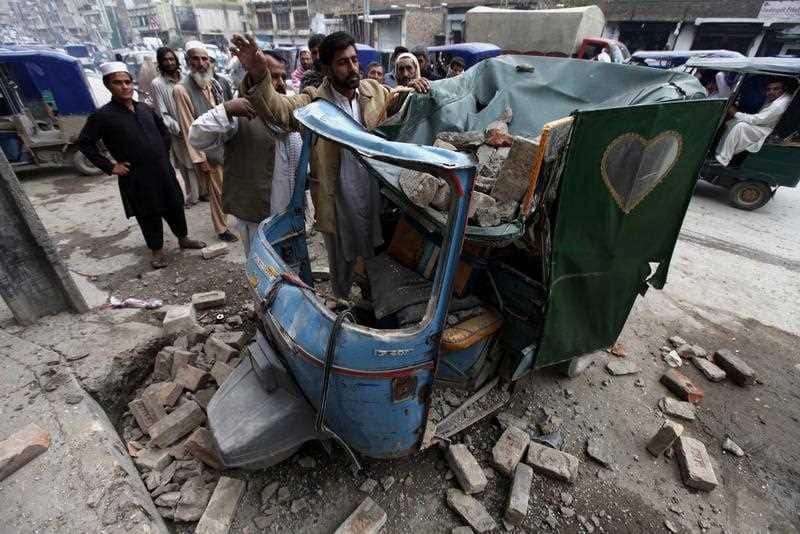
Pakistan's military and civilian authorities dispatched several helicopters to affected areas to assess damage and run rescue operations, the National Disaster Management Authority said. Landslides in mountainous northern Pakistan over the weekend caused by heavy rain and snow had already left thousands of tourists stranded.
The earthquake struck almost exactly six months after Nepal suffered its worst quake on record on April 25. Including the toll from a major aftershock in May, 9000 people lost their lives there and 900,000 homes were damaged or destroyed.
In Afghanistan, where rescue and relief work is likely to be complicated by security threats created by an escalating Taliban insurgency, more than 50 people were reported dead in several provinces including Badakhshan, where hundreds were killed in mudslides last year.
Large swathes of the remote province where the epicentre is located are effectively controlled by the Taliban, posing a huge challenge to any official aid efforts.
Hundreds of houses were destroyed, creating additional hardship with winter temperatures setting in.
The death toll could climb in coming days because communications were down in much of the rugged Hindu Kush mountain range where the quake was centred.
In Pakistan, 228 people were confirmed dead and more than 1800 injured.
The initial magnitude 7.5 quake on Monday afternoon was followed by seven aftershocks, measuring as high as magnitude 4.8, according to the US Geological Survey. The latest aftershock came just before dawn on Tuesday.
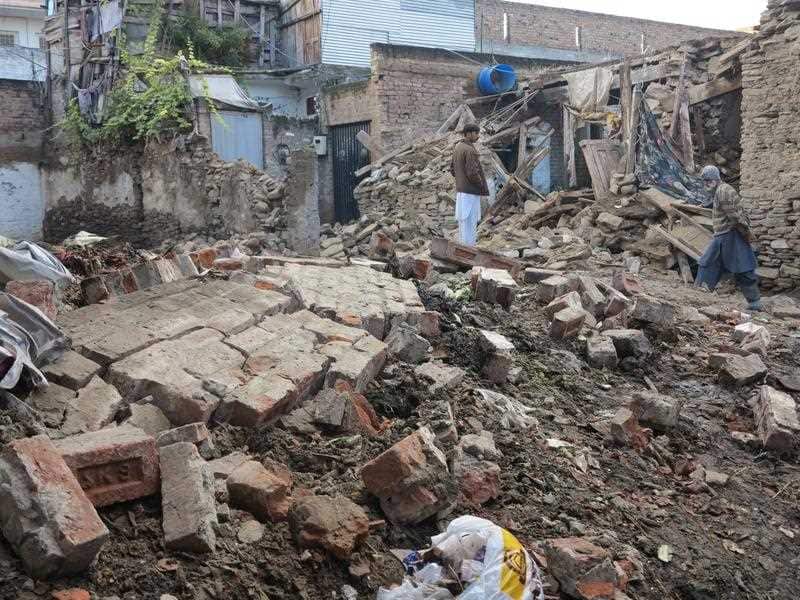
The United States and Iran were among countries that offered to provide humanitarian assistance to Afghanistan, which already depends heavily on foreign aid after decades of war that have wrecked its economy and infrastructure.
The quake was 213 km (132 miles) deep and centred 254 km (158 miles) northeast of Kabul.
Dr. John Ebel, chairman of the Department of Earth and Environmental Sciences at Boston College in the United States, said the depth of the earthquake had limited its severity and meant damage was likely to be spread broadly rather than focused in one disaster zone.
But he said landslides on the unstable slopes of the mountainous region could pose a major problem.
"Obviously if a landslide comes into a village, it will take out buildings, but landslides can also take out roads and communications and power systems, so you lose the ability to access remote areas," he said.







