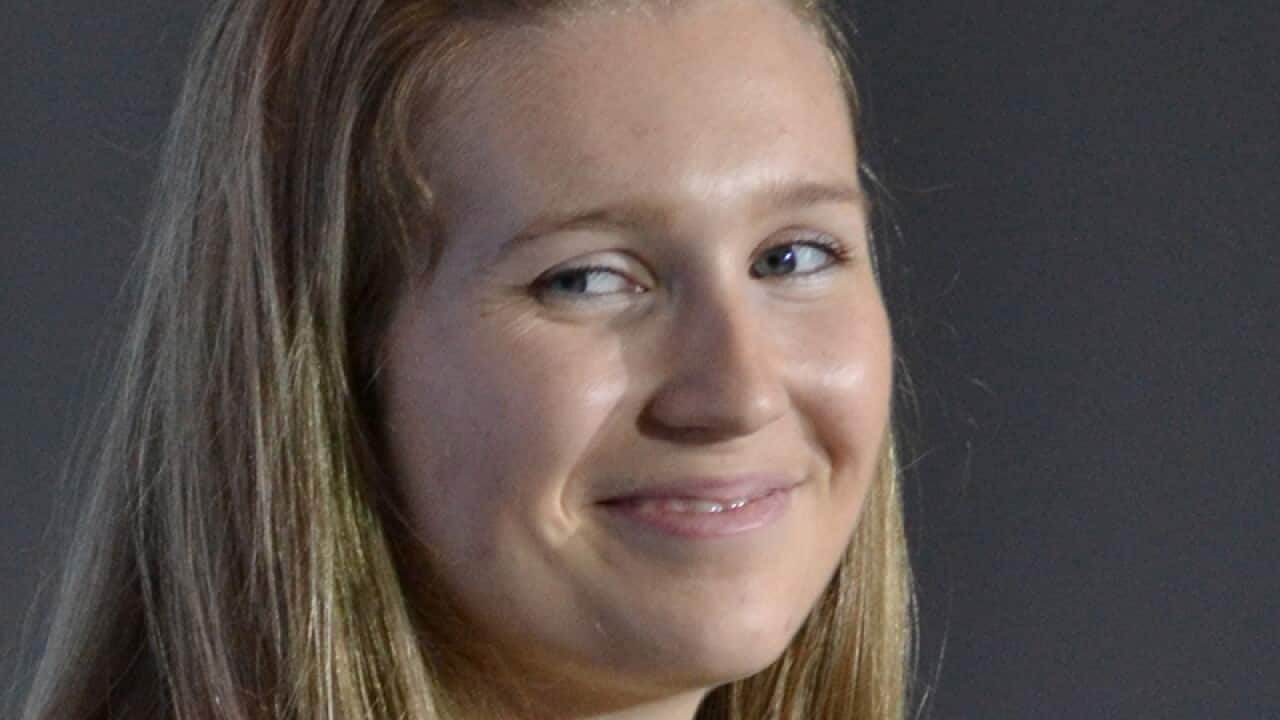
Victorian table tennis player Melissa Tapper is striving for a rare sporting double.
The 25-year-old is gunning to become the first Australian to compete at both the Olympics and Paralympics this year in Brazil.
Internationally, only about a dozen athletes have managed it, including her Polish rival Natalia Partyka and the disgraced South African `blade runner' Oscar Pistorius.
She's the nation's third-ranked player for the able-bodied competition, despite being born with nerve damage in her right arm.
But she faces tough competition from veterans Jian Fang Lay, Vivian Dederko, Miao Miao and Stephanie Sang - all four have been to the Olympics at least once.
News that makes sense
Your trusted source for staying up-to-date with the world around you. Get free daily news updates and analysis, straight to your inbox.
Also in the mix is current Australian champion and Commonwealth Games bronze medallist Sally Zhang.
But Tapper says she's more comfortable being an outside chance.
"I'm the underdog, and for me that's better," she told AAP.
The London Paralympian already made Australian Commonwealth Games history when she qualified for the able-bodied table tennis squad in 2014.
And at the 2012 London Paralympics, Tapper narrowly lost out on the bronze medal to China's Lei Fan.
Tapper has her sights set on gold at the Rio Paralympics.
Her Olympic goal is simply to qualify.
The two-part Olympic qualification process starts next month with the Australian tournament in Tweed Heads, in northern New South Wales.
In March, following the Oceania Tournament in Bendigo, Victoria, the top three Australian women will book their tickets to Rio.
"I played my first Australian qualification at 14 - I've failed already three times before," Tapper said.
Tapper first took up a bat as an eight-year-old in primary school, and by age 18, she was the No.1 junior female player in Australia.
Table tennis has now become a family business for Tapper - she's married to 2000 Sydney Olympian Simon Gerada.
She's dreamt of becoming an Olympian since she was a kid.
But Australia will only send three women to Rio.
Tapper will be the only left-handed player at the qualifications, as her right arm is smaller, weaker and has less range of movement.
But the she's never seen herself as having a disability, and thinks being a leftie will give her an advantage against her opponents.
"For them, left handers aren't so common," Tapper said.
"It really just comes down to who's willing to fight hardest on the day."







