“Girls are being sold and raped, children are being slaughtered, the elderly can’t leave so they’re getting blown up in their own homes, nothing like this has ever happened in the history of the world,” Naser said.
“Without international protection we’re not ready to go back.”
At the beginning of August, tens of thousands of Yazidis came under attack by the Islamic State in the Mt Sinjar region, in Iraqi Kurdistan’s Ninawa Province near the Syrian border.
Hundreds were massacred in the attack and dozens died of hunger and thirst after becoming trapped on Mt Sinjar for days, where they were hiding from the militants before eventually being evacuated by US forces and the Peshmerga.
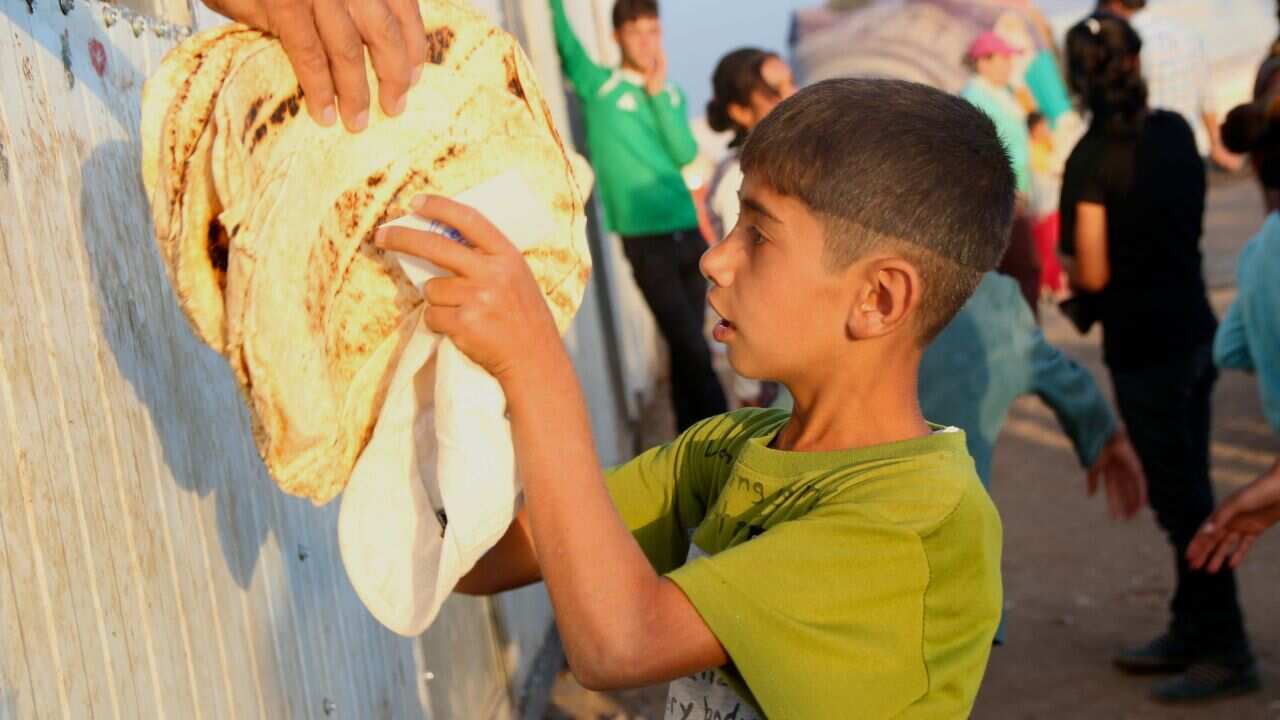
Thirteen thousand fled across the border to Nowruz Camp on the outskirts of Derike, a town in the Kurdish region of northern Syria, with nothing but the clothes on their back.
Here hundreds of tents are scattered across the arid land as people pass time drinking tea and playing cards while children run around barefoot.
At nightfall the pitch dark is only slightly relieved by one lamp that barely illuminates the central area of the camp.
While they are protected from violence here in the area under the control of the Kurdish forces, known as the YPG, there is little respite from the horrors they have faced. Living conditions are difficult, they say, while the psychological impact of their displacement, remains.
For the Yazidis, a Kurdish ethno-religious minority group, this is the first time they have been displaced from their homes.
A female Yazidi sheik told SBS how she was trapped on Mt Sinjar for eight days before being rescued.
“It was like we died 1000 times from the fear, hunger and thirst,” she said.
“Now we are here and winter is coming. We have no winter clothes and not enough blankets. We hope people hurry up and bring us the things we need.”
People say they are fearful of ever returning home and believe it won’t be possible unless they have international protection.
“I don’t want to become Muslim, I am Yazidi. It’s impossible for the Arabs and Yazidis to live together peacefully ever again,” Khader, a balding man with a bushy moustache, said.
“Minorities in Iraq have never even been considered second-class citizens, third-class at best. We’re simple people who’ve never been able to get a good education or have the cultural freedom we need. We have always feared our neighbours and the authorities.”
Back in the Kurdish area of northern Iraq, thousands of displaced Yazidi families are living in makeshift camps, half-finished buildings and schools.
In the city of Zakho in Dohuk province, 40 families are crammed into an unfinished building on the outskirts of the city with no relief from the cold. The only thing separating people, including babies as young as three months, from the dirty concrete floor are thin mattresses and blankets.
People here feel the government has deserted them and the international community has forgotten their plight.
“We just sit and sit and sit, waiting for the situation to change,” one man, who had been living at the building for 55 days, said over a cup of bitterly sweet tea.
“There is no future for us in Iraq. Our government doesn’t look after minorities.”
One man stressed that 4500 Yazidis, including about 3000 women and children, remain in IS hands.
“The international community must do something,” he said.
“We have been abandoned.”
Share


