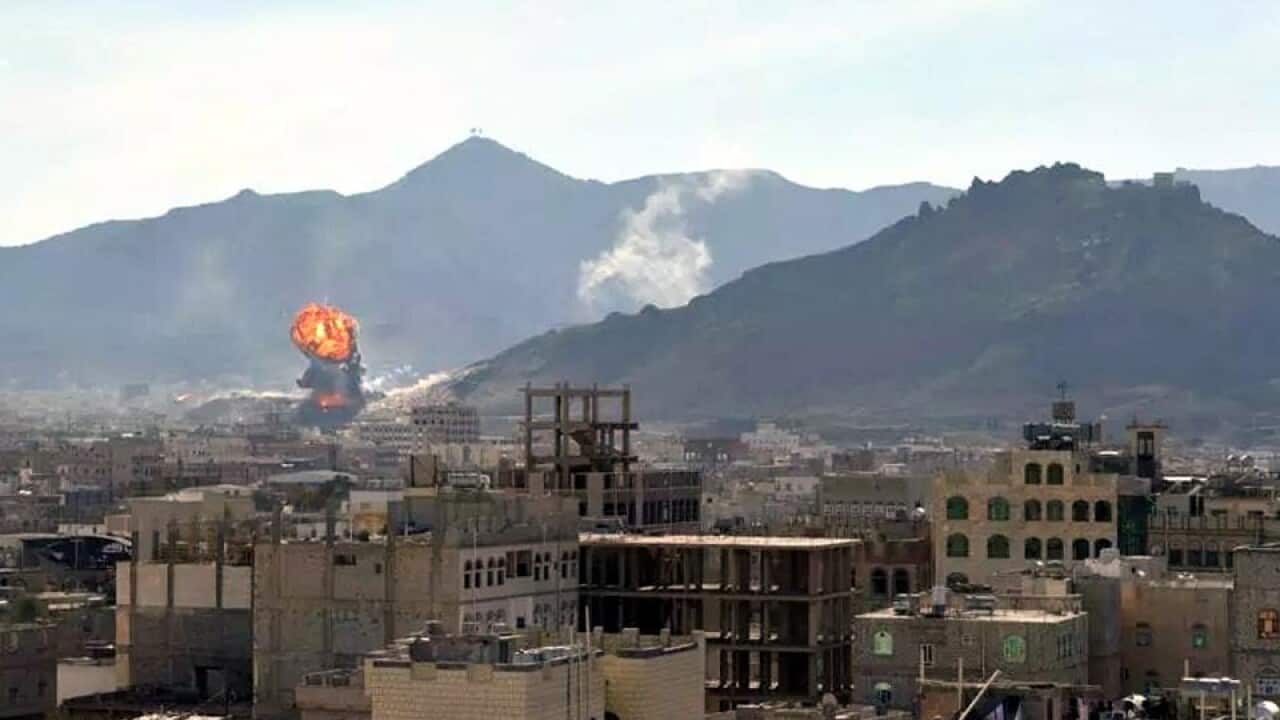
Tensions are high in Yemen's capital Sanaa but a ceasefire appears to be holding after heavy clashes between Shi'ite militia and the army threatened the US-backed government's fragile grip on power.
The militiamen, known as Huthis, were surrounding the prime minister's residence and had deployed not far from the entrance to the presidential palace, an AFP correspondent said.
Talks were expected later on Tuesday in a bid to ease tensions, after the government called for an "urgent meeting" to produce a roadmap to end violence.
Pitched battles erupted near the presidential palace and in other parts of Sanaa on Monday, in the biggest challenge yet to President Abdrabuh Mansur Hadi's rule.
A ceasefire was announced after several hours of clashes between troops and the Huthis, who overran Sanaa in September.
News that makes sense
Your trusted source for staying up-to-date with the world around you. Get free daily news updates and analysis, straight to your inbox.
The militia tightened its grip on the capital, seizing an army base overlooking the presidential palace and taking control of state media.
At least nine people were killed, including fighters from both sides, and 67 were wounded.
Yemen has been wracked by unrest for months, raising fears of a collapse of Hadi's government, a crucial ally in Washington's fight against al-Qaeda.
Prime Minister Khalid Bahah escaped to his residence, where he has lived since taking office in October, after his convoy came under fire from Huthi fighters during Monday's battles.
Heavily armed Huthis took up positions outside the residence late on Monday and were in control of all three of its entrances, government spokesman Rajih Badi told AFP.
At the presidential palace, Huthi militiamen were deployed only 500 metres from the entrance, an AFP correspondent said.
Presidential guard forces, heavily armed and equipped with armoured vehicles and anti-aircraft guns, were protecting the palace.
Several foreign missions were shut during the fighting. The French embassy remained closed on Tuesday but others had reopened, including the British and Dutch missions, diplomatic sources said.
Tensions have been running high in Sanaa since the Huthis on Saturday abducted Hadi's chief of staff, Ahmed Awad bin Mubarak, in an apparent move to extract changes to a draft constitution that he is overseeing.
The militants, who hail from Yemen's remote north and fought a decade-long war against the government, have rejected a decentralisation plan, claiming it divides the country into rich and poor regions.
Since their takeover of the capital, the Huthis, also known as Ansarullah, have pressed their advance into areas south of Sanaa, where they have met deadly resistance from Sunnis including al-Qaeda loyalists.
Yemen's branch of the jihadist network, al-Qaeda in the Arabian Peninsula, is considered its most dangerous and claimed responsibility for this month's attack in Paris on French satirical weekly Charlie Hebdo that left 12 dead.
Hadi's government has been a key ally of the United States, allowing Washington to carry out repeated drone attacks on al-Qaeda militants in its territory.







