Potentially radicalised children like the kids of jihadist Khaled Sharrouf will be prevented from returning to Australia under draft laws before parliament.
The government has introduced legislation to beef up the country's biometrics system, permitting the collection of biometric data from children and enabling mobile fingerprint checks at airports of foreign fighters with fake passports.
Sharrouf, who last year posted a photo on the internet of his young son holding up a severed head, was on a terrorist watchlist and used his brother's passport to leave Australia.
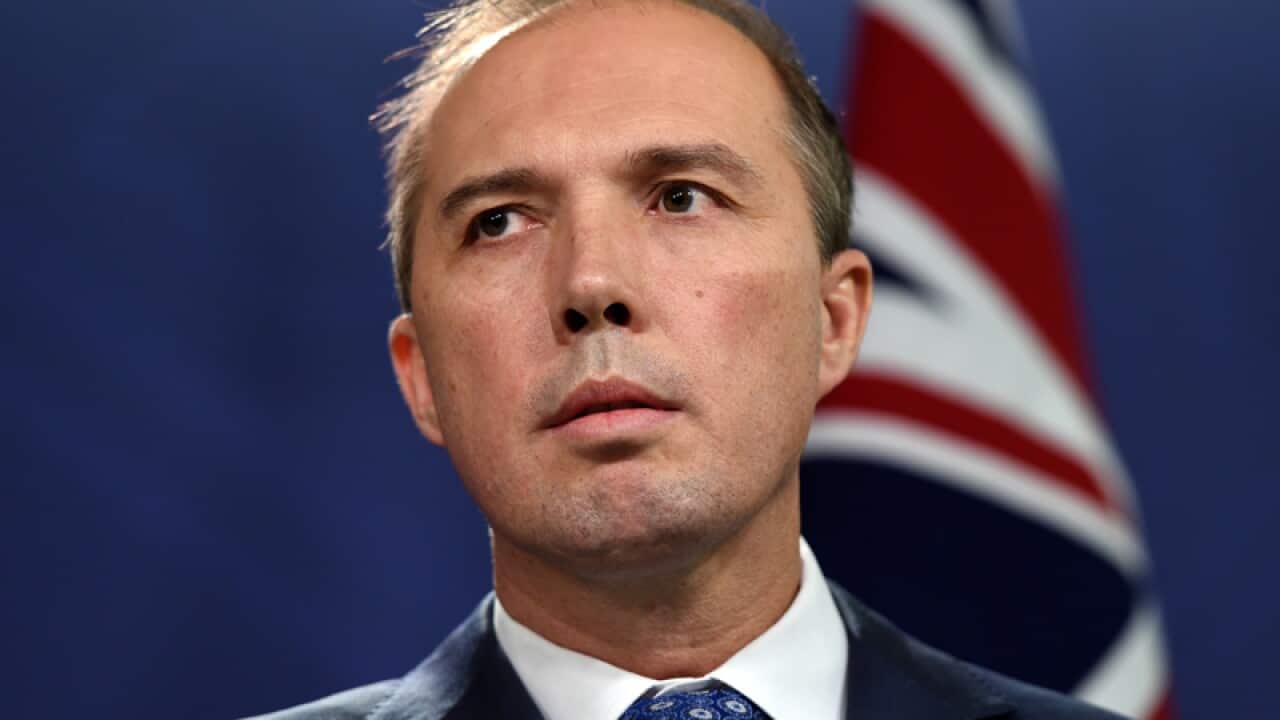
Immigration Minister Peter Dutton says the new collection measures would detect people like Sharrouf if they returned to Australia using cross-checks of their fingerprints against information from international agencies.
If a child was suspected of involvement in terrorism, their fingerprints would also be checked against relevant databases.
Mr Dutton said it was an uncomfortable prospect that children could be capable of involvement in terrorism and extreme violence, but recent examples in the Middle East were proof.
"Australia ... faces the return of potentially radicalised minors," he told parliament on Thursday.
The new powers aren't just for combating terrorists - it will also ensure authorities are alerted to children who've been abducted or smuggled.
Importantly, it's also designed to resolve the asylum seeker caseload.
Mr Dutton said existing powers to catch rejected asylum seekers re-entering the country under fake identities needed modernisation.
"It needs to be updated to more effectively meet current threats and to keep pace with advances in biometric technologies."
WHAT THE BILL WILL DO:
* Live scans of fingerprints on a hand-held device at airports, seaports
* Streamlines seven biometric collection powers into a broad discretionary power
* Provides flexibility on types of biometrics, and circumstances and places where they can be collected
* Does not introduce a universal biometrics collection policy.
Share


