In the small city of Hua Hin, two and half hours drive south of Bangkok, the first vocational school was founded by Thai King Bhumibol Adulyadei in 1985.
It's 10am and a class of 16-year-olds are learning the art of sales management.
A group of 50 students led by their teacher rehearse the lines, "selling is a form of communication".
From the age of four, children at Wangklaikangwon Industrial and Community Educational College are taught professional careers for free.
News that makes sense
Your trusted source for staying up-to-date with the world around you. Get free daily news updates and analysis, straight to your inbox.
Student Onnaree Nuikong says the school prepares them for the real world.
"At first I wanted to do agriculture like the King did his whole life, but I have a dream of doing sales or having my own business," said Ms Nuikong.
Pupils are offered apprenticeship courses in everything from mechanical engineering, to marketing, dressmaking, tourism services and hairdressing.
School director Jaturan Wattanaprateep says King Bhumibol personally chose the programs for the school, visiting on several occasions when staying at the Royal Palace just across the road.
"You can see that the students across the country are reaching for university level to be able to receive the diploma from the King himself. But (in) later years, it has been the Prince and Princesses," said Mr Wattanaprateep.
"This was his idea to get children to push themselves up and develop for the future."
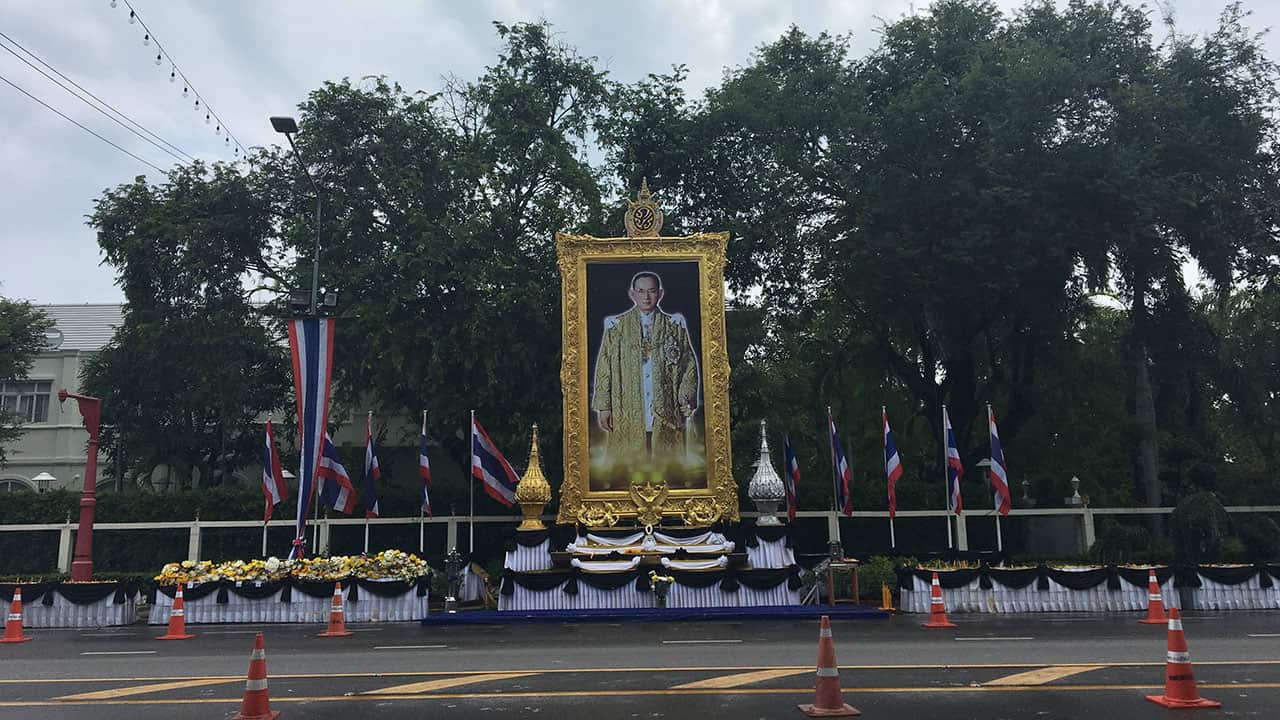
Over his 70 years on the throne, the late Thai King helped shape the country despite years of upheaval.
He visited rural areas and saw first-hand how things needed to change, setting up 4,447 programs to help the disadvantaged.
Many projects helped to teach locals how to save water so they would be prepared for the dry season.
The King also initiated programs to assist people in sustainable farming practices and flood prevention.
Education was also a top priority for the King, ensuring 58 new educational facilities were built in poor areas across the country.
Thippawan Suppakittaworn started King Bhumibol's Quest for Knowledge program when she was just 14-years-old.
Through educational videos broadcast on national television the King was able to teach children about local jobs and how to make a living.
Ms Suppakittaworn is now 29-years-old and a teacher herself, passing on the lessons she learnt from the late King.
"His method of teaching is to explain difficult things to simple. One important thing that he taught his people is that whatever roles you are having you have to be sincere with it," said Ms Suppakittaworn.
Four hundred educational television programs are currently produced a day and broadcast on 15 channels across Thailand.
School Director Jaturan Wattanaprateep says the programs are also available in the neighbouring countries of Laos, South China, Cambodia, Vietnam and Myanmar.
"By learning how to farm, animals feeding and agriculture it helps that they can learn by themselves so they don't have to come to Thailand and take the labour jobs away," said Mr Wattanaprateep.
Ninety percent of students who attend Wangklaikangwon Industrial and Community Educational College are guaranteed to walk into a job as soon as they graduate, the other 10 percent will go onto higher education.







