Thailand and Burma are joining forces to prevent a potentially massive spike in the number of deaths caused by malaria.
The political deal comes after a lethal new drug- resistant strain of the parasite was detected on the border between the two countries.
At the centre of it all is the small mountainous village of Bong Te Lang, in Thailand's Kanchanaburi province.
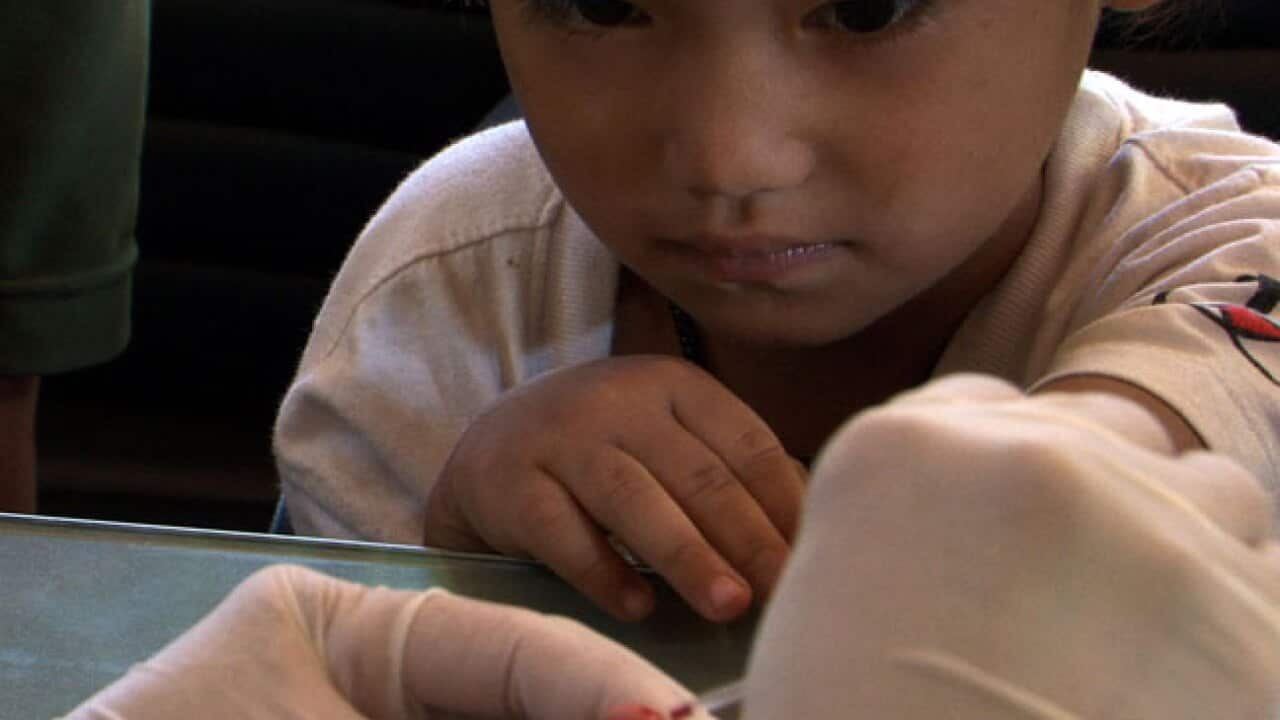
A rapid testing, treatment and tracking system has been set up there by the Thai government and aid agencies to control the disease.
Until recently the border area was a hotbed of unrest while the ruling Burmese Junta battled against the ethnic Karen National Union (KNU).
News that makes sense
Your trusted source for staying up-to-date with the world around you. Get free daily news updates and analysis, straight to your inbox.
“To be frank with you it has been very difficult to reach these areas, these villages, previously, because of security reasons,” Burmese Health Director General Saw Lwin told SBS at a meeting of Thai and Burmese officials.
The KNU has been fighting the central government since the very early days of Burma's independence from Britain six decades ago.
Largely Christian, the Karen rebelled against what they saw as violent repression by the Burma's nationalist military.
Now Burma is rejoining the world stage as a fledgling democracy and Dr Saw is quick to point out that his government has a malaria eradication program.
But he concedes more must be done to determine how wide-spread drug resistant malaria has become inside Burma.
“If we share such information with us, we can better understand the malaria situation along the border area,” Dr Saw said.
Evidence that the most deadly species of malaria parasite, Plasmodium falciparum, has mutated to resist the front line treatment for malaria was made public in April.
The mutation increases concern that resistance could now spread to India and then Africa through Burma, as resistance to other antimalarial drugs has done before.
If that happens, eliminating malaria might prove impossible.
A public-private partnership of governments and aid agencies like the World Health Organisation is working to contain the disease.
“We have a very, very narrow window of opportunity to contain the resistance to artemisinin combination therapy,” Roll Back Malaria Director Fatoumat Nafo-Traore told SBS.
Artemisinin is the closest thing to a malaria miracle drug but, just like chloroquine and mefloquine before it, the wonder-drug is starting to take much longer to be effective.
Although the drugs can be used on their own as a monotherapy, and these can still be obtained, fears over the possible development of resistance led to recommendations that they should only be used in conjunction with one or more other drugs as artemisinin-based combination therapies (ACTs).
These are now recommended by the World Health Organization as the first-line treatment for uncomplicated falciparum malaria in all endemic countries.
But Burma lags behind and migrant workers getting infected there often seek treatment in Thailand. Pachanee, a 14 year-old ethnic Karen farmer from Burma, is a typical case. Unwittingly, she is playing malaria roulette.
She has been infected twice already this year and is at the Sai Yok Malaria Clinic awaiting test results to see if, this time, she's caught the resistant strain.
“I don't know how many times I have had malaria. I can't remember,” Pachanee says while asking a friend if she knew the figure.
“Last time they cured me so I went back to work but now I am sick again.”
About 650 thousand people die of malaria every year, mostly in Africa. In Thailand, 12 out of 200 malaria cases so far this year have been drug resistant.
But big questions remain over the number of resistant cases inside Burma – where almost one- thousand people died of malaria in 2010.
“This is a very risky area. About 40 percent of the people who have malaria around Sai Yok district have come from other countries just to get treatment,” Sai Yok Disease Unit Director Wittaya Saipomsud explains.
Rather than treat Burmese crossing into Thailand, agencies like Roll Back Malaria want to share what they've learned by working over the border.
The prospect of Burma and Thailand making a political deal to tackle Malaria is seen as a breakthrough.
But with shrinking government budgets and major donor, the Global Fund running out of money, the question on everyone's lips is: 'Who will pay for it?'.