
4 min read
This article is more than 8 years old
Explainer
Thailand cave rescuers now face a daunting task ahead
More than 1,000 people have been involved in the operation to rescue 12 boys and their soccer coach from a cave in Thailand.
The group were found alive on Tuesday huddled together in the cave system, nine days after they went missing.
Here's a look at some of the rescue options and why extracting them could take some time.
The size of the cave
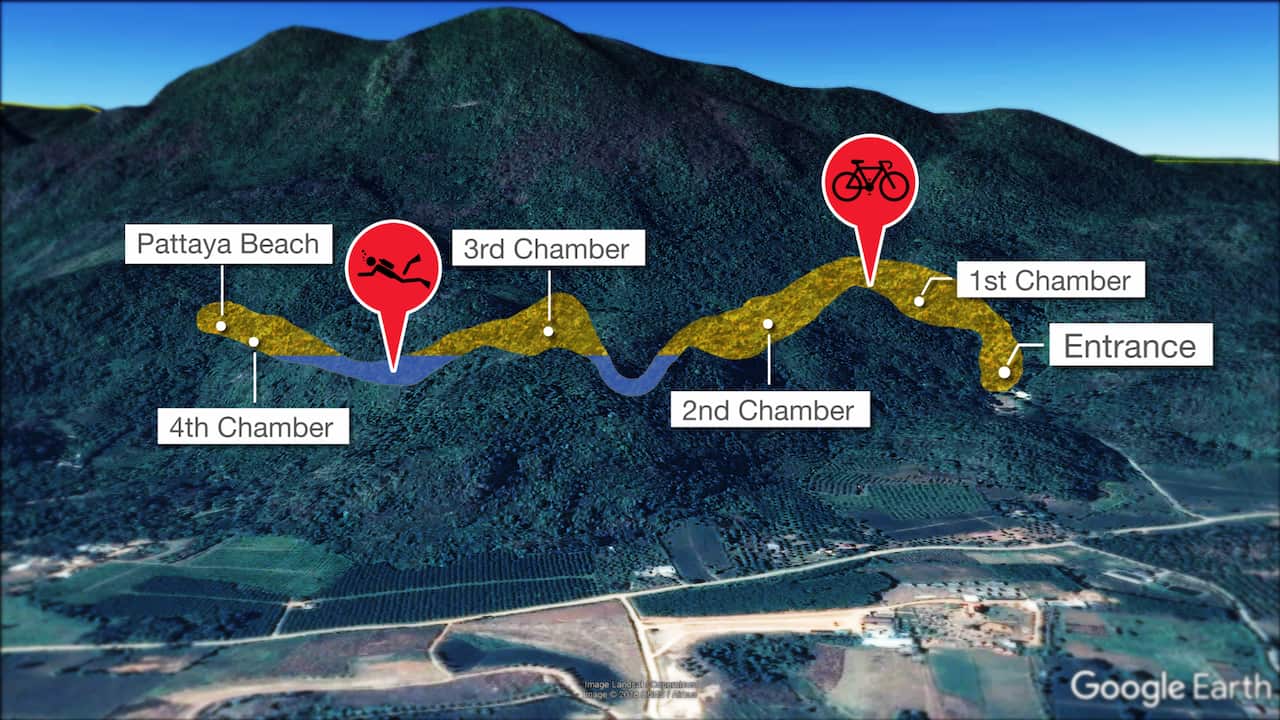
Tham Luang Nang Non cave in Chiang Rai province stretches under a mountainside for up to 10km, much of it a string of narrow passageways that lead to wide chambers and then back to narrow passageways.
The rocky and muddy ground makes several changes in elevation along the way.
The British Cave Rescue Council, which has members taking part in the operation, estimates the boys are around 2km into the cave and somewhere between 800m to 1km below the surface.
It's an extreme cave system. Cave diver Ben Reymenants
"It's an extreme cave system. It's very long. One of the longest in Thailand ... It's a complex system of tunnels," said cave diver Ben Reymenants.
The cave is flooded
Finding the boys took more than nine days, partly because of how difficult it is to move around the cave.
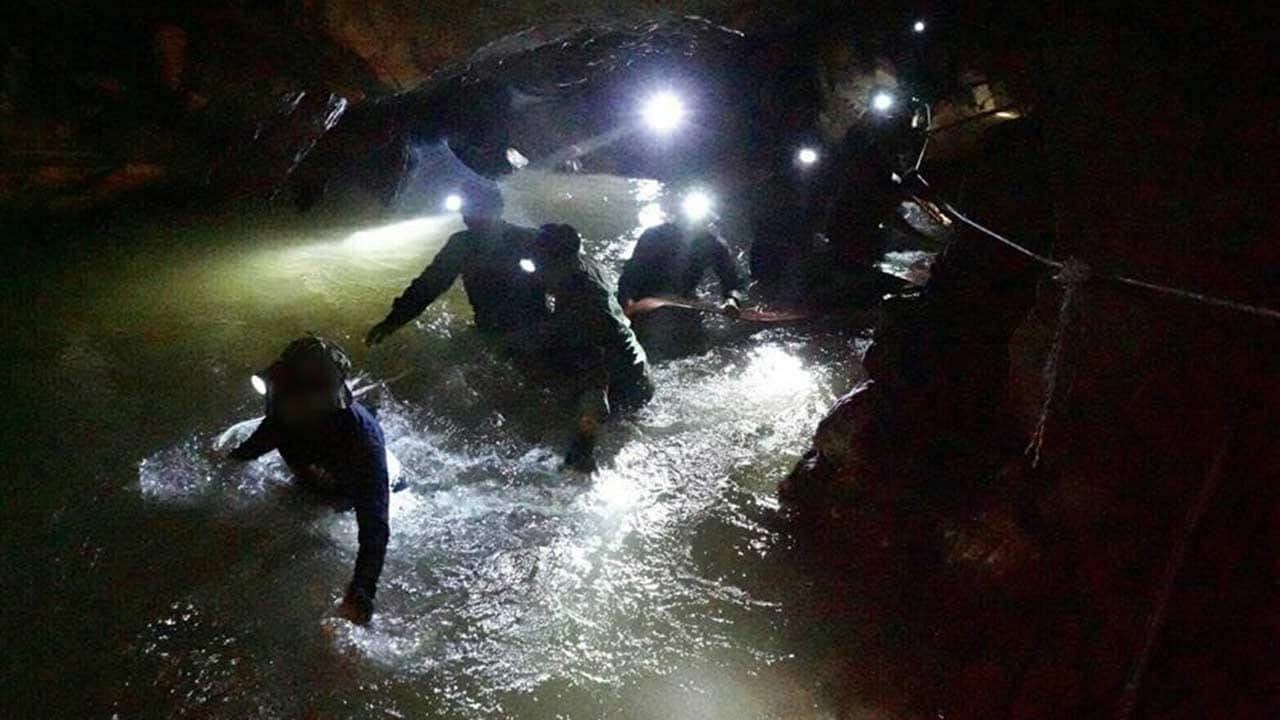
The cave floods during Thailand's rainy season and even elite Thai navy SEAL divers were finding it difficult to move through the muddy waters, currents and tight passageways.
Safety first
Thai authorities say they are committed to "100 per cent safety" when they consider how to extract the boys, who don't appear to be in urgent need of medical evacuation.
According to Anmar Mirza, national coordinator of the National Cave Rescue Commission in the US and editor of the book Manual of US Cave Rescue Technique, the main decision is now whether to try to evacuate the boys or to supply them in place.
Supplying them in place
This is possibly the safest option.
It would involve bringing food and other supplies to the boys and waiting for water levels to drop, naturally or by pumping out water, or until rescuers can find or create another exit.
This could take anywhere from days to weeks to even months as the rainy season typically lasts through October.
The Thai navy is already doing this short-term, sending teams with high-protein liquid food to feed the boys, keep them company and explore the cave infrastructure where they are to ensure it is safe.
The navy said medics will be sent to help and improve conditions in the cave.
The danger of staying put
More monsoon rains are on the way.
After a break in the weather in recent days, the Thai Meteorological Department forecast for Chiang Rai calls for light rain through Friday followed by heavy rain starting Saturday and continuing to 10 July.
Such storms could raise water levels in the cave again and complicate the supply missions.
Creating another entrance
Along with the search efforts inside the cave, rescuers have searched on the mountainside for possible ways into the caverns below. Authorities said those efforts will continue.
Excavating and drilling equipment was sent to the mountain, but creating a shaft large enough to extract the boys would be extremely complicated and could take a long time.
The British Cave Rescue Council said the boys are "located in a relatively small space and this would make any potential drilling attempt as a means of rescue very difficult."
'Diving them out'
Diving would be the fastest, but arguably most dangerous, extraction method.
[It's] one of the most dangerous situations possible. Anmar Mirza, National Cave Rescue Commission
Mr Mirza said, "trying to take non-divers through a cave is one of the most dangerous situations possible, even if the dives are relatively easy."
If they dive, they have no choice but to follow the steps that rescuers took though tiny passageways clogged with mud and silt.
That journey, including the total trek and dive, takes a skilled navy SEAL diver about six hours.
Additional reporting: Nick Baker, AFP







