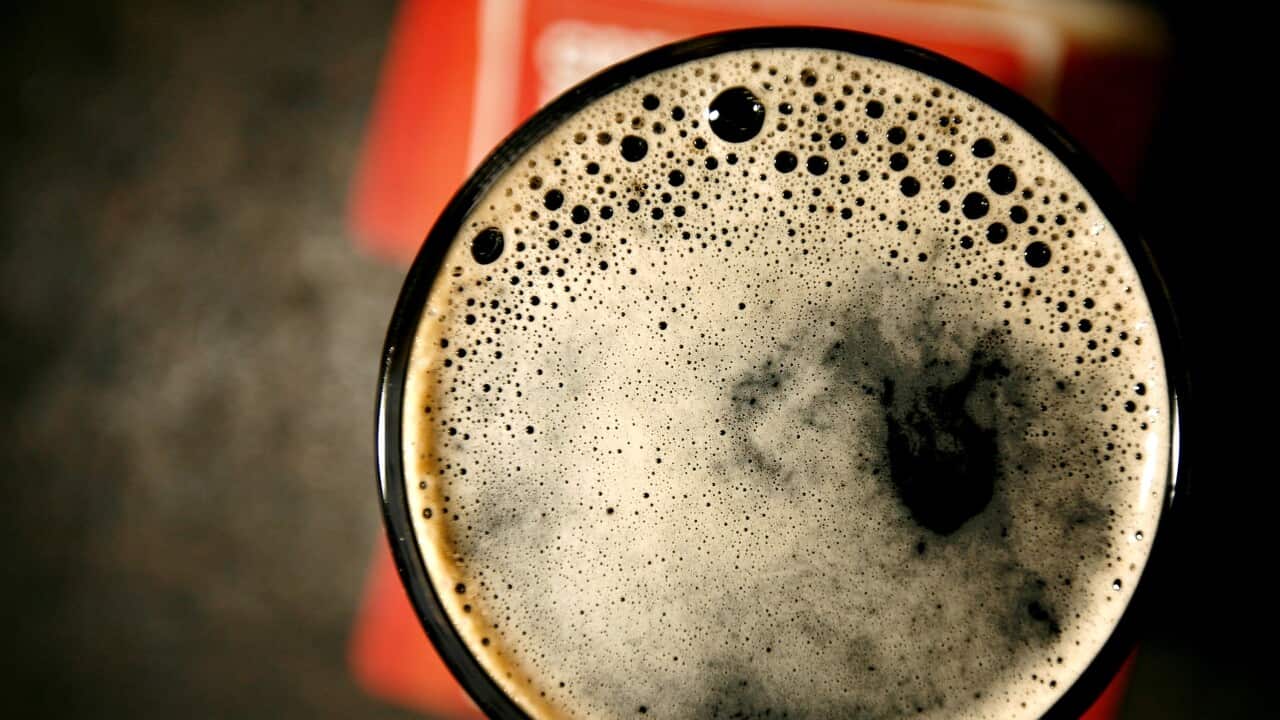
Beer fanciers find the brew's yeasty odour beautiful, enticing and almost irresistible.
They can thank fruit flies for that, say Belgian scientists who've advanced the body of beer and fly knowledge with a paper in Cell Reports.
Brewers large and small have lamented invasions of "pesky" little insects on internet forums.
But bioengineer Kevin Verstrepen of University of Leuven has found the little insects can't help it and they have evolved an intricate symbiosis with yeast based on smell.
The flies benefit by feeding on the yeasts and the yeasts benefit from hitching a ride on flies to disperse into new environments.
News that makes sense
Your trusted source for staying up-to-date with the world around you. Get free daily news updates and analysis, straight to your inbox.
Professor Verstrepen first noticed a relationship 15 years ago when studying how yeasts contribute to the flavours of beer and wine.
"When returning to the lab after a weekend, I found that a flask with a smelly yeast culture was infested by fruit flies that had escaped from a neighbouring genetics lab," he said in a statement.
"Another flask that contained a mutant yeast strain in which the aroma gene was deleted did not contain any flies."
The pungent smell of beer is due in part to aroma compounds produced by common brewer's yeast.
One gene in particular, alcohol acetyl transferase (ATF1), is responsible for most of the volatile chemicals.
Verstrepen and fruit fly neurobiologists Emre Yaksi and Bassem Hassan used molecular biology, neurobiology and behavioural tests to show that loss of ATF1 changes the response of the fruit fly brain.
The flies ignored the non-fruity smelling yeast.
The team also isolated many different yeast species from the bodies of fruit flies and found most produced aroma compounds. They also isolated several strong aroma-producing yeasts from flowers.
The results suggest similar mechanisms may exist in other microbes, including those on flowering plants and pathogens.