

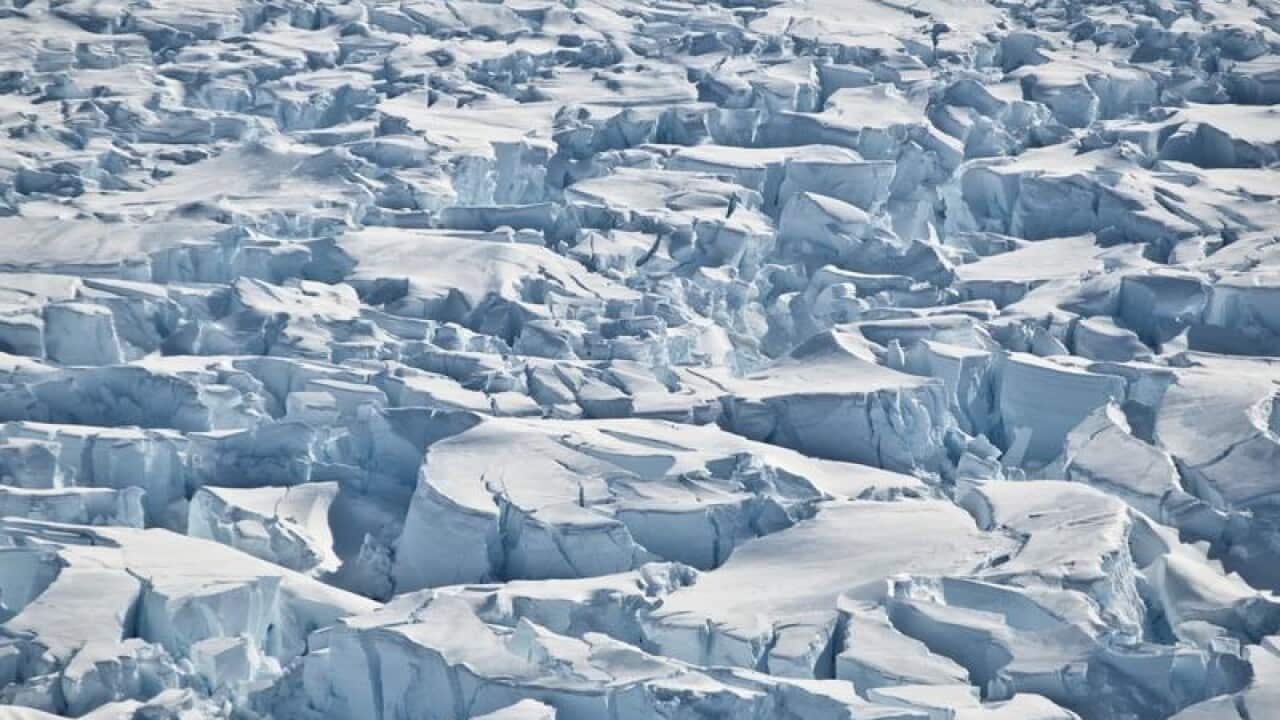
Antarctica's bedrock is rising surprisingly fast as a vast mass of ice melts into the oceans, a trend that might slow an ascent in sea levels caused by global warming, scientists say.
The Earth's crust in West Antarctica is rising by up to 4.1 centimetres a year, an international team has written in the journal Science, likening it to a continental-scale version of a foam mattress reforming after someone sitting on it gets up.
The rate, among the fastest ever recorded, is likely to accelerate and could total eight metres this century, they said, helping to stabilise the ice and slow a rise in sea levels that threatens coasts from Bangladesh to Florida.
"It's good news for Antarctica," lead author Valentina Barletta of the Technical University of Denmark and Ohio State University told Reuters of the findings, based on GPS sensors placed on bedrock around the Amundsen Sea in West Antarctica.
Much of the West Antarctic ice sheet, which has enough ice to raise world sea levels by more than three metres if it ever all melted, rests on the seabed, pinned down by the weight of ice above.
News that makes sense
Your trusted source for staying up-to-date with the world around you. Get free daily news updates and analysis, straight to your inbox.
The fast rise of the bedrock beneath will lift ever more of the ice onto land, reducing the risks of a breakup of the sheet caused by warming ocean water seeping beneath the ice.
The uplift "increases the potential stability of the West Antarctic Ice Sheet against catastrophic collapse," the scientists wrote.
Last week, another study said that three trillion tonnes of ice had thawed off from Antarctica since 1992, raising sea levels by almost a centimetre - a worsening trend.
It often takes thousands of years for the Earth's crust to reshape after a loss of ice. Parts of Scandinavia or Alaska, for instance, are still rising since the end of the last Ice Age removed a blanket of ice more than a kilometre thick.
A further report this month found that the West Antarctic ice sheet expanded about 10,000 years ago, interrupting a long-term retreat after the last Ice Age, because of a rise of the land beneath.
But it said the process was too slow to save the ice sheet from a possible collapse triggered by global warming.