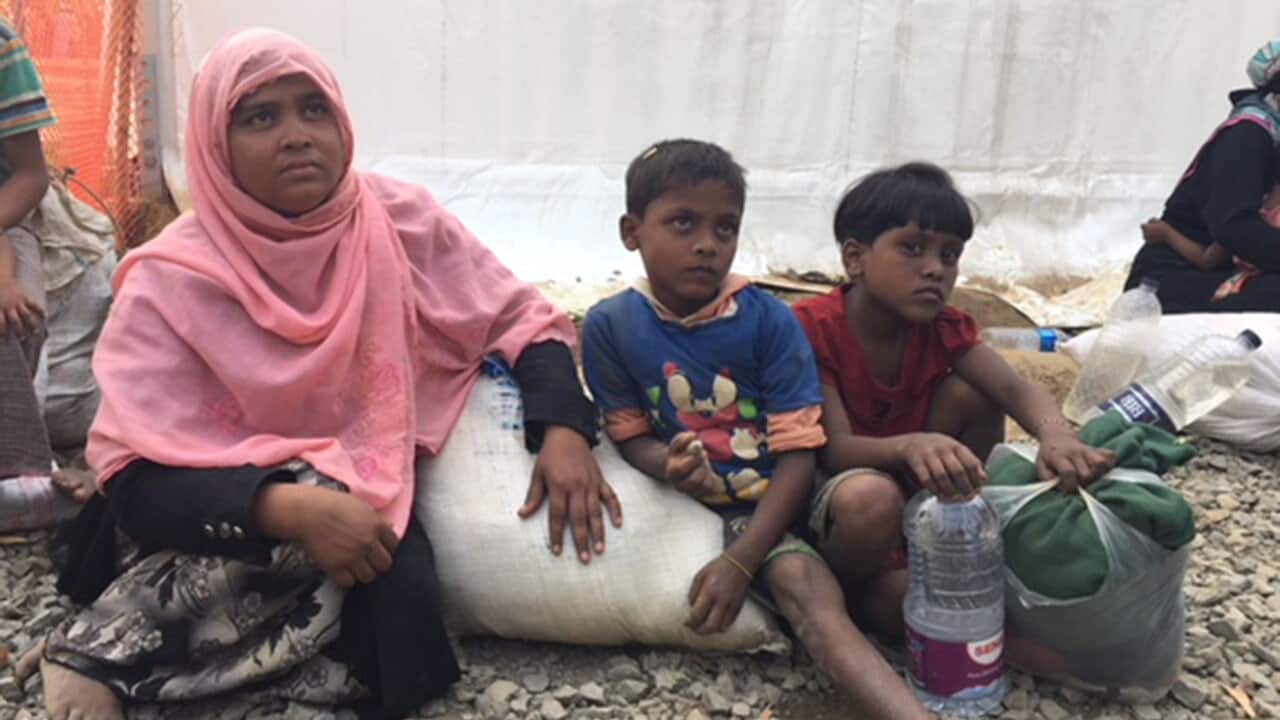
It's 11am when I am shown around the newly opened refugee transit centre in Southern Bangladesh.
The area was set up to accommodate the fleeing Rohingyas who have crossed the border and need urgent assistance.
I asked Kym Blechynden, an Australian Red Cross Emergency Health Coordinator if they were expecting any new arrivals on the day I was there, she replied no.
As I looked up from my filming, I could see a stream of people start to gather outside the gate.
Barefoot and with just the clothes on their back, mothers were clutching their babies and fathers and children begged for help.
News that makes sense
Your trusted source for staying up-to-date with the world around you. Get free daily news updates and analysis, straight to your inbox.
Ms Blechynden ran over to the gate and radioed in for backup.
I looked down the long dirt track in front of me and the hundreds of people were getting closer.
HOW TO HELP THE ROHINGYA MUSLIMS
I saw a young boy cross the road carrying his few salvaged belongings on a stick over his shoulder.
Red Cross staff from the nearby field hospital rushed to the site, trying to control the crowd.
It soon became clear that this was an unexpected influx.
One by one, they were let through the gate.
Exhausted, some of the women struggled to walk.
Mother of four Zonnota Begum said her family had crossed the border illegally.
"We came through the mountains, rivers, with children we suffered a lot of difficulties," Ms Begum said.
I watched another little boy, who was severely dehydrated, as he took his first sip of water in a while.
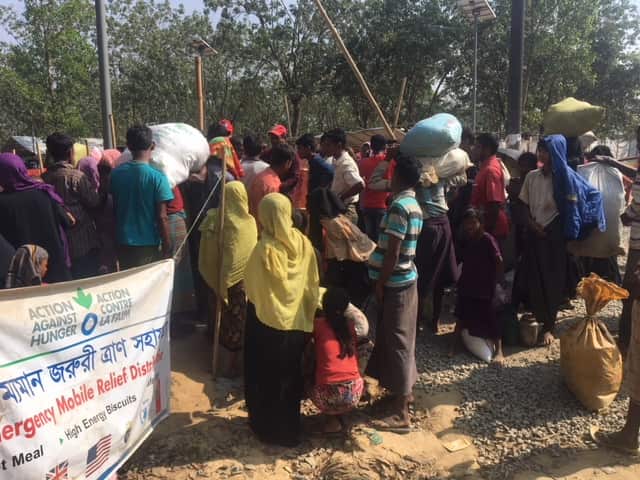
Sweet biscuits and plastic bags full of dhal were handed out to starving families.
The group all had fled from the same village in Rakhine state and had been travelling for more than a fortnight.
I pointed out nine-year-old Nur Kiyas to Red Cross workers - she could not stop vomiting.
She was so weak when I saw her that she couldn't even hold her head up.
Her cheekbones were jutted out below her sunken eyes.
Her father, Mohammed Soyed told me she been like this for the entire way.
"I think she's suffering from a cold and coughing because of water contamination. I can't make her eat anything," He said.
After a quick assessment medical teams rushed her to a hospital with five other severely malnourished children.
"A lot of people have just been through a really tough experience and need somewhere safe and urgent medical care as well," Ms Blechynden said.
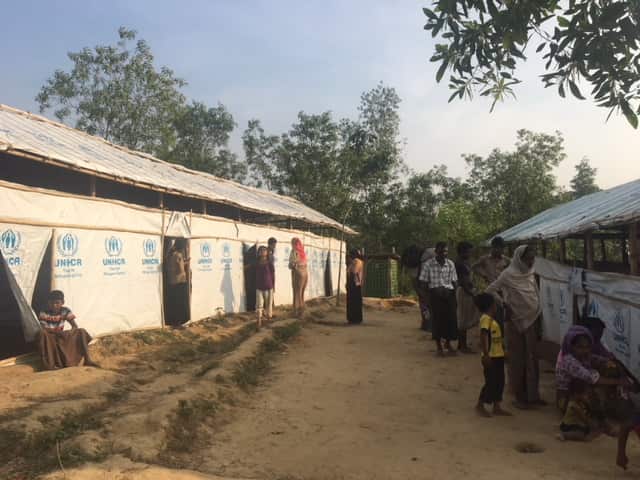
Several non-governmental organisations arrived during the influx - including UNHCR and MSF.
Each family was individually assessed. Those needing urgent assistance were lined up on one side and the rest on another.
Mother of two Hamida Begum said she nearly drowned on the way over.
"We came by boat. I was about to drown as the water entered into the boat," Ms Begum said.
Mohammed Faruque, aged 19, waited in the urgent line with his grandma Soloma Khatun.
The bullet scars on his arm were a horrific reminder of home and the day that he witnessed his father being murdered by the Myanmar military.
"Early in the morning my father and I went to the market the military came and shot us. My father was killed and I got shot. They took away my father's dead body and I ran away crying. Then I came back home and I was hiding for one or two months as the military was looking for injured people so I fled Myanmar," he said.
They escaped on foot through the mountains with no food or water before crossing by boat.
He said his mother, Fatema Khatun sat in the other line with her five other children.
"I was vomiting the whole night and could not get up quickly so they picked me up and threw me in the water.
Then they left with all my possessions," Ms Khatun said.
She said they had no choice but to leave after one of her children narrowly escaped arrest by the military.
"As we walked a long way we faced difficulties. I feel better because I could save my children's lives. If my husband was here I wouldn't face as much hardship. It would be good if he was with me," Ms Khatun said.
They waited for hours to be registered as children were immunised against measles.
When they finally reached the front of the line they received basic supplies that will get them through the night, including a tarp to sleep on.
As they headed to their temporary accommodation, Ms Khatun said she was relieved that her children will have a roof over their heads.
"I feel thankful. I feel safe and peaceful," she said.
But it will only be for a few days, as the transit camp can only house 1300 to 1500 people at one time and aid workers had already received news of more refugees who were on their way.
The next challenge for families will be to find space to build a makeshift home in the overcrowded refugee camps across the road.







