
IN BRIEF
- Australia's air traffic control workforce is in the spotlight amid days of flight delays and a near collision at Sydney Airport.
- Experts say the job is highly specialised and requires years of experience to ensure public safety is not compromised.
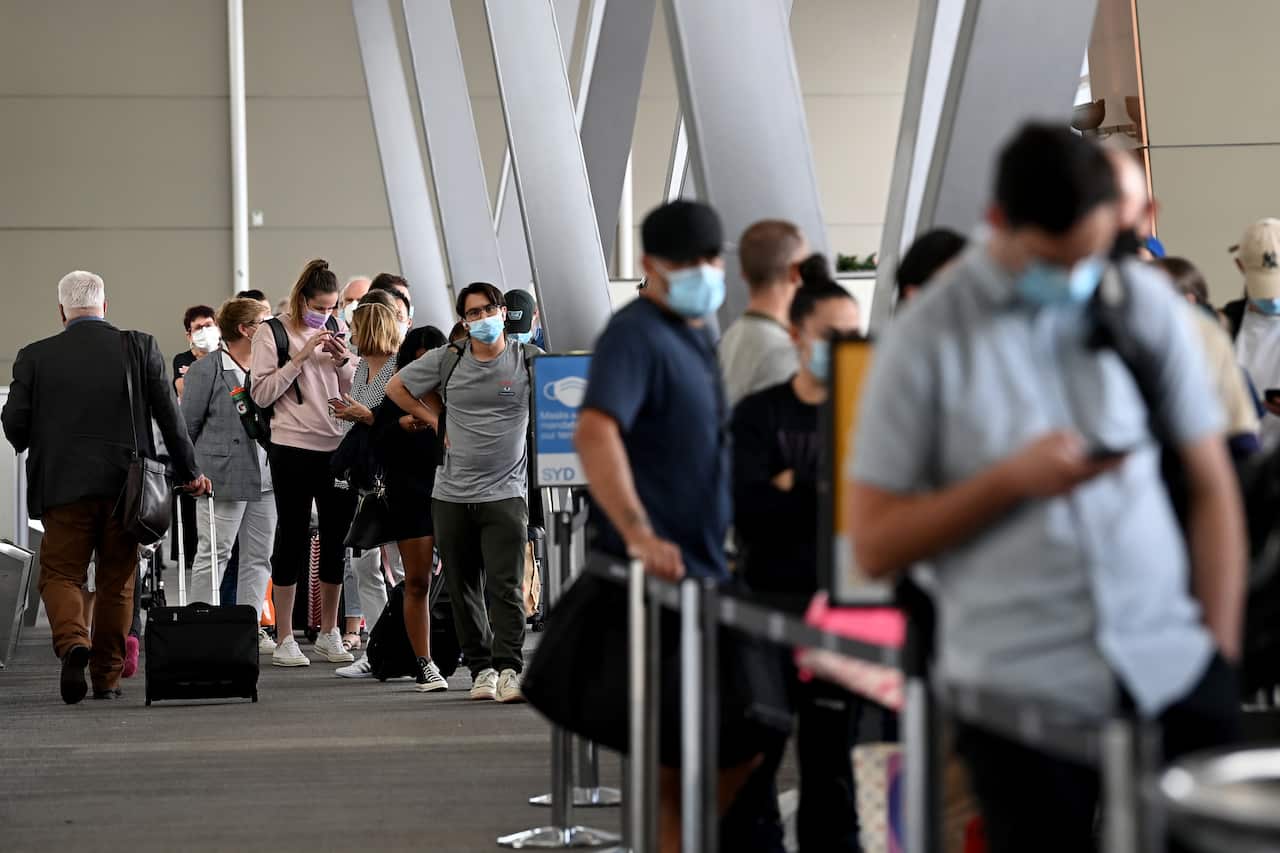
On Tuesday, many Australians arrived at the airport with their plane waiting on the tarmac and clear skies overhead — only to discover their flight had been delayed.
Around 200 flights moving through Melbourne and Perth Airports were forecast to experience delays, according to a daily plan issued by Airservices Australia.
In Sydney, 138 flights were expected to be impacted by ground delays of around 43 minutes, in part due to strong winds, the government-owned air traffic management organisation said.
Rob Sharp, CEO of Airservices Australia, acknowledged that flight delays and disruptions can cause "very high frustration levels" for passengers, airlines and airport partners alike.
Behind the scenes, delays are often used to ensure public safety is not compromised during what Sharp described as a "challenging period" for air traffic controllers.
News that makes sense
Your trusted source for staying up-to-date with the world around you. Get free daily news updates and analysis, straight to your inbox.
"We do this through effectively putting space between aircraft. But it does come at a cost, and that cost is delays," Sharp said during a press conference on Monday.
His comments follow significant delays to flights on Friday and Saturday last week. On Sunday, two passenger jets also narrowly avoided a ground collision at Sydney Airport, with the incident now under investigation.
It's left industry leaders and aviation experts questioning whether Australia's air traffic control workforce can keep up with aviation demands.
Who's in control?
Uğur Turhan is a senior lecturer in aviation at the University of New South Wales in Canberra. He said controllers are responsible for air traffic safety and efficiency, both on the ground and in the air.
"You cannot put somebody as a high-performing air-traffic controller in one day or one year ... generally, we think that five years' experience is a really good level to perform at high levels in complex traffic situations," Turhan told SBS News.
There are three types of controllers — tower controllers, terminal controllers and en route controllers — responsible for various stages of flights including take-off, landing and airspace movement.
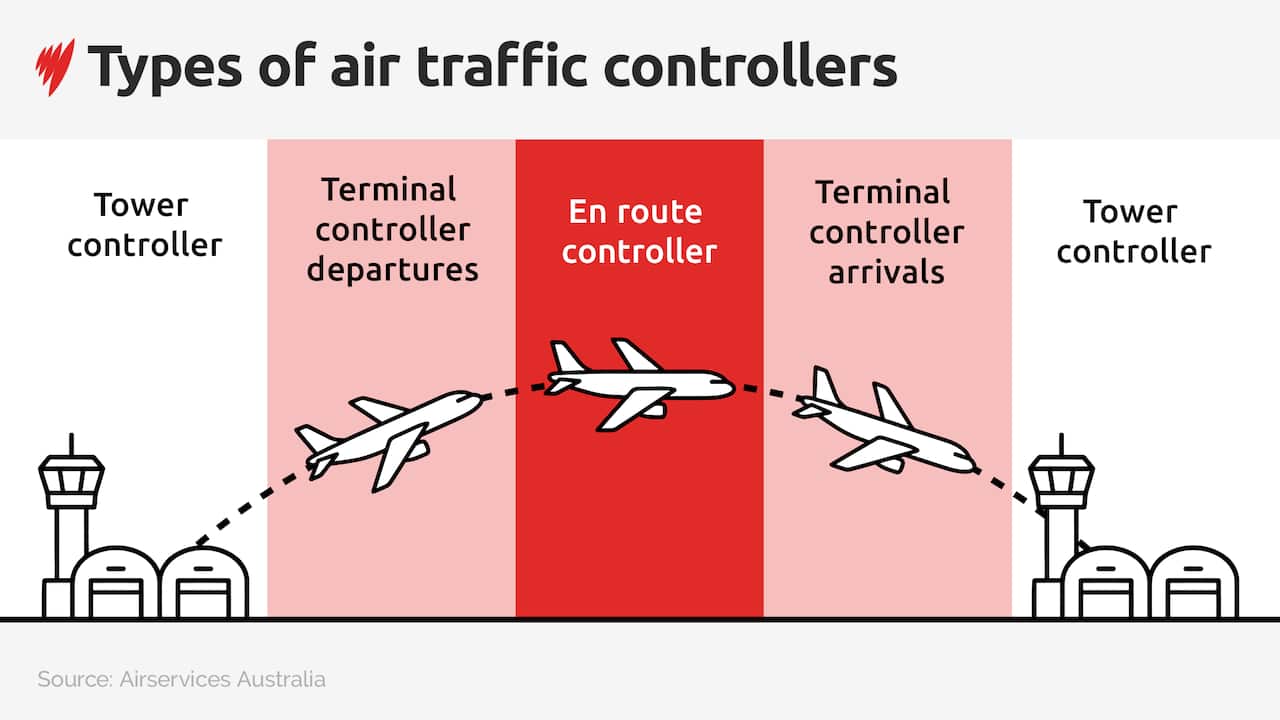
While training programs vary, typically air traffic controllers train for 12 months before undergoing additional on-the-job training.
Australian air services manage more than 51 million square kilometres of airspace, equivalent to approximately 11 per cent of the world's airspace. This area is managed 24 hours a day, 365 days a year, Airservices Australia said.
Federal Transport Minister Catherine King believes the work of air traffic controllers is a "really stressful and difficult job".
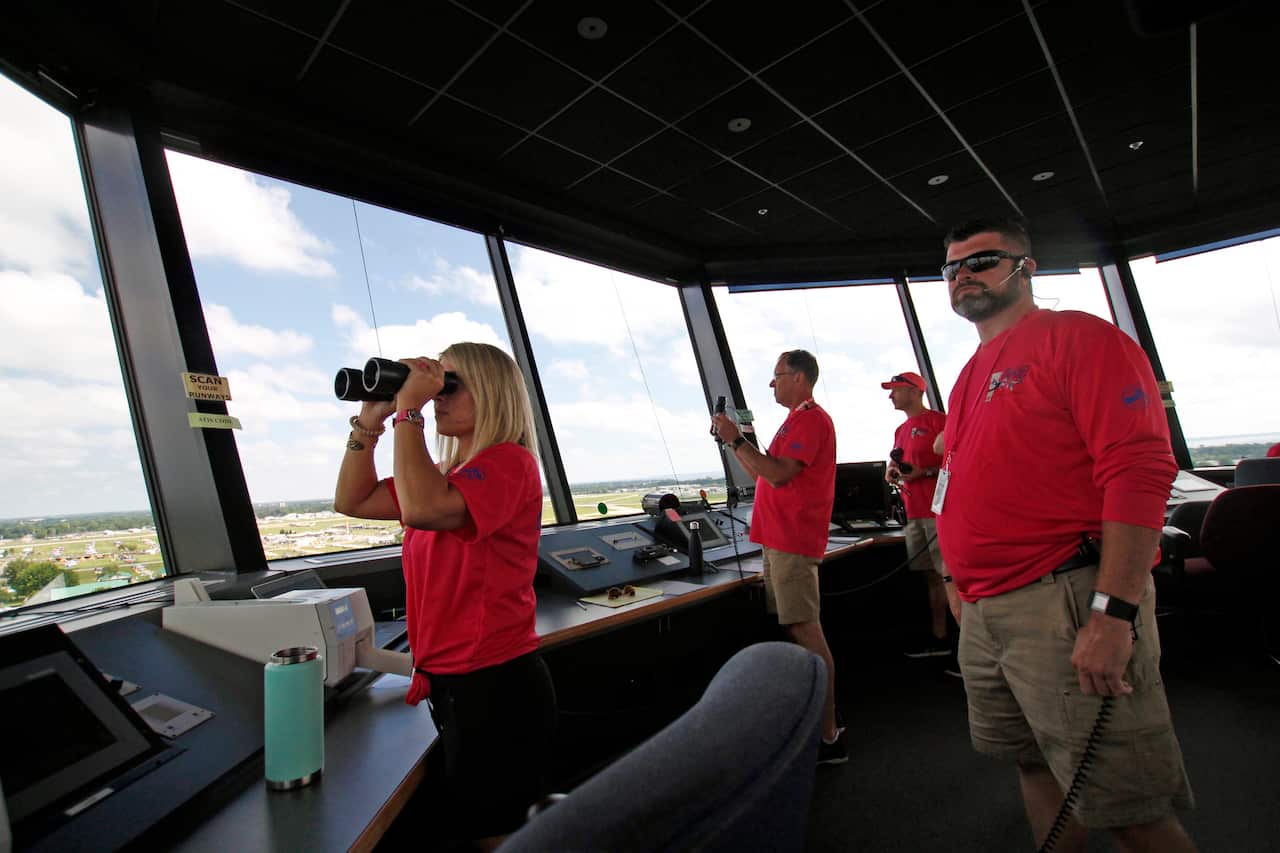
"If you've been in an air traffic control tower, you've seen the number of flights they are managing, the complexities in how quickly they have to think. It's a really specialised job."
She held emergency meetings in Canberra on Monday following recent flight disruptions. King described her discussion with Sharp from Airservices Australia as "constructive" and said she felt "confident" the organisation was doing "everything they can to get on top of this".
Staff shortages
National disruptions due to air traffic control have fallen by 86 per cent over the past financial year, according to Airservices Australia. Ground delays caused by air services also reduced by 13 per cent.
The air traffic industry has recorded an uptick in staffing, with a record 109 new controllers employed last year. Sharp told the ABC's 7.30 on Monday there were now more than 1,070 air traffic controllers in Australia.
There are an additional 15 people in training, expected to join the workforce by the end of 2027, King said in a press conference on Monday. Experienced air traffic controllers have also been hired from overseas to work in Australia.
Sharp said the sector has traditionally relied on high staff overtime, which he does not believe is a "sustainable model" as Australian airports expand. He said new rostering systems are likely to ease staff burdens from September this year.
Turhan acknowledged the impact of the COVID-19 pandemic on the aviation industry too.
"Globally, we had COVID-19. We lost some manpower capability in aviation, not just for air traffic controllers. As I said, it is not easy to put someone, with a high performance level in [the job in] just one year; it takes time."
Between October 2021 and December 2022, more than 180 air traffic controllers accepted voluntary redundancies, according to online information published by the Brisbane Flight Path Community Alliance.
Turhan believes Sydney Airport is a particularly challenging environment for new air traffic controllers. It requires workers to train for two years, plus an additional two years to embed into the system, according to Sharp from Airservices Australia.
"It has a really complex layout ... and also it is operated by different domestic and international terminals," Turhan said.
"In Sydney Airport ... you cannot operate your flights during the night. So, during that limited time you should perform all traffic in a short time and traffic levels are not homogeneously distributed to the time. So, we have peak traffic."
A global issue?
Air traffic control is a highly competitive field which can offer high pay. The base salary for an initial trainee air traffic controller begins at $60,000, which increases to more than $171,000 for a Level 5 controller. Workers at a Level 10 classification can earn over $243,000, and supervisors more than $286,000.
Angus Mitchell, the chief commissioner of the Australian Transport Safety Bureau, said it's also considered a specialised profession.
"Airports are incredibly busy. You've got planes taking off, planes landing, planes being manoeuvred across crossing runways, across taxiways. It is a complex environment, but it needs to also be incredibly robust," Mitchell told SBS News.
"Even at low speeds, there can be very significant outcomes if planes come into contact with each other."
This complexity has fuelled a global shortage in air traffic controllers.
In July 2025, United States transportation secretary Sean Duffy told Congress it would cost US$31.5 billion ($44.6 billion) to fully modernise the country's air traffic control system. That same year, the Federal Aviation Administration told US media it was facing a shortage of around 3,000 air traffic controllers.
In July 2026, Singapore announced new air traffic controller recruits would receive a sign-on bonus of SGD$20,000 (approximately $22,100), as Changi Airport is expanded.
Parts of Europe, including Athens Airport in Greece, have experienced flight delays amidst seasonal summer travel peaks.
However, Turhan cautioned against comparing Australia's situation directly with Europe.
"In Australia, we have really broad and wide airspace. We have a few big airports but they are busy, and they're handling different kinds of traffic levels."
He is optimistic that discussions about Australia's air traffic control sector could eventually lead to reduced workloads, improved working conditions and fatigue management.
For the latest from SBS News, download our app and subscribe to our newsletter.







