
Both in Australia and around the world, 2025 was marked by moments that shaped the global conversation.
From gen Z–led protests in Nepal to a devastating fire in Hong Kong, from harrowing images of starvation in Gaza to scenes of relief and joy as a ceasefire between Israel and Hamas led to the release of the final living Israeli hostages in exchange for hundreds of Palestinian prisoners and detainees.
Closer to home, Australians returned to the polls to elect a second consecutive Labor government, while Prime Minister Anthony Albanese came face-to-face with United States President Donald Trump during a meeting at the White House.
As the year draws to a close, SBS News has compiled some of the most powerful photos and videos capturing the defining stories of 2025.
Bondi Beach terror attack
News that makes sense
Your trusted source for staying up-to-date with the world around you. Get free daily news updates and analysis, straight to your inbox.
Australia's deadliest terror attack in decades unfolded on 14 December, when two gunmen opened fire on a crowd of people gathered for a Jewish Hanukkah celebration at Bondi Beach.
Fifteen people were killed, while dozens of others were injured.
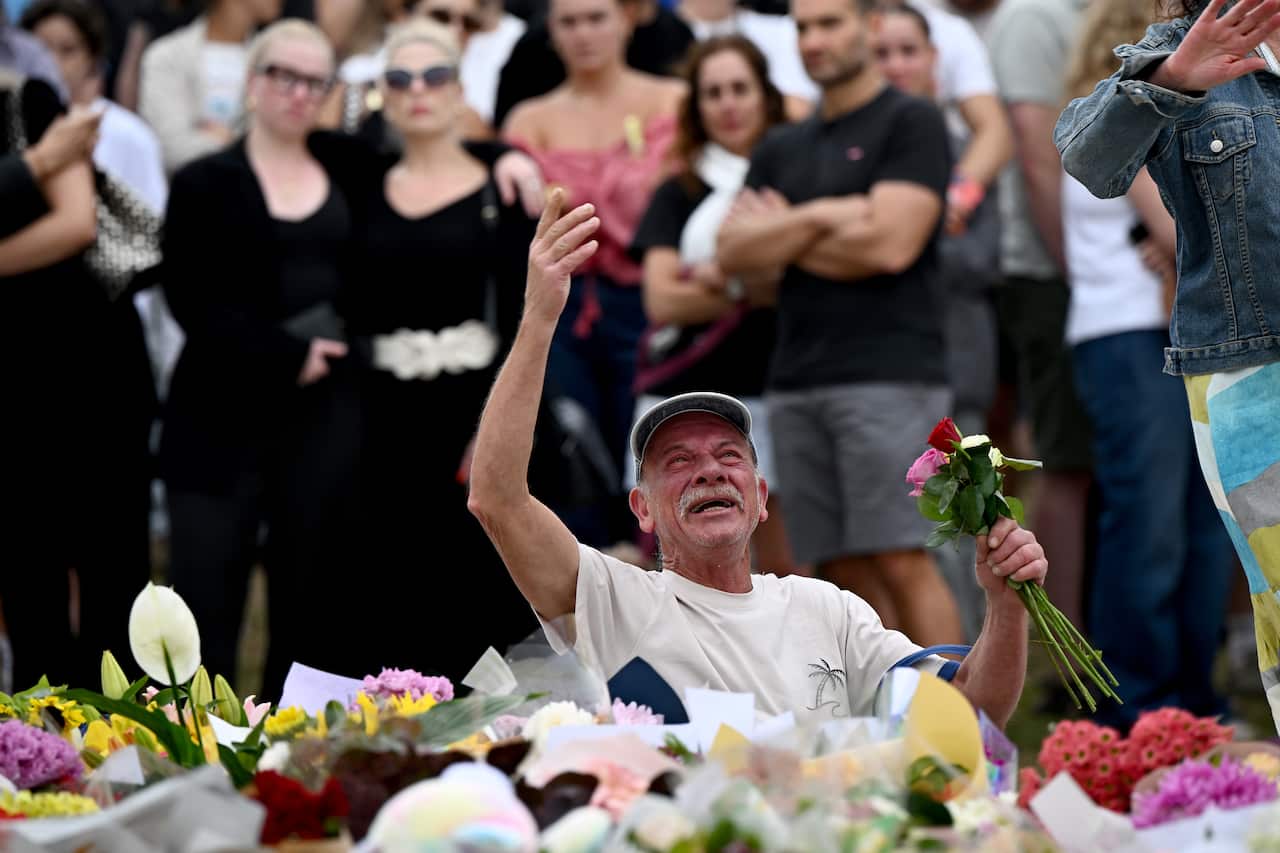
The horrific attack also witnessed moments of great heroism, with a clip of 43-year-old tobacco shop owner Ahmed Al-Ahmed disarming one of the alleged gunmen going viral around the world.
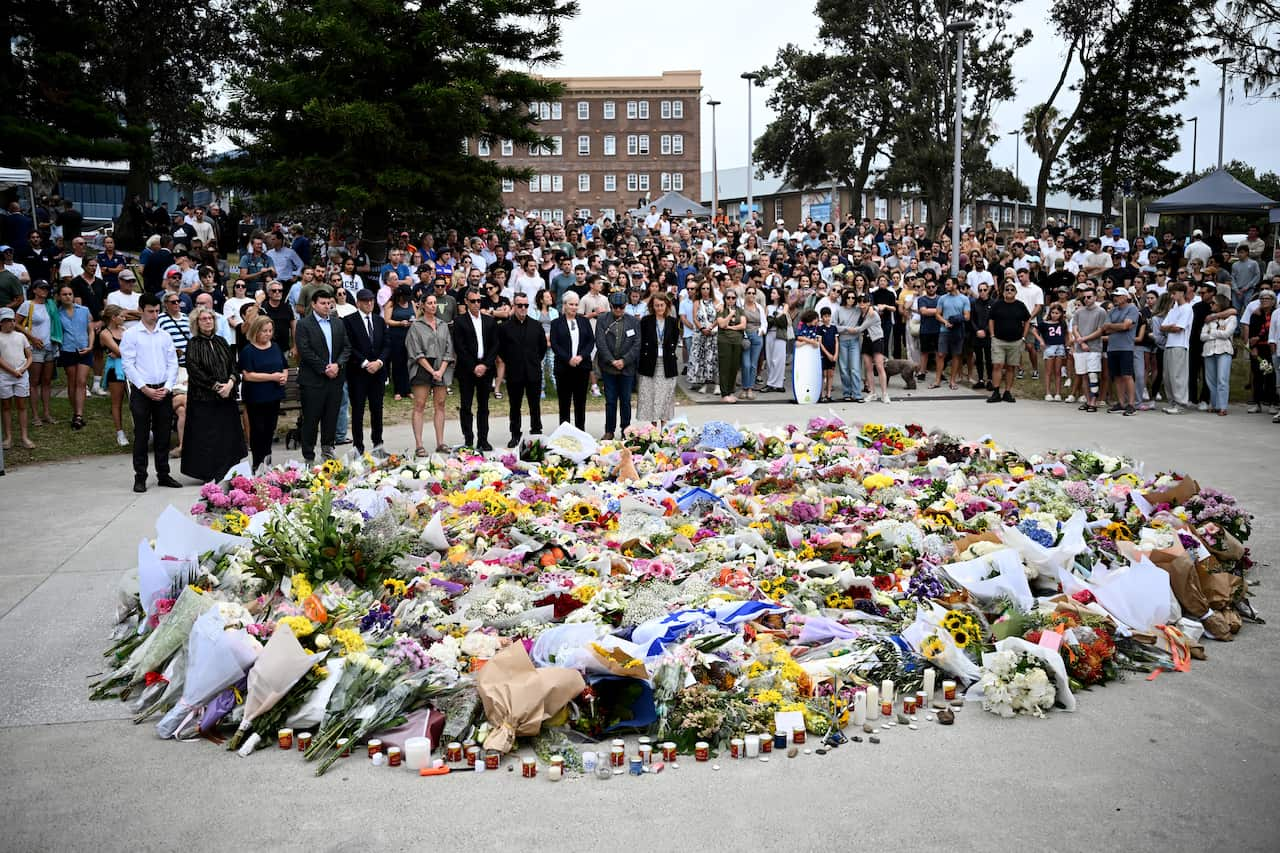
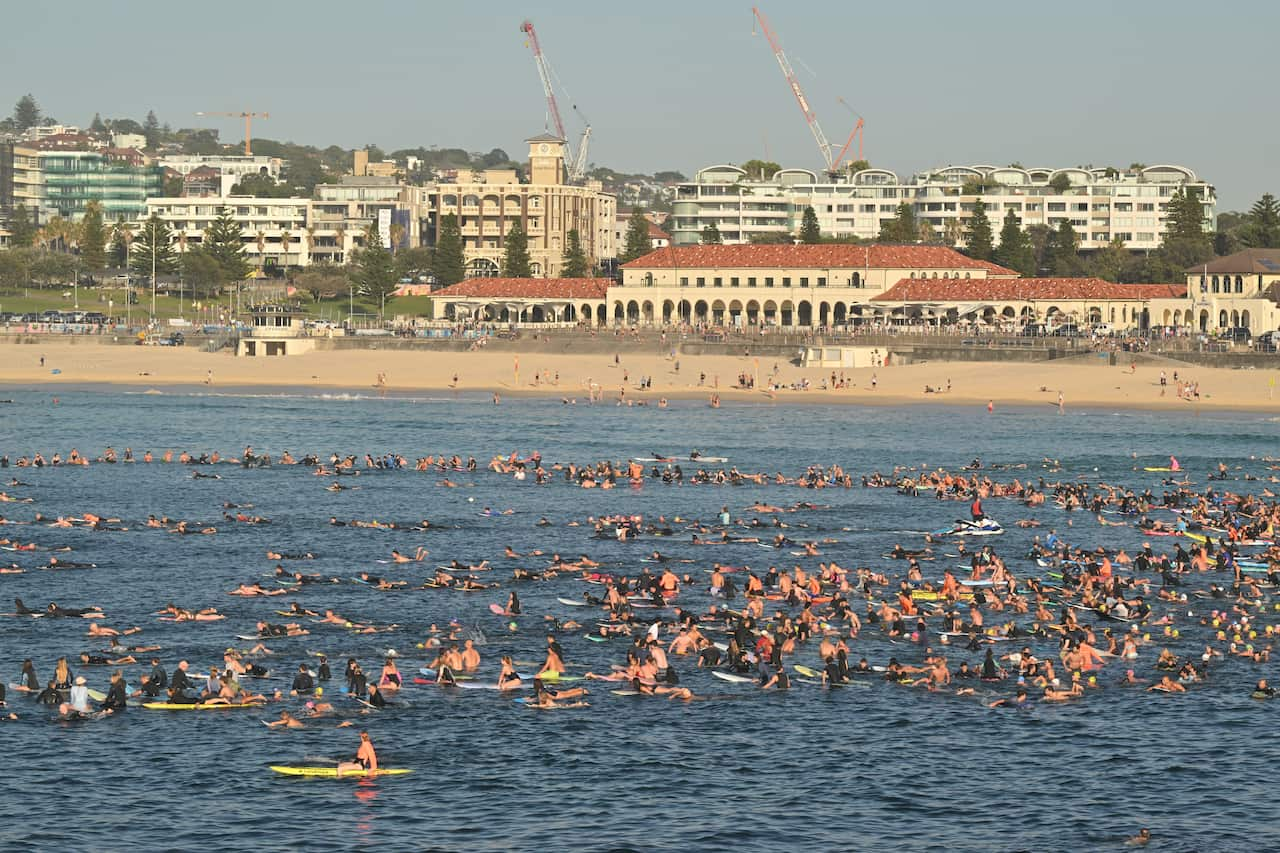
Australians gathered at the site of the attack to hold vigils and commemorate those killed, placing flowers and other tributes at a makeshift memorial site at Bondi Pavilion.
The deadliest shooting in Australia since the Port Arthur massacre in 1996 has prompted the NSW government to introduce stricter protest and firearm laws.
'March for Humanity'
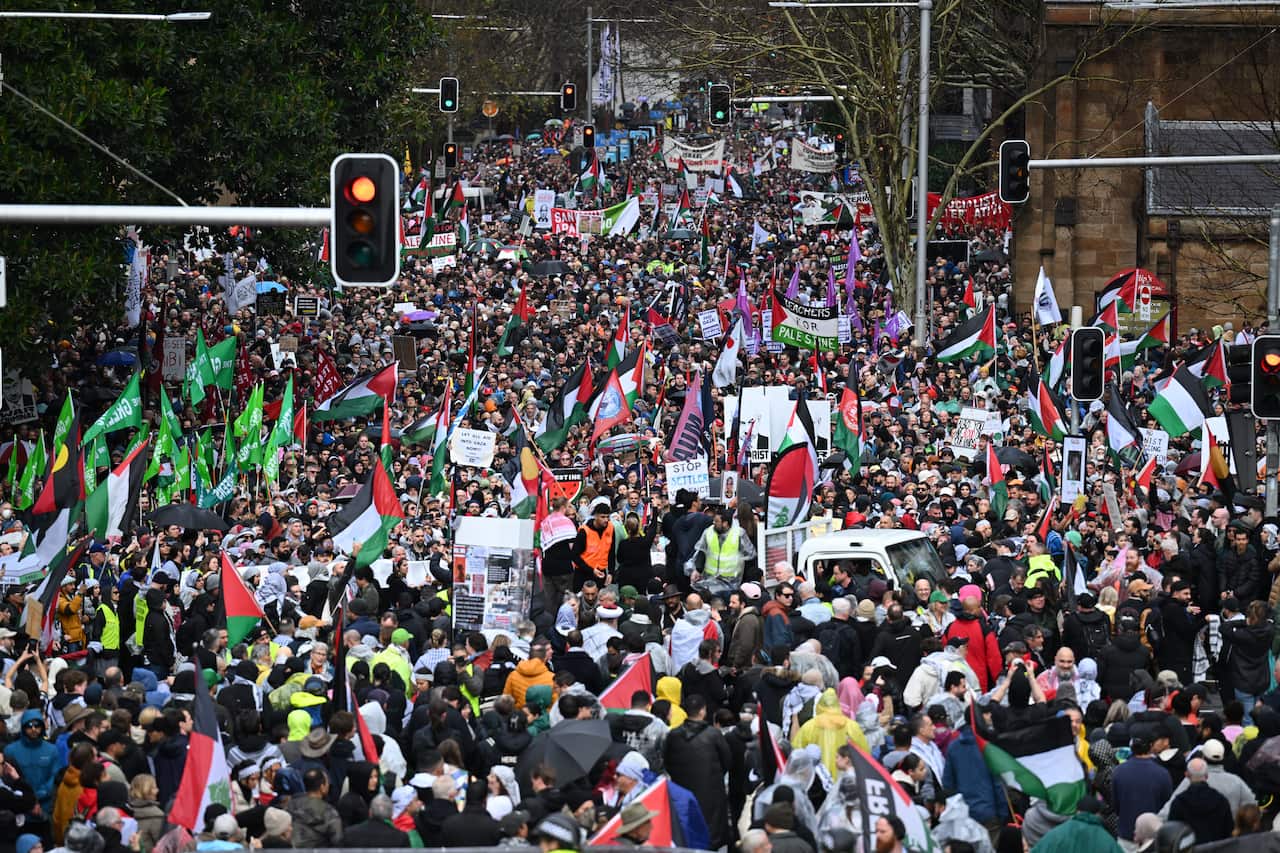
Tens of thousands of pro-Palestinian demonstrators marched across Sydney Harbour Bridge in August, calling for an end to the war in Gaza.
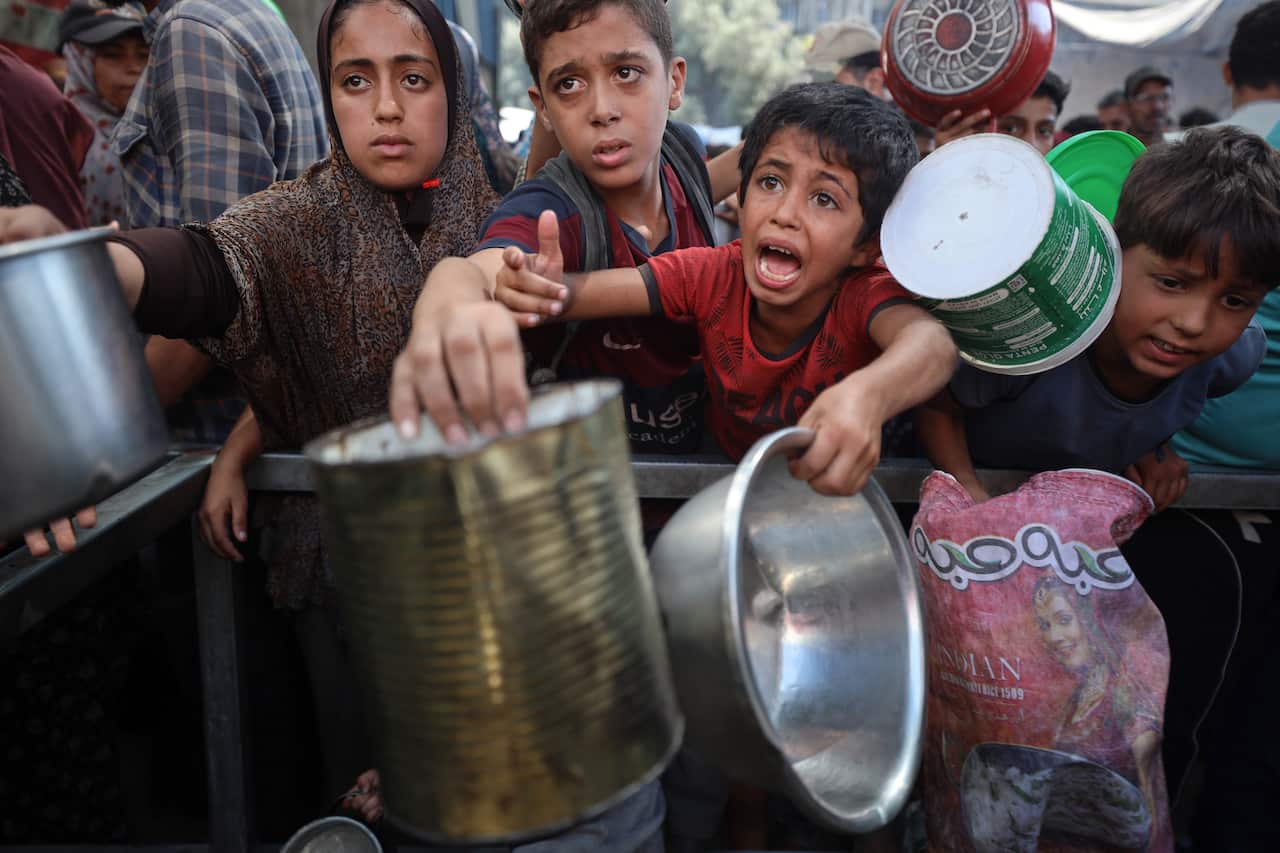
They also called on Israel to lift restrictions on aid into Gaza, amid warnings from aid agencies that millions of Palestinians faced starvation.
Israel repeatedly denied it was behind chronic food shortages in Gaza, instead accusing Hamas of deliberately preventing supplies from being distributed and looting aid for themselves, which the militant group denies.
'March for Humanity' organisers said up to 300,000 people took part in the protest in Sydney, while NSW Police put the figure at 90,000.
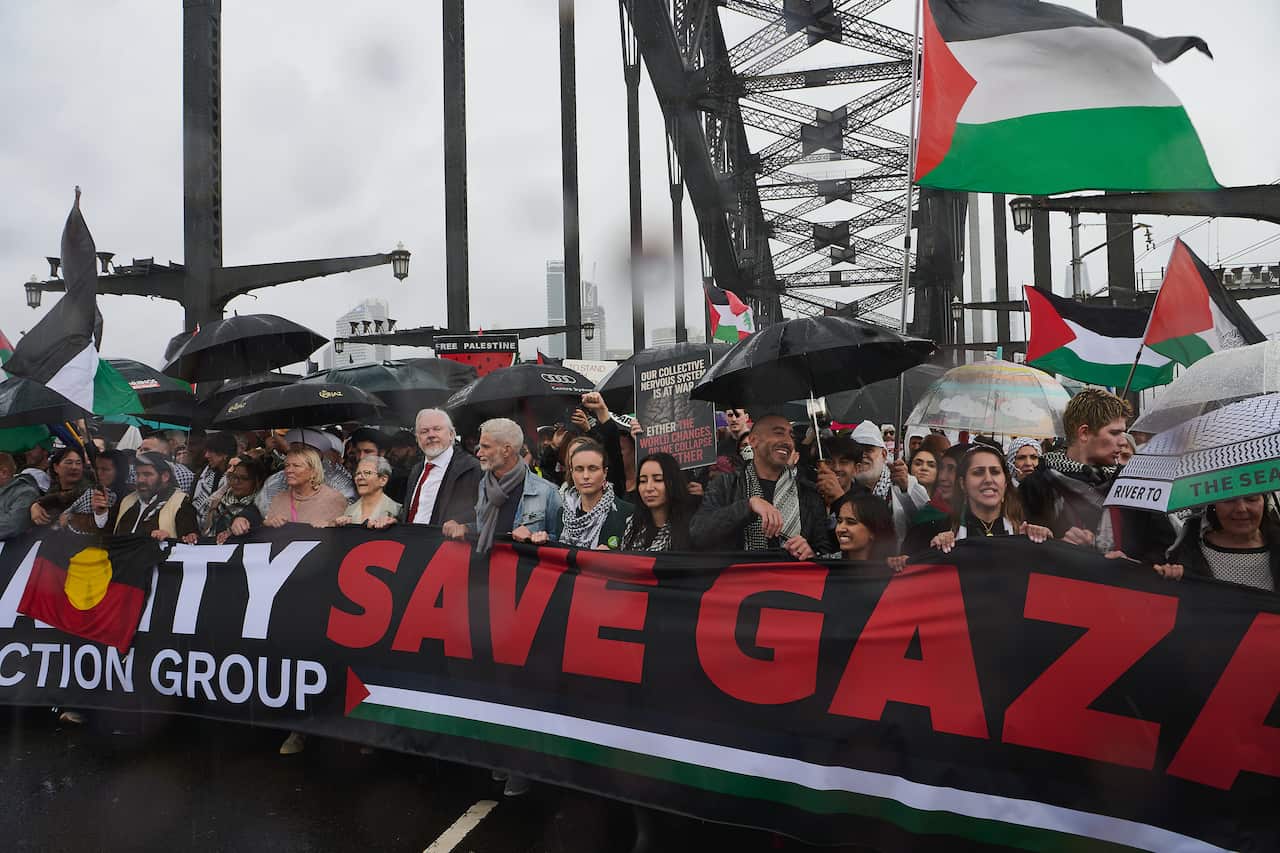
WikiLeaks founder Julian Assange, former foreign minister Bob Carr and federal MP Ed Husic took part in the march.
Pope Francis' funeral, Pope Leo's inauguration
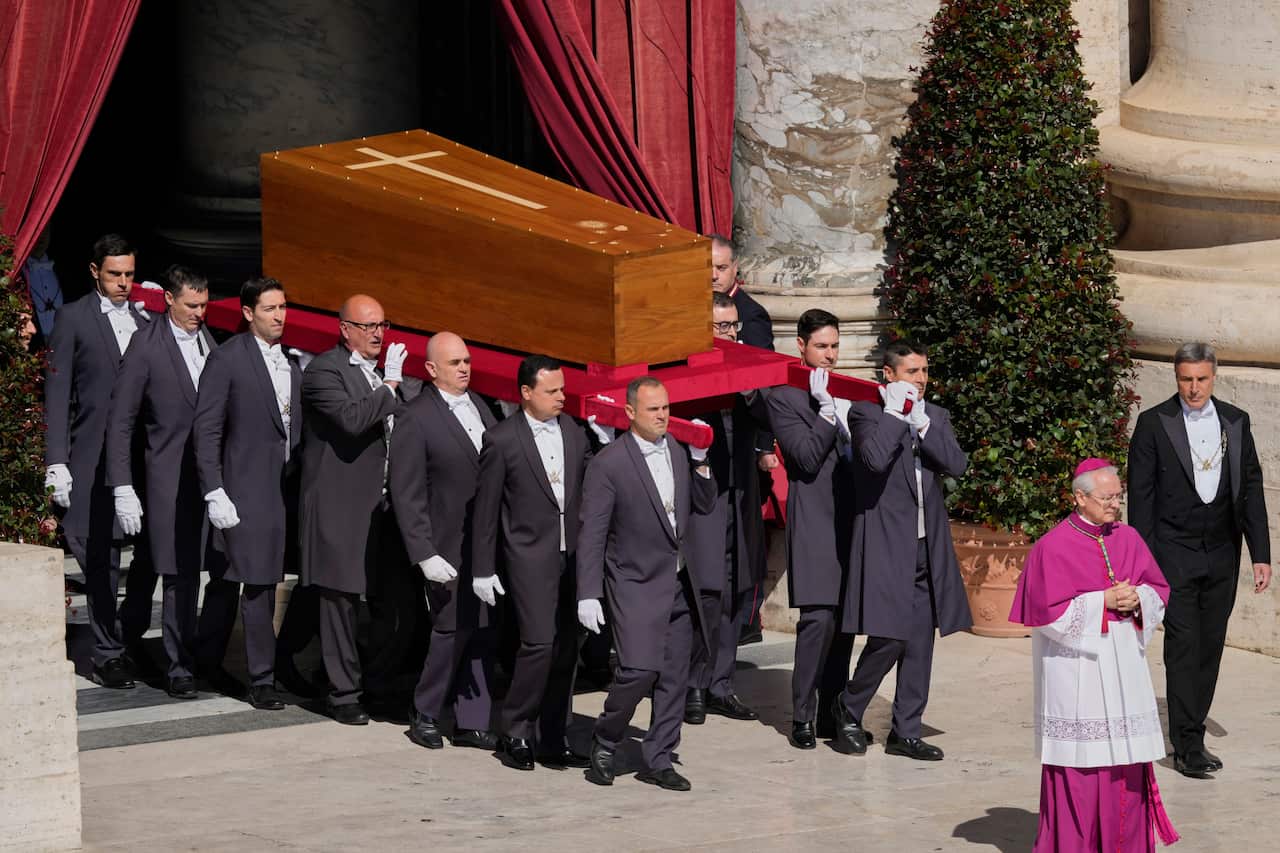
In late April, hundreds of thousands gathered in Rome and millions more around the world tuned in to witness Pope Francis' funeral, a final tribute to a pontiff who called on humanity to "build bridges, not walls".
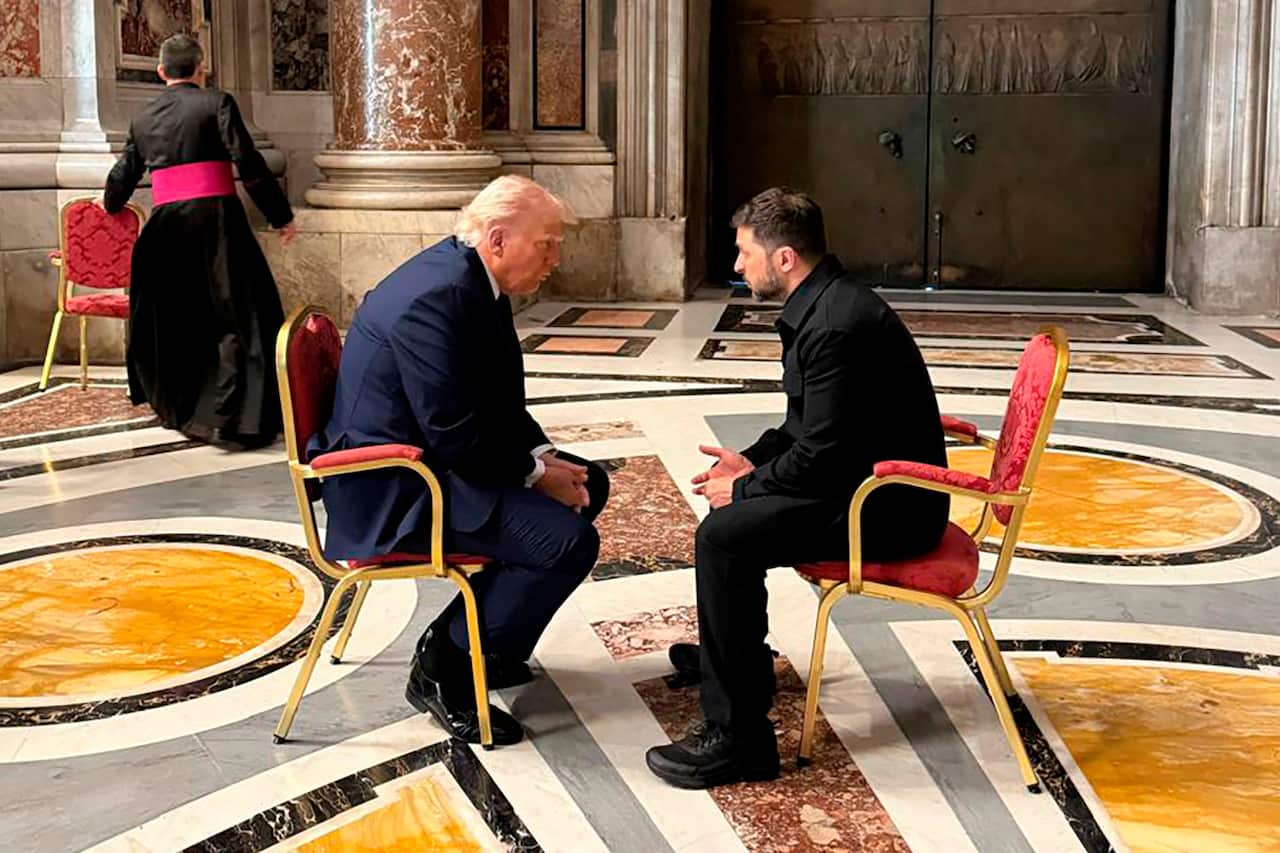
However, one of the most iconic images to emerge from the occasion had nothing to do with the late pontiff — save for the fact that his funeral served as a moment for two world leaders to hold a face-to-face meeting.
In early May, following two days of deliberation, the group of cardinals known as the conclave chose the new leader of the Catholic Church — and the world's nearly 1.4 billion Catholics.
Pope Leo became the 267th pontiff of the Roman Catholic Church in May, taking part in a formal ceremony to mark the beginning of his papacy.
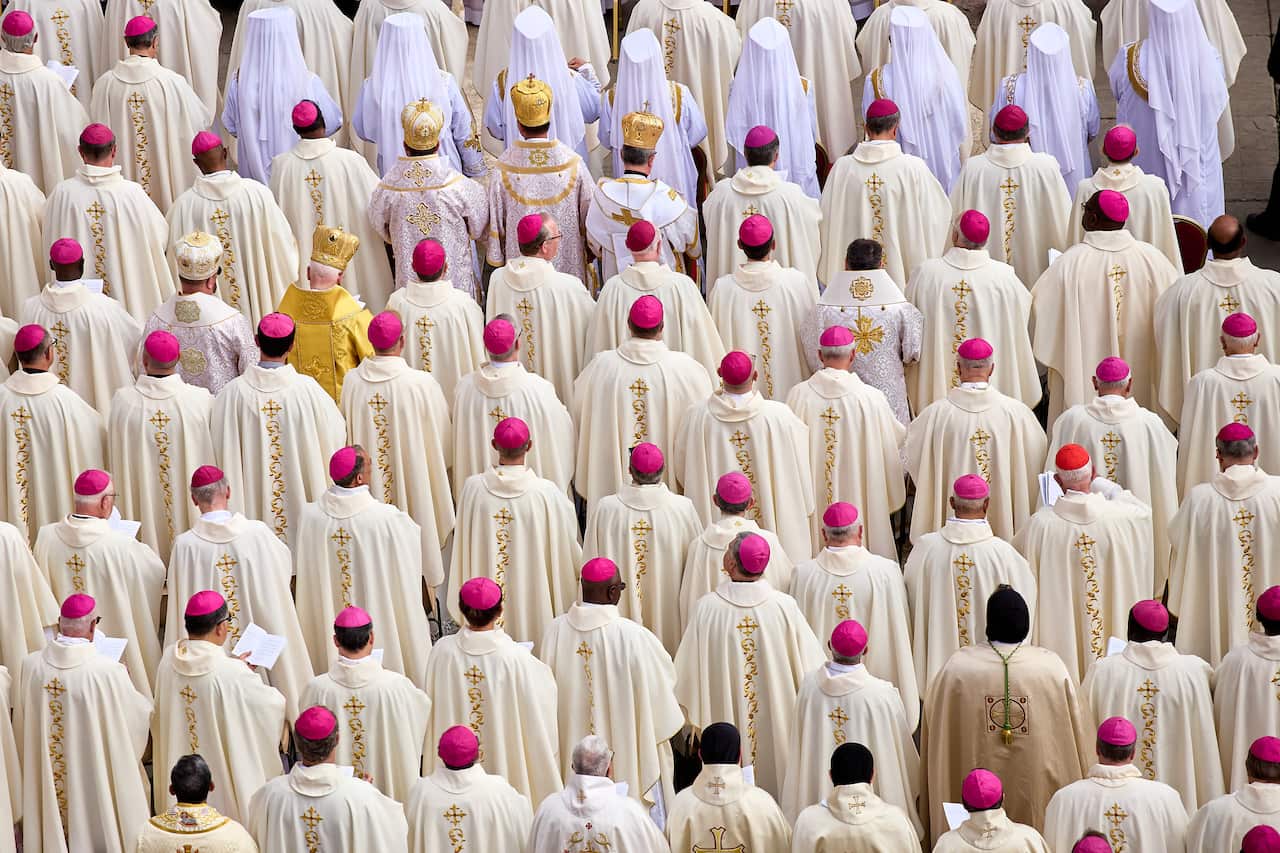
Some 200,000 people gathered for the two-hour papal mass in St Peter's Square at the Vatican.
Australians go to the polls
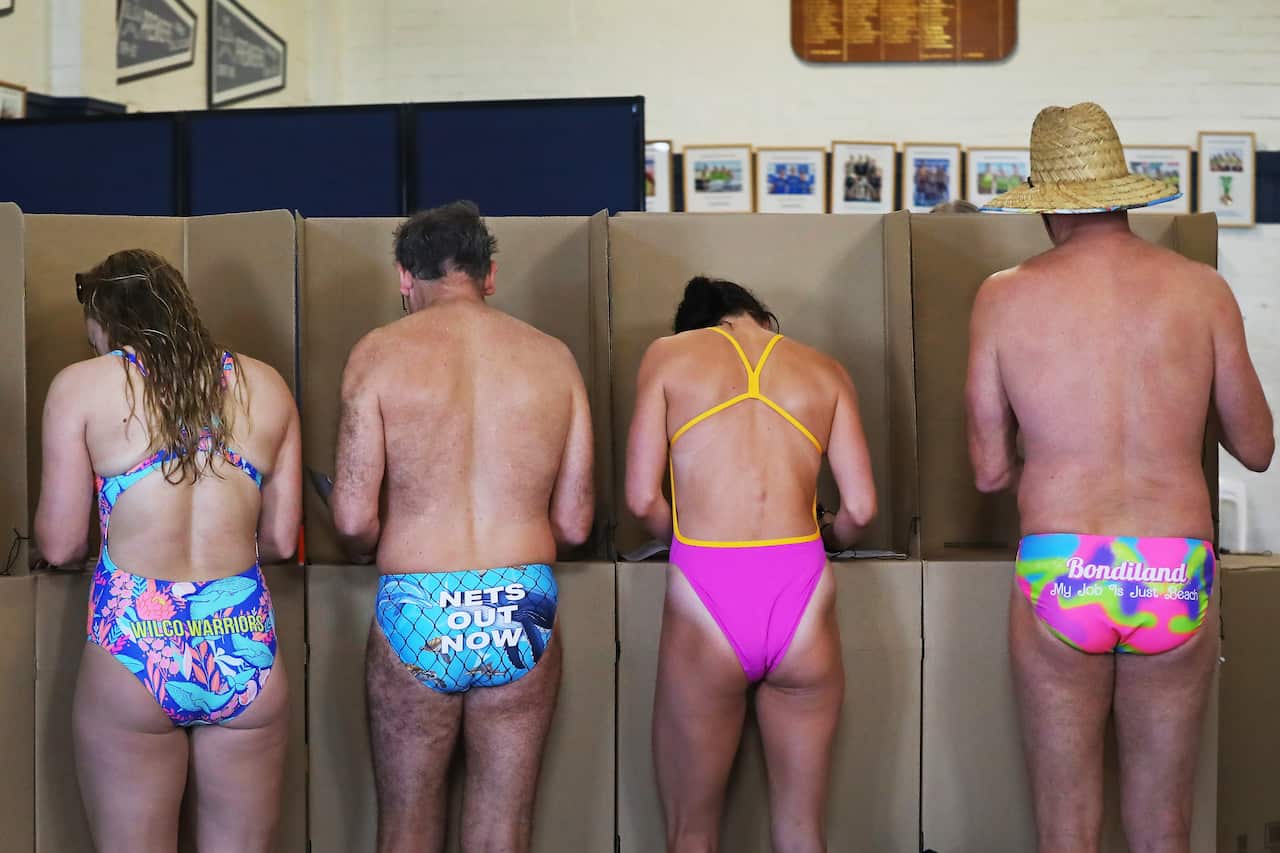
Labor was elected for a second consecutive term in May, with Australians turning out to the polls — some after a morning dip at the beach.
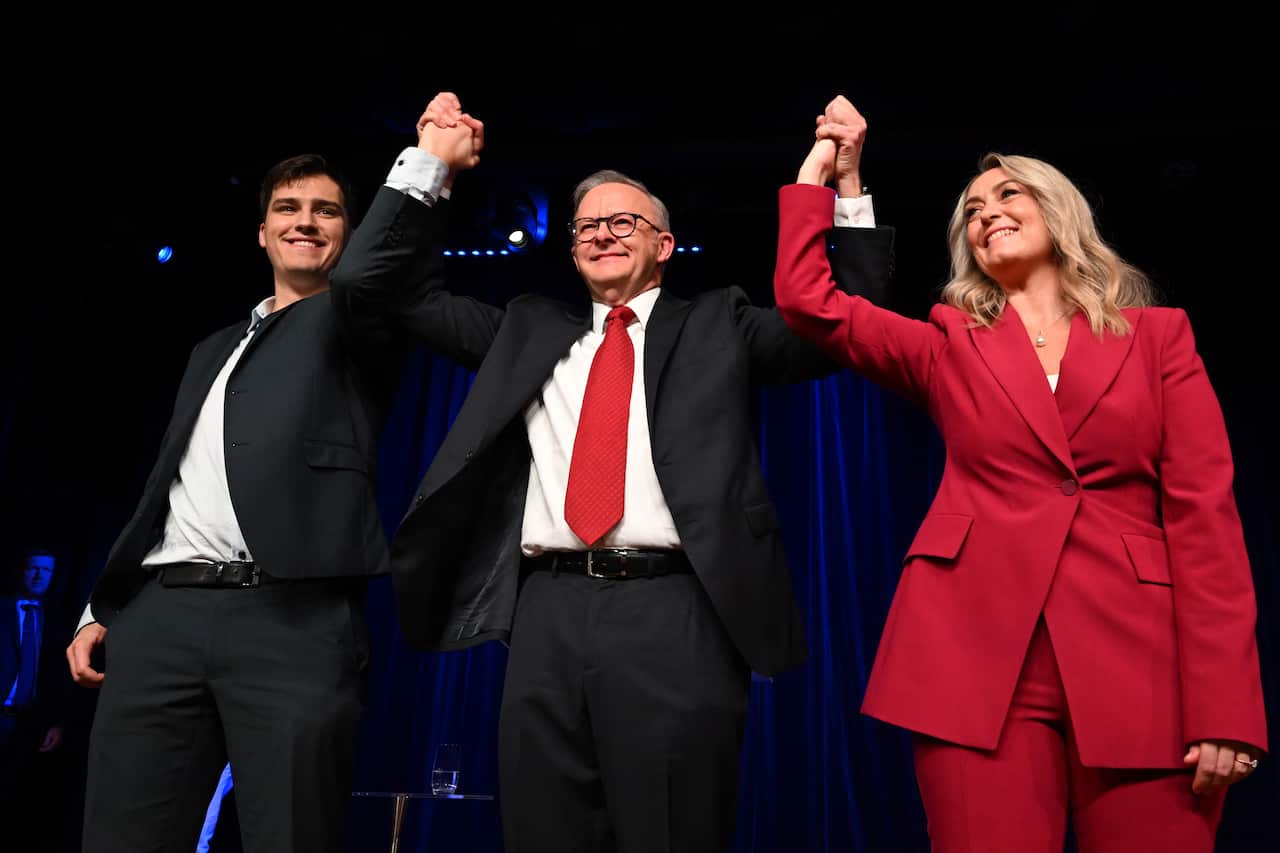
Prime Minister Anthony Albanese was joined by his now-wife Jodie Haydon and son Nathan at Labor's election night party.
"Serving as your prime minister is the greatest honour of my life," Albanese told party faithful at the Canterbury-Bankstown RSL on election night.
"And it is with a deep sense of humility and a profound sense of responsibility that the first thing that I do tonight is to say thank you to the people of Australia for the chance to continue to serve the best nation on earth."
Hong Kong's Tai Po fire
Striking images and videos of a massive fire that engulfed several residential buildings in Hong Kong's Tai Po district quickly spread across the world in late November.
More than 160 people were killed during the blaze, with dozens injured, according to the latest local official figures.
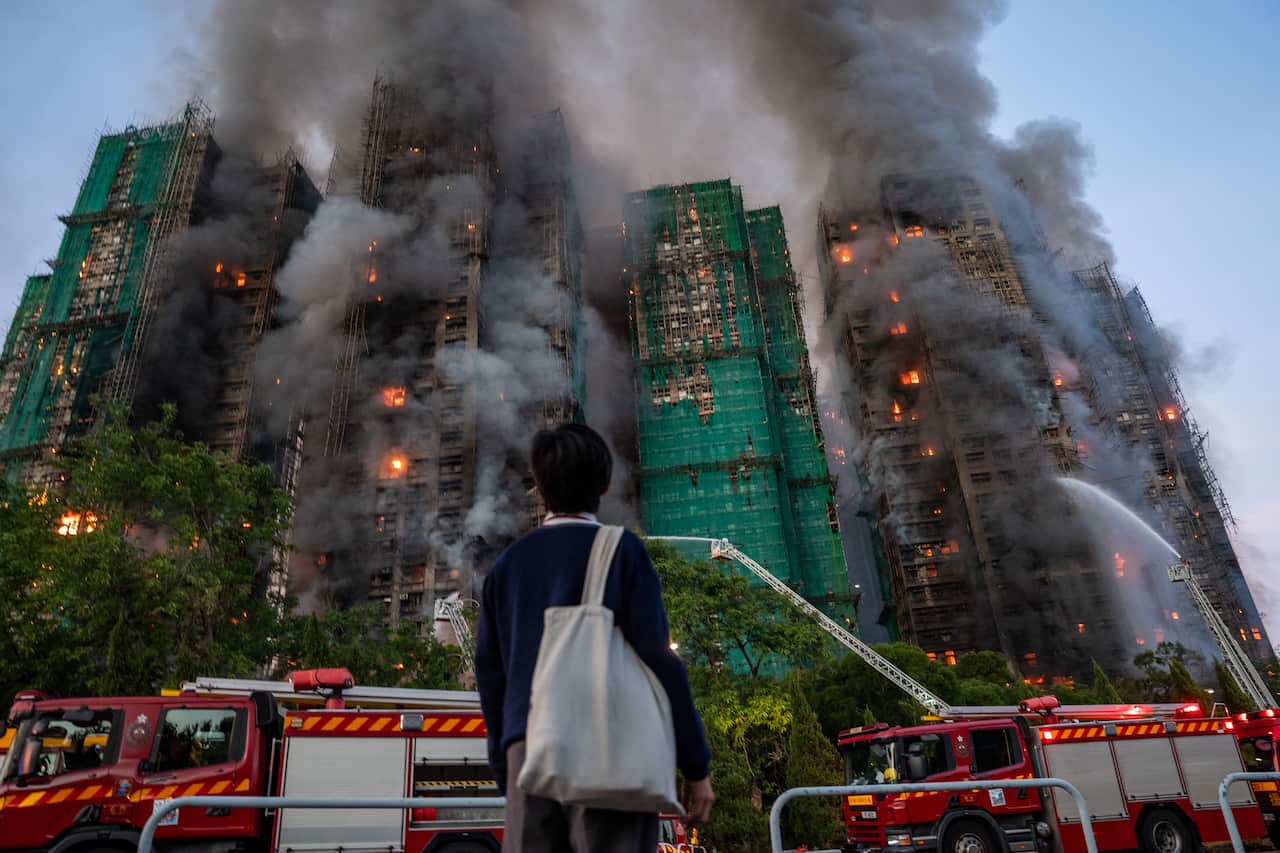
Hong Kong has set up an inter-departmental task force to investigate the cause of the fire and how it spread so quickly, but has not yet released its findings.
Albanese's White House visit
Albanese's highly anticipated meeting with Trump took place at the White House in October.
The bilateral meeting took 10 months to secure, but was hailed as a success after Albanese emerged with a new economic deal and strengthened ties to Australia's closest ally.
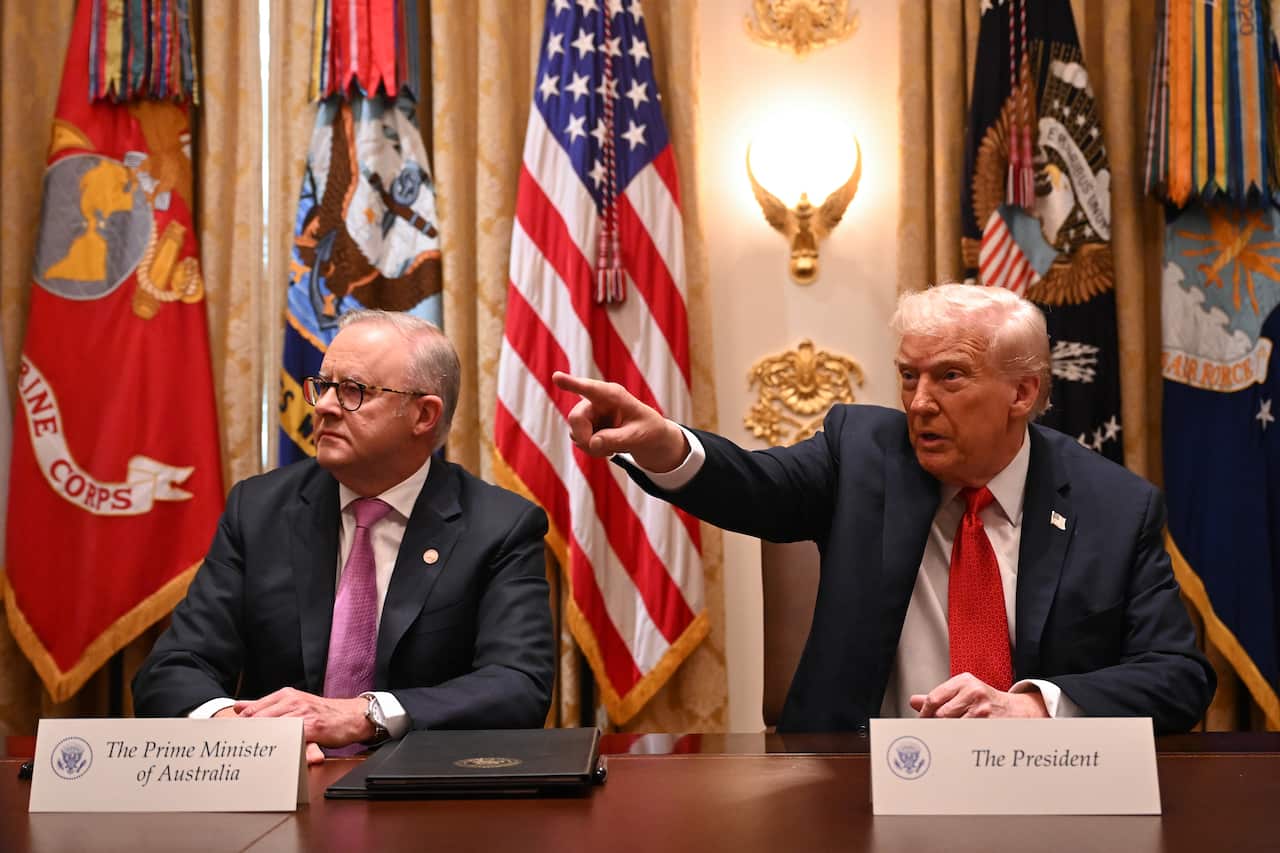
A moment of tension emerged when Trump told Australia's ambassador to the US, Kevin Rudd, "I don't like you either" in response to a question about previous disparaging remarks by Rudd about the president.
Daniel Andrews at Beijing military parade
In September, former Victorian premier Daniel Andrews attended China's World War Two military parade in Beijing, alongside Russian President Vladimir Putin and North Korean leader Kim Jong-un.
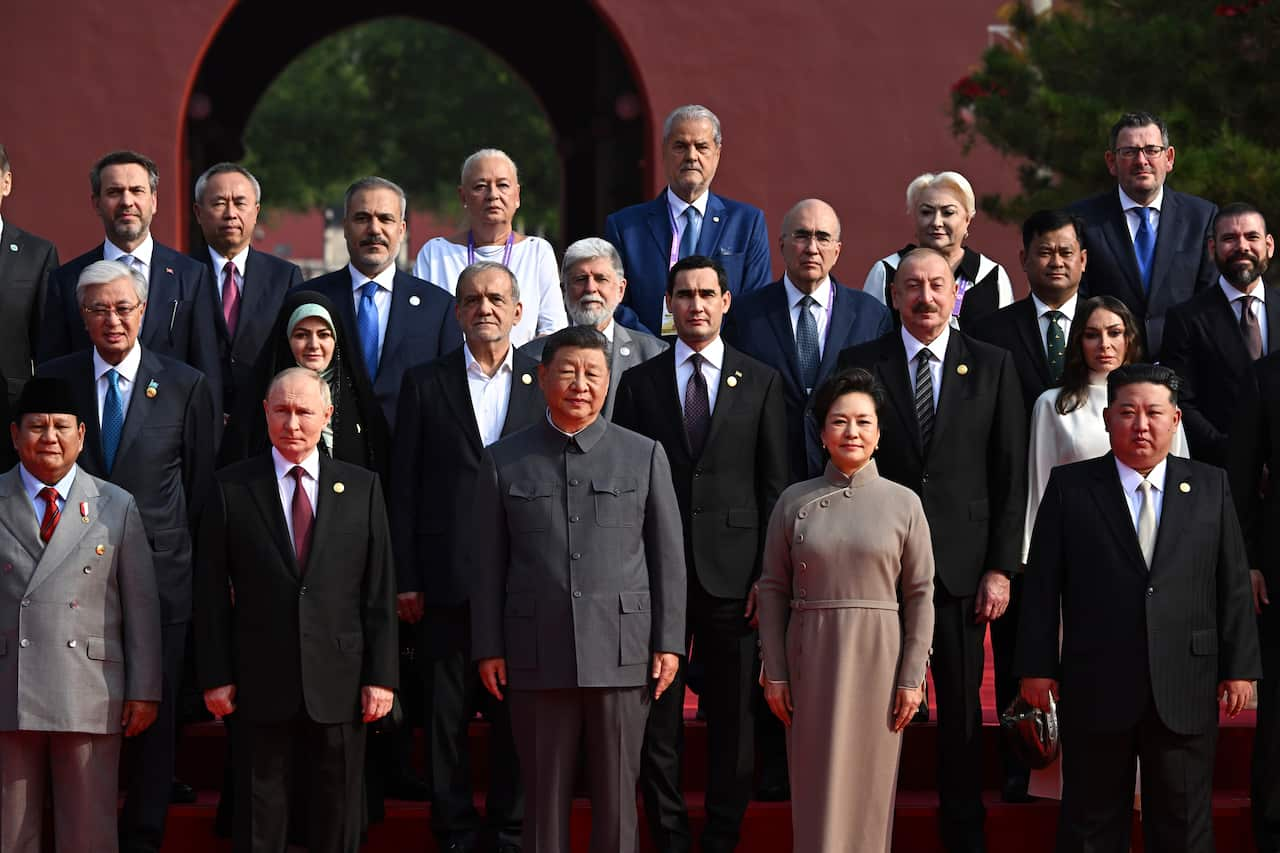
The military parade was part of China's celebration of the 80th anniversary of the victory of World War Two.
Andrews has defended his presence at the military parade, but also condemned Russia and Iran, whose leaders also attended.
Former foreign minister Bob Carr was also invited to attend the event, but he chose to attend separate indoor events instead.
Cyclone Alfred
Tropical Cyclone Alfred barrelled down the Queensland coast in March, bringing torrential rain and flooding.
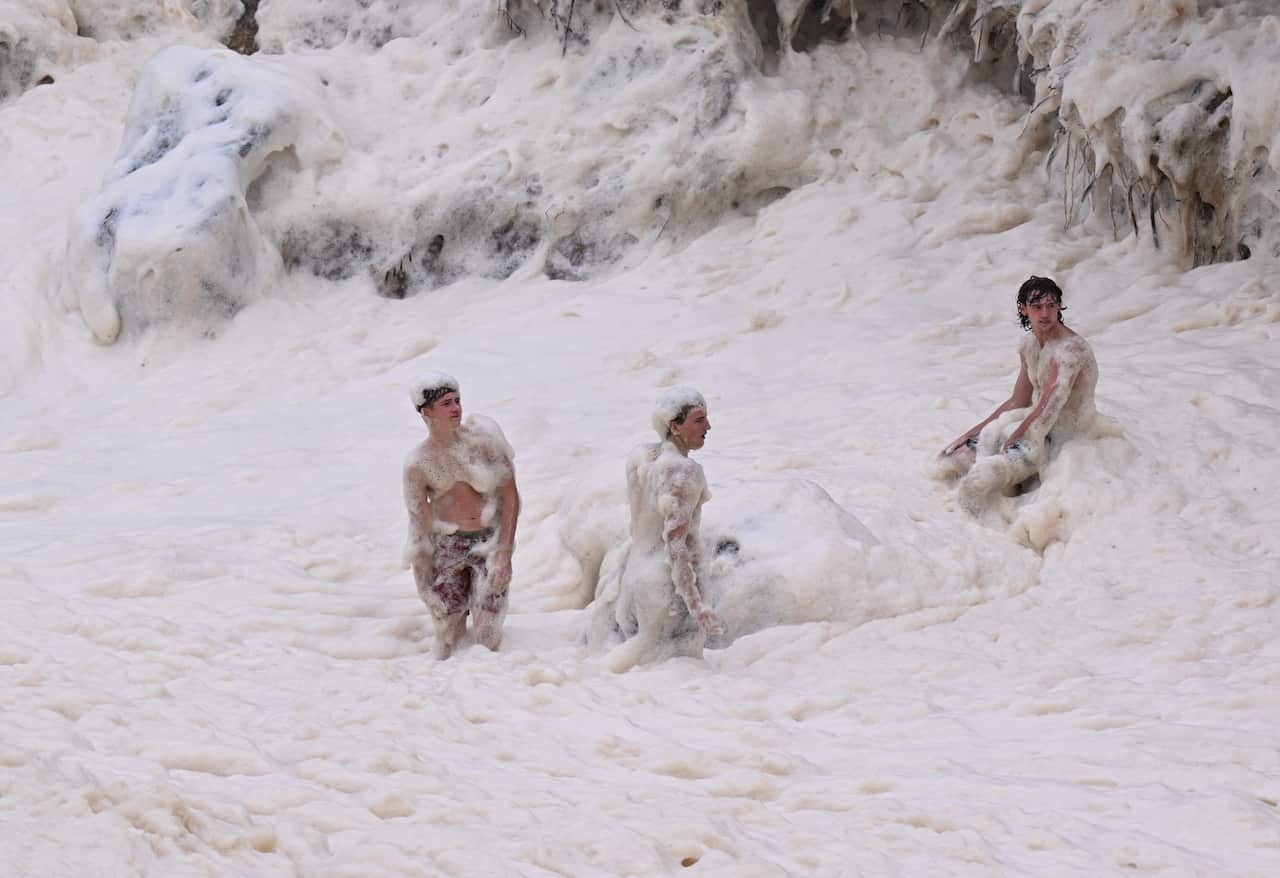
Tens of thousands of people were left without power, and one fatality was recorded.
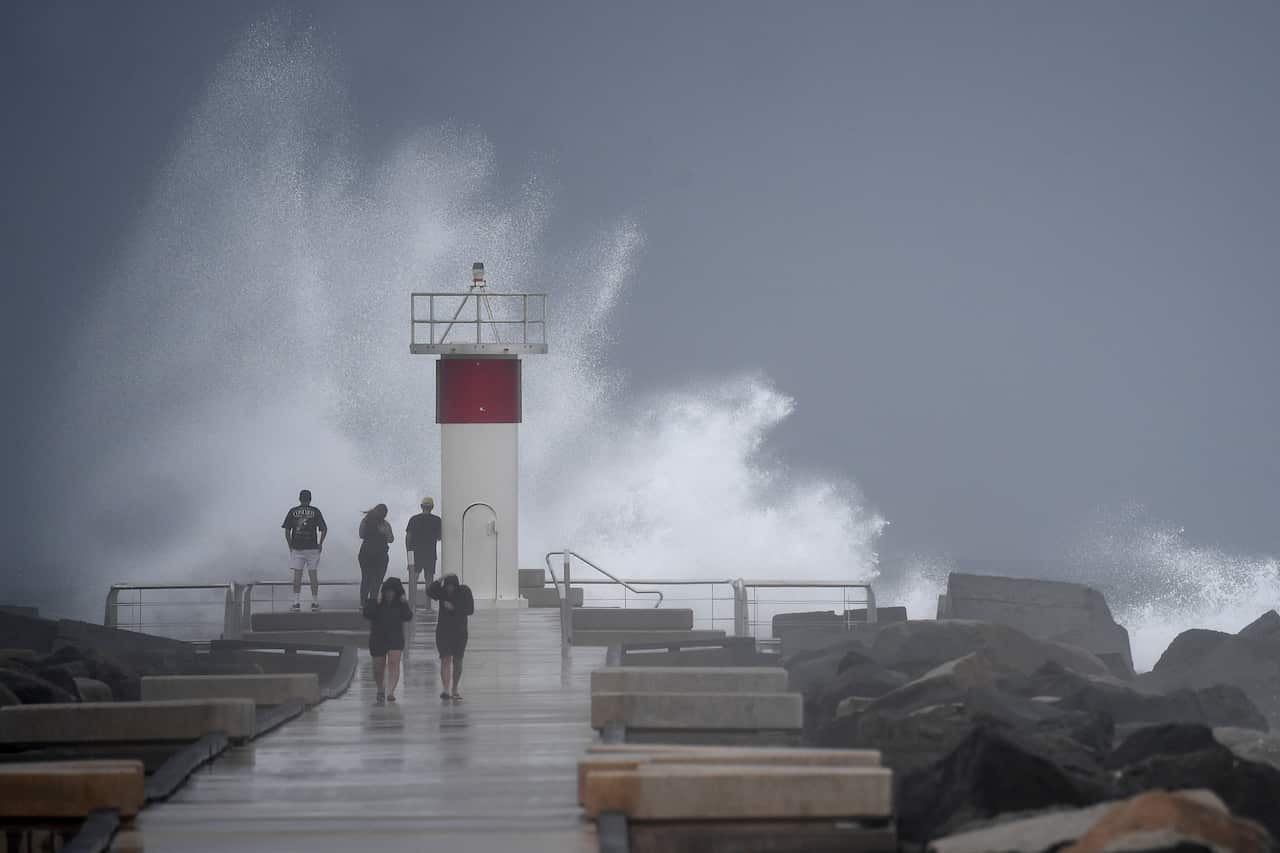
The cyclone ranked among the 10 most economically catastrophic events of 2025, according to the United Kingdom-based humanitarian relief charity Christian Aid, causing losses of roughly $1.8 billion, AAP reported in late December.
Gaza ceasefires and hostage-detainee exchanges
Following two years of horrific images emerging from the Gaza Strip, the world witnessed a period of more positive images in October, after a US-brokered ceasefire deal led to the release of the remaining Israeli hostages taken by Palestinian militant groups on 7 October 2023.
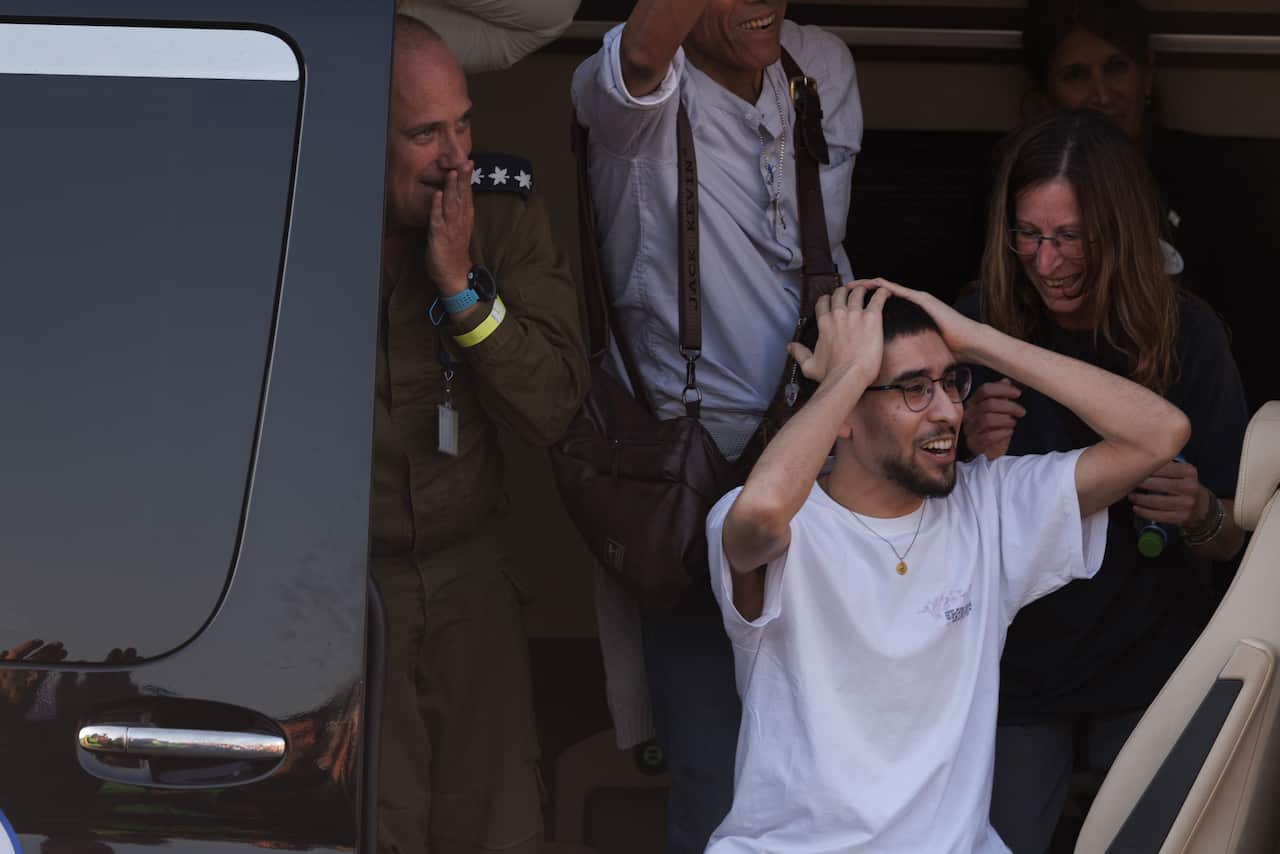
Under the deal, the hostages were set free in exchange for the release of about 1,700 Palestinians detained without charge under "administrative detention" policies by the Israeli army in Gaza during the war, and around 250 Palestinian prisoners.
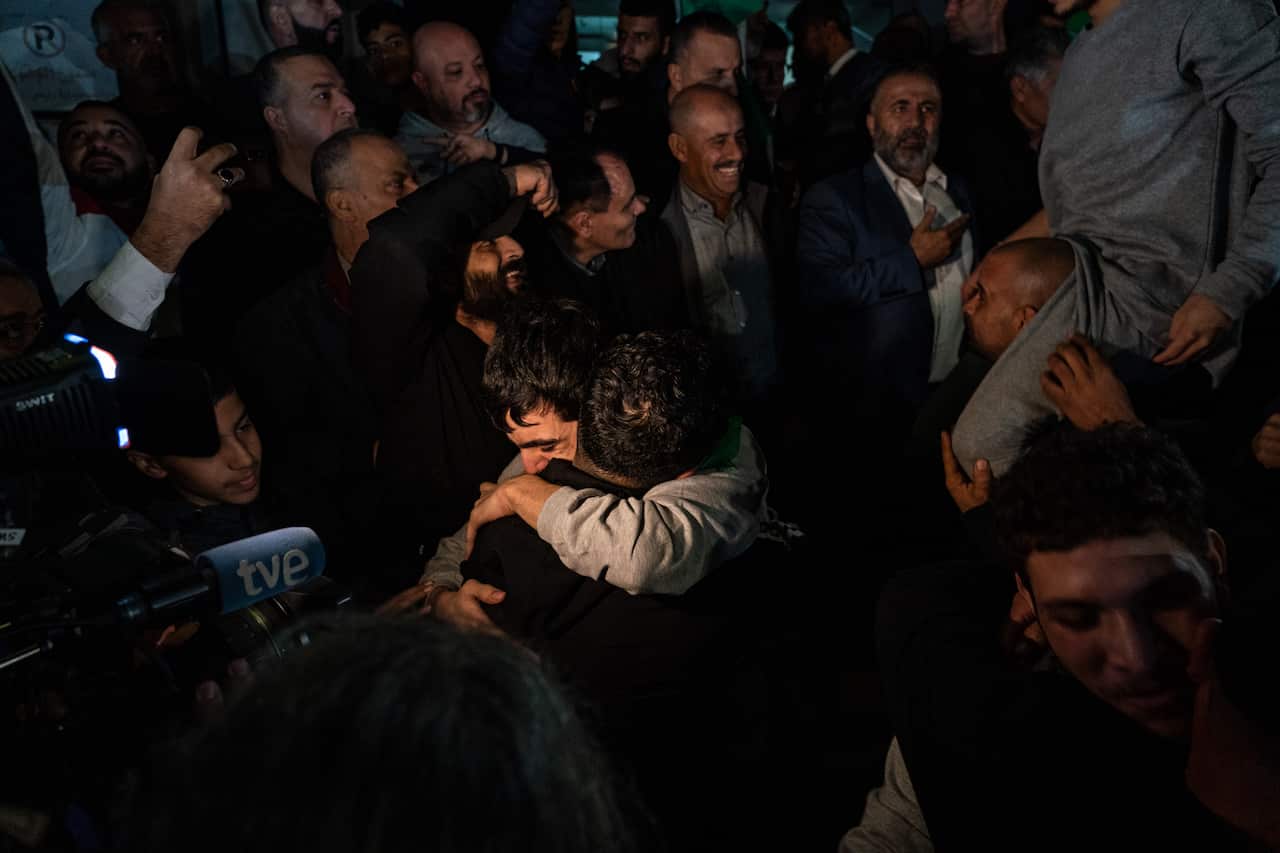
It followed a ceasefire earlier in the year, which also saw similar exchanges. That truce only lasted until it was broken by a wave of Israeli airstrikes in March, with Prime Minister Benjamin Netanyahu accusing Hamas of refusing to release Israeli hostages and rejecting proposals to extend the ceasefire.
Meanwhie, Hamas accused Israel of going after "defenceless civilians" and overturning the ceasefire agreement.
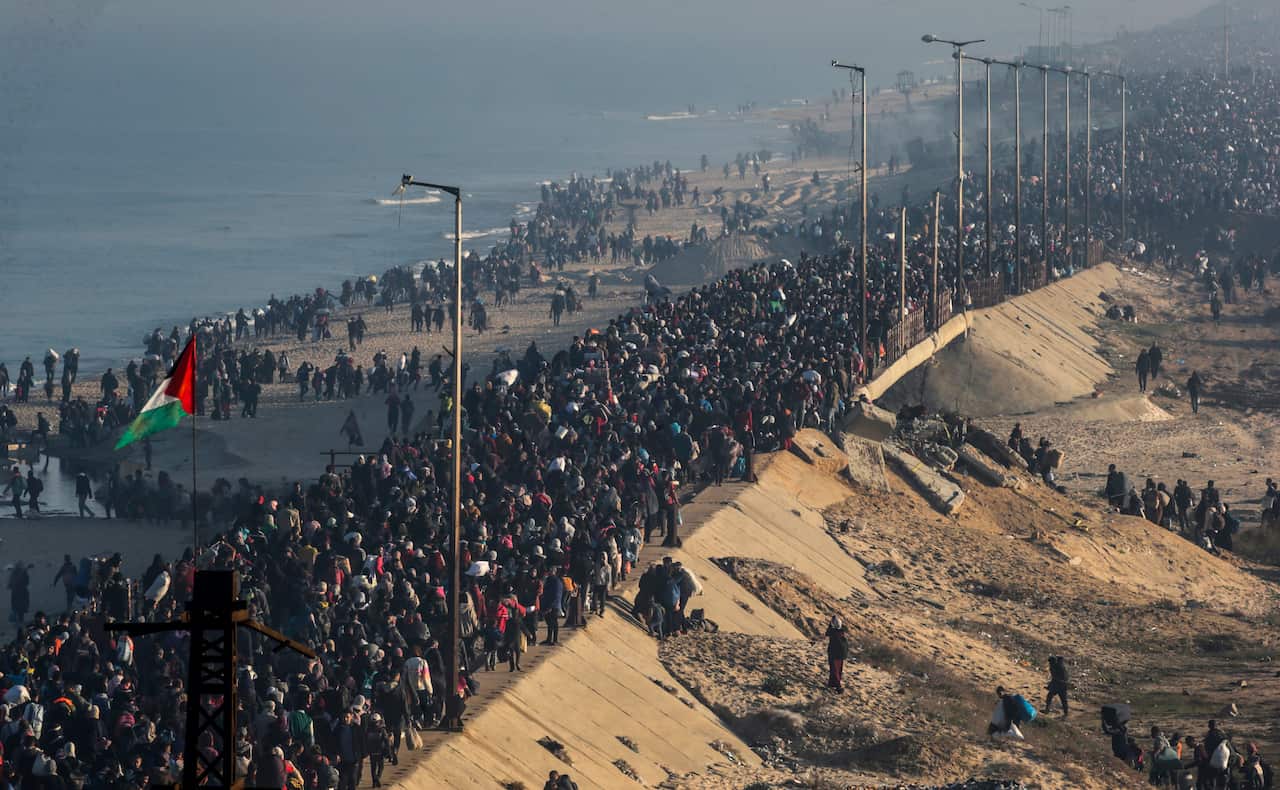
In both periods, the exchanges were staggered and often delayed by disagreements that sparked significant public anxiety, as people on both sides waited to see whether their loved ones would be released.
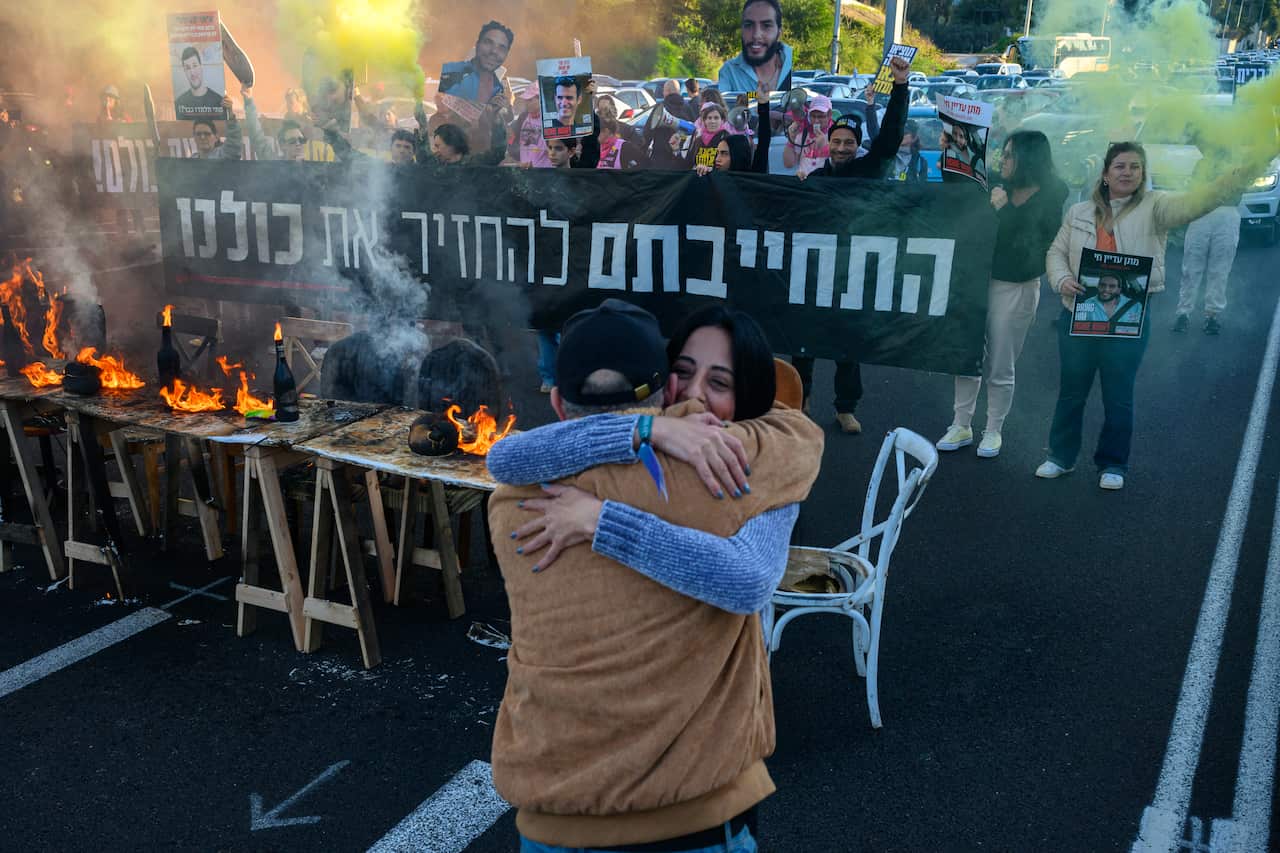
As part of the October deal, Hamas also agreed to hand over the remains of Israeli hostages who died while in captivity.
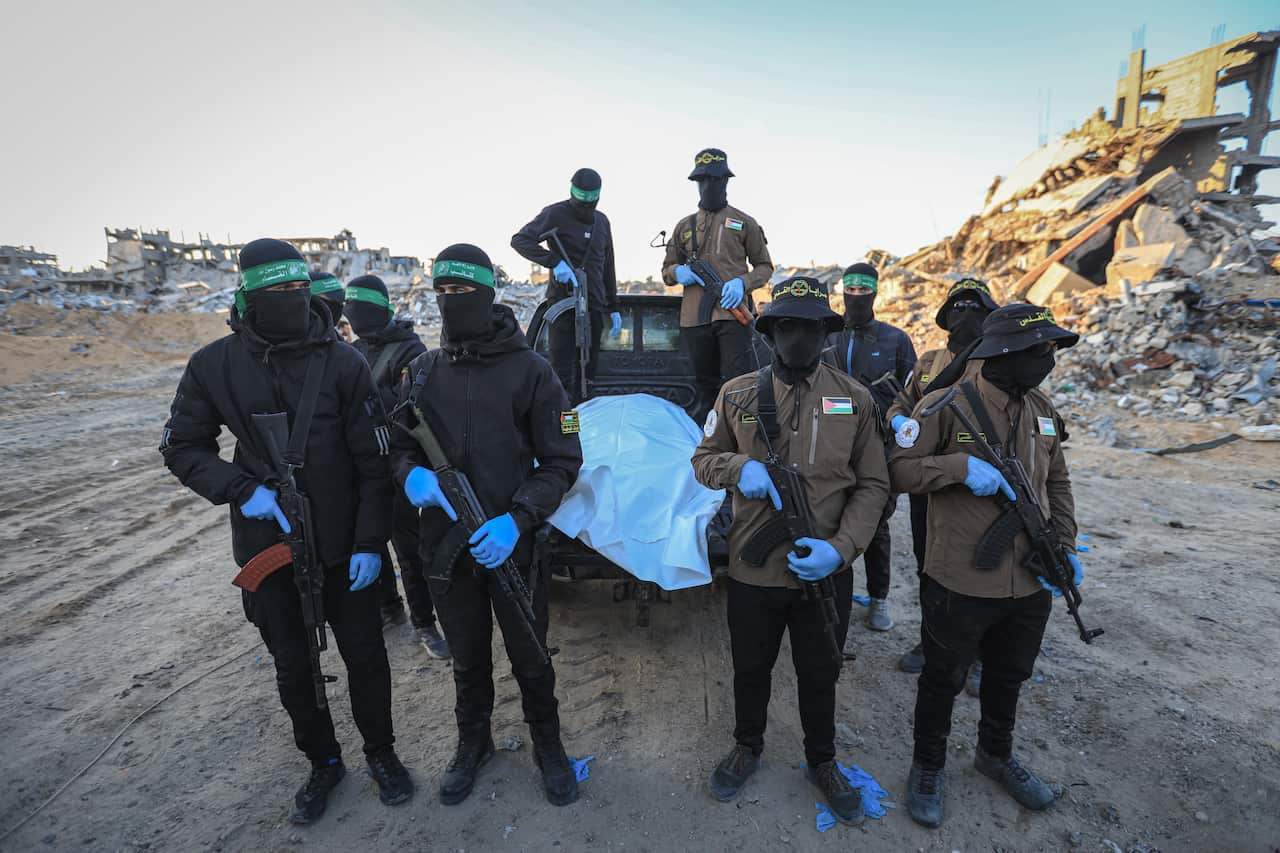
As of late December, it had handed over the remains of all but one, with the group citing logistical difficulties in the devastated territory.
Famine in Gaza
Amid an aid blockade by Israel, famine was declared for the first time in Gaza, as determined by the United Nations-backed Integrated Food Security Phase Classification (IPC) Famine Review Committee in August. It was the first time the IPC had recorded famine outside of Africa.
The report detailed that famine in Gaza City and surrounds was "entirely man-made, it can be halted and reversed", with the committee calling for swift action. Israel dismissed the findings, with Netanyahu saying Israel "does not have a policy of starvation".
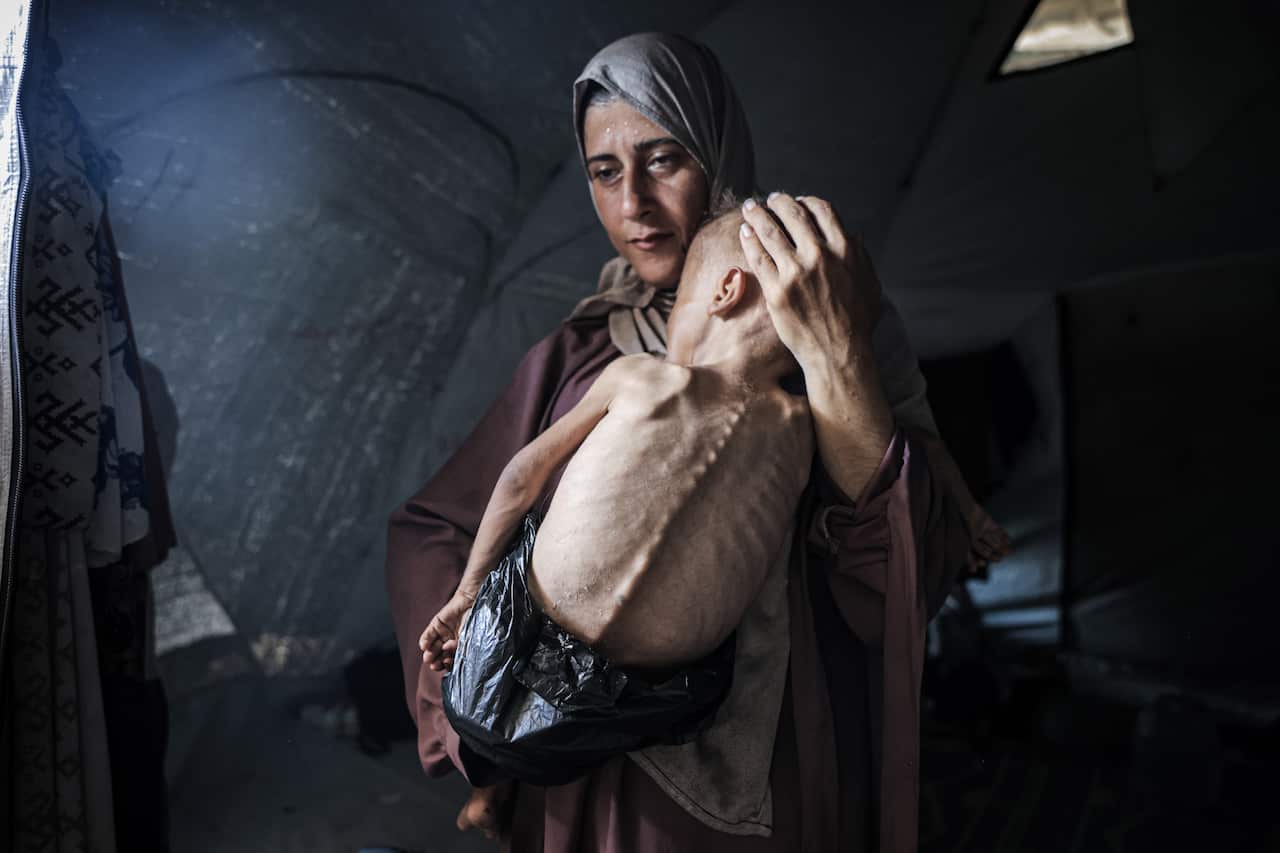
An image of toddler Muhammad Zakariya Ayyoub al-Matouq, a child in Gaza, went viral and was published widely by media outlets as a depiction of reports of starvation in the enclave.
In the photo, published by Turkish news agency Anadolu, the frail toddler has a starkly pronounced spine and shoulder blades, wears a plastic bag nappy, and is being held by his mother.
A British journalist and antisemitism researcher said the image was "misleading" and that media outlets did not acknowledge the 18-month-old's pre-existing medical conditions. The New York Times later issued a clarification about its publication after "new information" surfaced.
Oxfam Australia told SBS News at the time that children with pre-existing conditions may already experience immune deficiencies, so are often most affected by a lack of food.
Marko Kerac, who helped draw up the World Health Organization's treatment guidelines for severe acute malnutrition, also said it was typical in the early stages of a hunger crisis that those most impacted suffered from pre-existing illnesses.
In December, the IPC said that it no longer classified any areas in Gaza as experiencing famine, following the October ceasefire and Israel partly easing restrictions on aid deliveries.
However, it said the situation across the Gaza Strip was still critical, and that 1.6 million people are expected to face acute food insecurity over the next four months. The UN says aid is still restricted, and has called for unimpeded humanitarian access across Gaza.
Erin Patterson found guilty
In July, after an 11-week trial, Erin Patterson was found guilty on three counts of murder and one count of attempted murder in a case that captivated both Australia and the world.
In 2023, Patterson deliberately poisoned her former in-laws, Don and Gail Patterson, Gail's sister Heather Wilkinson and her husband Ian Wilkinson by serving them a beef Wellington meal containing death cap mushrooms at her Gippsland home.
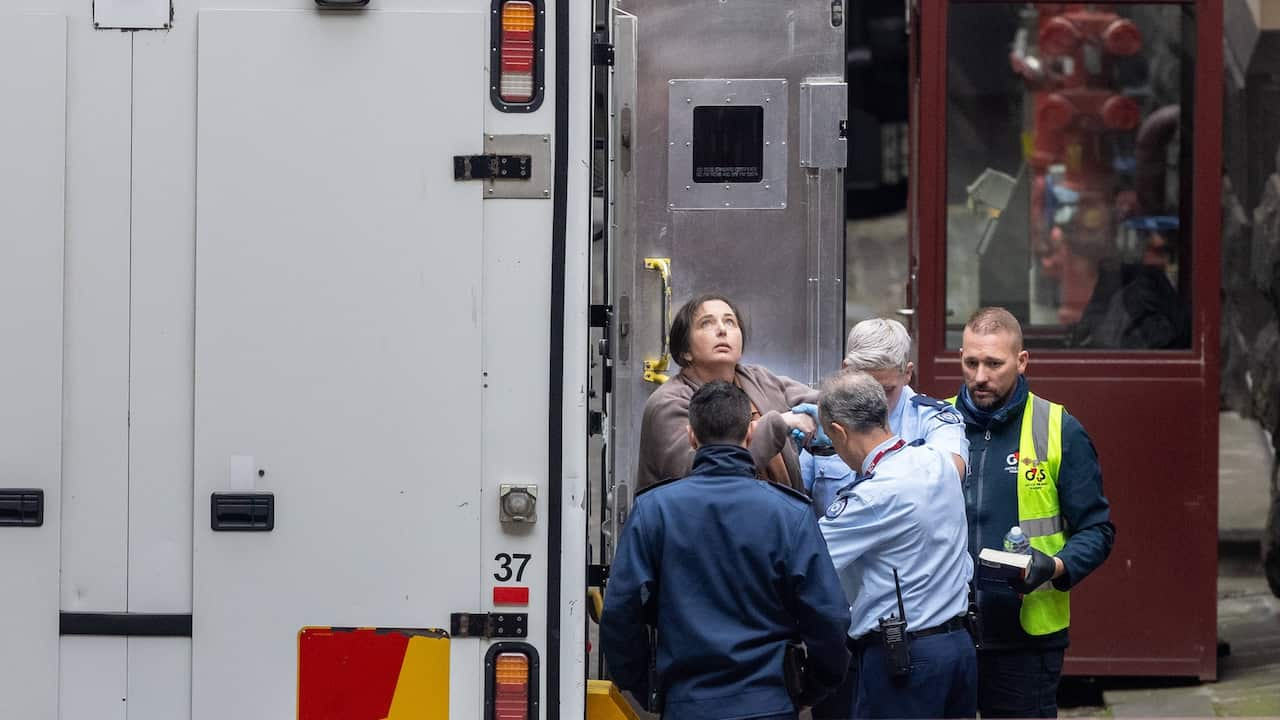
Don and Gail Patterson and Heather Wilkinson died in hospital days after the meal, while Ian Wilkinson spent two months in hospital recovering.
In August, Patterson was sentenced to life in prison with a non-parole period of 33 years.
The Zelenskyy-Trump clash
A March press conference between Trump and Ukrainian President Volodymyr Zelenskyy started in a seemingly amicable way, but soon turned nasty, with Trump and US vice president JD Vance suggesting Zelenskyy's approach had hindered peace efforts.
Relations between the two have since improved, and in the last week of 2025, the two leaders met again in Florida to discuss Ukraine's 20-point peace proposal.
After the meeting, Trump said he and Zelenskyy were "getting a lot closer, maybe very close" to an agreement to end the war in Ukraine.
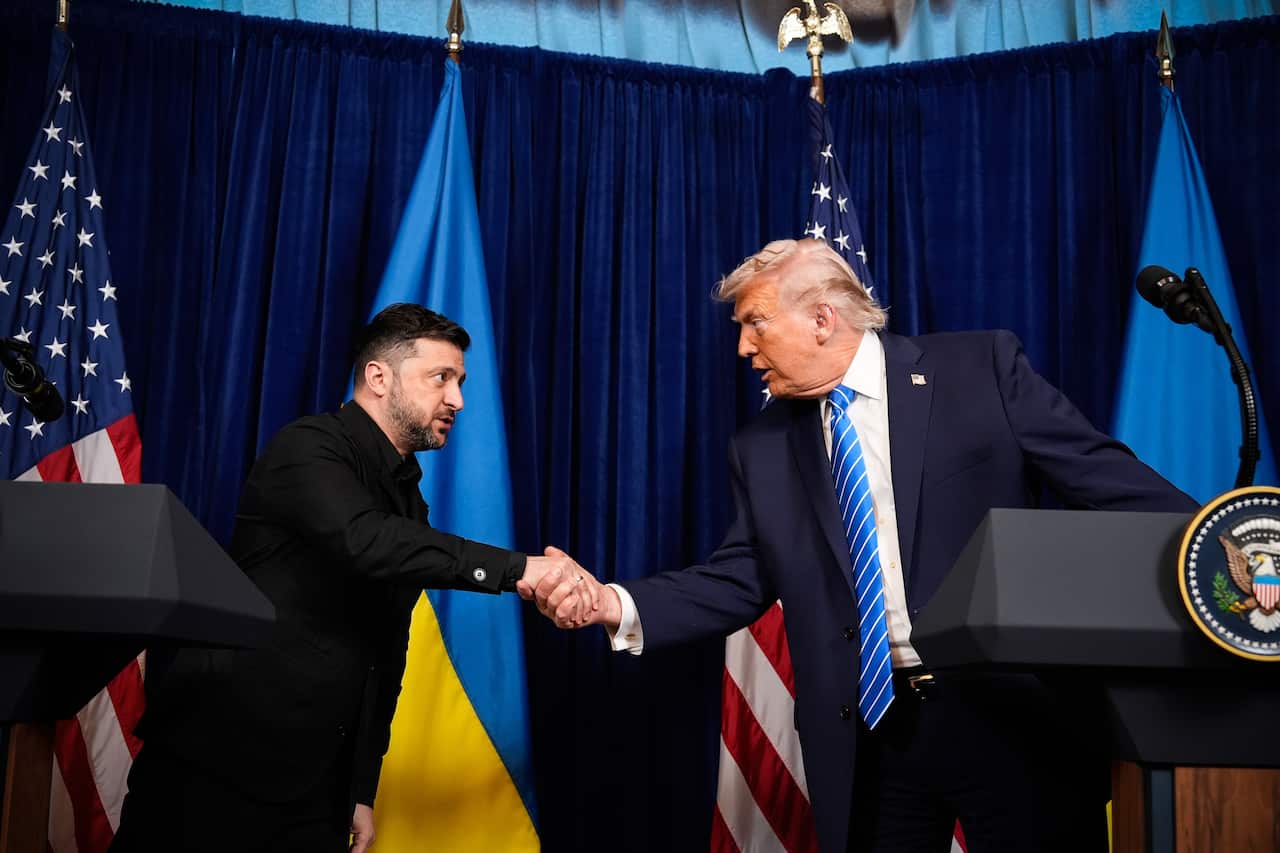
But both leaders acknowledged one or two "thorny issues" remain unresolved.
The 20-point plan addresses issues around security guarantees, territory, the Zaporizhzhia nuclear power plant and its relation with the European Union and NATO.
Ukraine insisted on pausing the war on the current battle lines, but Russia wanted to claim all of Donbas.
Assassination of Charlie Kirk
In September, US right-wing commentator and activist Charlie Kirk was shot dead at an event at a university in the state of Utah.
The alleged shooter, Tyler Robinson, was arrested a short time later. In December, the 22-year-old man made his first in-person court appearance.
Kirk, founder of conservative group Turning Point USA, had been a long-time keen supporter of Trump, who attended Kirk's memorial service and called him a "martyr for American freedom".
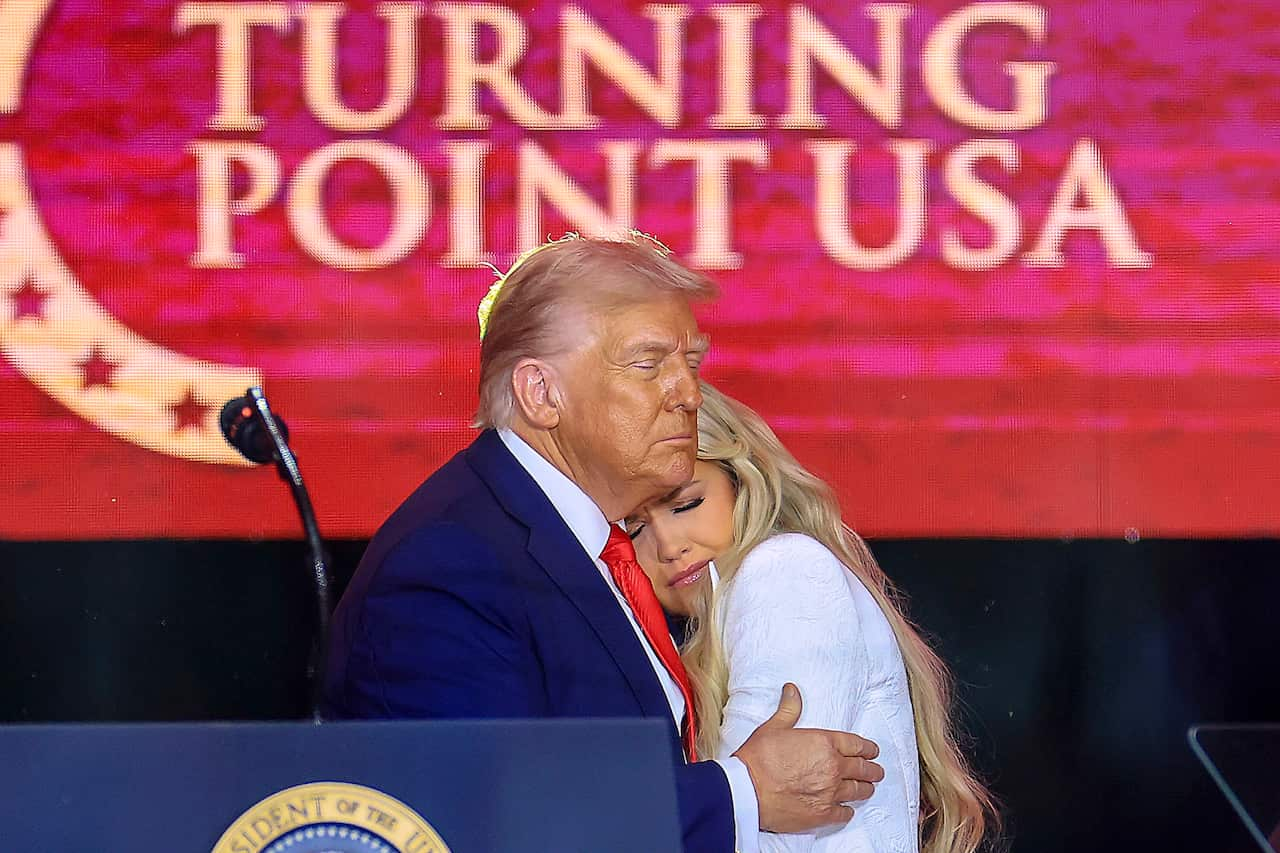
Kirk's widow Erika said she forgave the alleged shooter during her husband's memorial service.
Nepal's gen Z uprising
In early September, Nepal's long-serving prime minister resigned after a wave of protests — triggered by a social media ban but fuelled by long-burning frustration with corruption — rocked the Himalayan nation.
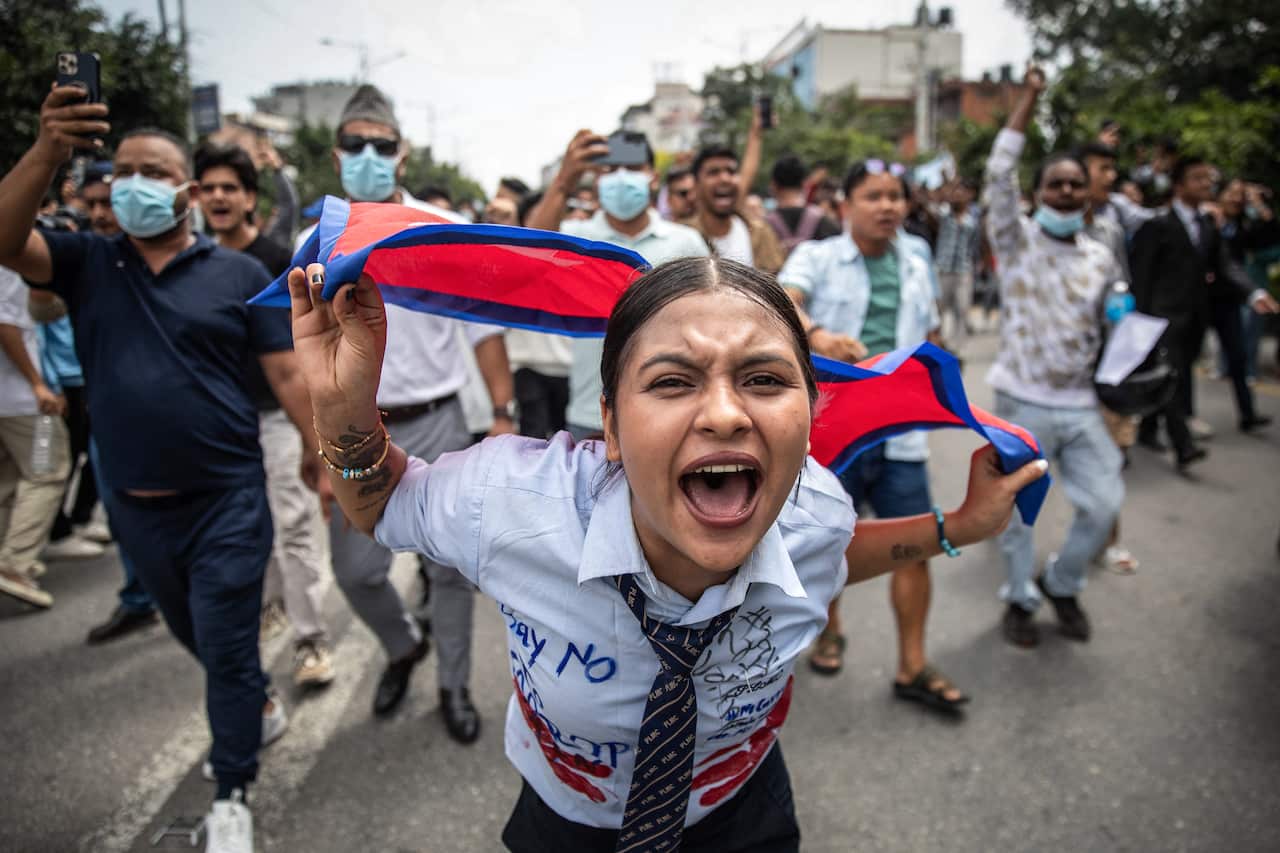
The protests left at least 72 people dead and hundreds injured — although some younger Nepalis said the gen Z protesters who sparked the demonstrations shouldn't be blamed for the violence that ultimately transpired.
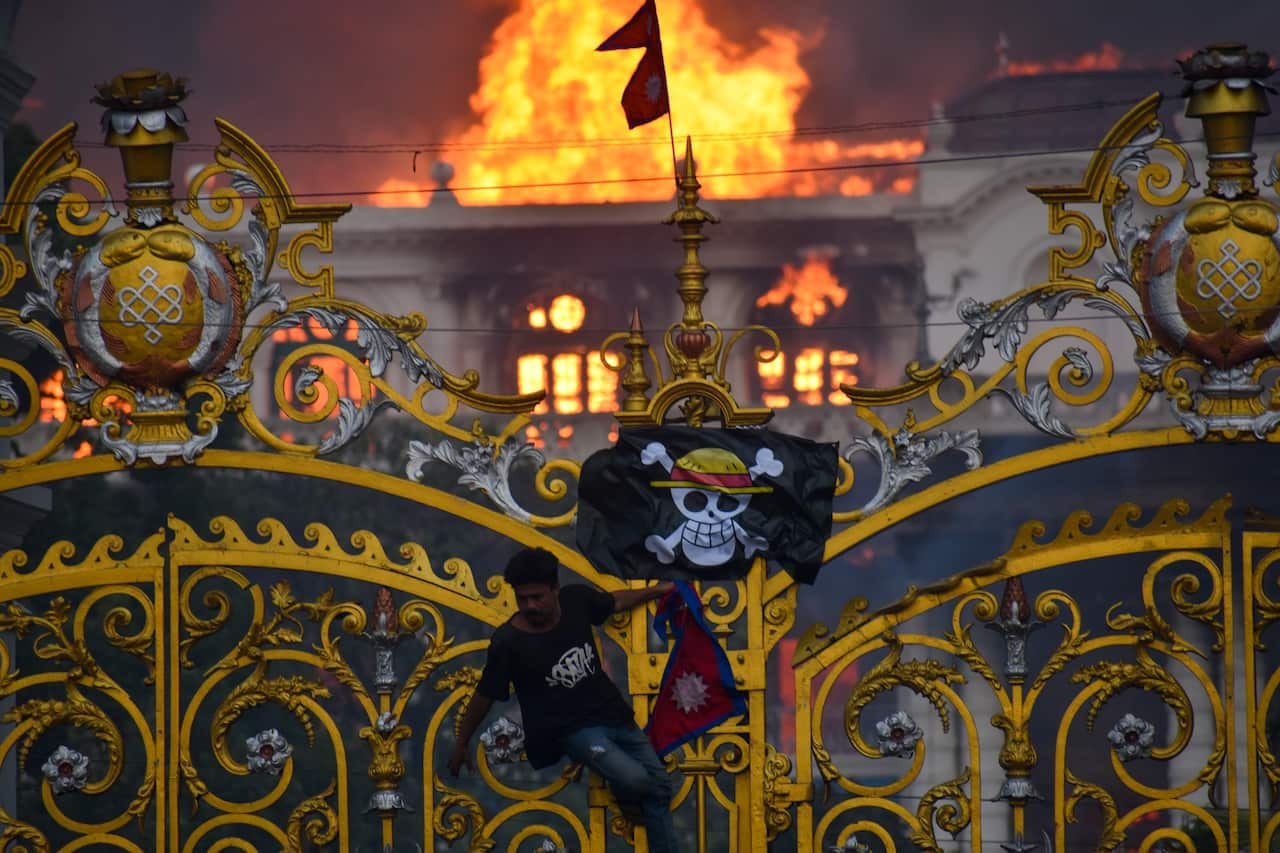
General elections are expected to be held on 5 March 2026.
A post-Assad Syria
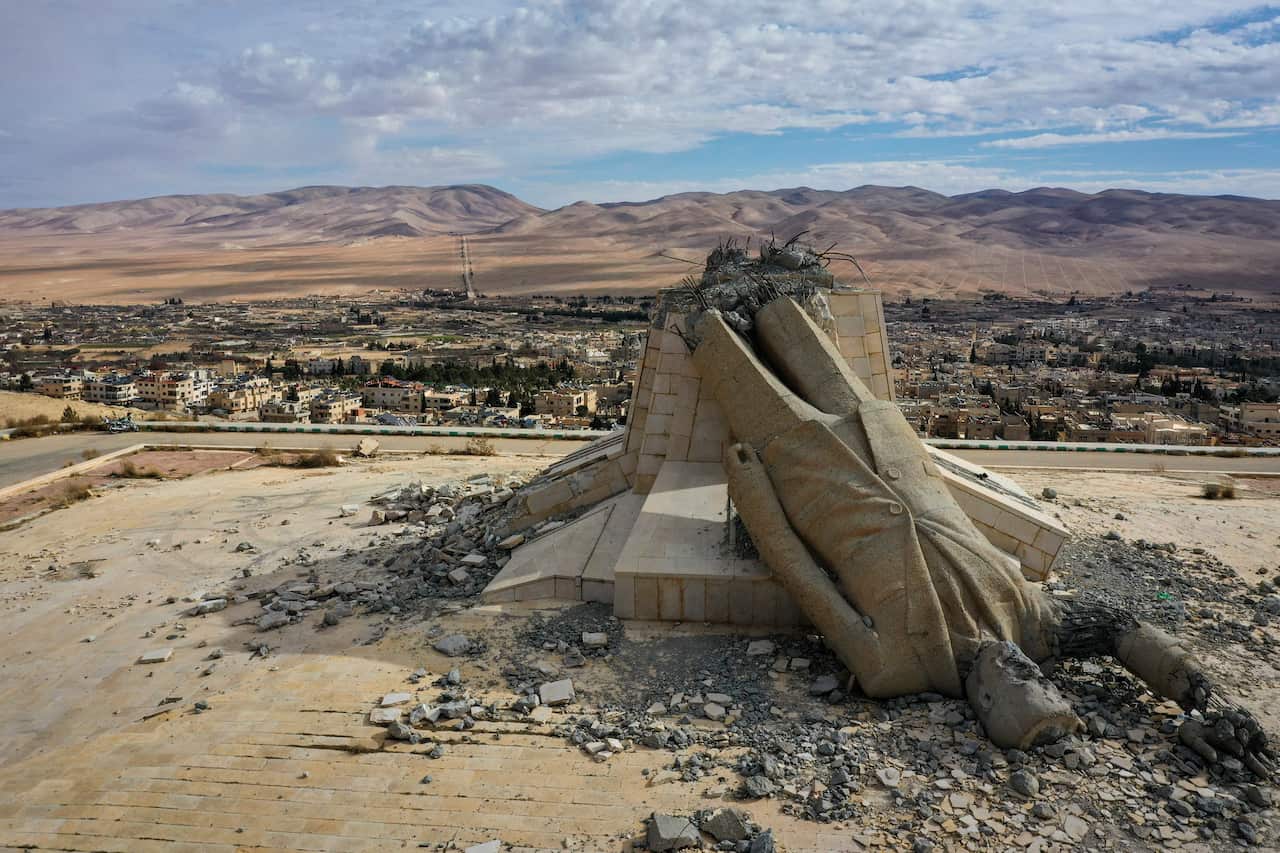
In late 2024, opposition forces launched a major offensive that led to the fall of Syria's Assad regime, which had governed Syria since 1971.
While those events are outside the remit of this compilation, it was not until January 2025 that photos emerged of a statue of former president Hafez al-Assad that had been toppled on top of a mountain in Dayr Atiyah.
After meeting Trump in the Saudi capital Riyadh in May, Syria's new president, Ahmed al-Sharaa, made a historic visit to the White House in early November.
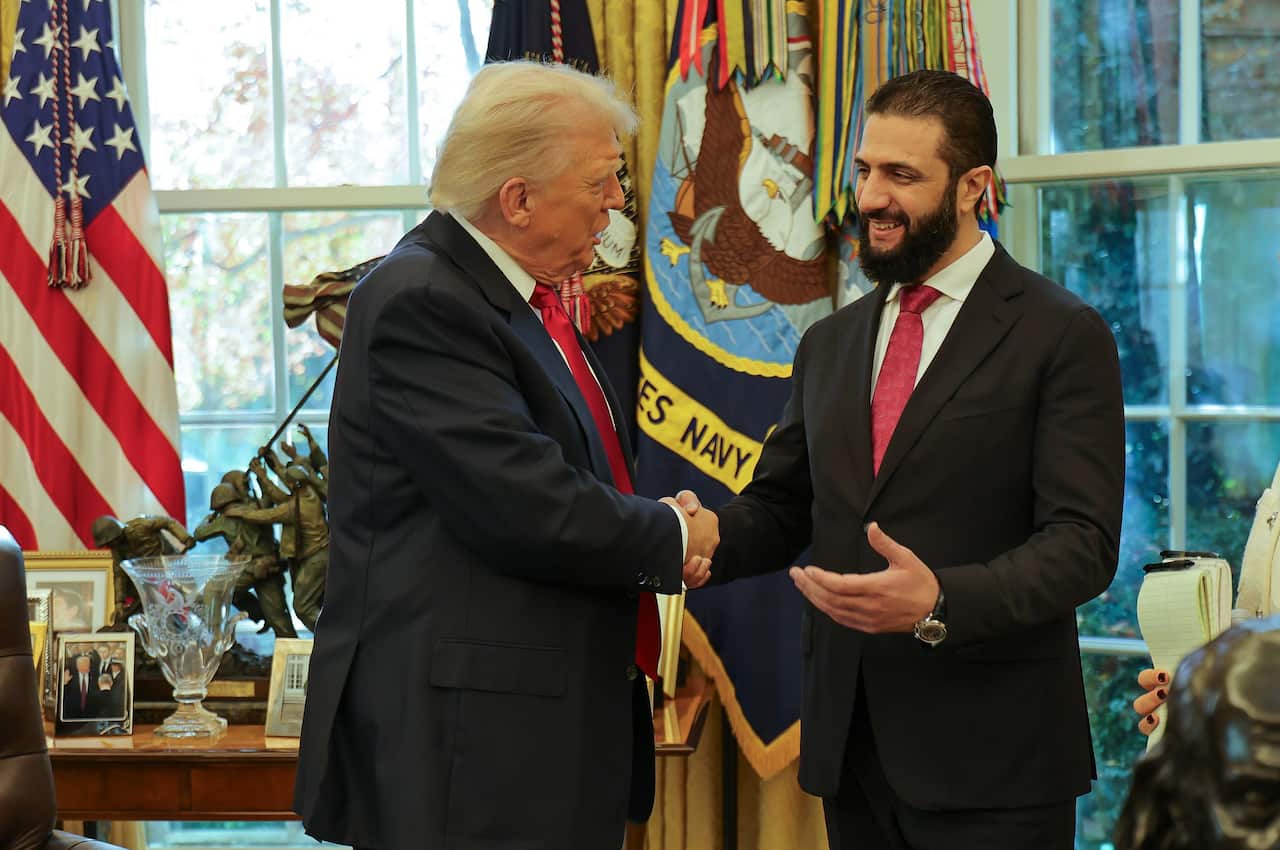
During his visit, the former al-Qaeda fighter — who spent years in US-run prisons in Iraq and had a US$10 million ($15 million) bounty on his head (lifted in late 2024) — was seen shooting hoops with US military commanders.
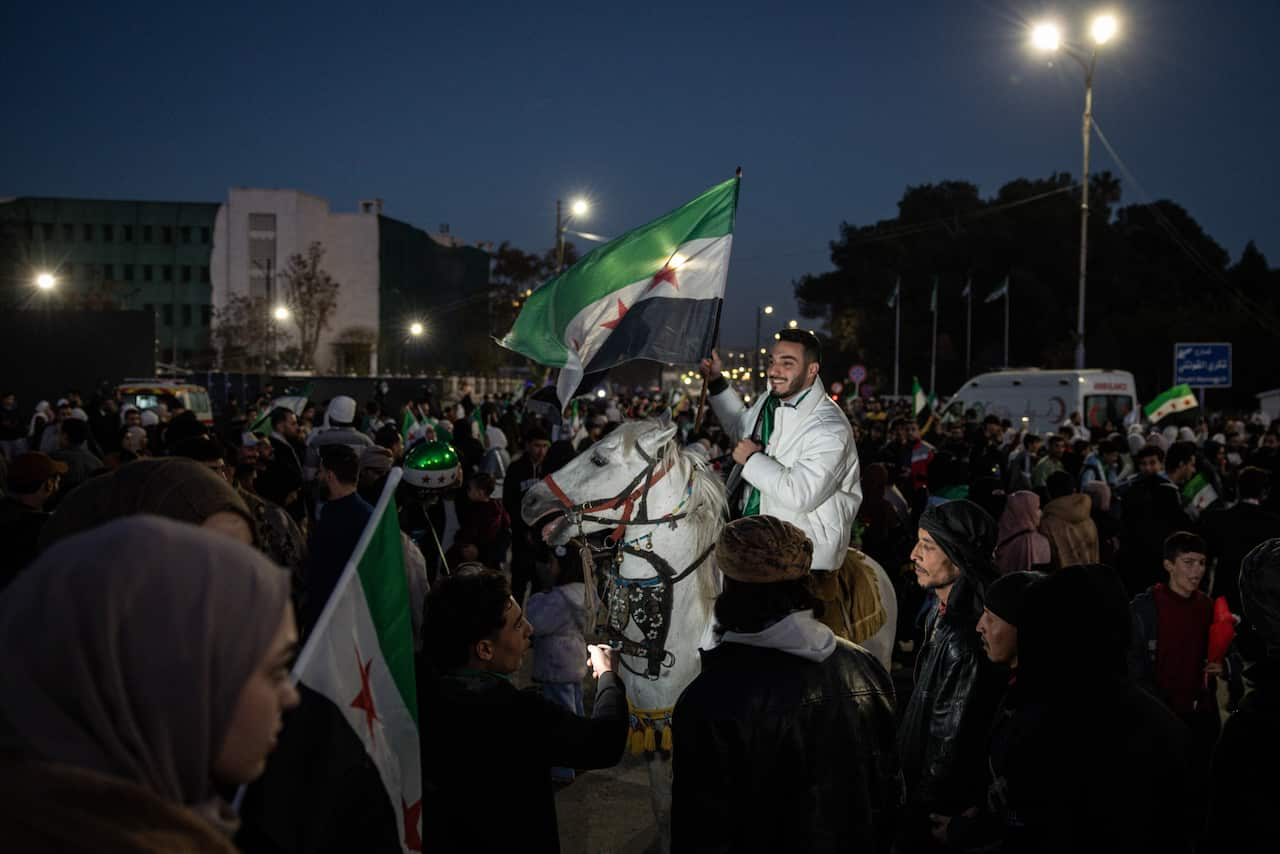
In early December, many Syrians turned out to celebrate the first anniversary of the fall of the Assad regime.
For the latest from SBS News, download our app and subscribe to our newsletter.







