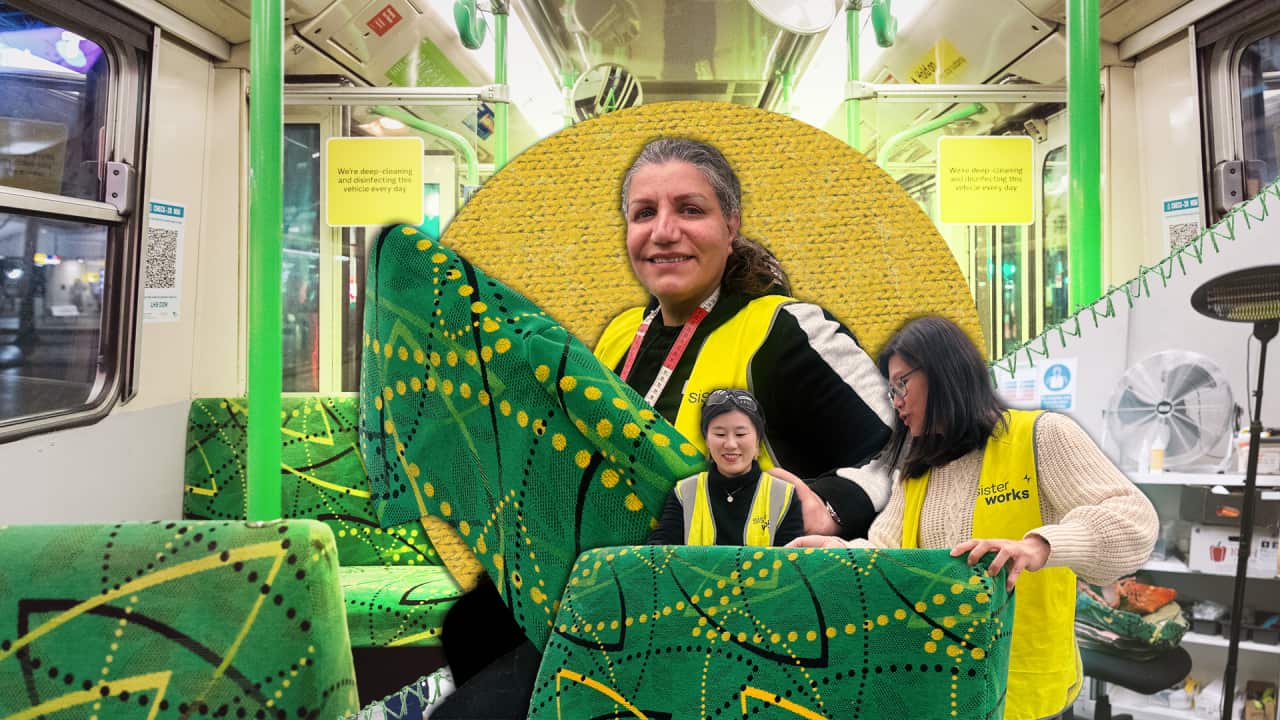
When Farah Shirkool steps onto a Melbourne tram, she doesn't just see a place to sit. Her eyes are drawn to the seats — familiar, personal, and hard-earned.
"All the time, I'm thinking, 'Oh, I made that one'," she told SBS News.
For most of the three million people who ride Melbourne's trams each week, the seats are little more than a brief moment of rest during a daily commute.
But for Shirkool, they symbolise something far greater: financial independence, confidence, and a sense of belonging in a city she now calls home.
News that makes sense
Your trusted source for staying up-to-date with the world around you. Get free daily news updates and analysis, straight to your inbox.
Shirkool arrived in Australia in 2012 as a single mother fleeing Iran amid political turbulence, violence and economic hardship — circumstances that left her deeply fearful for her future.
"I moved to Australia for a better life for my daughter, and because Australia is a very safe country," she said.
With a young daughter, limited English and no local support network, Shirkool's priorities were simple and urgent: survival and independence.
"Money is very important for life; if you have no money, no life," she said.
"The first time I came here, I was very scared," she said, explaining she spent long stretches at home after first arriving in Australia, isolated and unsure of how to start again.
Her turning point came in 2018, when a social worker connected her with SisterWorks — a Melbourne-based social enterprise that supports refugee, asylum seeker, and migrant women to achieve economic independence through employment and entrepreneurship.
A place to belong
Nervous but curious, Shirkool attended her first session and quickly found a sense of belonging.
"For the first time, I made friends ... I was very happy to find work here because I couldn't speak English and SisterWorks really supported me," she said.
"Maybe outside, I wouldn't have found a job."
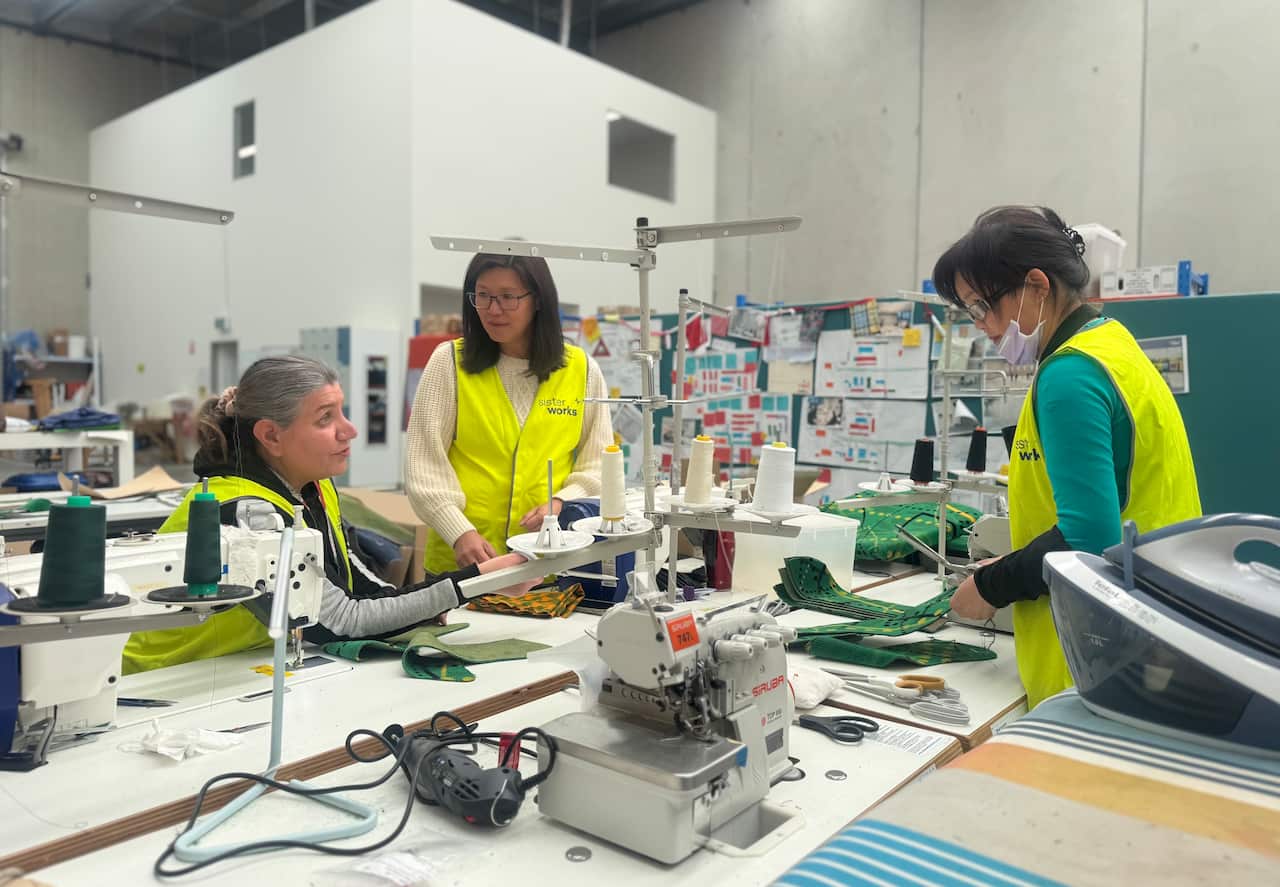
After completing English, computer and social skills training, Shirkool joined the organisation's manufacturing hub. There, she rediscovered a skill — sewing — something she first learned as a teenager on the streets of Tehran.
"I like sewing. I started in Iran as a 19-year-old making uniforms for doctors, nurses, and schools," she said.
She started producing items such as bags, candles, soaps and towels, sold through SisterWorks' social enterprise model.
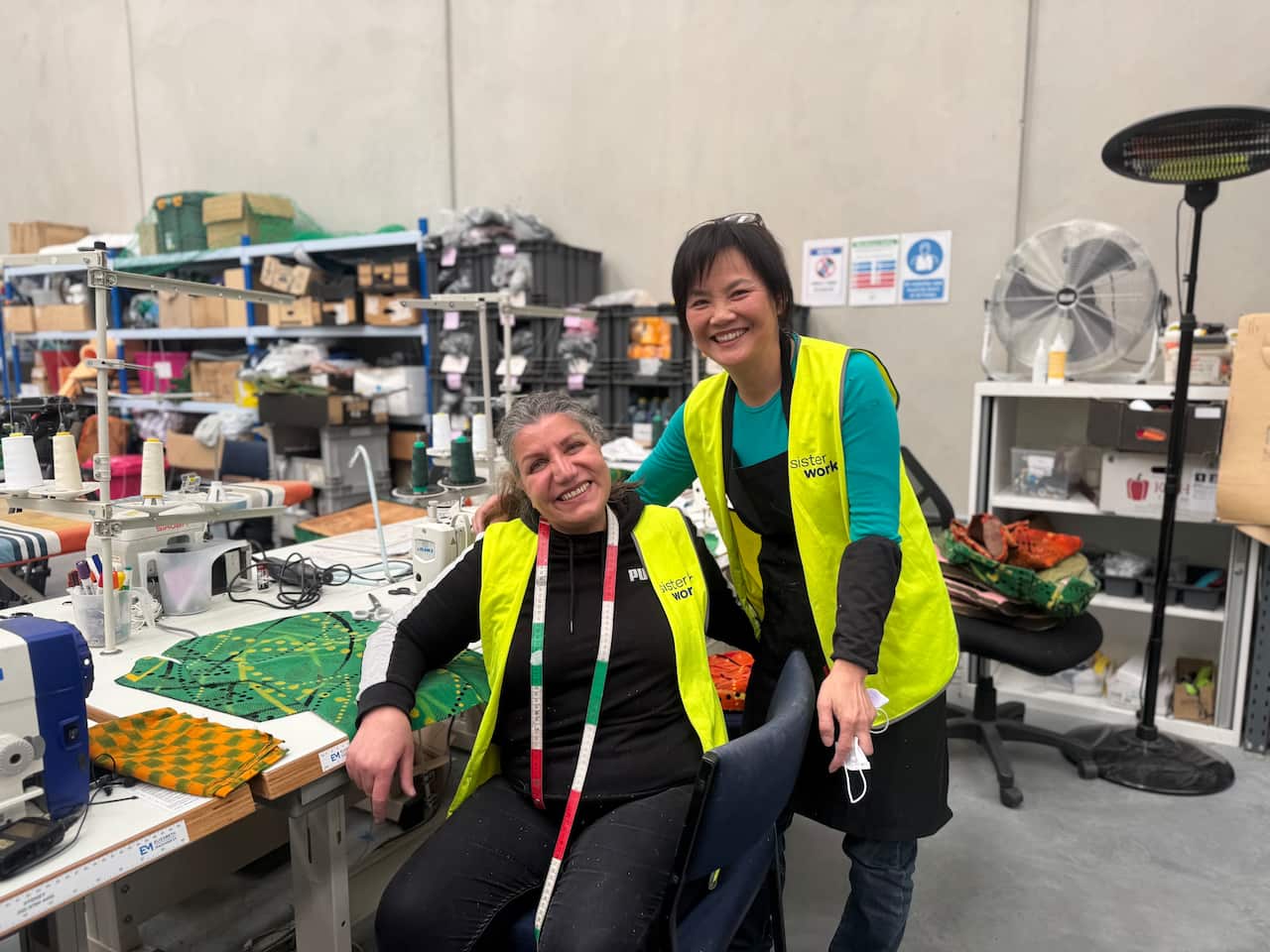
Years later, Shirkool now works as a sewing instructor alongside 15 other women, affectionately known as "sisters".
"SisterWorks is like family for me, it's good for the heart, you know, the ladies help me and I help other sisters — it feels very good," she said.
Bridging the employment gap
SisterWorks CEO Ifrin Fittock said Shirkool's journey reflects the structural barriers many migrant women face when trying to enter the workforce.
"When you arrive in a new country and you don't know anyone, it's hard to break through," she told SBS News
"Migrant, refugee and asylum seeker women take 18 months to land in employment as opposed to their male counterparts of six months ... some of these women fall through the cracks of the mainstream support system here in Australia, and it's a shame because there's quite a lot of them."
Over 12 years, SisterWorks says it has supported more than 3,500 women from 105 nationalities, offering tailored assistance based on each woman's skills, background and aspirations.
"Women really are the big fabric of the CALD [Culturally and Linguistically Diverse] community here in Australia, and they are an untapped workforce," Fittock said.
"They're willing to put their best efforts and want to go into employment, want to grow themselves, and be like you and I, the taxpayers of this country, save some money, buy a house, buy cars and send the kids to school — it's almost their dream to be able to do so."
She said SisterWorks plays a crucial role in bridging the gap between motivated women and the network of employers they rely on.
"We love doing what we're doing because we are trying to narrow the gap between what they [migrant women] have, what they have done, what employers need, and that's how this system works," she said.
'Not just a seat'
A community partnership with Yarra Trams — which saw a specially wrapped tram carry SisterWorks' mission statement across the city — eventually led to a social procurement partnership between the two organisations.

"After several discussions with Yarra Trams, we landed on the tram seat refurbishment project, understanding that a lot of our sisters are crafty," Fittock said.
"They are really meticulous in their work, and that's precisely the skills that are needed to maintain, reupholster and refurbish the Yarra Trams seats."
What started with just a handful of women has since grown significantly.
Today, SisterWorks teams refurbish nearly 80 per cent of Melbourne's tram seats.
On average, the women refurbish around 70 seats each month, generating more than 1,500 hours of paid employment and diverting over 1.2 tonnes of waste from landfill in the last financial year.
For Yarra Trams' social procurement manager, Francesca Maclean, the partnership demonstrates how public institutions can create impact beyond their core services.
"It's not just a seat, it's actually an economy and livelihood that's created," she told SBS News.
"It's our way of demonstrating we can use the taxpayer funds to run the tram network, to deliver value above and beyond dollars."
Turning skills into infrastructure
Maclean said the rail industry has historically been inaccessible to women, particularly migrant and refugee women, and this collaboration helps disrupt that pattern by recognising the skills already present in Melbourne's multicultural communities.
"SisterWorks has got the entrepreneurial spirit, the women power, and together we've built their capability to meet our technical safety and quality requirements as the world's largest tram network," she said.
"We really saw the potential of not only creating employment hours for them, but also really meaningful work that they can see when they get on the tram ... it enables them to be role models within their communities."
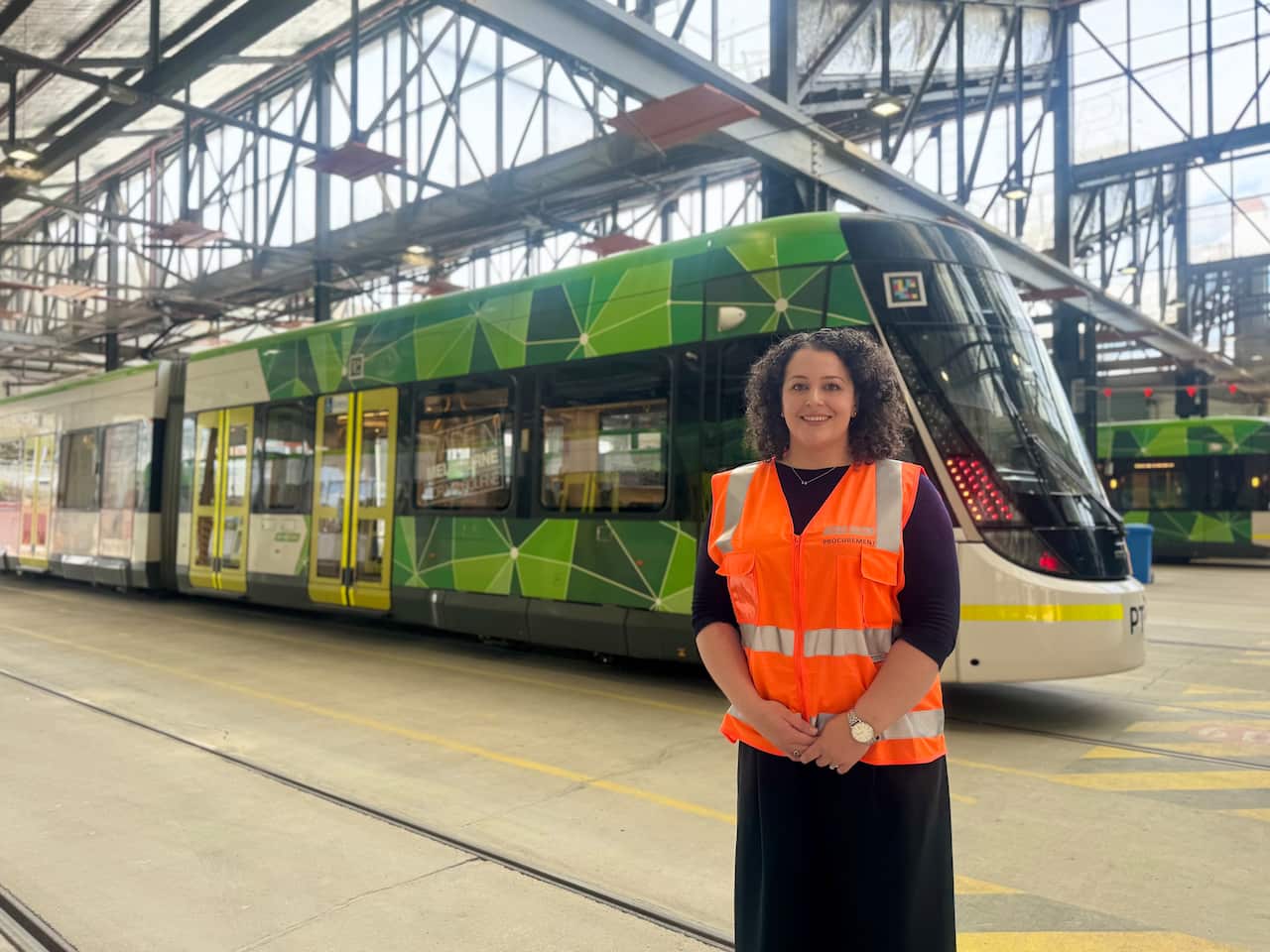
Yarra Trams runs around 35,000 services each week, carrying roughly half a million passengers daily, subjecting the seats to constant use.
"If your child spilled some food on the seat because they were getting a bit hangry mid-journey, or someone's water or coffee has spilled, this is what causes the wear and tear," Maclean said.
Care in every stitch
When a seat is damaged or stained, it is removed from circulation and sent to SisterWorks for a "multistep" repair process. Depending on the damage, the sisters replace the fabric and foam, and even comfort-test the seat until they are satisfied.
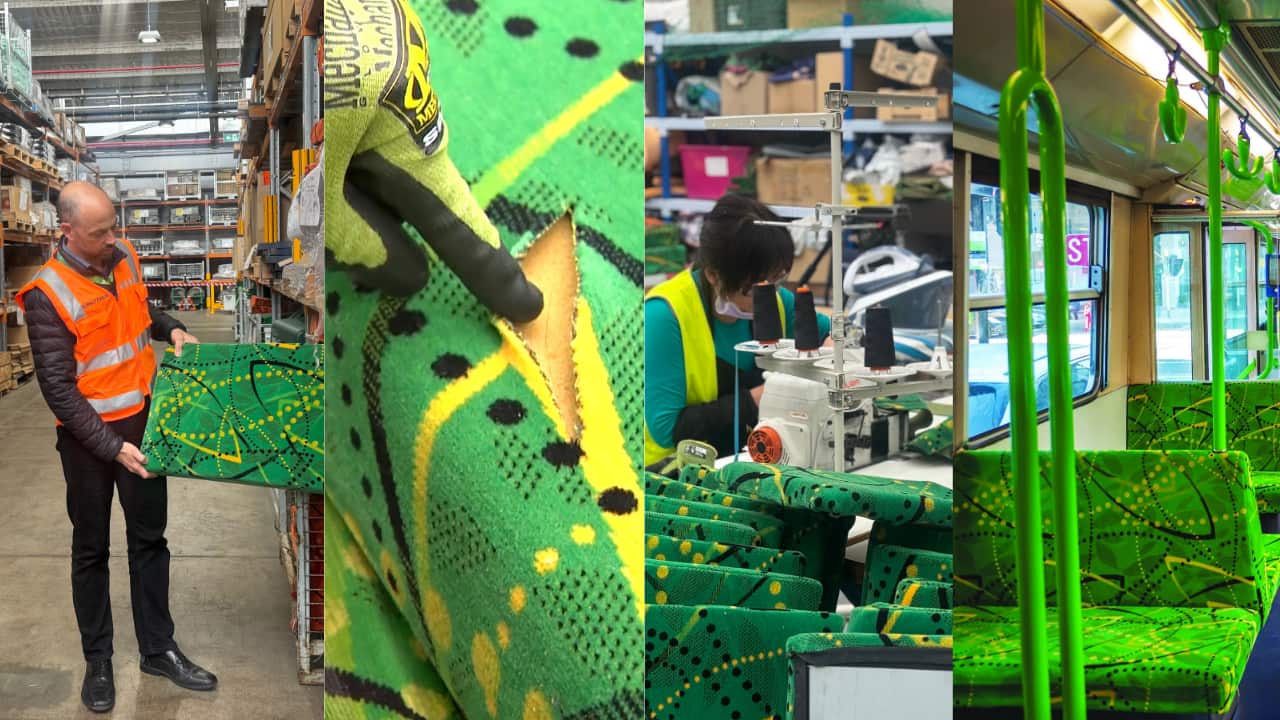
"They literally sit on it [the seats], we have been told, and have a think, 'Would I be happy to sit on this seat if I were catching a tram?', which is great, right? It shows the care," Maclean said.
Fittock said the sisters are thrilled to be part of the "iconic" project and take pride in every stitch.
"It's like whenever they're in the tram, they can see that this is actually my work, this is something that I fixed and put back into the tram," she said.
"It's also about self-agency, self-belief and confidence that they are an active participant in this country."
For Shirkool, the future feels steadier than it once did.
"I'm happy because I'm busy.
"A job is very important for a good life."
For the latest from SBS News, download our app and subscribe to our newsletter.







