
Every Monday a group of women in their sixties meet up at a hall in Melbourne's eastern suburbs. It's not for bingo or bowls, they're students of Soo Bahk Do.
Instructor Leonie Broman is a fifth dan black belt in the ancient Korean martial art, a fact she says surprises almost everyone she meets.
"Watch out for Ninja Nanna. I'm most unlike what they'd expect of a martial artist and I just keep going," she said.
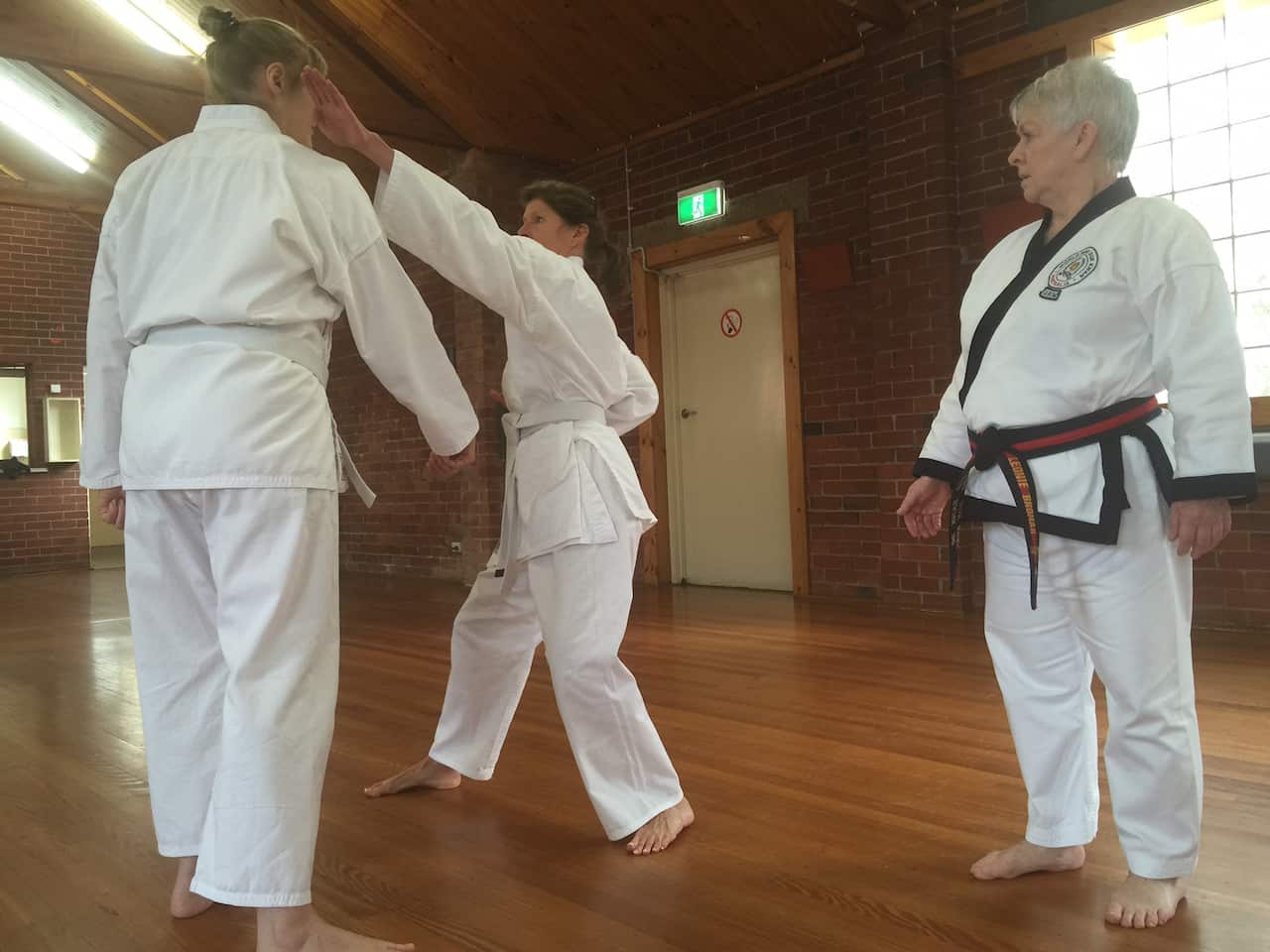
Translated to the way of the striking hand, the discipline was brought to Australia around four decades ago. It's an art that requires control over the whole body, using movements that range from fast and spontaneous to slow and graceful.
Now the art is attracting a new wave of students, of a more mature age.
"It keeps us independent and living longer. A lot of older women are by themselves so it gives them independence a few life skills self-defence," said Ms Broman.
Each master of the discipline is given a belt number from a global register, but not every student intends to take the art to that level.
Maggie Romain began Soo Bahk Do this year, and so far it's been just a bit of fun.
"I don't think I'm up to breaking the wood, but we'll see. I've got my one tip on my belt so I'll just see how I go," she said.
The emphasis on harmony between body mind and spirit resulting in a wide range of benefits.
"My blood pressure has gone down, I seem to be a bit calmer, if I get a problem I don't worry so much now I sort of think I can sort this out," said Ms Romain.
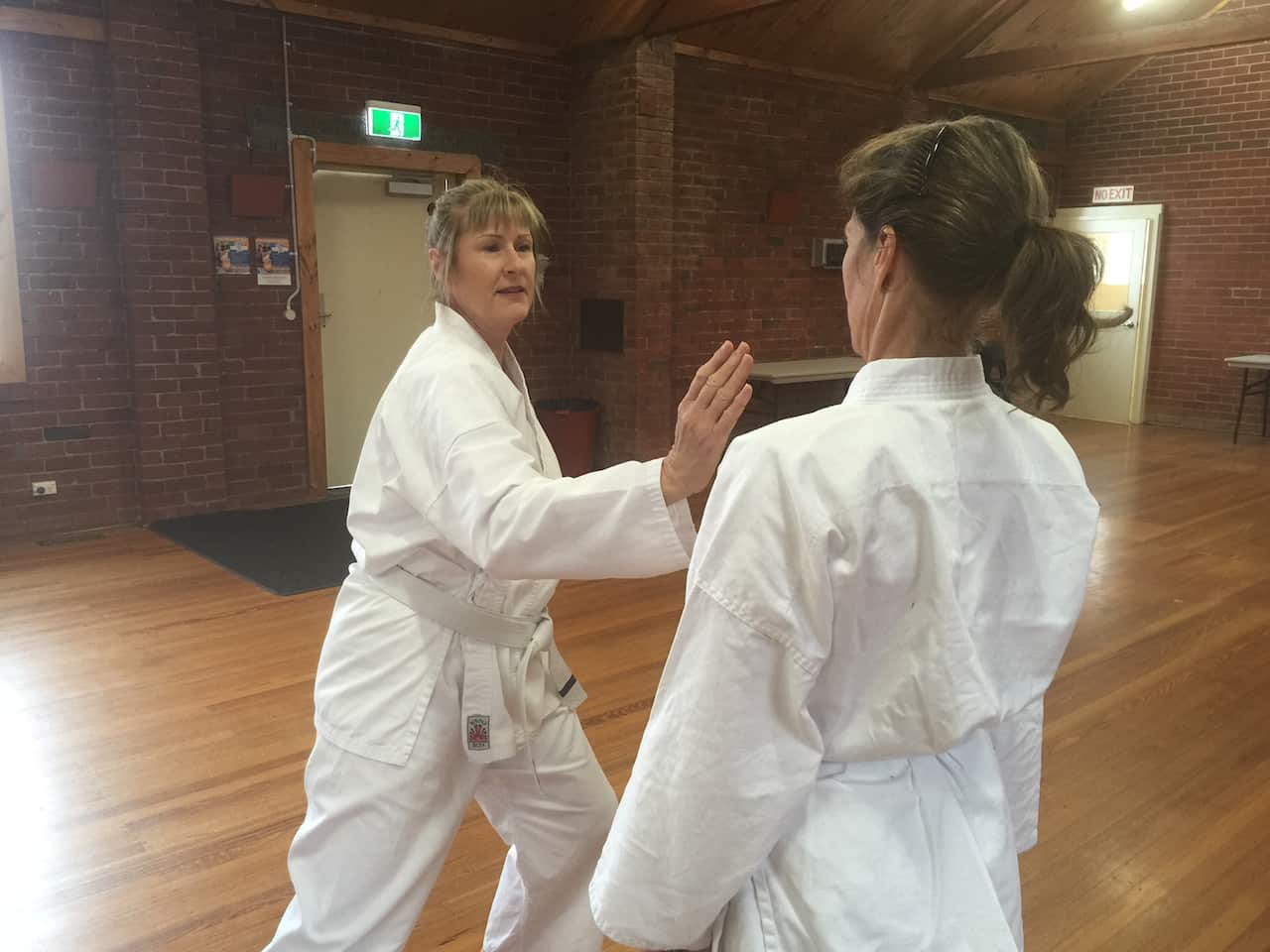
The history of Soo Bahk Do dates back at least 2000 years to ancient Korea. It's meant to be a non-competitive martial art, but it certainly has applications for self-defence.
Student Tracey Newton says she hopes her training would kick in should a situation arise.
"Yes they will hopefully if anything ever happens I will automatically know how to do things."





