This audio is voiced by AI and may occasionally mispronounce words.
Share your feedback and help us improve this feature. Read more about how we use AI at SBS here.
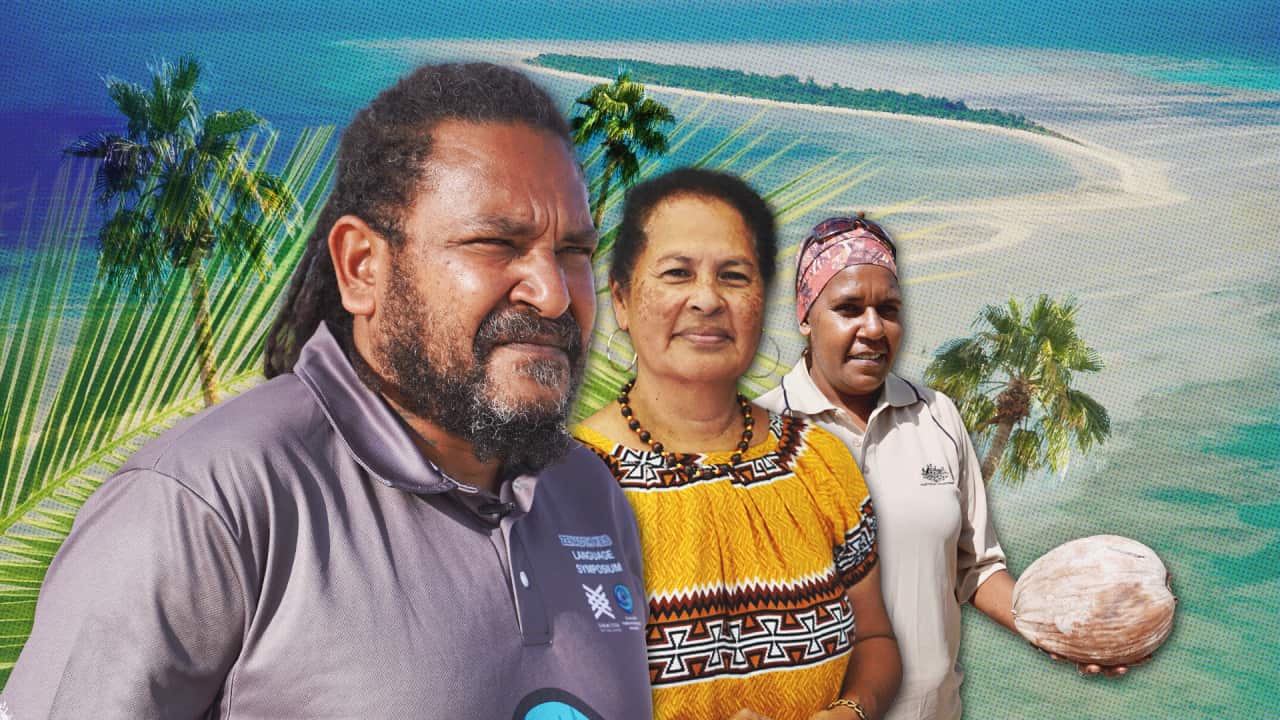
Yessie Mosby paces down the beach near his home on Masig, a teardrop-shaped island in the Torres Strait.
As he walks, he points to the crimson fruit of a wongai tree, a marooned yellow rowboat and a tree trunk full of hiding holes — hallmarks of his generations-long connection to this spot.
But not all Mosby's memories are fond.
The Kulkalgal man recalls a day in 2017, when his son recovered the washed-up remains of his great-great-grandmother while playing in the sand.
"They were picking up her bones like shells off the beach. My son grabbed her skull and placed her in a bucket," he says.
News that makes sense
Your trusted source for staying up-to-date with the world around you. Get free daily news updates and analysis, straight to your inbox.
Less than three metres above sea level, Masig's sandy shores are slowly being eaten away by rising tides. Areas once safely inland, such as burial sites, playgrounds, roads and family gardens, are receding before its residents' eyes.
The most dire scientific predictions give the Torres Strait's low-lying islands, including Masig, until 2050 before they become uninhabitable. But Mosby, a climate advocate and chair of the Masigalgal Prescribed Body Corporate (a legal entity that holds and manages native title rights on behalf of Traditional Owners), has taken to measuring the encroaching tides in real time.
"When I was young, the island was here," the 43-year-old says, using the sand as a slate to draw a line.
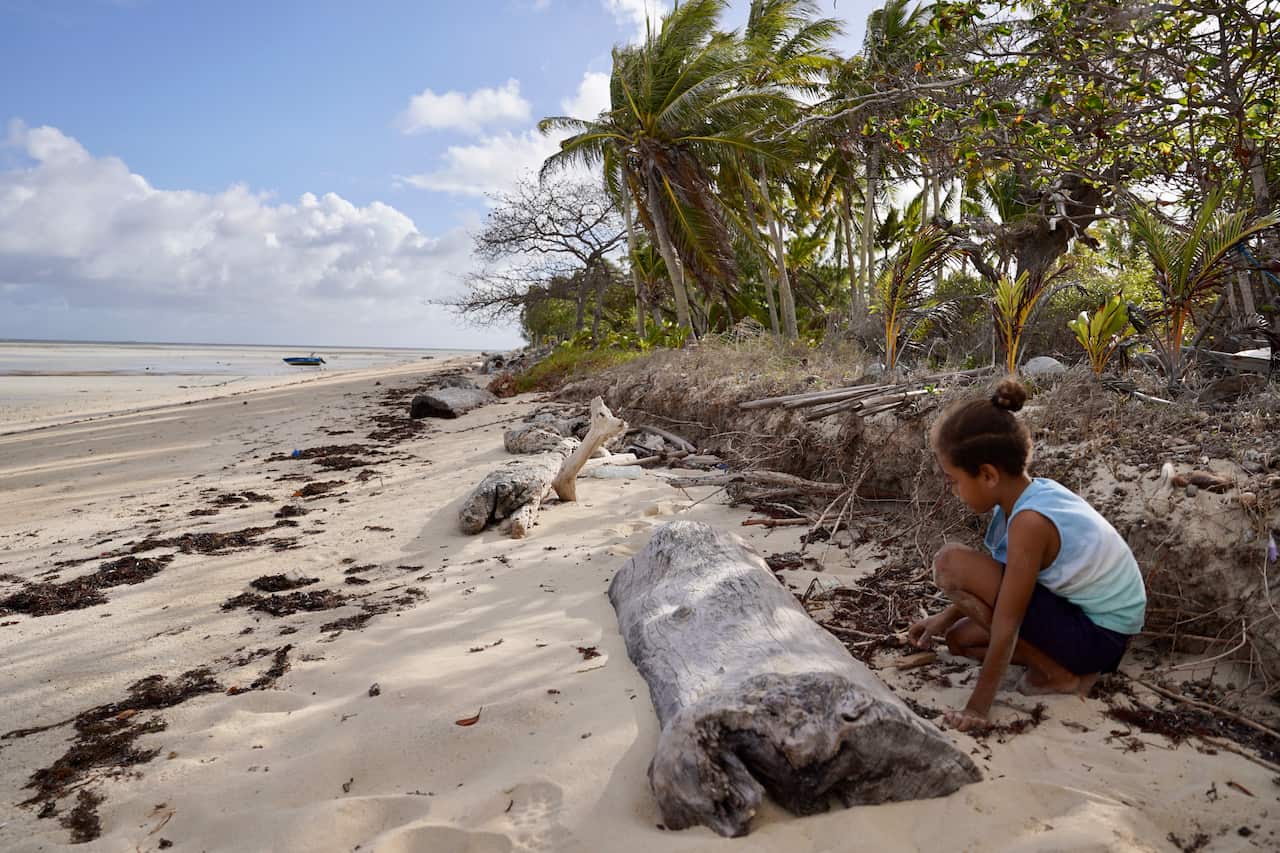
But with the birth of each of his seven children, now aged five to 15 years, that mark has edged further inland.
Finding his ancestor's remains was the final straw.
"That loved one should be resting in peace. She shouldn't be washed out into the sea," he says.
That's when it hit me. I have to try and do something to save this place.
Five years later, in 2022, Mosby was among eight Torres Strait Islanders who won a landmark UN human rights ruling against the Australian government over climate change inaction. The group have been calling for urgent action to protect Masig and its neighbouring islands.
Over the past decade, the federal and Queensland governments have invested millions in the Torres Strait Seawalls Program, installing thousands of sandbags to mitigate coastal erosion. On Masig, they wrap around the island's northwestern side to form a seawall.
But so far, external efforts to hold back the tide have been inadequate.
One way Traditional Owners are seeking to take back control of their future is by establishing a new Indigenous Protected Area (IPA). Unlike other conservation zones, such as national parks or marine reserves, IPAs are voluntarily declared and managed by First Nations Australians.
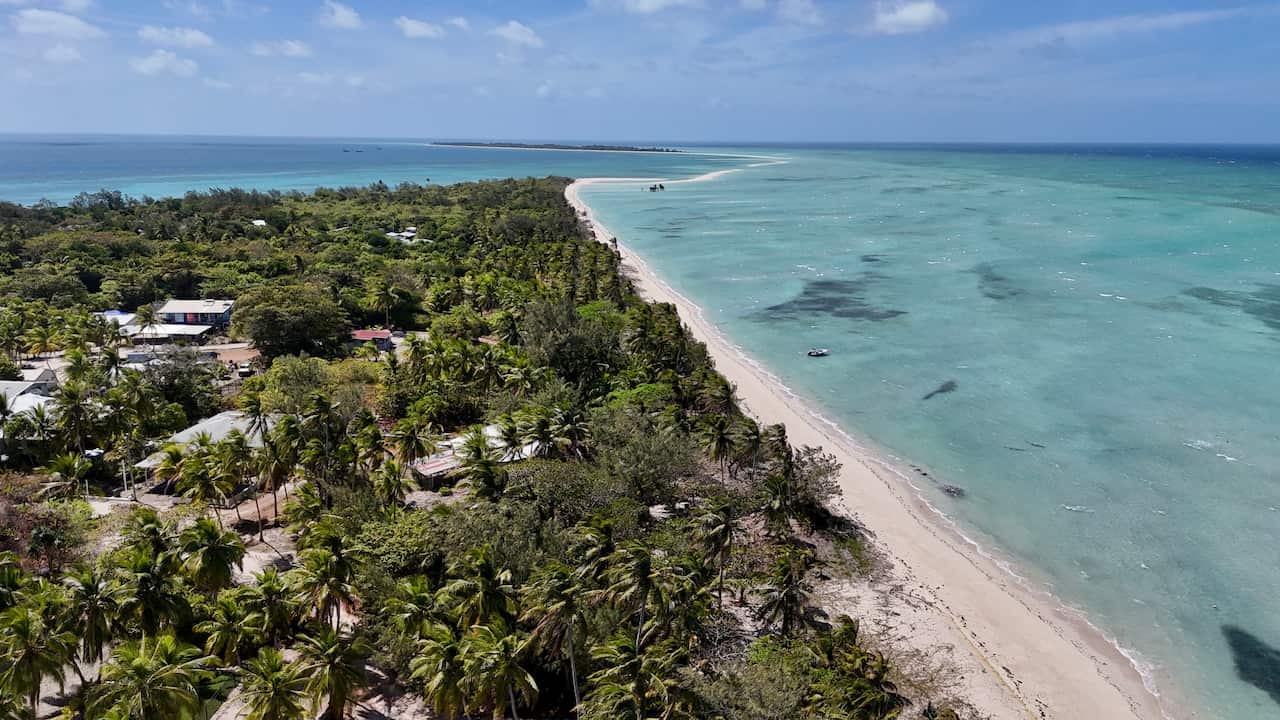
In 2025, the Masigilgal IPA was created to shelter fragile reef systems, culturally significant species and ancient knowledge from the onslaught of climate change. Officially, it covers the 11 uninhabited coral cays surrounding Masig, but much of the conservation work extends to the island too.
Mosby hopes it will give Masigalgal people, the Traditional Owners of Masig, an advantage in the race to save the island.
"We have the Western knowledge of how climate change works [with] traditional knowledge of how the tide runs, the current flows, what occupies these islands, how the island actually sits," he says.
'It was just bare'
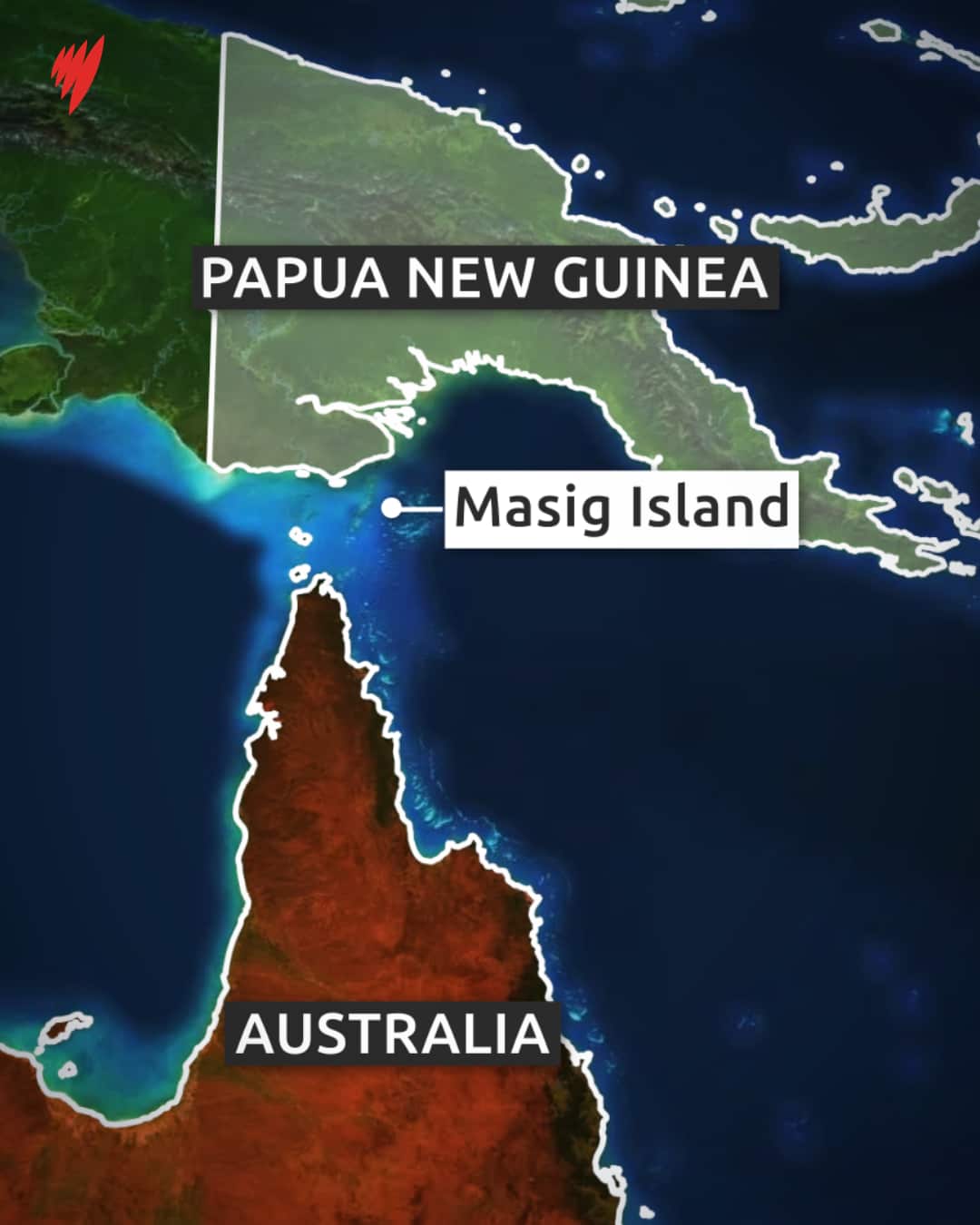
Formerly known as Yorke Island, Masig is a coral cay in the Torres Strait's Central Islands cluster. It is situated closer to Papua New Guinea than Australia and is home to just under 300 people.
Life on Masig is unhurried. It has one narrow landing strip, one supermarket, one primary school and one cafe — MigiYarn Cafe. It's been operating for nearly a decade and is the go-to watering hole for locals to meet and chat.
It's been operating for nearly a decade, but this year, the cafe has cemented itself as the go-to watering hole for locals to meet and chat. Beyond the sound of its swaying hammocks and whirring coffee machine, the lapping ocean is never far away, and a constant reminder of the risks of running a beachfront business on Masig.
Everyone here has a story about climate change. Kimiko Mosby, the cafe's co-owner, recalls a particularly extreme bout of weather in 2018.
"We had the high tides, we had the winds, and we had rain. It was just bang, bang, bang," she says.
"It took a few metres from us."
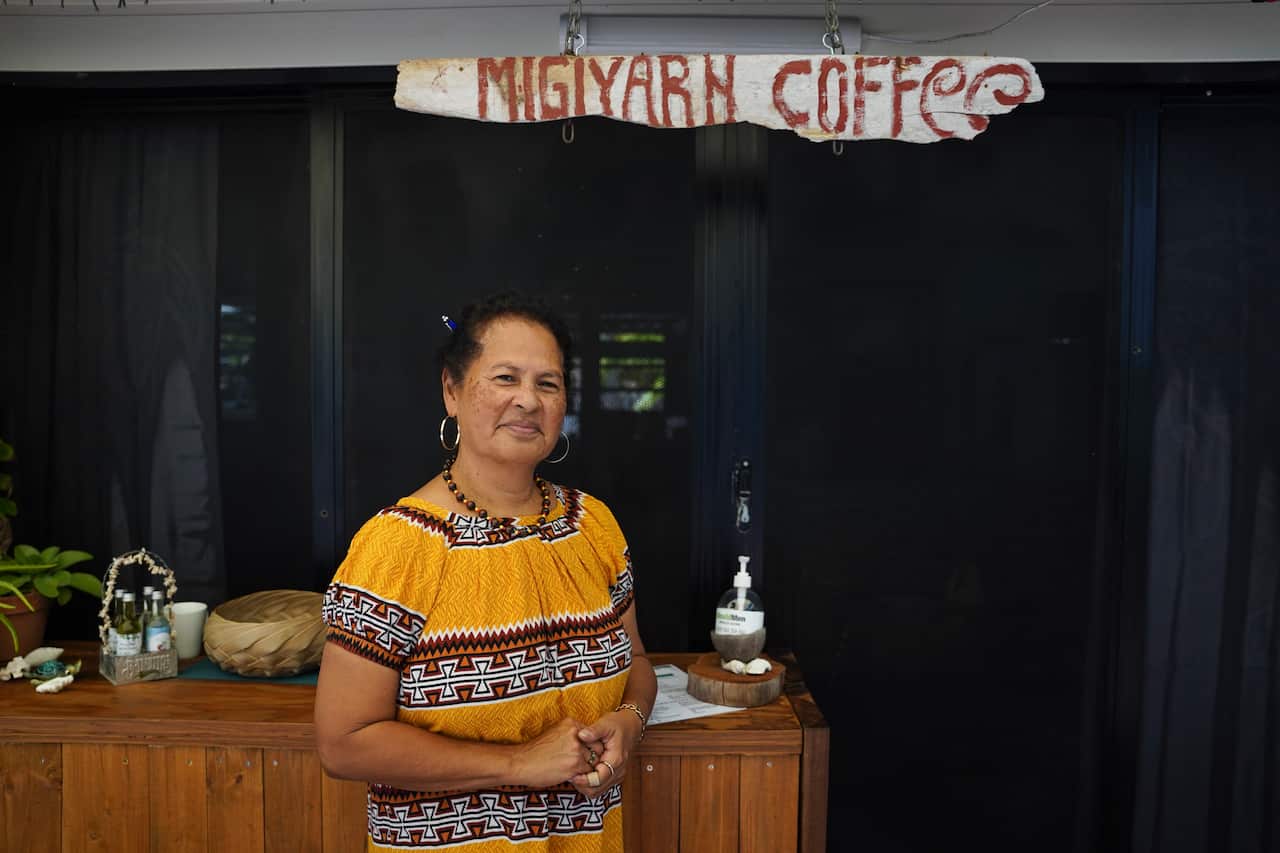
Mosby had just planted some coconut trees in front of the cafe, which were swept away overnight.
"It was just bare."
So when the opportunity arose to help shape the island's IPA, Mosby jumped at it.
"The consultation process nutted out exactly what we wanted, our input, what our aspirations were, how we saw it and how we wanted to manage it," she says.
After eight years of planning, the Masigilgal IPA was dedicated in July 2025 and now covers 245 hectares of land.
"It's funny, because we always knew Masig and the surrounding islands belong to us, but local people now have a hand in managing our places," she says.
The IPA is run by a small group of environmental rangers from the Torres Strait Regional Authority (TSRA), a Commonwealth agency. Most of these rangers are Masigalgal, or from neighbouring islands, and have become "a vital part of our community," Mosby says.
Revegetation and 'the tree of life'
Life on Masig has traditionally revolved around its trove of ocean goods — from historic pearling and shell trades to modern crayfish and prawn exports. But one resource offers hope for the future.
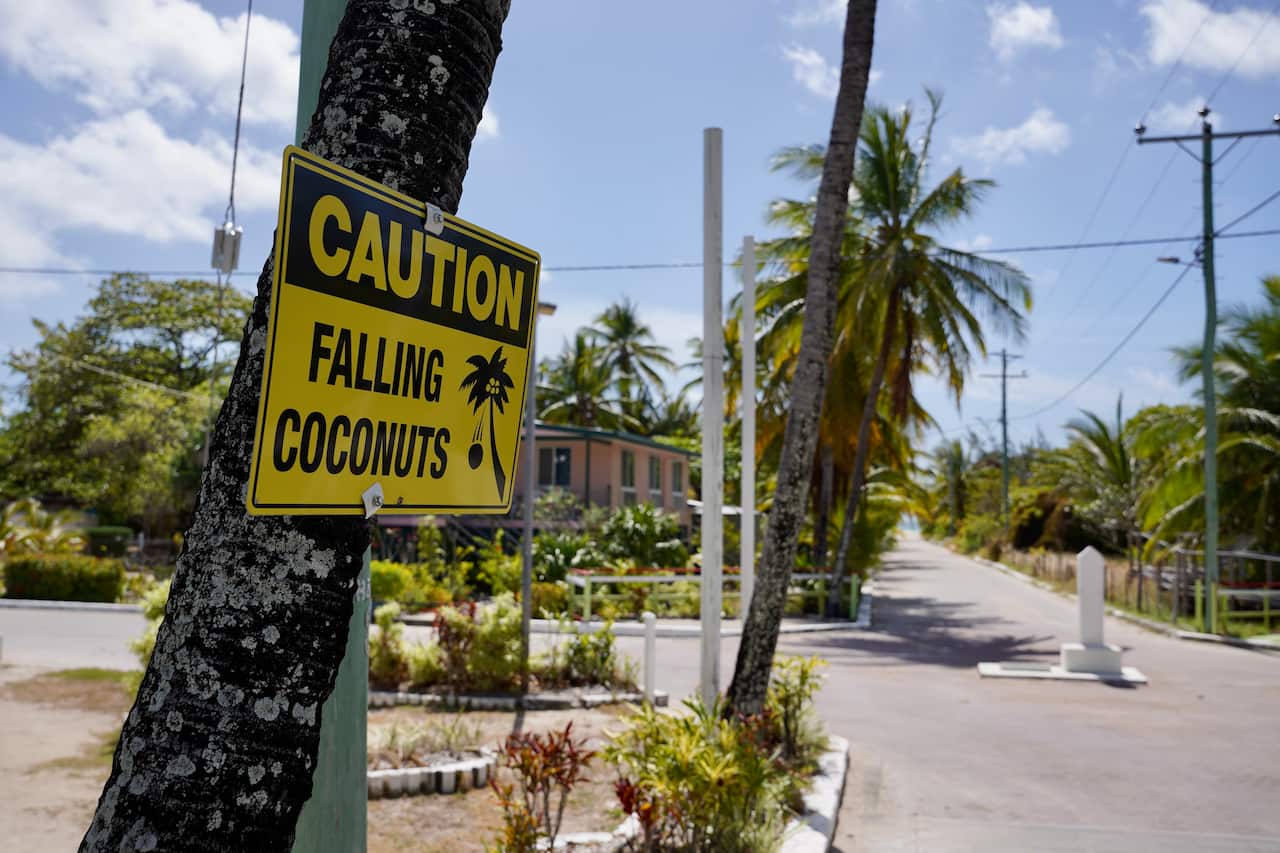
Known locally as 'the tree of life', and in Miriam Mir (a traditional language of the eastern Torres Strait) as "urab", coconut palms are ubiquitous on Masig — so much so that glaring yellow signs warn passersby of falling coconuts.
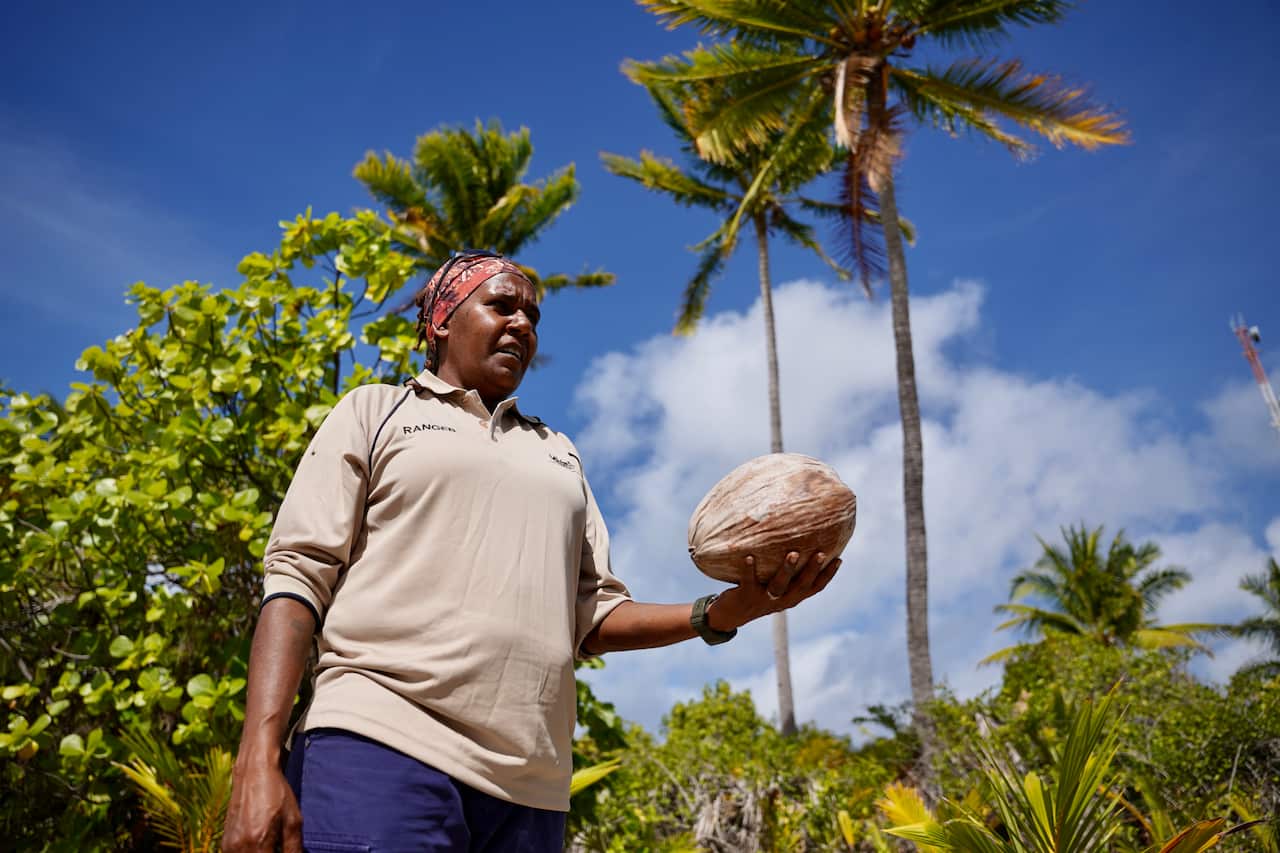
At a revegetation site on the island's northwestern side, palms of all heights shoot toward the sky, their fibrous roots holding loose sand and soil in place and helping to buffer against erosion.
Laura Pearson, a Kulkalayg woman and senior ranger supervisor from nearby Warraber Island, is working at the site and explains how they collect ripe, unhusked coconuts and strategically replant them when sprouts form.
"Urab is a really culturally significant plant for us Torres Strait people that provides shelter, slows down the coastal erosion effects, and provides us with water and cooking resources," she says.
The approach is tailored to the island's climate and customs.
"It's important to read our traditional seasons," Pearson says.
Unlike the Western seasonal calendar, the timing and duration of seasons vary according to Masig's traditional calendar. Masigalgal people recognise four seasons — Kuki, Zei, Woerr and Naigai — and look for signs in the wind, weather and wildlife to tell them when one season is expected to change to another.
For example, the season of Kuki — which runs roughly December to April — can be read through signs such as the build-up of big storm clouds and lightning in the far north-west. It's a season when Weiba (rose-crowned fruit doves) become fat and plentiful because of the abundance of ripe fruit on the island.
When SBS News visits, it's leading up to the dry season, which typically runs from September to November.
"We call it Naigai season," Pearson says.
"We don't plant in the dry season; we plant leading up to the monsoon season."
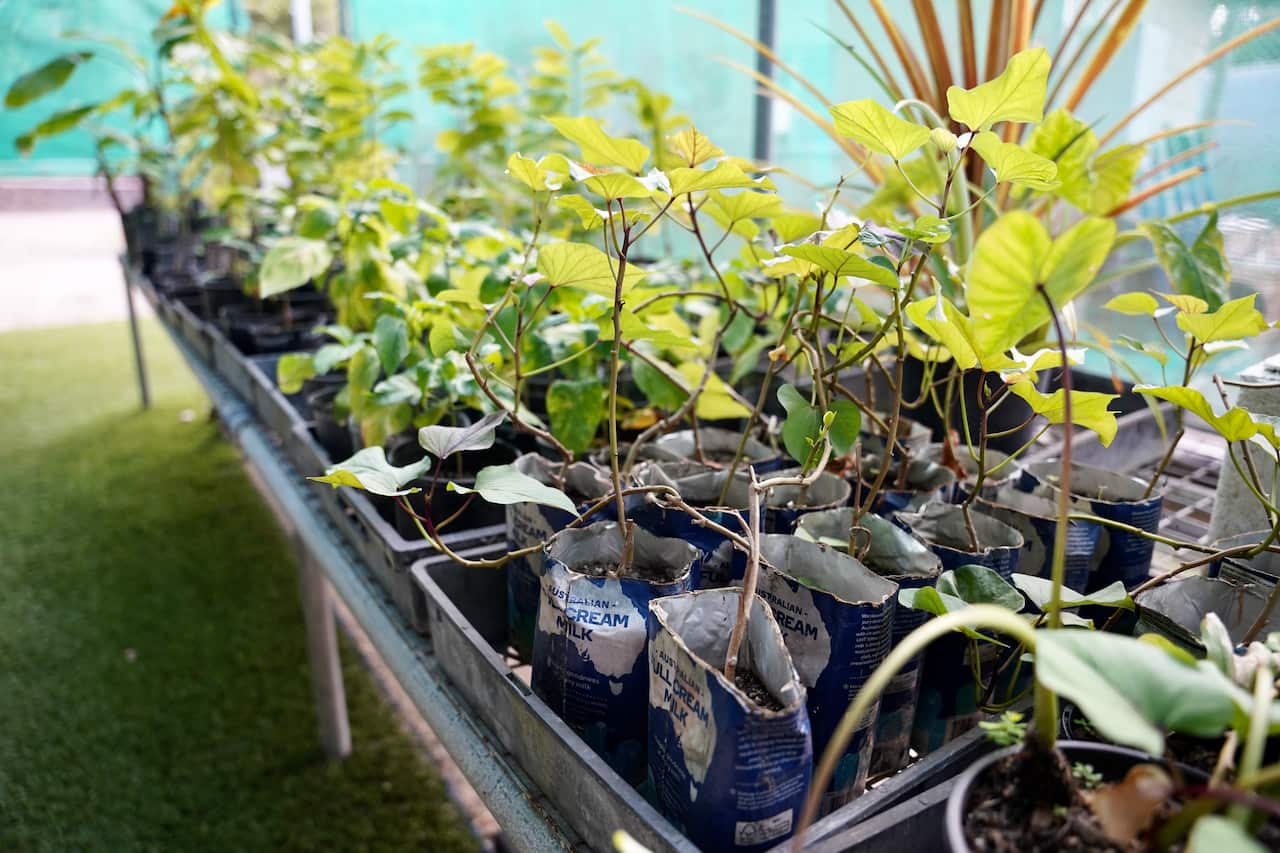
Other native plants are propagated at Mother's Well, the island's plant nursery where rows of green saplings line a polytunnel. Some plants are distributed to community gardens, while others are transported to the IPA's uninhabited islands to boost habitat for local wildlife.
The Masigilgal IPA is a resting spot for more than 30 migratory bird species — including the Eastern Curlew, the world's largest migratory shorebird. According to the Australian Conservation Foundation, global populations have declined by around 80 per cent in the last 30 years. In Australia, the species is now listed as critically endangered due to severe habitat destruction.
Revegetation is a small part of the management puzzle across Masig's uninhabited islands. Rangers must also tackle marine debris, ghost nets (discarded fishing nets), invasive plants and feral species. A day's work might involve dealing with an outbreak of leucaena, a rapidly growing woody weed, or wild pigs that disturb sacred sites, says Pearson.
"Our job is to get in and eradicate it or control it," she says.
"It's never-ending, but it's the best job in the world."
Beyond Masig
Masigilgal is one of five IPAs scattered throughout the more than 274 islands in the Torres Strait. All IPAs are on uninhabited islands covered by Native Title, many of which were historically used for temporary camps and seasonal hunting. As part of the national IPA program, they receive federal government funding to fuel conservation work.
Nationally, more than 95 IPAs span Land and Sea Country from the Tiwi Islands to Tasmania. But Ilana Foster, TSRA's IPA and traditional knowledge specialist, says that navigating a vast body of ocean poses different challenges to mainland Australia.
Sitting where the Coral and Arafura Seas converge, the Strait is the unofficial dugong capital of the world – more than 100,000 of the marine mammals reside in its vast seagrass meadows. It also harbours six of the world's seven turtle species, three of which regularly nest on islands in the region.
However, sea-level rise is beginning to disturb these patterns.
"The high tides are eating away at the sand beaches, so the amount of ground that turtles have to lay in is reduced," Foster says.
Rangers carry out routine marine surveys, checking for changes and deformities in the number of turtle eggs in a nest, called a clutch.
Some IPAs are also facing existential threats, says Vic McGrath, the Torres Strait's first IPA coordinator.
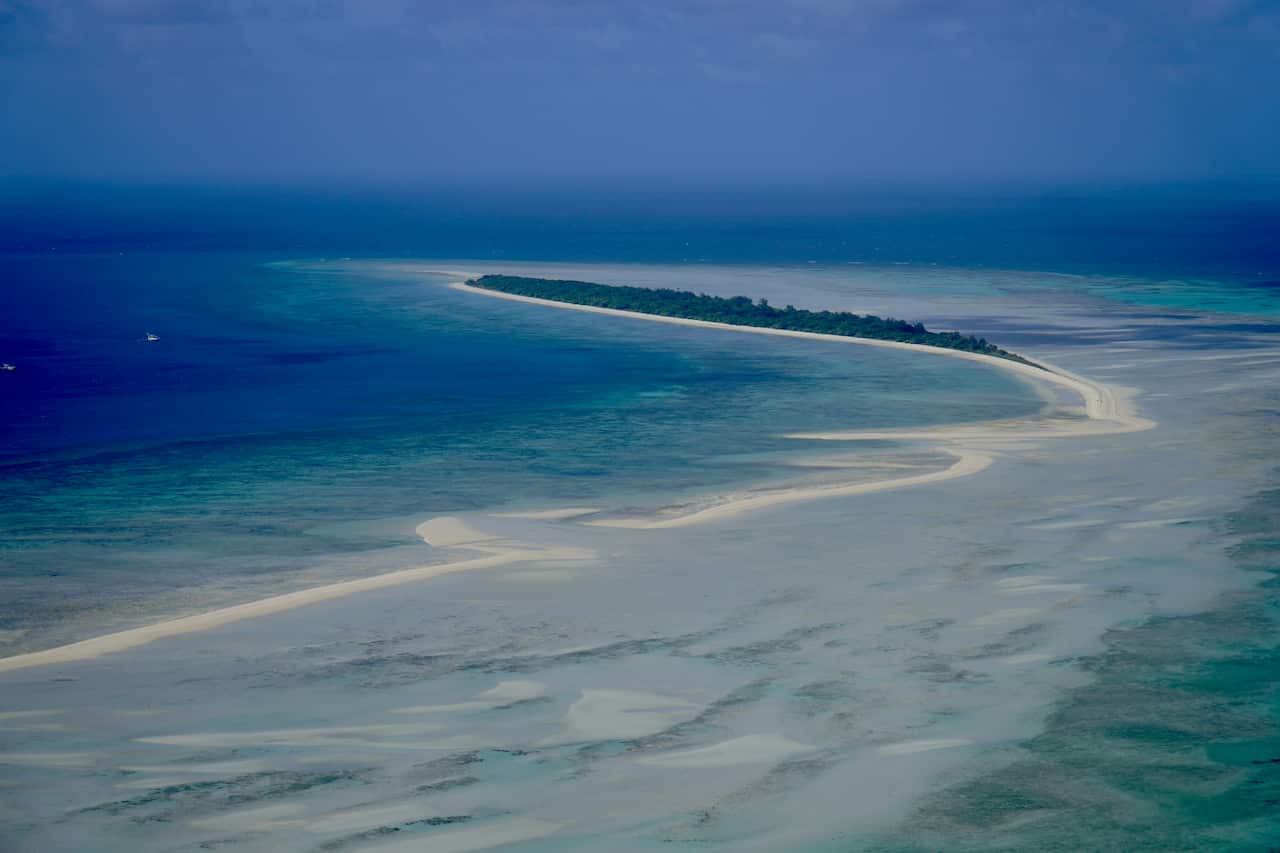
Warul Kawa (or Deliverance Island), an IPA in the far north-western corner of the Torres Strait, is steeped in spiritual significance.
"When you die, all Torres Strait Islanders go there. Your soul heads off to its final place in the west," McGrath explains.
But this sacred island and its IPA are facing a multitude of risks, from shipping lanes and oil spills to the growing threat of illegal fishing.
"Some of those newer IPAs are based on little islands adjacent to shipping channels. I'm concerned about modern impacts", he says.
Amid these dangers, Foster says rangers are documenting vital cultural data.
The reality is that these places are disappearing.
"What else can you do when something is gone but look back on images, recordings, written works," she says.
Since 2009, TSRA's traditional ecological knowledge program has recorded the names of local flora and fauna. Previously, this information had been passed down orally or chronicled in outdated Western anthropological studies, notably from an 1800s historic expedition by AC Haddon.
Now, these community resources developed via the IPA act as a benchmark for monitoring change.
"You can see that the seasons have changed significantly, that they're not happening at the same time," Foster says.
It takes a village
For now, First Nations-led solutions are shouldering a heavy burden.
At Yessie Mosby's camp, rangers have provided makeshift buffers made from densely packed coconut fibres to help fortify the shoreline.
"It's working. I reckon if this wasn't here, this tree would've been washed out," he says.
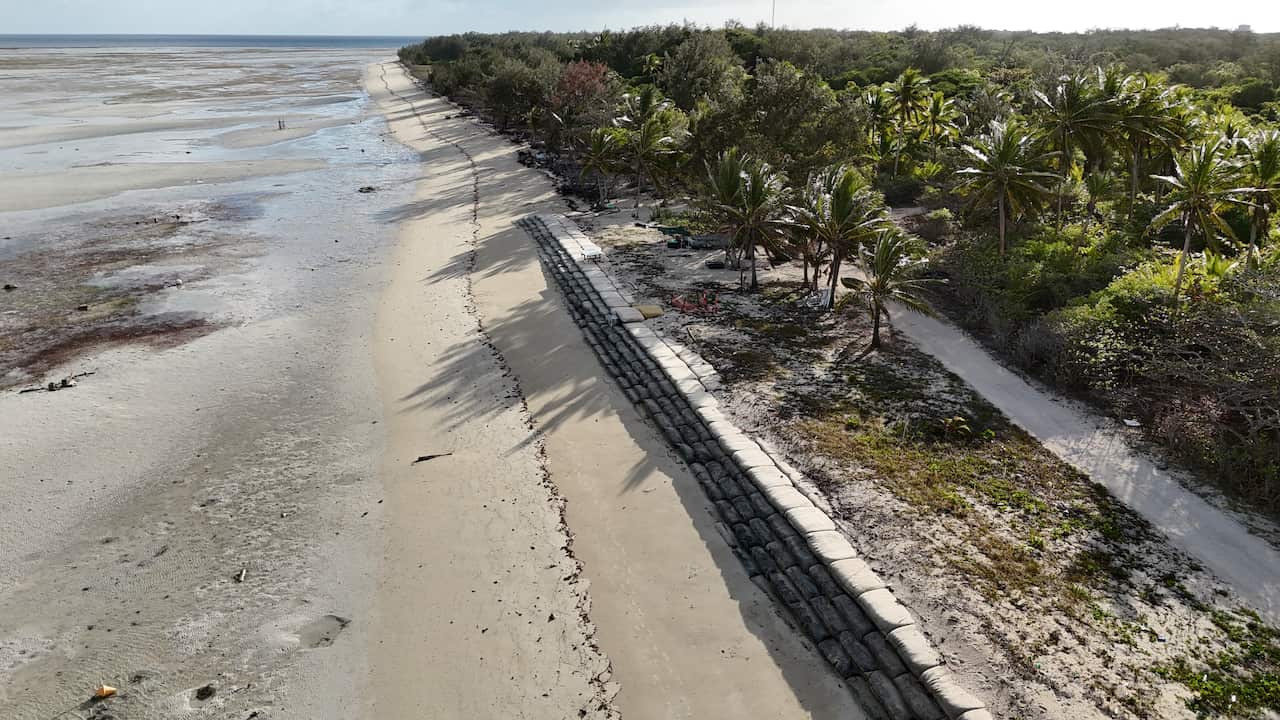
At times, it can feel like paddling upstream.
Mosby points out that Masig has a tiny carbon footprint, and despite their best efforts on a local level, it will take large-scale action to meaningfully slow climate change.
"We are at the frontline and getting hit by [Mother Nature's] fury. That gets me very upset; it makes my blood boil," he says.
"If the world stops burning fossil fuels and reduces the emissions down to 1.5C, then they will contribute to [saving] an ancient race."
In September 2026, the UN Environment Programme (UNEP) released a report warning that global temperature rise is set to cross 1.5C, exceeding global targets.
"You know it's not just an island for us. It's not just our home," Mosby says.
This island is our school. This island is our maternity ward. This island is our science lab. This island is our library.
He warns that climate change drives culture into extinction.
"Masig has a nickname within the Torres Strait. They call this island the teardrop of the Straits. When you leave this island, you shed tears."
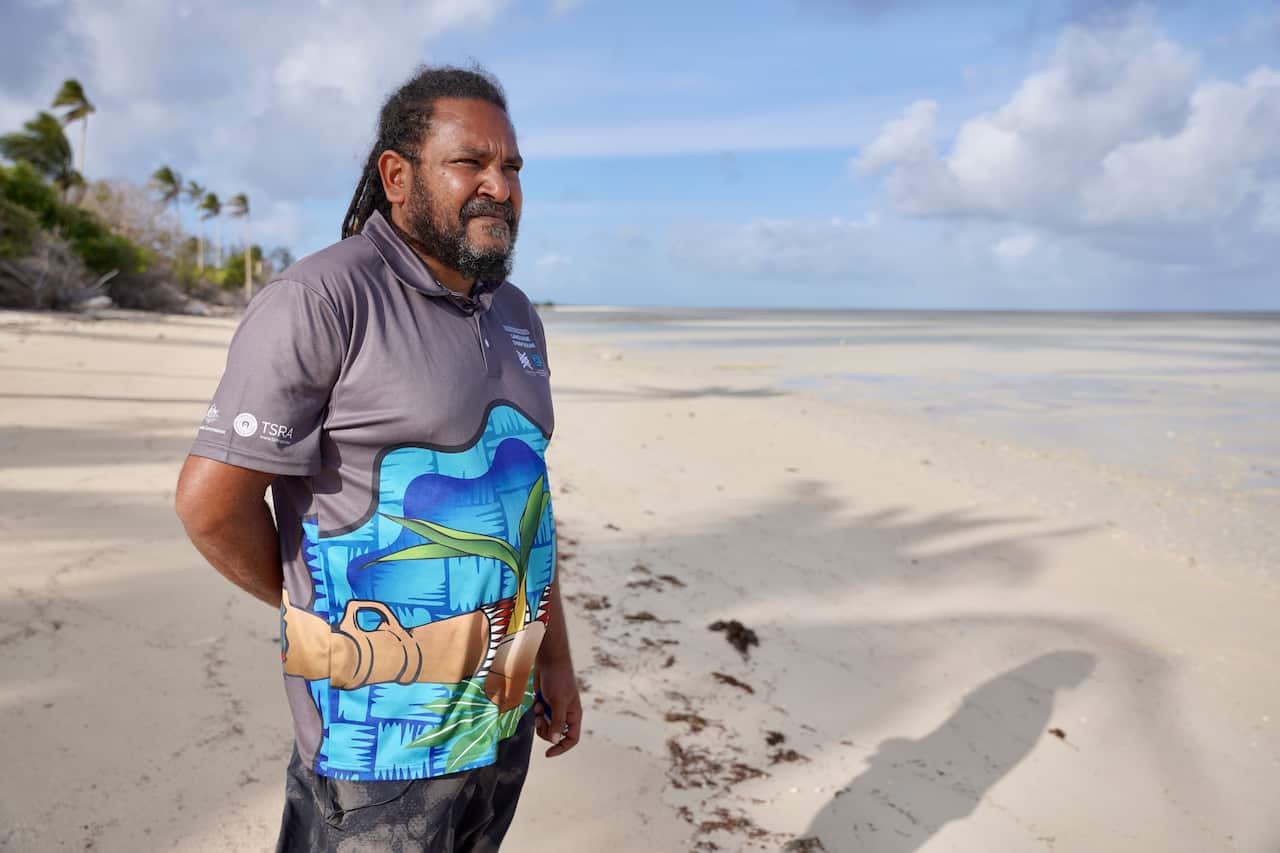
Although it is hard to estimate the exact rate of erosion, Masig's distinctive tip is shrinking, slowly being blurred by rising tides.
We know that this island is hurt. She is seeking help
"Already we've got traditional methods of trying to save these islands, but it has to take a village. It has to take everybody to pull as one to try and save these islands."
This story was produced with support from the Pulitzer Center's Ocean Reporting Network.
For more, watch SBS World News tonight at 6.30pm AEDT on SBS and SBS On Demand.







