
Australian households and businesses are in a "pretty good position" despite the "noise" surrounding consecutive interest rate rates, according to Reserve Bank of Australia (RBA) governor Michele Bullock.
Her comments at an overseas conference of central bankers were reported as Australia's annual inflation rate softened by more than expected on Wednesday.
The monthly Consumer Price Index (CPI) rose 4.9 per cent over the 12 months to October, down from the 5.6 per cent increase in September, adding to the case for the Reserve Bank staying on hold next month.
Households 'are actually in a pretty good position'
Speaking as a panellist at the HKMA-BIS High-Level Conference in Hong Kong, Bullock said the RBA's rate rises have "created a lot of political noise and a lot of noise from the general public" as they flow through to mortgage holders.
News that makes sense
Your trusted source for staying up-to-date with the world around you. Get free daily news updates and analysis, straight to your inbox.
"People are very unhappy. The cash flow channel works very quickly in Australia and it's very prominent," she said.
"But what I'd like to highlight here is though, despite that noise, households and businesses in Australia are actually in a pretty good position. Their balance sheets are pretty good."
Bullock said that households had built up "large savings buffers" during the COVID-19 pandemic that were largely still intact. She said housing prices are surprisingly rising again, and that those who are coming off low fixed rate mortgages are "managing quite well".
"And all the indications from the banks, and all we hear from the banks, is these households are doing fine," she said.
"From a financial stability perspective, this all looks rather good."
Bullock acknowledged there were "distributional consequences" associated with rising interest rates, which are causing "challenges".
"The challenge for us now is really to continue to ... make sure that we don’t let inflation expectations get ahead. They’re not at the moment, they’re remaining relatively well anchored. The challenge is to do that, at the same time as we don’t end up with a large increase in unemployment.

Inflation and the rising cost of living have been causing pain for Australians in 2023.
The central bank has been lifting rates to bring inflation back within its 2-3 per cent target range.
Bullock has been focused lately on the role of domestic demand, which she has said is contributing to price pressures alongside supply shocks.
The below charts show the latest figures around living costs, household savings, and wages, along with rent and electricity prices.
Cost of living
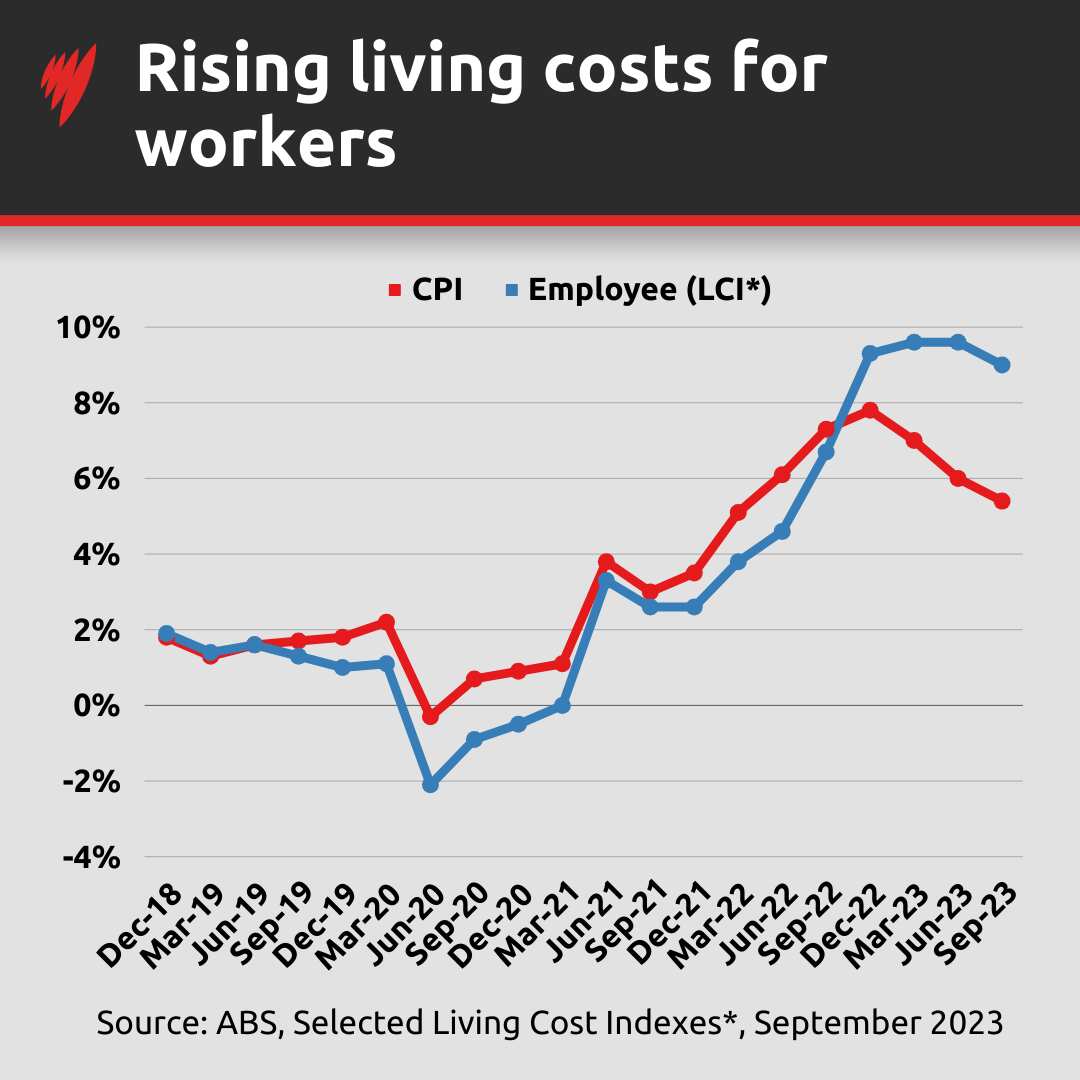
Living costs for employee households rose 2 per cent in the September 2023 quarter, which was higher than the 1.5 per cent in the previous quarter, according to the Australian Bureau of Statistics (ABS).
Living Cost Indexes (LCIs) measure the price change of goods and services, and its effect on living expenses for various households. Increases in living costs across different households ranged from 0.5 to 2 per cent, with workers recording the largest increase due to rising mortgage interest charges.
The ABS notes a key difference between LCIs and the CPI is the inclusion of mortgage interest charges rather than the cost of building new dwellings.
Household savings
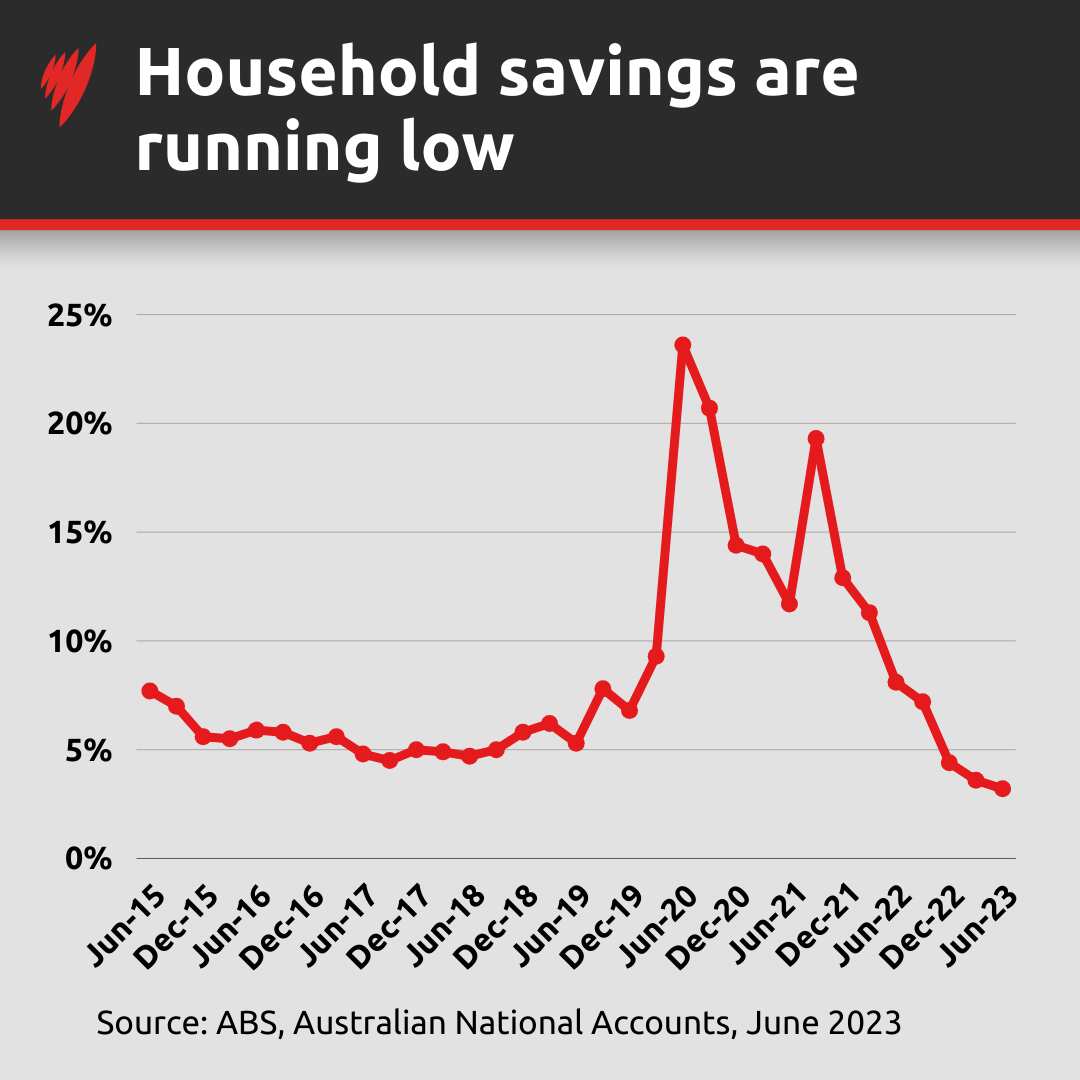
According to the latest ABS data, the household saving ratio declined from 3.6 to 3.2 per cent in the June 2023 quarter.
"Savings fell as the rise in nominal household consumption outweighed a softer rise in gross disposable income," the ABS said in September.
This was the seventh consecutive fall and the lowest level since 2008.
Wages
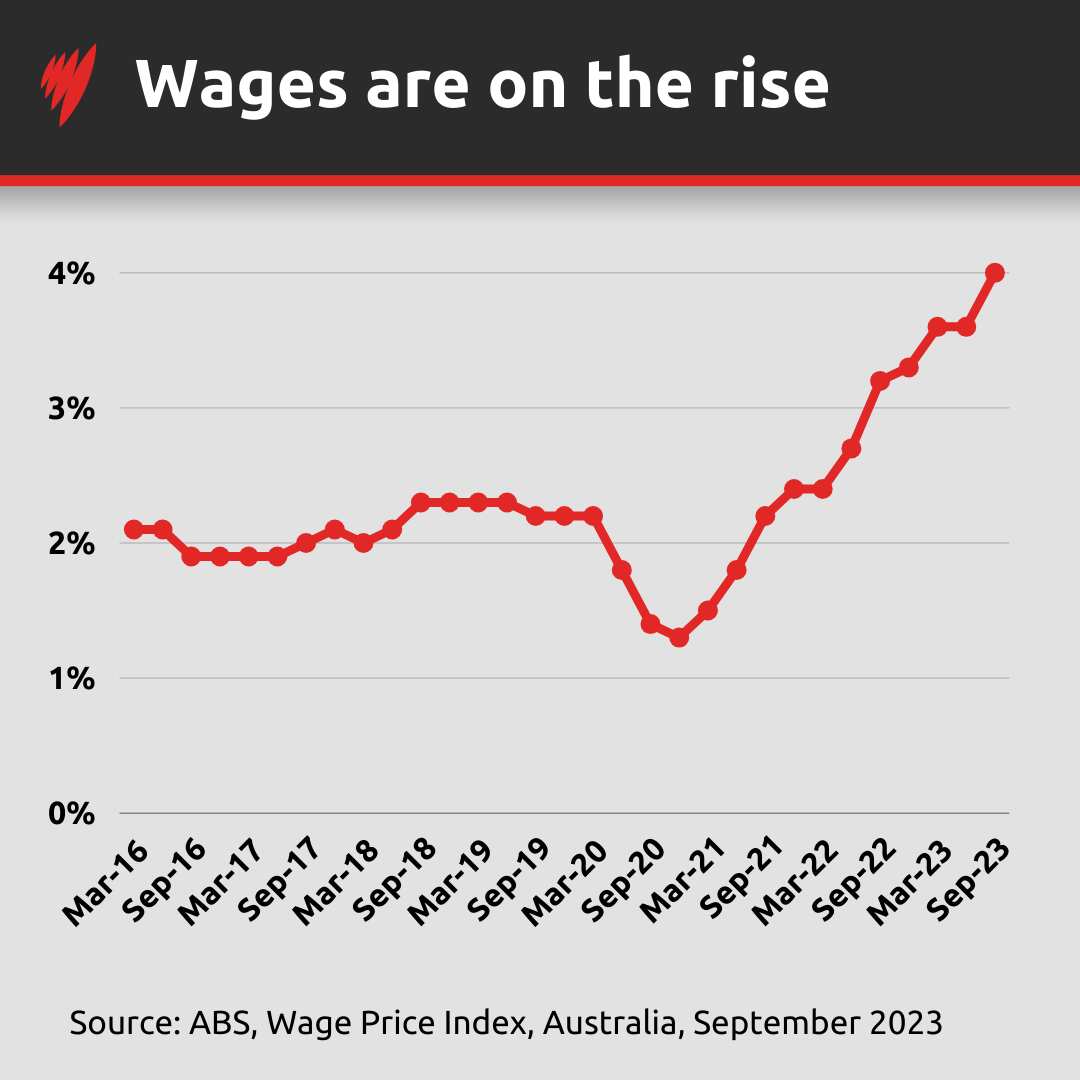
Wages grew 1.3 per cent in September quarter and four per cent for the year, according to seasonally-adjusted data from the ABS, released earlier this month.
It was the highest quarterly growth since records of the Wage Price Index (WPI) began in 1997.
The annual WPI growth was the highest since the March 2009 quarter.
Rentals

Rental affordability for Australians in every state has gone from bad to worse as price hikes spread from the cities to the regions.
A recent survey of advertised rentals has shown a tiny percentage of rental properties are priced within the budget of essential workers such as nurses and cleaners.
Separately, National Shelter and SGS Economics's Rental Affordability Index, released in mid-October, found affordability plummeted in every city except Canberra and Hobart over the last 12 months.
Regional Queensland is now the least affordable place in Australia when comparing income to rental prices, according to the index. Median rentals there cost $553 a week, reaching the rental stress threshold of 30 per cent of an average household's pre-tax income going to housing.
Sydney experienced the sharpest decline in affordability in city areas, jumping to 29 per cent of household income, which is in line with Hobart.
Melbourne and Perth also experienced a 10 per cent decline in affordability.
Electricity prices
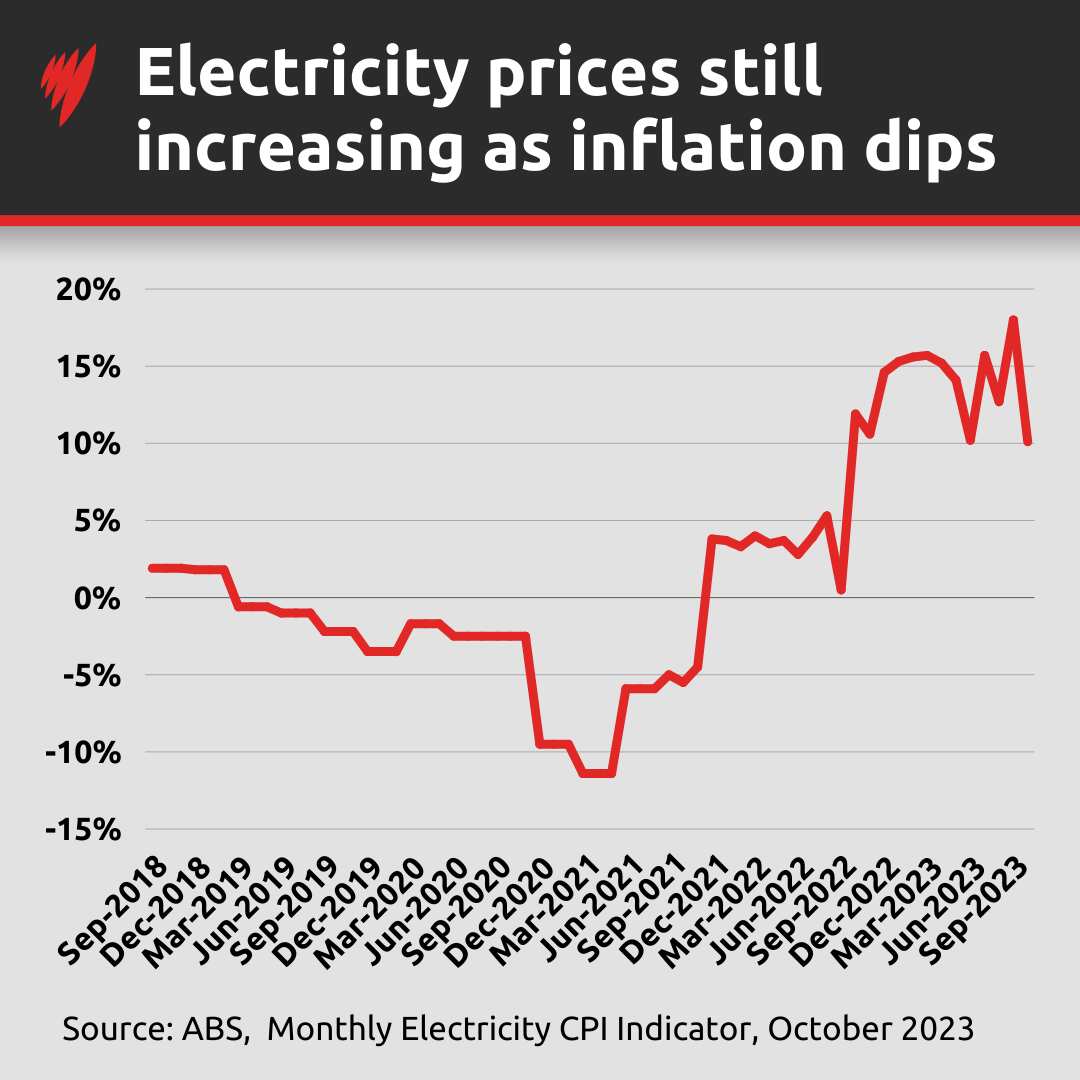
The monthly CPI rose 4.9 per cent over the 12 months to October, with the most significant prise rises being housing (6.1 per cent), food and non-alcoholic beverages (5.3 per cent) and transport (4.9 per cent).
Electricity prices rose 10.1 per cent in the 12 months to October 2023, down from a rise of 18 per cent in September.
With additional reporting by the Australian Associated Press.







