
Mohamad Hafez can hold his whole world in his hands.
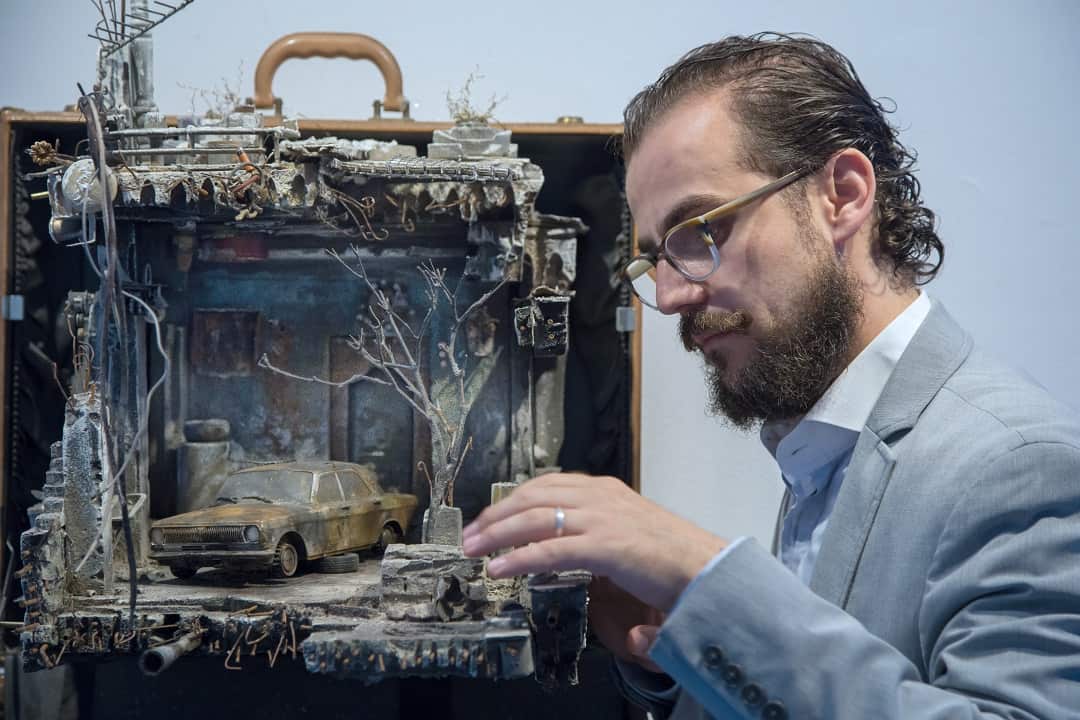
For 15 years, the Syrian exile has recreated the streetscapes of war-torn Damascus in miniature form.
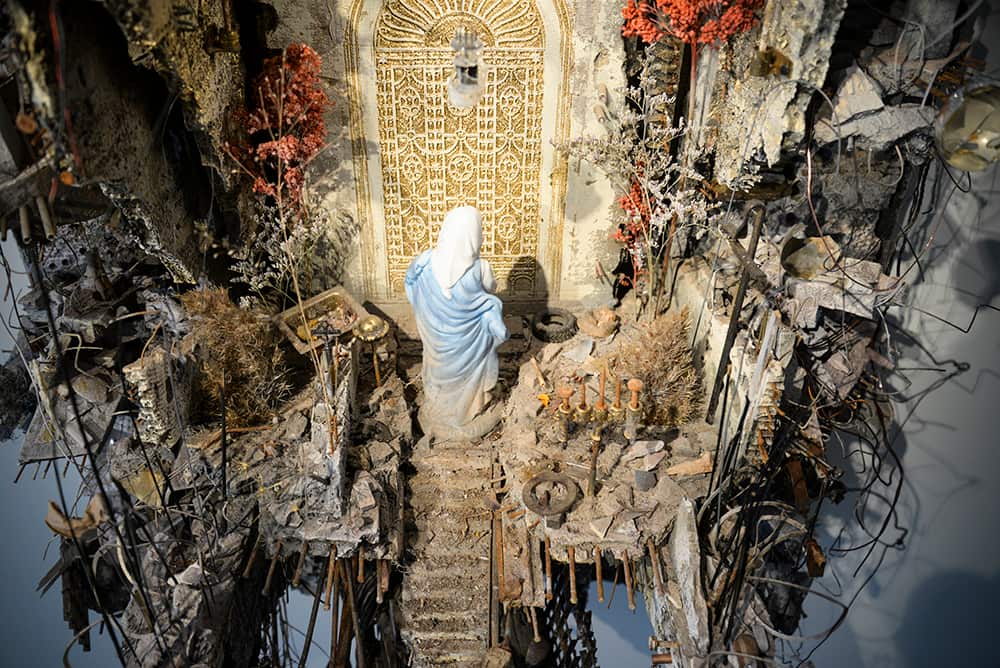
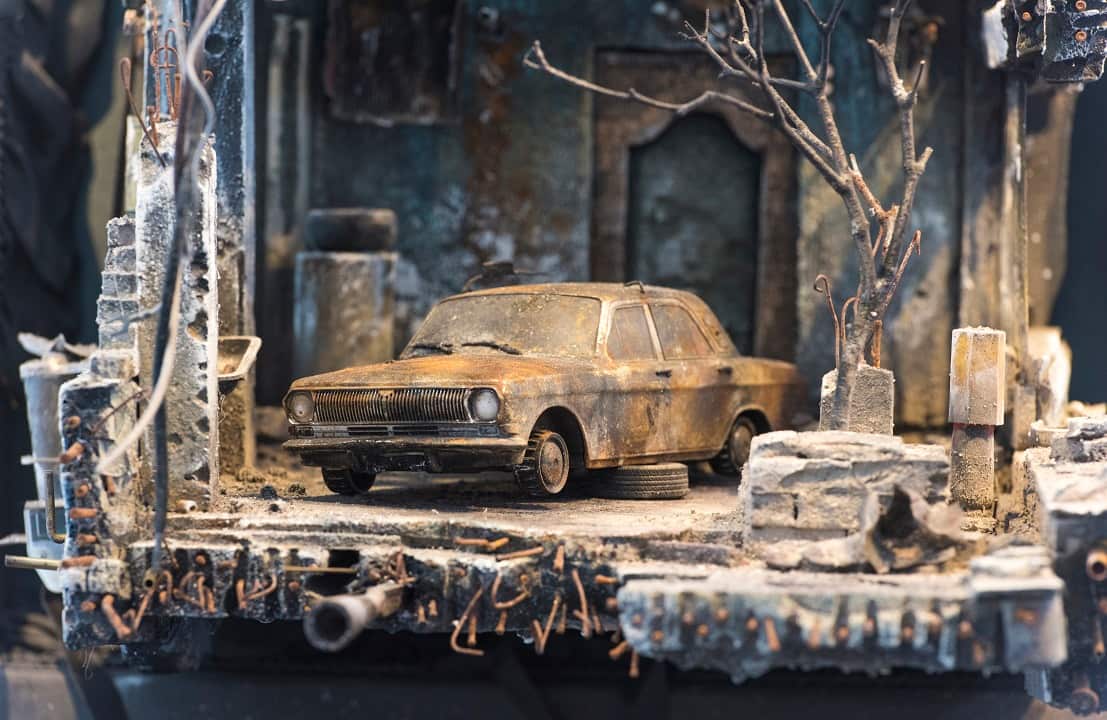
Using seashells, old toy cars, linen, piano keys, radio parts and other scraps, he pieces together devastating dioramas of the neighbourhoods of his childhood from his American studio.
Pointed archways and traditional silk "aghabani" hanging from clotheslines sit next to blackened homes destroyed by shrapnel; past and present, side by side.
"I've been doing this for 15 years and the first 10 years were completely in secret. They were confidential. I was modelling these for myself as a therapeutic outlet," Mr Hafez told SBS News.
News that makes sense
Your trusted source for staying up-to-date with the world around you. Get free daily news updates and analysis, straight to your inbox.
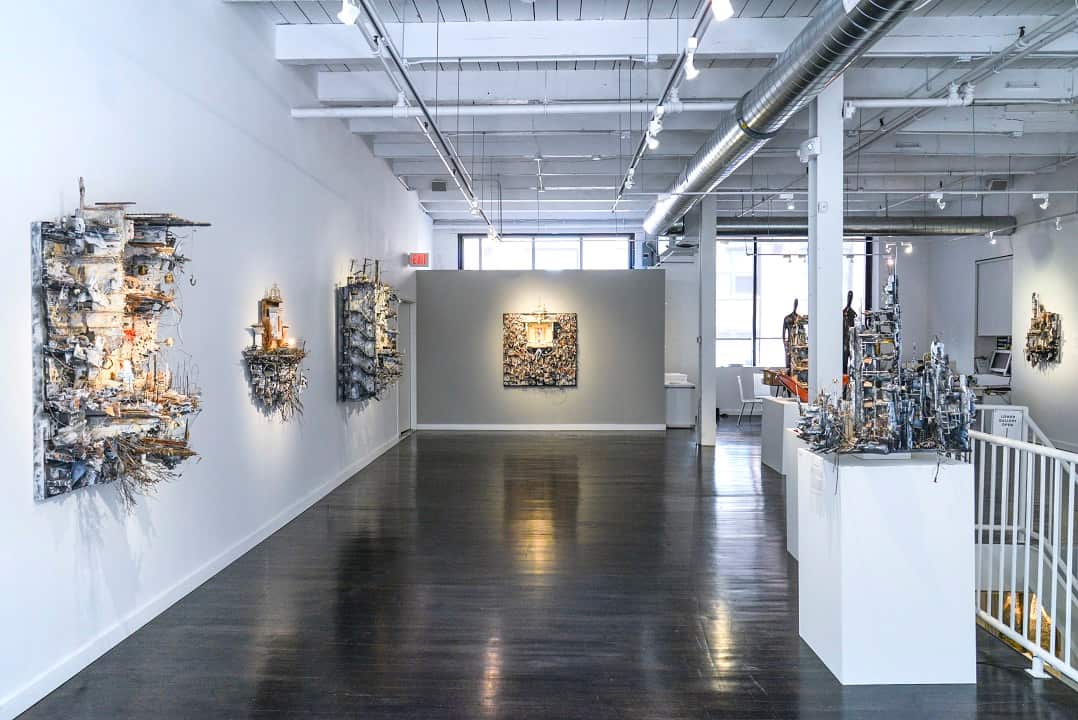
Although his work very small, its impact is immense, featuring in exhibitions around the world.
'Extremely homesick, lonely'
Born in Damascus, Mr Hafez was raised in Saudi Arabia but left to pursue his studies in Iowa, in America's Midwest, when he was 17.
Mr Hafez entered the US on a one-way student visa. The Bush-era administration tracking program, enacted after the 11 September 2001 terrorist attacks, meant Mr Hafez couldn't return home for eight years, fearing that that being a Muslim from Syria would make re-entry into the US unlikely.
After completing his studies at Iowa State University in 2009, he built a successful career as a corporate architect for Pickard Chilton, a firm based in New Haven, Connecticut, designing skyscrapers and other large-scale projects.
But the pain of being separated from his family, and living in exile, inspired Mr Hafez's art.
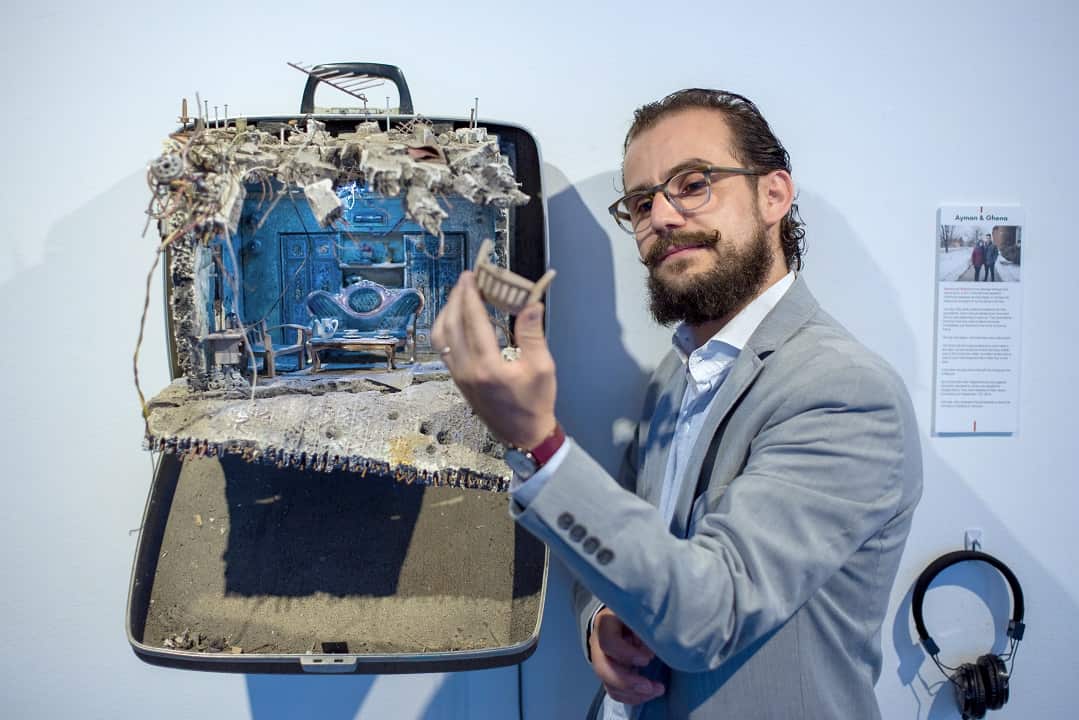
“Here was this young 18-year-old Mohamad stuck in the middle of Iowa and during Christmas breaks and summer breaks while everyone around me went home to their parents and loved ones, including my own sibling who would get together with my family in Damascus,” Mr Hafez told SBS News.
“And I’m there [in the US] stuck. Extremely homesick, extremely lonely. So the medium at hand, being an architect, was model-making. So I developed this way of artwork that I came up with that you see today."
Mr Hafez began to recreate the memories of his boyhood using whatever materials he could find.
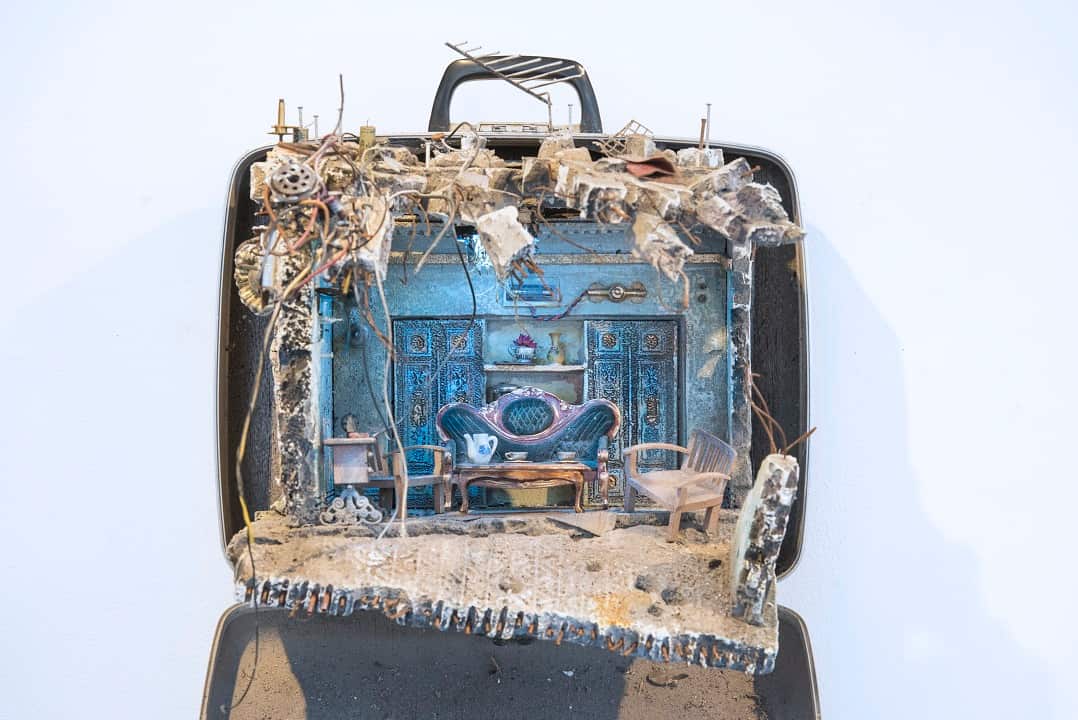
But his work took a darker turn after his brief return to Damascus in 2011 - his first and only visit to his hometown since he left.
After that visit, pro-democracy demonstrations erupted in Syria in the southern city of Daraa, which was inspired by the Arab Spring in bordering countries. After the government used deadly force to stop the revolt, violence erupted throughout the country.
The resulting Syrian war forced his parents to leave their home in Damascus and move to Dubai and his brother-in-law to flee to Sweden.
This is when his work shifted from the memories of old Damascus to the gritty and desolate destruction of war.
“I felt like I had to do something, I had to raise awareness. I had to humanise a vast majority of a population that is thought of in the abstract most of the times where the conversation doesn’t go beyond a headline in the media,” he told SBS News.
“So I thought to myself if people thought of refugees as your fellow neighbours, as your fellow classmate – people with hopes, aspirations, dreams, pains and baggage just like any of us – I think we would be in a better position where we would not witness a travel ban that paints arbitrarily millions of people based on their passport colour.”
Mr Hafez’s recent work, currently showcased in acclaimed exhibitions around the US, portrays the memories of a nation that once prospered.
Imbued in his work is a message of hope using verses from the Quran.
He hopes the artwork appeals not just to those who have suffered hardship, but to the wider audience who may not have felt the devastation of displacement.
“The message I’m trying to say is none of us are single liners. You cannot describe a single human being in a single line: a Syrian, a Muslim, an Arab, a refugee… I am not building artwork to cater to Syrians or Muslims,” he said.
“I am building artwork to cater to the Trump voter in the middle of America. That never met a Muslim, have never met an immigrant, who have never met a meaningful conversation with an immigrant…I am trying to put a face to the label.”
He said his work has touched a diverse range of people.
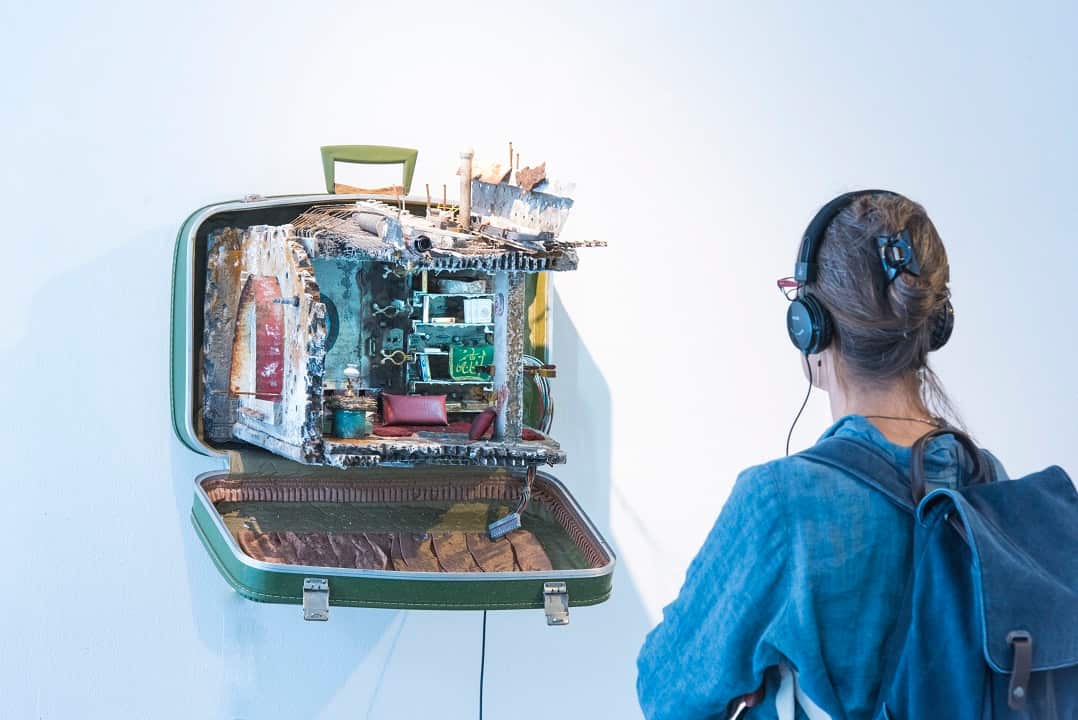
“When I get a collector who is Jewish-American handing me the suitcases of their grandparents that were refugees from Poland post-WWII. They said ‘this is my grandma’s suitcase, I’ve held onto it for 30 years. You are doing something I relate to, here is my grandmother’s suitcase and you go do something with this,'" he said.
“A Jewish-American giving a Muslim-Syrian artist a suitcase of her late-grandparents to do artwork in. That is a fantastic feeling, that is a humanity, that is the America I know.”
For more on Mohamad Hafez and his work visit: mohamadhafez.com







