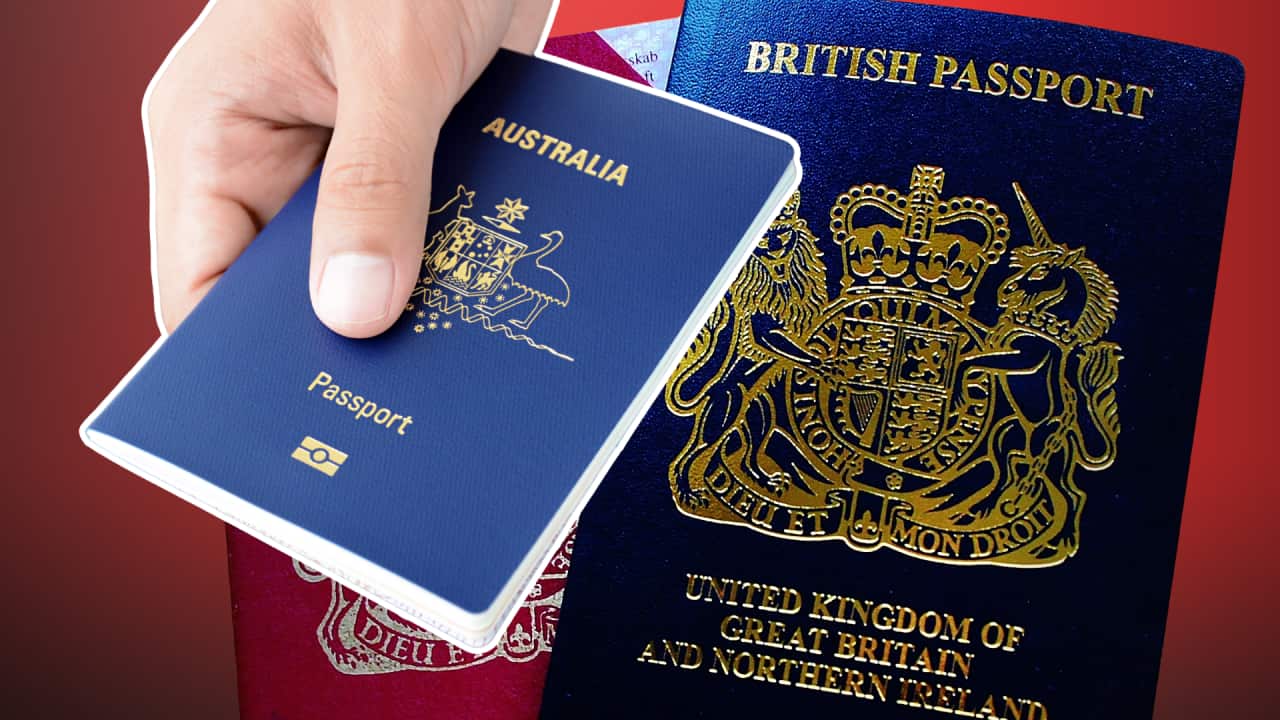
In brief
- From 25 February, British and Irish citizens will need a valid UK passport to enter the country.
- Dual citizens are advised to obtain a new UK passport or a certificate of entitlement.
New border rules for people entering the UK will come into effect today, meaning some Australian travellers could be caught out if they don't have updated documentation.
People without British citizenship will need to obtain an Electronic Travel Authority (ETA) certificate, which costs £16 ($31), takes up to three days to process, and is valid for multiple journeys.
However, the new rules state UK citizens are now prohibited from entering Britain or Ireland without a valid UK passport.
That means Australians who are dual citizens of the UK or Ireland will now need a valid UK passport — or a certificate of entitlement — to enter the country, even if they have an Australian passport.
What are the new rules for UK passports, and what has changed?
News that makes sense
Your trusted source for staying up-to-date with the world around you. Get free daily news updates and analysis, straight to your inbox.
From 25 February, British and Irish citizens will need a valid UK passport to enter the country.
This applies to Australian dual citizens, who previously could enter the country solely with their Australian passports and an ETA — the standard visa to enter the UK for travel, business or transit.
At the time of writing, the Australian government's official travel advice service, Smartraveller, is advising that dual citizens are unable to obtain an ETA, warning that from Wednesday, Australian British or Australian Irish citizens may not be able to board their flight without a valid document.
Dual citizens are advised to obtain a new UK passport or a certificate of entitlement.
Passport application costs vary depending on which country one lives in and how urgently they need the passport and how frequently they travel but standard costs for someone applying in Australia are £108 ($206) for an adult, and £70 ($134) for a child.
A certificate of entitlement is a digital document added to a valid passport that confirms a UK citizen has the right to live or work in the country without restrictions, and carries a fee of £482 ($920).
A third option is for dual citizens to renounce their UK citizenship, which costs £589 ($1,124).
Can I enter with an expired UK passport?
The short answer is yes — depending on your carrier.
This week, the UK's Home Office announced dual citizens entering the UK can use their expired passports in tandem with a valid passport and ETA, but left the final decision to travel carriers, including airlines, ships or trains.
On its website, the Home Office wrote that "your carrier may allow you to travel if you have both an expired UK passport, issued in 1989 or later [and] a valid passport".
"The personal details on both passports must match.
"It is the carrier's decision whether to allow you to travel," the update wrote.
Qantas has confirmed it will be accepting dual citizenship travellers with expired UK passports, based on UK government advice.
Australian Travel Industry Association CEO Dean Long said it was a "massive relief".
"We've seen a critical, last-minute bit of common sense from the UK Home Office today. They've recognised the documentation scramble and will now allow dual citizens to enter the UK using an expired British passport alongside their valid Australian one, provided that UK passport was issued in 1989 or later," he told SBS News.
He said leaving the decision up to the airlines was a "massive catch".
"We're still operating on a 'no permission, no travel' model, so while this is a welcome reprieve, it's not a guaranteed golden ticket if the carrier decides to play it safe."
Costly confusion over new rules
The confusion has left those intending to travel faced with either the bureaucratic process of passport renewal or the cancellation of travel plans — both costly.
For many Australians born to British or Irish parents, the news prompted a scramble to find the documents necessary to begin the UK passport process.
SBS Audio spoke with Kathy Dwyer, who was born in Australia to a British father.
Dwyer's planned trip to the UK was upended when she discovered she had to apply for a British passport.
"To do that, I needed my father's birth certificate. He was born about a hundred years ago and I didn't have a copy, so then I had to ask for that from the British government, and I've only just received that today," she told SBS.
"Then I had to get their marriage certificate, which meant that I had to get their death certificates. So in the end, we decided that we wouldn't go to the UK at all."
Long said many Australians didn't even know that they were UK citizens under the law.
"There's a misconception that this only affects people who already hold two physical passports," he told SBS News.
"If you have a parent born in the UK, there's a high probability you're automatically a citizen under their law, even if you've never identified as one or held a UK passport in your life. These travellers assumed they could just apply for a standard ETA, but because they are legally British, that visitor pathway is closed to them. They're stuck in a documentation trap."
Long said the new rules marked a "total shift" in the way Australia approached the UK.
"It's a border shake-up that has triggered genuine chaos for those caught unprepared.
"You've got to understand the financial sting here. If an airline lets you board but the UK Border Force refuses you entry on arrival because your paperwork isn't compliant, you are 100 per cent responsible for the cost of getting back to Australia.
"Our advice is simple: don't risk it on a whim."
For the latest from SBS News, download our app and subscribe to our newsletter.







