
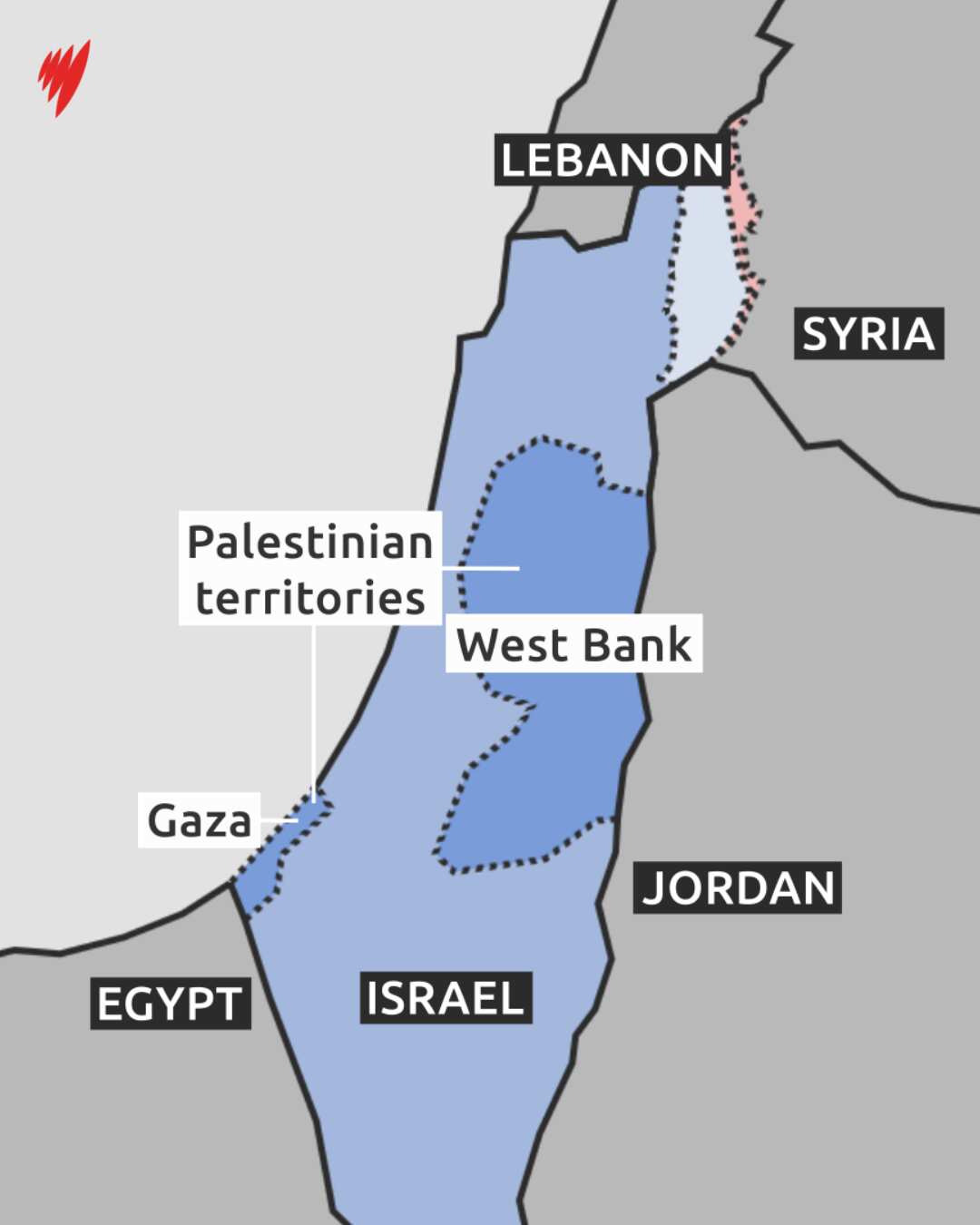
A year after the deadly October 7 attacks on Israel, the retaliation in Gaza continues, raising concerns that areas in the north may become completely isolated.
Israel has bombarded Gaza after militants led by Hamas — the Palestinian enclave's militant rulers — killed more than 1,200 people in Israel during an attack last year and took about 250 others hostage.
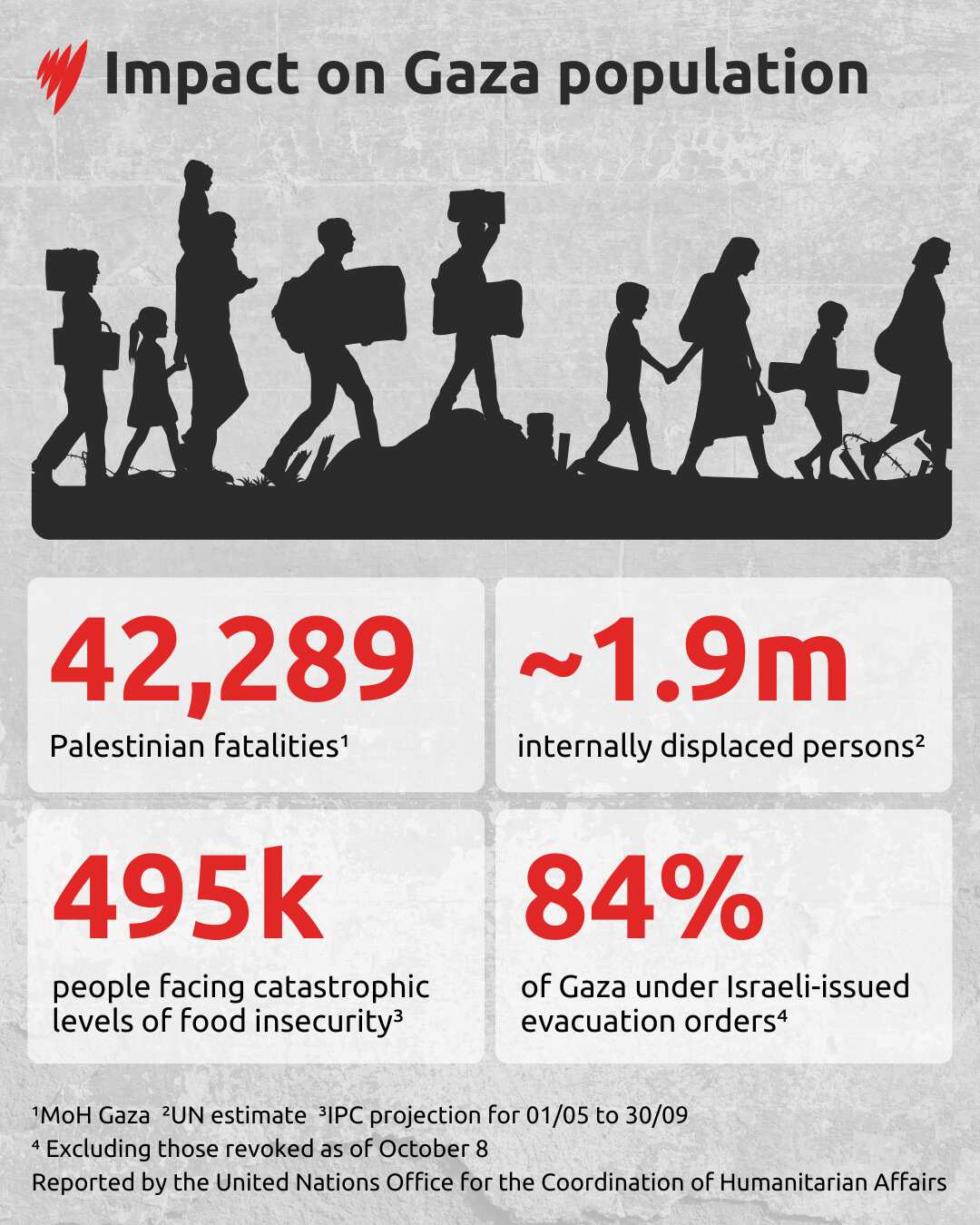
Civilians have borne the brunt of much of the Israeli onslaught, which according to Gaza's health ministry has killed at least 42,227 Palestinians over the past year, most of them civilians.
In recent weeks, operations have intensified in north Gaza around Jabalia, which is home to one of eight historic refugee camps in the Gaza Strip.
News that makes sense
Your trusted source for staying up-to-date with the world around you. Get free daily news updates and analysis, straight to your inbox.
The military has encircled the camp and sent tanks to nearby towns. Over the weekend, it ramped up airstrikes and other operations in a bid to stamp out Hamas fighters it says are trying to regroup there.
Gaza civil defence agency spokesperson Mahmud Bassal said a large number of people had been killed since the Israeli military operation against Jabalia began earlier this month.
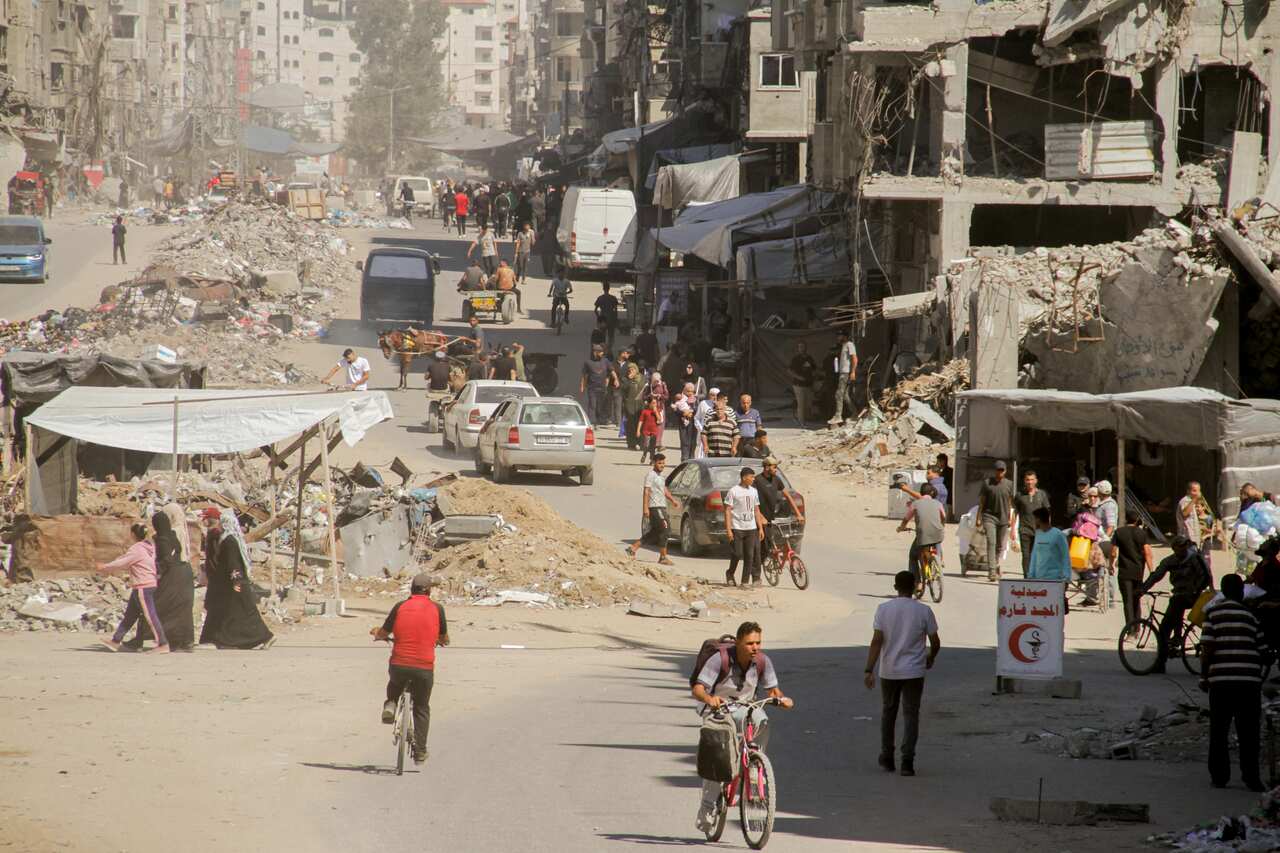
"The number of dead is high, and people are under the rubble, missing," Muhammad Abu Halima, a 40-year-old Jabalia resident, told the AFP news agency.
"For over a week, there has been no hope, no water and no means of life," he said.
The United Nations Human Rights Office said the Israeli military appeared to be "cutting off north Gaza completely from the rest of the Gaza Strip".
"The separation of north Gaza raises further concerns that Israel does not intend to allow civilians to return to their homes, and the repeated calls for all Palestinians to leave northern Gaza raise grave concerns of large-scale forced transfer of the civilian population," it said in a statement.
Israeli Prime Minister Benjamin Netanyahu on Sunday defended the assault, saying troops were targeting militants.
Hamas denounced Israel's operations as a "criminal military campaign".
UN Secretary-General António Guterres on Monday condemned the level of civilian casualties in northern Gaza, while a White House national security council spokesperson said Israel has a responsibility to do more to ensure Palestinian civilians were not harmed by its attacks against the militant group.
On Monday, an Israeli air strike killed four people and wounded dozens of others when it caused a fire and hit tents of displaced Palestinians inside Al-Aqsa Hospital, where over 500 people had been sheltering.
The hospital is in the central Gaza Strip city of Deir Al-Balah, where a million people were sheltering, medics said.
Guterres has condemned the attack.
His spokesperson, Stephane Dujarric, says humanitarian staff are assessing the damage to the hospital - and the plan to rollout out the next phase of polio vaccinations will proceed.
Israel says it made efforts to limit civilian casualties in the hospital strike.
Almost two million people displaced
The ongoing war has displaced an estimated 90 per cent of Gaza's population of 2.1 million people, according to the UN's Office for the Coordination of Humanitarian Affairs.
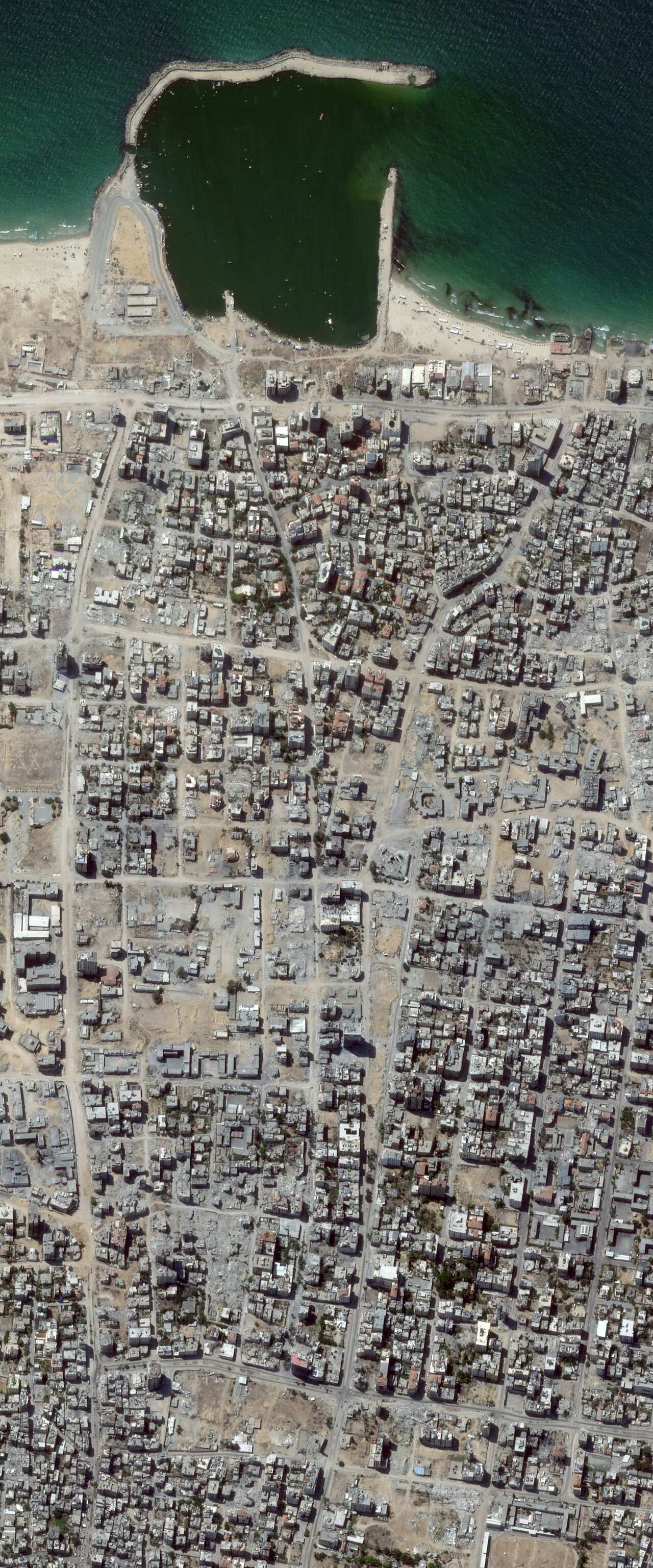
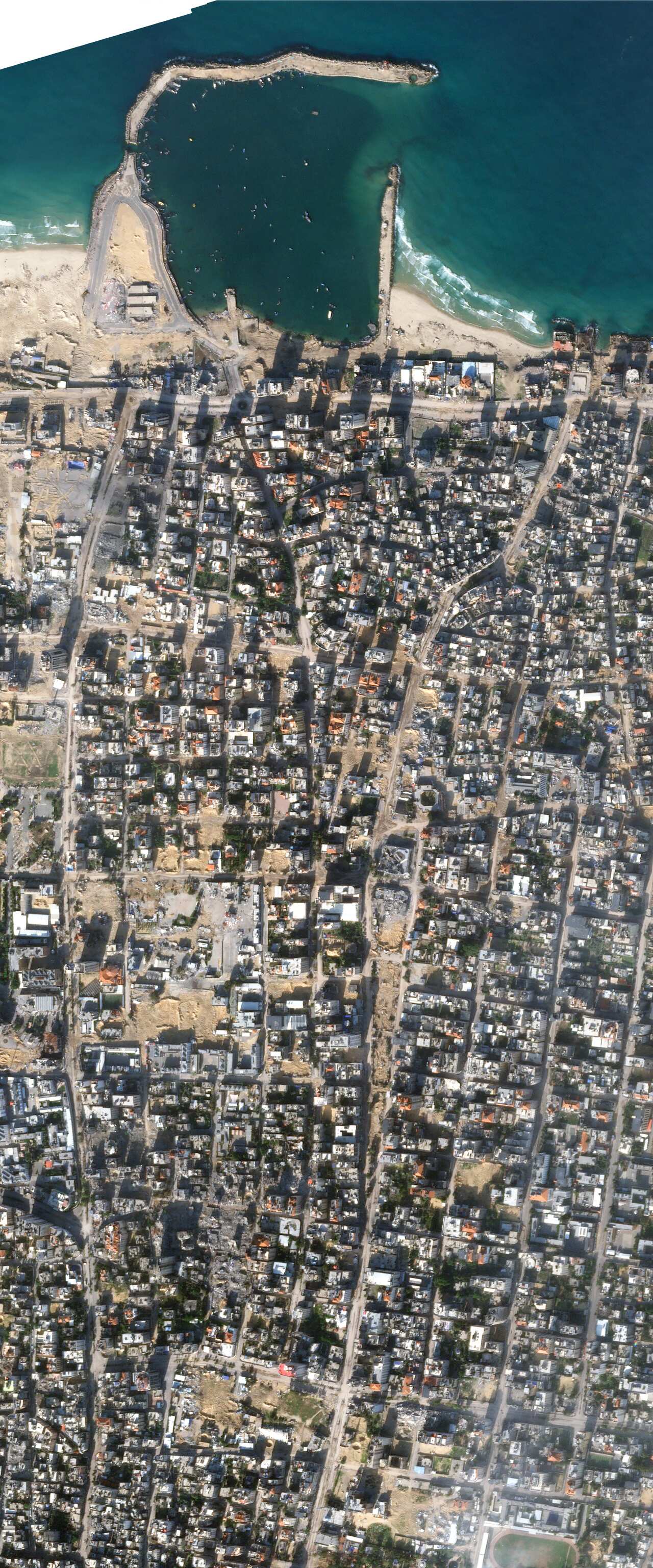
Analysis of satellite data by Corey Scher of CUNY Graduate Center and Jamon Van Den Hoek of Oregon State University, found 58.7 per cent of buildings in the Gaza Strip had likely been damaged since the start of the war.
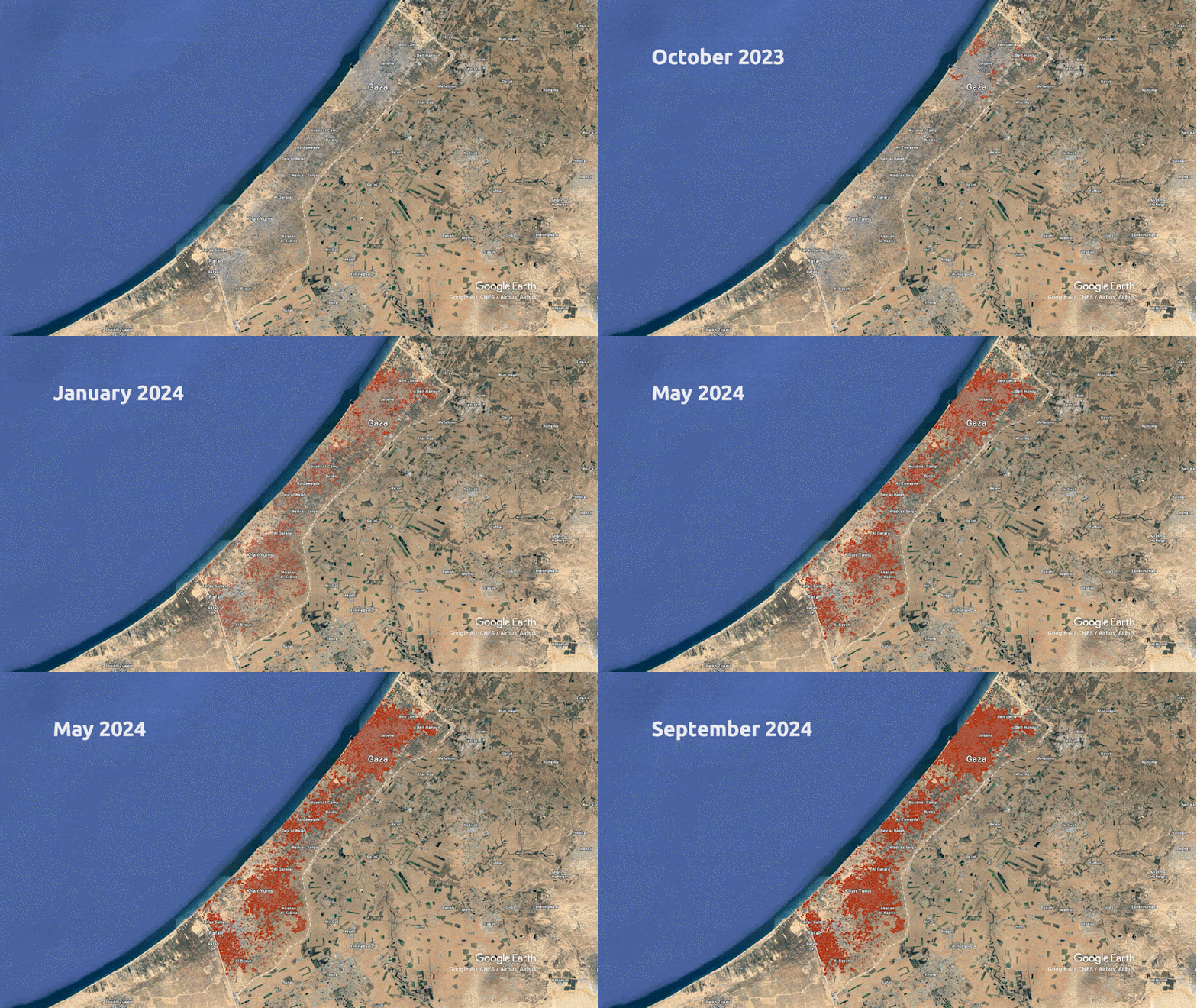
A UN Satellite Centre assessment issued on 30 September found "two-thirds of the total structures in the Gaza Strip have sustained damage" after nearly a year of war.
Last year, Guterres described the "nightmare in Gaza" as a "crisis of humanity", saying the territory had become a "graveyard for children".
Gaza's civil defence agency said Israeli shelling on Sunday had killed at least 15 people at a school serving as a shelter for displaced Palestinians in the Nuseirat camp in central Gaza.
"This school shelters hundreds of displaced people from different families, including some from Gaza, the south, and various parts of the Gaza Strip," said Mahmud Bassal, spokesperson for the agency.
The Israeli military said it was "looking into the reports".
The attack comes just days after an Israeli airstrike on a school killed at least 28 people in Gaza's Deir al-Balah.
Israel's military regularly accuses Hamas of hiding in school buildings where thousands of Gazans have sought shelter — a claim the Palestinian militant group rejects.
Life-changing injuries
Around 96,000 in the Gaza Strip have also been wounded, according to the health ministry in Gaza.
The World Health Organization (WHO) says more than a quarter of those wounded have sustained life-changing injuries, including severe limb injuries, amputations and major burns.
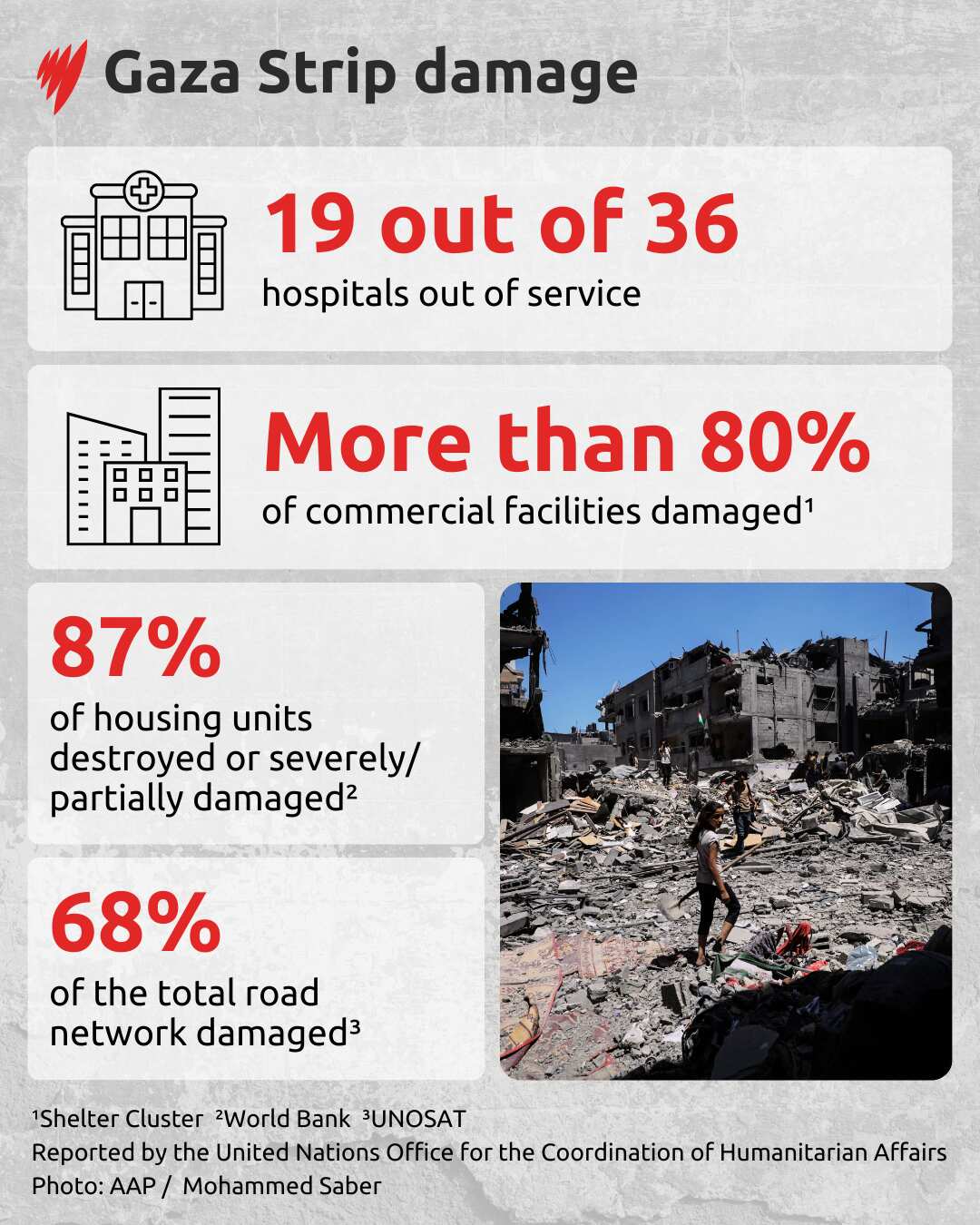
Access to medical care is difficult, with the WHO saying just 17 of Gaza's 36 hospitals remain partly functional.
An attack on al-Shifa Hospital last year saw vast swathes of the facility completely destroyed.

A UNICEF official told AFP an estimated 19,000 children are unaccompanied or have been separated from their parents.
The UN's Commission of Inquiry report in July concluded Israel's retaliation against Gaza had resulted in war crimes, crimes against humanity and other international law violations.
Israel's operations have also seen it accused of genocide, although Israel has strongly denied the accusation.
Israel's push for total victory continues
Netanyahu has repeatedly pledged to achieve total victory in Gaza by eradicating Hamas.
After more than a year of war, the Palestinian militant group is believed to have been dramatically weakened by the killing of several of its leaders and thousands of fighters.
But Hamas has not been crushed outright, and fighters regrouping in pockets of the territory spark renewed offensives by the Israeli military.
In recent months, Israel has broadened the conflict to include attacks on Lebanon, launching a ground offensive against Hezbollah militants on 30 September.
The escalation has raised fears of a region-wide escalation that could draw in Iran and the United States.
Israel's military said on Saturday its forces had attacked roughly 280 "terror targets" during combat operations in Lebanon and Gaza over the Yom Kippur (Day of Atonement) weekend.
"Among these targets were underground terror infrastructure sites, weapons storage facilities, military command centres, terrorist cells, and additional terrorist infrastructure sites."
With additional reporting by Agence France-Presse.







