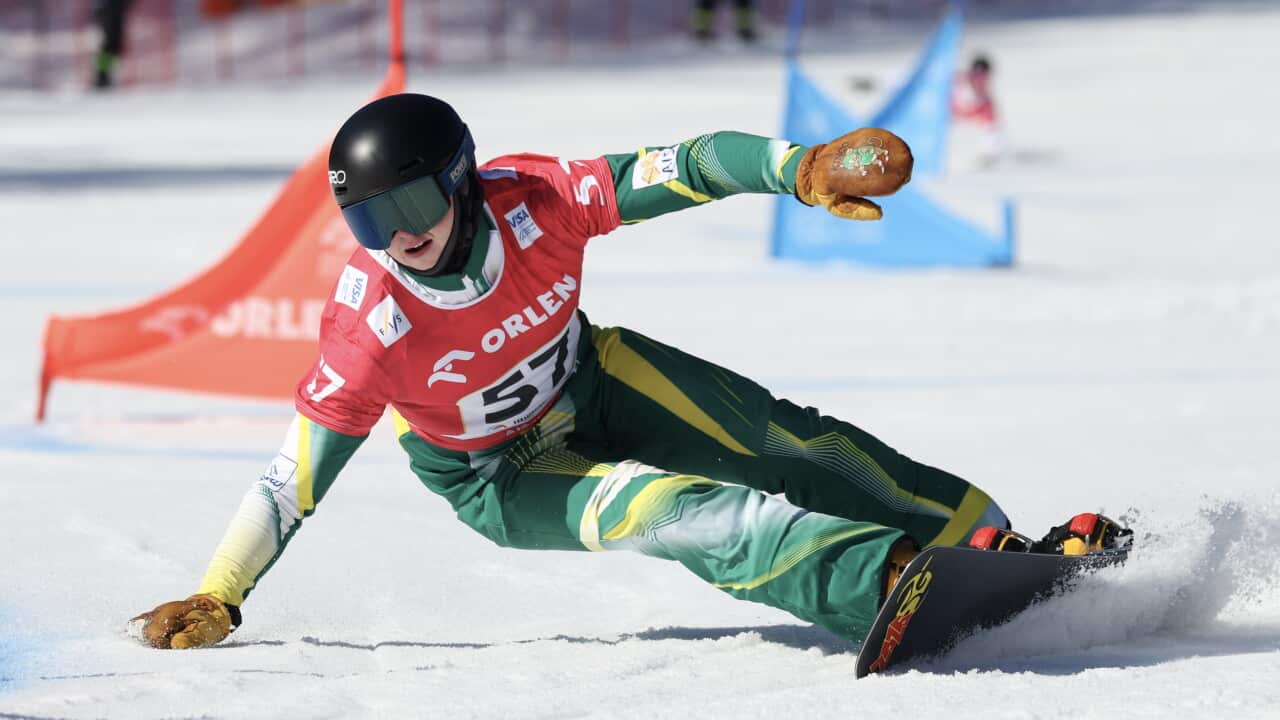
Ski resorts across Australia have faced one of the hottest winters on record. For Australian snowboarder Harvey Edmanson, this is a threat to his future, and to the future of young snow athletes across Australia.
Speaking to SBS, the member of the Australian Alpine Snowboard National Team said: "If I don't have snow and training opportunities in Australia, it's going to make it really hard to continue."
Many professional snow athletes, including Edmanson, are self-funded. He has to fit his training around working as a façade designer in Melbourne.
The 27-year-old does most of his training at Mount Buller in Victoria but also ventures further north to the Perisher and Thredbo resorts in NSW.
Typically, he aims to train on the slopes from early July until late September. This year his start was delayed by three weeks and he was forced to stop in late August.
News that makes sense
Your trusted source for staying up-to-date with the world around you. Get free daily news updates and analysis, straight to your inbox.
"It makes it hard when I miss out on over a month of training," Edmanson said.
Additionally, to train at a high level, Edmanson and other athletes need a sectioned-off part of the slope where they can set up racing conditions.
Ski resorts are usually happy to accommodate this, but have found it harder this year due to having a smaller area with sufficient snow depth.
"When there's only limited snow and limited run hill space, then it's not possible," Edmanson said.
Australian snow athletes often compete overseas during the northern hemisphere’s winter before returning to train in Australia in the off-season.
As snow seasons get shorter, Edmanson said athletes are skipping Australia entirely and starting to look overseas for off-season training.
This is not something he can do given he needs to work, and he joked that he "can't commute to New Zealand".
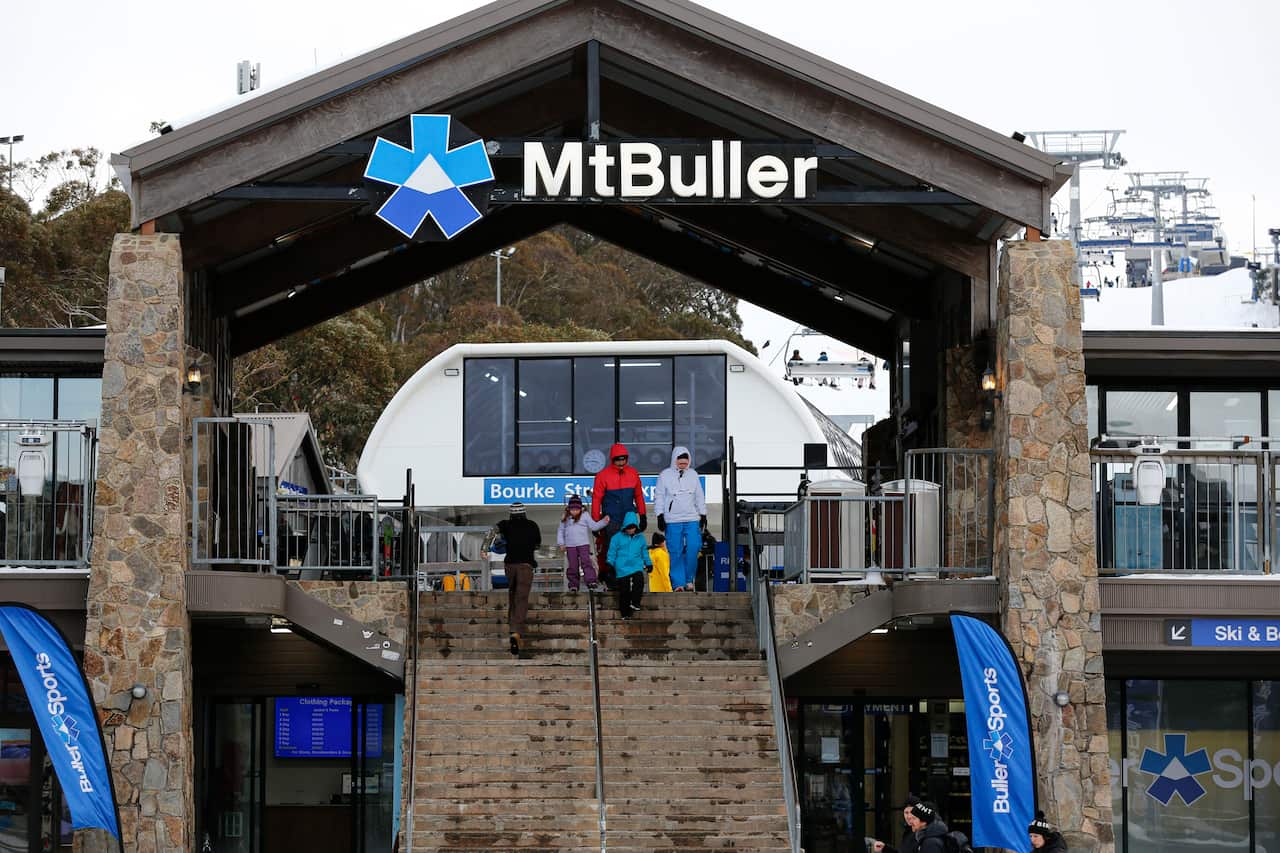
Will young athletes feel the consequences?
Some in the snow sports community fear for future generations of Australian snow athletes if opportunities continue to dwindle for younger athletes seeking to develop.
Edmanson runs a futures program for developing athletes and says there's a lot of young athletes who are "looking to compete, looking to train, and they don't get enough time on snow in Australia".
Many younger athletes need to balance school and practice. Edmanson didn’t travel overseas to compete until he finished school.
"The most important part of my training and development all happened in Australia," he said. "It's really scary that there's a lot of young athletes that might not have that opportunity."
This year’s Milano Cortina Winter Olympics provided an injection of optimism into Australian snow sports after the Australian team won a national best three golds, two silvers and one bronze.
To continue this momentum, Edmanson says we need to give young athletes "that opportunity from riding at home".
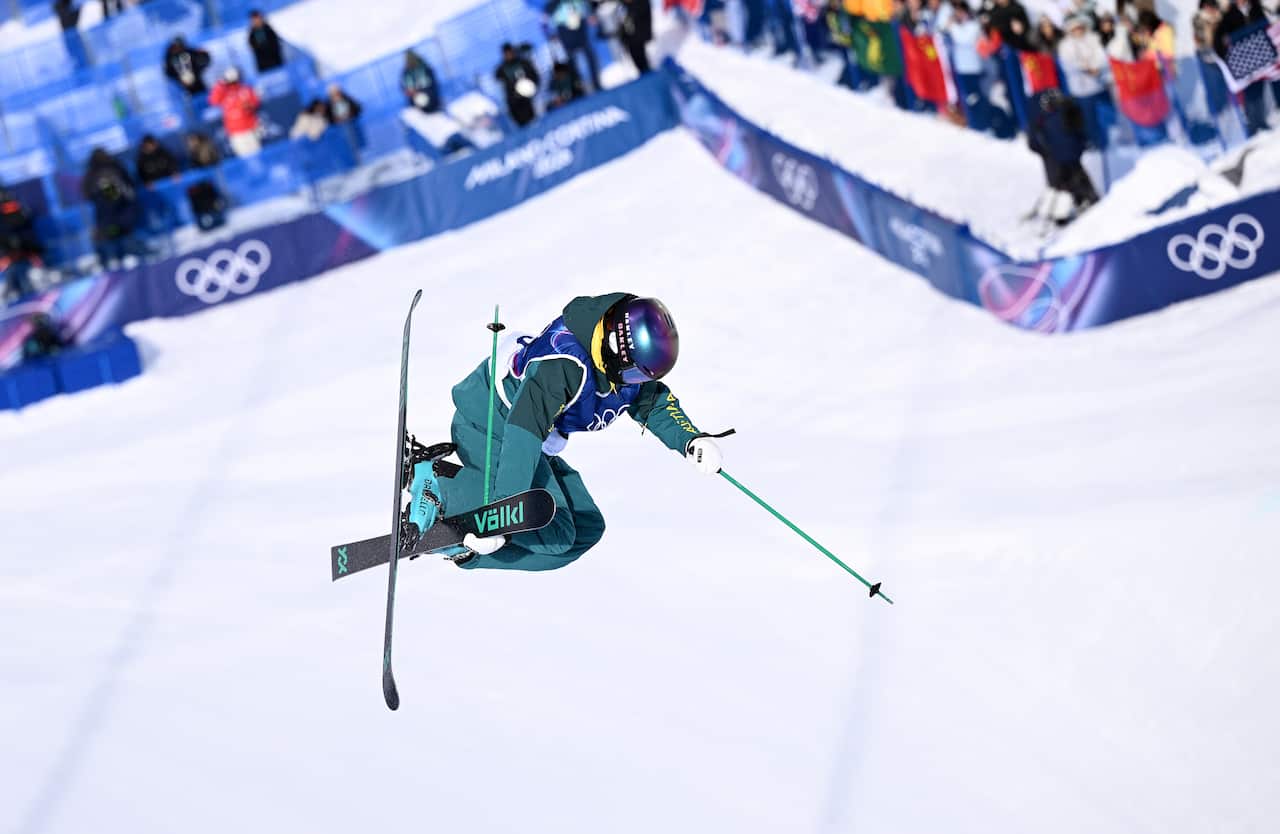
What does the future hold for Australian snow?
Several factors contributed to this year’s historically short snow season. A spokesperson for the Bureau of Meteorology told SBS that: "Long periods with high pressure systems in the Tasman Sea occurred during winter, directing warmer air from the north over south-eastern Australia."
Dr Linden Ashcroft, a senior lecturer in climate science at the University of Melbourne, told SBS: "we just didn't get the big cold fronts, the big Antarctic blasts of cold air, as often this winter".
Not every year will be as light on snow as this year, experts say, but broader trends are concerning.
Also speaking to SBS, the University of Canberra’s Duanne White, associate professor in ecology and genomics, said: "there's a lot of things that go into determining how much snow we have in the mountains in any particular one year", however: "the trend is obvious".
These conditions are likely to deteriorate over the coming years, with Ashcroft saying: "We already know that next year is going to be the world's hottest on record."
"We have already locked into not having snow seasons like the seasons that maybe our parents had."
Is it too late for snow sports in Australia?
Snowboarding and downhill skiing require around 30cm of snow. Resorts must maintain this level of snow for at least 60 days a year to remain economically viable.
The use of snowmaking machines has become necessary for many resorts. But these also require cold temperatures to operate.
White explained that resorts "generate snow in a factory, effectively on site with a giant freezer, and then blow that onto the slopes," but added that "that's not exactly sustainable for a broad scale".
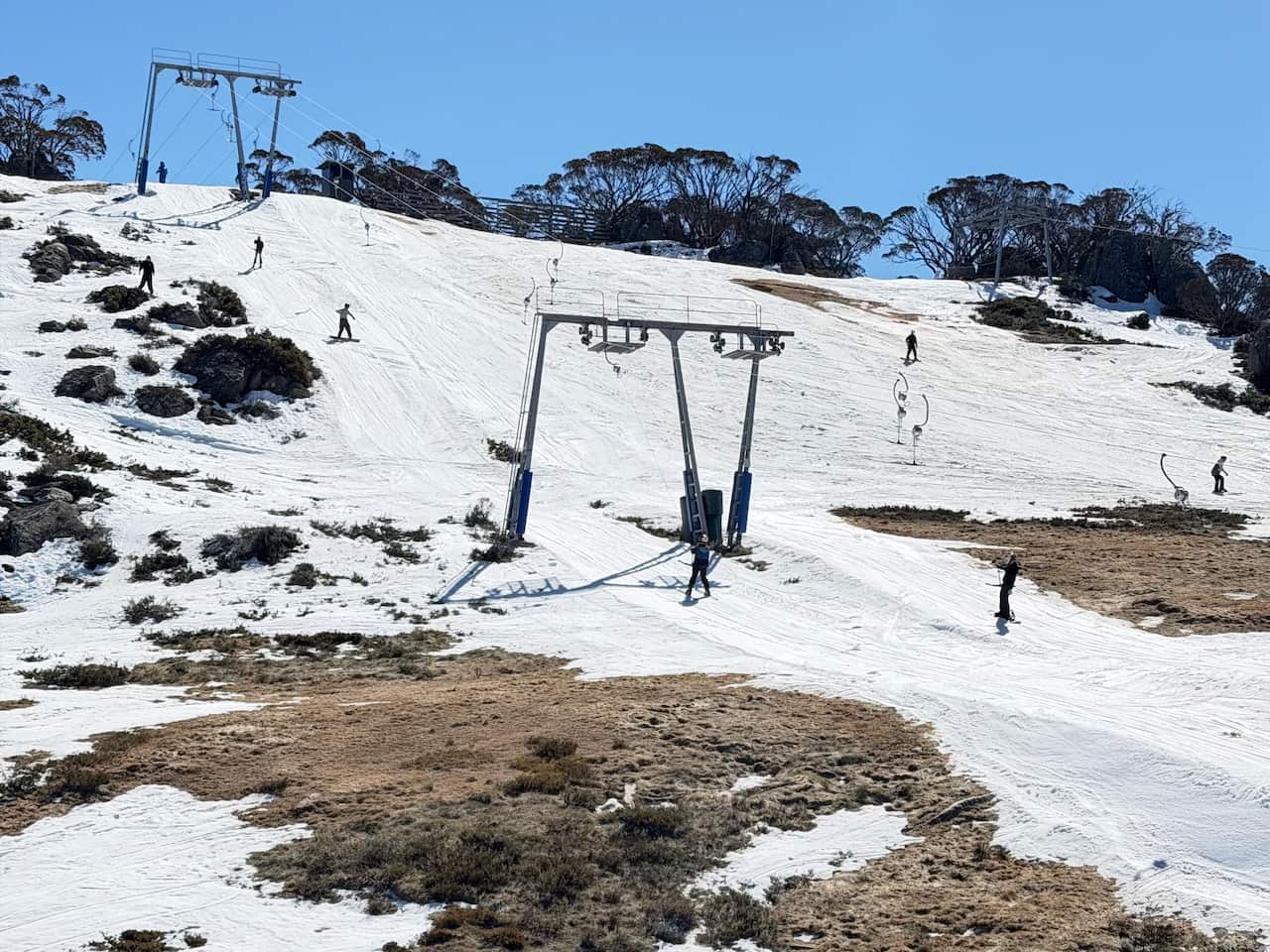
Despite the downward trend, Ashcroft said: "It's never too late. It's never too late to stop making things get worse." Edmanson echoed this saying: "No, there's steps [people can take]".
Edmanson works with Protect Our Winters (POW), an organisation made up of climate scientists and advocates, that seeks to protect cold weather in Australia.
Modelling from POW predicts that under a "low emission scenario" Australian snow sports could still have a strong future. To reach this scenario, the organisation advocates for a "transition away from fossil fuels".
Ashcroft said: "It's not too late to save the snow, but we have to act now, and we have to act fast." However he said we "need to prepare for a future that doesn't look like the past".
Edmandon said he hopes the "next generation have the same opportunities that I do, that I had when I was a developing athlete".
"Being in the Australian Alps, is an incredible environment. It's super beautiful, and to be able to compete and train there is unreal."
For the latest from SBS News, download our app and subscribe to our newsletter.







