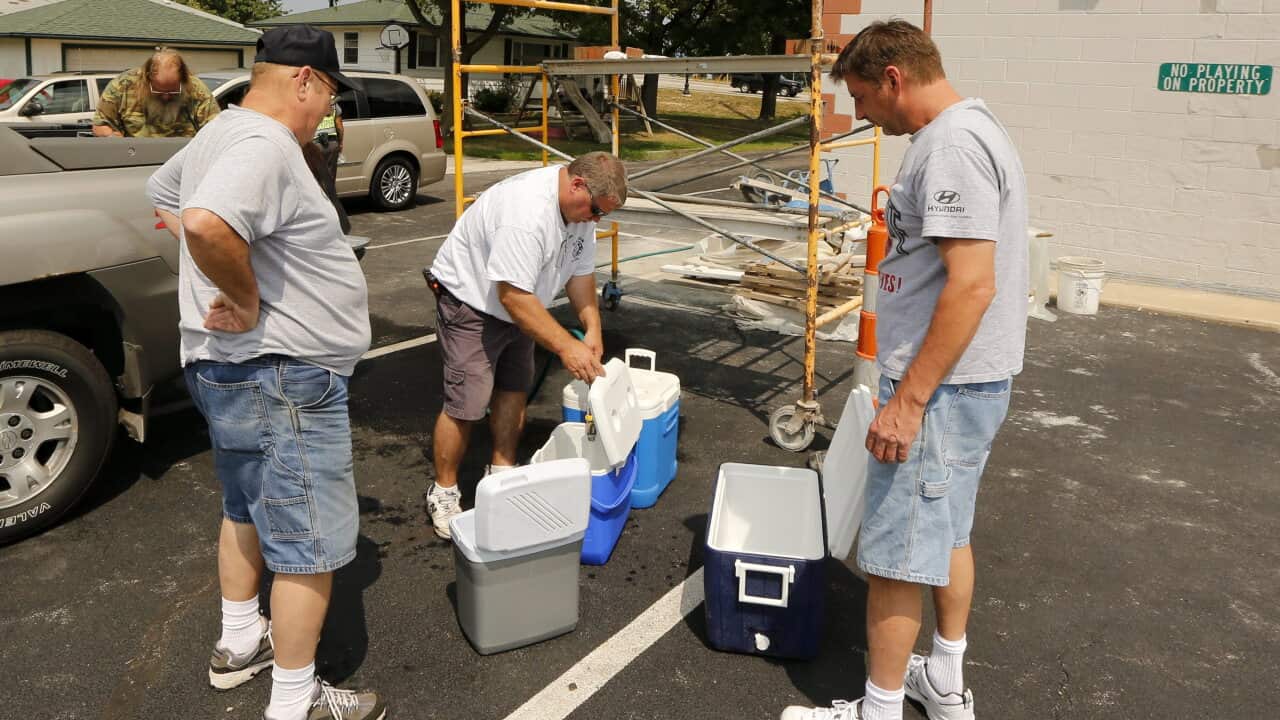
Hundreds of thousands of Toledo, Ohio residents have entered a third day unable to drink their tap water after officials warned that the supply is polluted.
In a rare 3am press conference, Mayor Michael Collins said the ban, in place since Saturday, remained in effect, even though tests showed the quality of the water was improving.
"It's my decision to keep the status quo in effect for at least the next five or six hours," he told local media on Monday.
"I'm not going to make a decision to expose the city until I feel that I can put my head on a pillow and be comfortable with my decision," Collins said, according to ABC affiliate WTGV.
More tests were needed, he said.
News that makes sense
Your trusted source for staying up-to-date with the world around you. Get free daily news updates and analysis, straight to your inbox.
The ban affects up to 500,000 area residents, local media reports.
Residents in the midwestern US city and its suburbs were also warned not to boil the water because that would increase the concentration of the microcystin toxin.
"The toxins are the result of a large bloom of algae in the western side of Lake Erie," where the city gets most of its water, the Ohio Management Agency said in a statement Sunday.
The local Red Cross said that the toxin can cause nausea, diarrhea, vomiting, and affect liver functions but is rarely fatal to humans.
Governor John Kasich issued a state of emergency for three counties Saturday due to the contaminated water, allowing state officials to divert resources to the affected area.
National Guard soldiers were mobilised and over the weekend help distribute bottled water and pour water into containers from military tanks vehicles.
"We are not going to get off of this until this whole thing gets solved, no matter how long that it takes," Kasich said at a joint press conference on Sunday with Collins.
Algae had likely bloomed in the lake due to phosphorous and nitrogen from farm fertiliser runoff, officials said.







