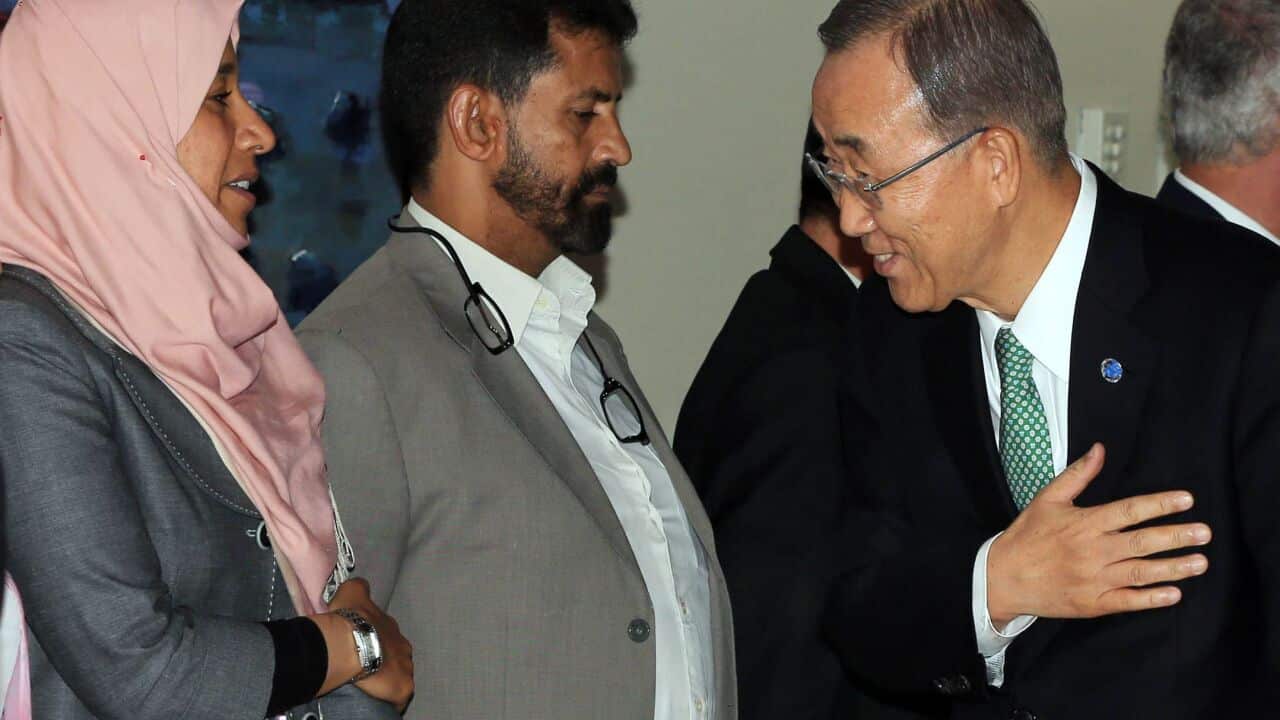
UN chief Ban Ki-Moon has made a surprise visit to Libya and urged warring factions to end the turmoil gripping the North African nation since Muammar Gaddafi was toppled in 2011.
The authorities have struggled to impose their will across a country awash with weapons and powerful militias that ousted and killed the veteran dictator.
"Let me be clear: if violent confrontations do not cease immediately, if sustainable peace is not restored, prosperity and a better life will be a distant dream," Ban told rival parliamentarians on Saturday, according to an official transcript of his remarks.
He flew to Tripoli just weeks after the outgoing government admitted from its safe refuge at Tobruk in the east that it had in effect lost control of the capital to armed militias.
The UN chief spoke ahead of meetings with political parties to shore up talks aimed at ending a split that has further destabilised the oil-rich nation.
News that makes sense
Your trusted source for staying up-to-date with the world around you. Get free daily news updates and analysis, straight to your inbox.
The discussions would include the deputy president of the house of representatives, other members of the house and lawmakers who boycotted parliamentary sessions, it said.
Ban urged the formation of a national unity cabinet, stressing the importance of "a strong government able to implement decisions" in the country where militias control swathes of territory.
"There is no alternative to dialogue," Ban said ahead of the meeting of rival MPs, also attended by the incoming EU foreign policy chief, Italian Foreign Minister Federica Mogherini, as well as envoys from Britain, France and Malta.
The UN mission chief in Libya, Bernardino Leon, managed to bring the rival factions together for talks in the remote oasis town of Ghadames on September 29.
Ban on Saturday called the talks "a first courageous step", adding "I am here to support the process that was initiated in Ghadames."
Libya's parliament, elected in June, is recognised by the international community but contested by the militia controlling most of Tripoli and by Islamists who hold much of the eastern city of Benghazi.
The UN refugee agency said on Friday that clashes between rival militias had driven an estimated 287,000 people from their homes, including about 100,000 who have fled the outskirts of the capital.
Another 15,000 people were estimated to have been displaced around Benghazi, the country's second city, it said.
"The need for healthcare, food, and other basic commodities - plus for shelter ahead of winter - has become critical," said UN refugee agency spokesman Adrian Edwards.
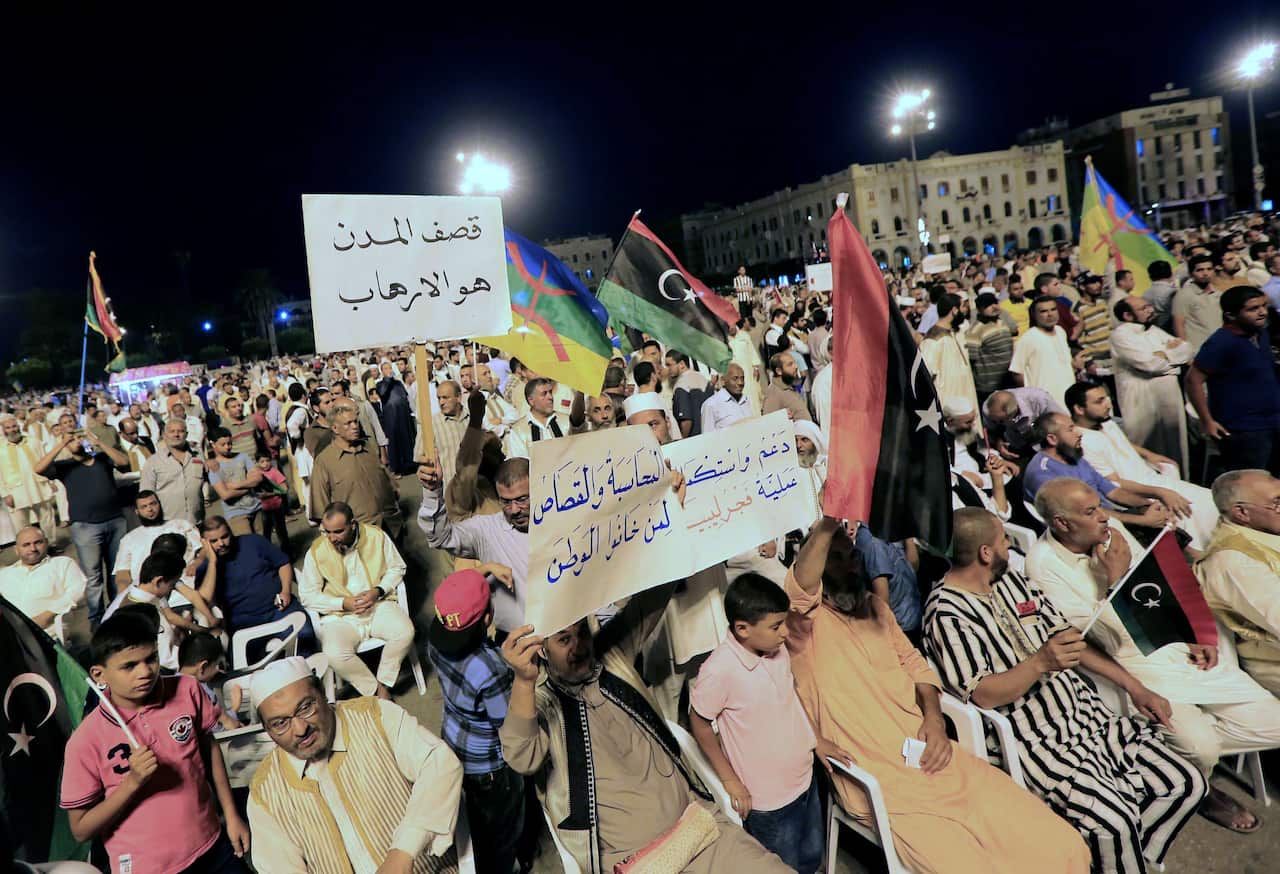
On Friday, Libyan protestors formed a large demonstration calling for the removal of Libya's Parliament in central Martyr's Square in Torbruk, Tripoli. The administration of Abdullah al-Thani and parliament, elected in June, both moved to Tobruk in August for security reasons when Islamist-backed militias captured most of the capital Tripoli and second city Benghazi.







