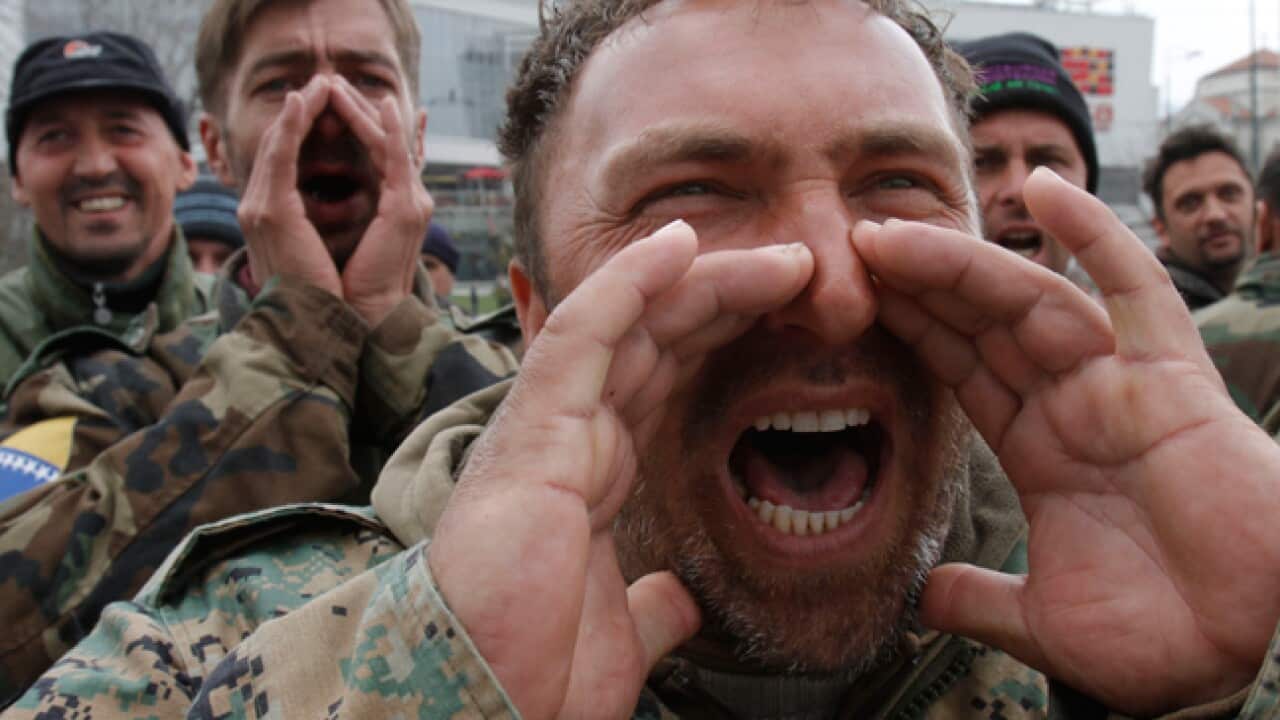
The war in Bosnia-Hercegovina, which began 20 years ago this week, was part of a series of conflicts which tore apart the socialist federation of Yugoslavia, created by Josip Broz Tito at the end of World War II.
Key dates:
June 1991: Croatia and Slovenia, two of the six multi-ethnic states making up Yugoslavia, become the first to secede.
News that makes sense
Your trusted source for staying up-to-date with the world around you. Get free daily news updates and analysis, straight to your inbox.
Although the secession of Slovenia takes place relatively peacefully, that of ethnically-mixed Croatia leads to full-scale war by the end of 1991.
- February, 1992: In a referendum, the citizens of Bosnia vote in favour of independence, which is declared on March 3. But while ethnic Croat and Muslim Bosnians vote mainly in favour, the Serb minority boycotts the poll.
The following month, representatives of Bosnia's Muslims, Croats and Serbs agree to set up a loose federal structure. Bosnian Serbs, supported by the nationalist leader of Serbia, Slobodan Milosevic, have already carved out their own area.
- April 5, 1992: Bosnian Serb troops armed by the Belgrade-controlled federal Yugoslav army, lay siege to the Bosnian capital Sarajevo. The siege will last for almost four years and cause an estimated 11,000 deaths.
- April 6, 1992: The European Community, now the European Union, recognises Bosnia as an independent state.
Also in April, the United Nations deploys a 14,000-strong Protection Force, UNPROFOR to both Bosnia and Croatia.
- July 1992: UN forces, which control the Sarajevo airport, begin an airlift to provide supplies to the civilian population.
Over the year, Bosnian Serb forces gain control of much of the country, rounding up and in some cases massacring Muslim and Croat Bosnians. Tens of thousands of captives are herded into camps, where torture, rape and other human rights abuses are widespread.
- April 1993: The North Atlantic Treaty Organisation (NATO), acting for the UN, declares a air exclusion zone over Bosnia.
The UN creates six "safe areas" for civilians, in Sarajevo and the towns of Srebrenica, Tuzla, Zepa, Gorazde and Bihac.
Diplomatic attempts to end the fighting fail.
- February 1994: In one of the worst attacks on Sarajevo, a Serb shell kills 68 people in a crowded city marketplace.
NATO begins military action, shooting down several Serb warplanes.
- March 1, 1994: Under US pressure the Bosnian Muslims and Bosnian Croats join forces in a newly created Muslim Croat Federation which ends 11 months of conflict between the parties.
- December 1994: Bosnian Serbs and Muslims sign a ceasefire agreement brokered by former US president Jimmy Carter. A similar agreement is signed the following month by Bosnian Serbs and Croats, but the fighting continues.
- May 1995: Bosnian Serb forces shell the town of Tuzla, killing 75.
In the same month, the Bosnian Serbs take over 370 UN forces members hostage, holding them for almost a month.
- July 1995: In the worst single incident of the war, Bosnian Serb forces take over the UN protected 'safe area' of Srebrenica and massacre up to 8,000 Muslims men and boys.
- October 1995: A ceasefire brokered by the United States comes into force over all of Bosnia.
- November 21, 1995: After three weeks of talks in the US city of Dayton, the leaders of Bosnia, Croatia and Serbia agree to a peace deal, which is signed in Paris the following month.
- December 1995: A NATO force is deployed to keep the peace in Bosnia, which has been divided into a loose Muslim-Croat federation and a Serb entity. The NATO mission is later taken over by the European Union.
Over almost four years, the Bosnian war left some 100,000 people dead and created 2.2 million refugees and displaced persons. Many have since not been able to return to their original homes.







