(Transcript from World News Australia Radio)
Tongans have emerged from the most powerful cyclone ever to hit the Pacific archipelago to assess the damage and begin the recovery process.
As Aileen Phillips reports, Cyclone Ian ripped through the islands over the weekend, destroying much in its path.
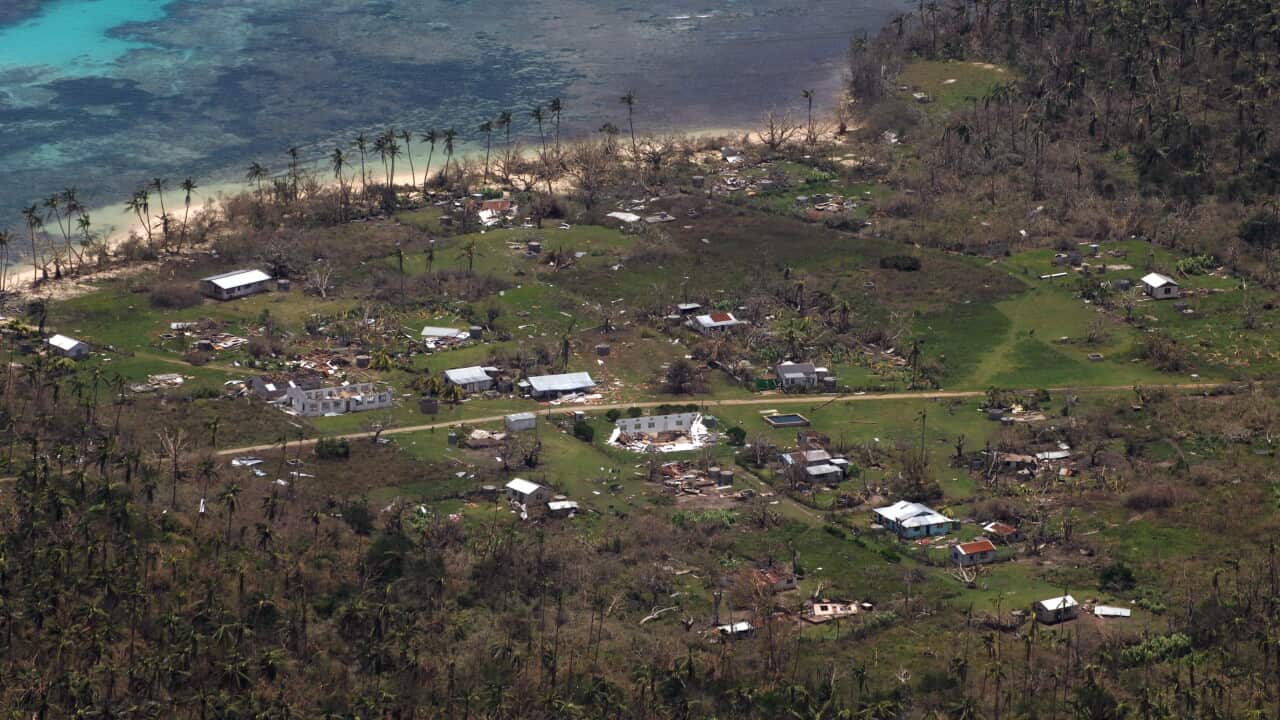
Category five Cyclone Ian brought winds of more than 200-kilometres per hour that flattened buildings, uprooted trees and destroyed crops.
The low-lying Ha'apai islands, between the main island of Tongatapu in the south and the Vava'u islands to the north were the worst hit.
News that makes sense
Your trusted source for staying up-to-date with the world around you. Get free daily news updates and analysis, straight to your inbox.
Tongan authorities say 70 per cent of houses and buildings in Ha'apai -- which is home to about 8000 people --were damaged or destroyed.
There has been one confirmed death as a result of the cyclone and Sune Gudnitz, of the United Nations office for the Coordination of Humanitarian Affairs, has told the ABC it's amazing there haven't been more.
"Fortunately I would say that casualty rates at this stage seem very low, and that of course is very much a testament, I think, to awareness in the communities of what to do in these kinds of situations, and also to the proactivity of the government to get people into shelters and so forth. So we hope that so far that rate will stay low even if people in communities have been very damaged through the loss of property and other things."
Cyclone Ian was downgraded to a category four cyclone on Saturday morning, but increased in intensity later in the day to be restored to the most severe rating of category five as it hit Ha'apai.
Ha'apai governor Tu'i Ha'angana says the destruction was so severe that he can now see from one side of the island to the other.
The Red Cross established a policy last year of maintaining containers of relief supplies on most islands, and the head of its Tongan mission says it's been able to provide immediate assistance.The Tonga navy has sent two patrol boats to Ha'apai, and the Matangi Tonga news website has reported the government is considering a request for overseas aid.
Several aid agencies based in New Zealand and Australia have sent teams to Tonga to assess the damage and what's needed to rebuild.
One of those agencies is Oxfam, and its Australian Pacific Regional Manager, Vita Maiorano, says understanding the true impact of Cyclone Ian is still at a very early stage.
"Right now what's happening is you've got a lot of people on the ground within Tonga who are actually doing initial rapid assessment to understand the extent of damage within the country. What we're learning is that homes and infrastructure have been impacted. There's been an impact on water and the level of sanitation and livelihoods and the access to food and farming. And subsistence farming is likely to be impacted as well."
The Australian Tongan community is practised in dealing with natural disasters in Tonga.
The archipelago frequently experiences severe cyclones and in 2009 was hit by a tsunami after an earthquake.
The Reverend Fakava Finau of the Wesley Methodist Church in Melbourne says the local community is ready to help.
"I think with us in the the church is that the first thing we'll look at is that we as a community will start to pray for the people and a quick recovery, for help and donations from the other neighbouring countries. And we'll talk as ministers how we can collect food, clothes, things like that. We'll probably put in some money and send it through the Red Cross or from us direct to Ha'apai groups where they can distribute to the people."
Mr Finau says in Tonga itself, the residents will be picking themselves up and rebuilding.
"The Tongans are a community of people where they look to their neighbours (for) what needs to be done. The might start to build a shed to start with. Anything they could do to help the community, the local community will start to move on and see what needed to be done. They will put hands on things to support and to help those who are affected."







