
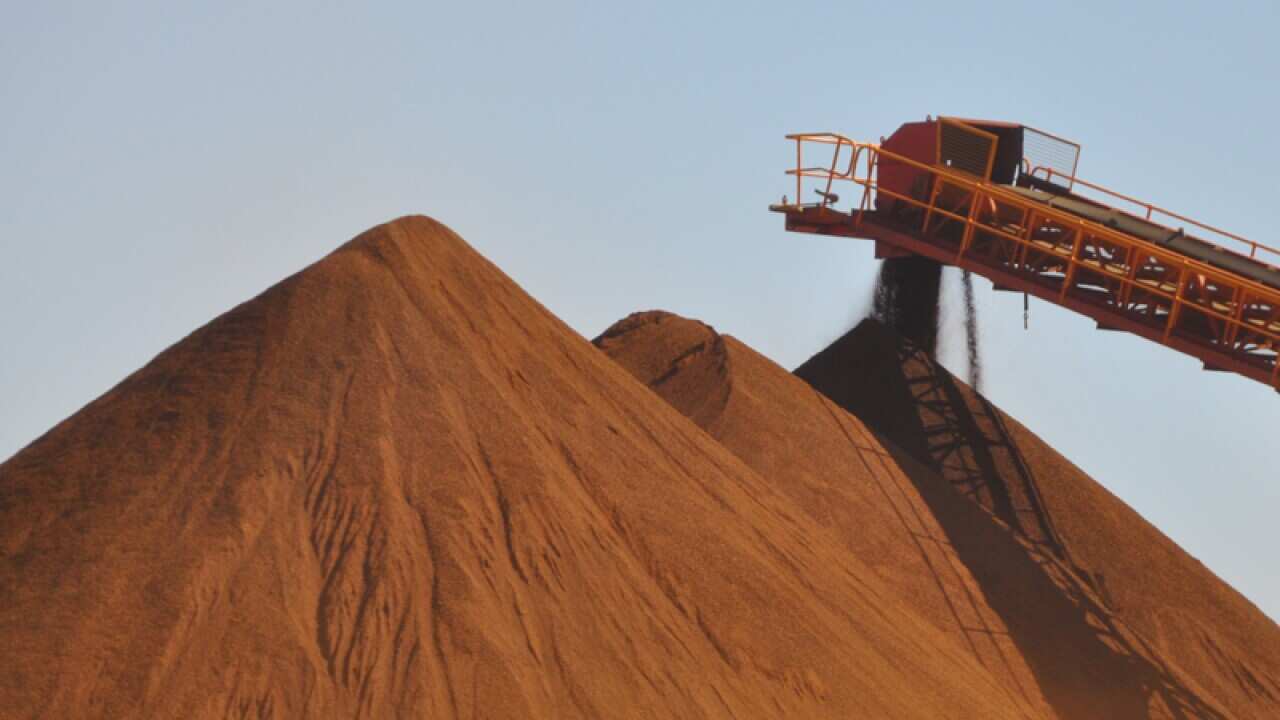
Falling iron ore prices have caused the biggest blow out in the trade deficit in 16 months.
Australia's trade balance was $1.9 billion in the red in May, nearly triple April's $780 million deficit and much larger than economists had expected.
It was the second monthly trade deficit in a row and the largest since January 2013.
Exports fell five per cent in May, while imports were down one per cent, the Australian Bureau of Statistics figures showed.
NAB senior economist David de Garis said rising volumes in mining exports were not enough to offset a severe drop in iron ore prices.
"Apart from the cyclone season at the turn of the year iron ore shipments just kept carrying on rising," he said.
"We know that the fall in prices have been unwinding a lot of the rise in volumes."
The iron ore price plunged 12.8 per cent in May, starting the month at $US109 a tonne and dropping to $US95.
JP Morgan economist Ben Jarman doesn't expect there will be a return any time soon to the strong trade surpluses recorded earlier the year.
"Today's numbers confirm our sense that the trade outcomes recorded in the first quarter were as good as it gets," he said.
"There should still be price drags still in the pipeline for ores revenues in coming reports, unless prices deliver a meaningful recovery."
Commonwealth Bank economist Gareth Aird said the fall in iron ore prices was not offset by a drop in the Australian dollar, which remained strong in May.
"As bulk commodity exports are priced in US dollars, the net result of a decline in prices and a flat Australian dollar weighs on export receipts," he said.
However he is confident that there will be return to surplus soon.
"In our view, export receipts will lift due to higher volumes and a stabilisation in commodity prices," Mr Aird said.
"Import growth is expected to remain soft as the decline in mining capital expenditure weighs on capital goods imports."
Net exports made a large contribution of 1.4 percentage points the Australia's economic growth in the first quarter of the year, but Mr Aird doesn't expect that to be repeated in the June quarter.





