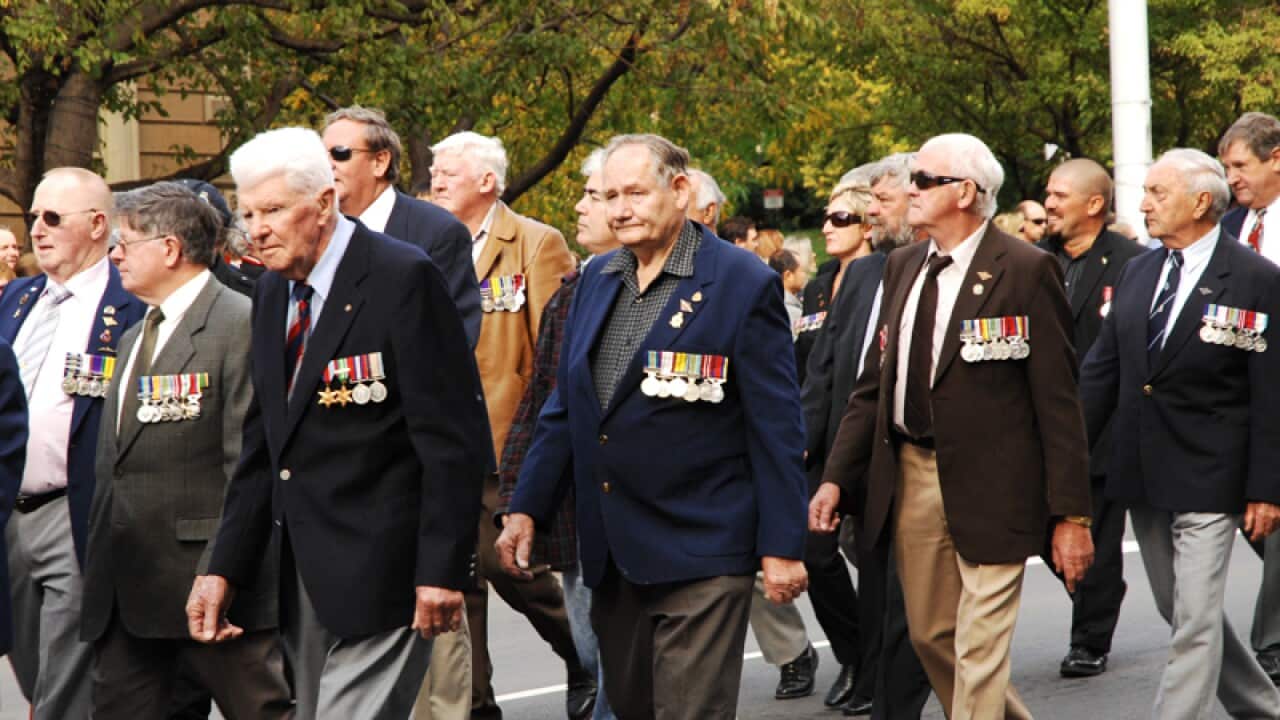
Haunted by images of mangled bodies, Vietnam veteran Tony Dell hasn't slept for more than four hours a night during the past 40 years.
When he returned home in 1968 after serving a year in Vietnam he became introverted, edgy, angry, had difficulty sleeping and his marriage broke down.
It wasn't until 2008, when he began talking about the war, that he was diagnosed with post-traumatic stress disorder (PTSD).
"I still get flashbacks ... bullets whizzing over your head and mangled up bodies," the former Australian Test cricketer told AAP from his home on the Sunshine Coast.
"The problem is it sinks into your subconscious and stays there and it ferments and eventually it comes out as PTSD."
News that makes sense
Your trusted source for staying up-to-date with the world around you. Get free daily news updates and analysis, straight to your inbox.
Keen to create more awareness around the disorder which affects five to 10 per cent of Australians, Mr Dell on Wednesday became the first of 300 Vietnam veterans to take part in a new Queensland-based research project into PTSD.
The Gallipoli Medical Research Foundation and RSL Queensland study will look at the health risks of PTSD such as heart disease and cancer, and the role genetics plays.
"We think that stress is interacting with genes that predispose people to these diseases," lead researcher Queensland University of Technology Professor Ross Young told AAP.
Of those veterans involved in the study, half suffer from PTSD.
Prof Young is hopeful the year-long study will improve diagnosis, treatment and potentially prevention.
Mr Dell treats his symptoms by exercising and talking about his war experience, and has spent the past several years encouraging others to speak to out.
"If I'd talked about the war when I first got home things wouldn't have been so tough," he said.