
This audio is voiced by AI and may occasionally mispronounce words.
Share your feedback and help us improve this feature. Read more about how we use AI at SBS here.
Seventy years ago, two young Greek women arrived in Australia on the same ship, carrying hopes of a new life.
Maria Alexakis was 19. Eleni Doukas was 22.
Their friendship began on a 38-day voyage from Athens to Sydney aboard the MS Tasmania, one of the ships that came to be known as "bride ships" — carrying thousands of young Greek women to Australia in the post-war years.
Ten days after arriving in Sydney, Maria wore a hastily bought wedding dress at a Sydney department store to marry Spiro Alexakis.
A week later, Eleni wore the same dress at her wedding to Peter Doukas.
News that makes sense
Your trusted source for staying up-to-date with the world around you. Get free daily news updates and analysis, straight to your inbox.
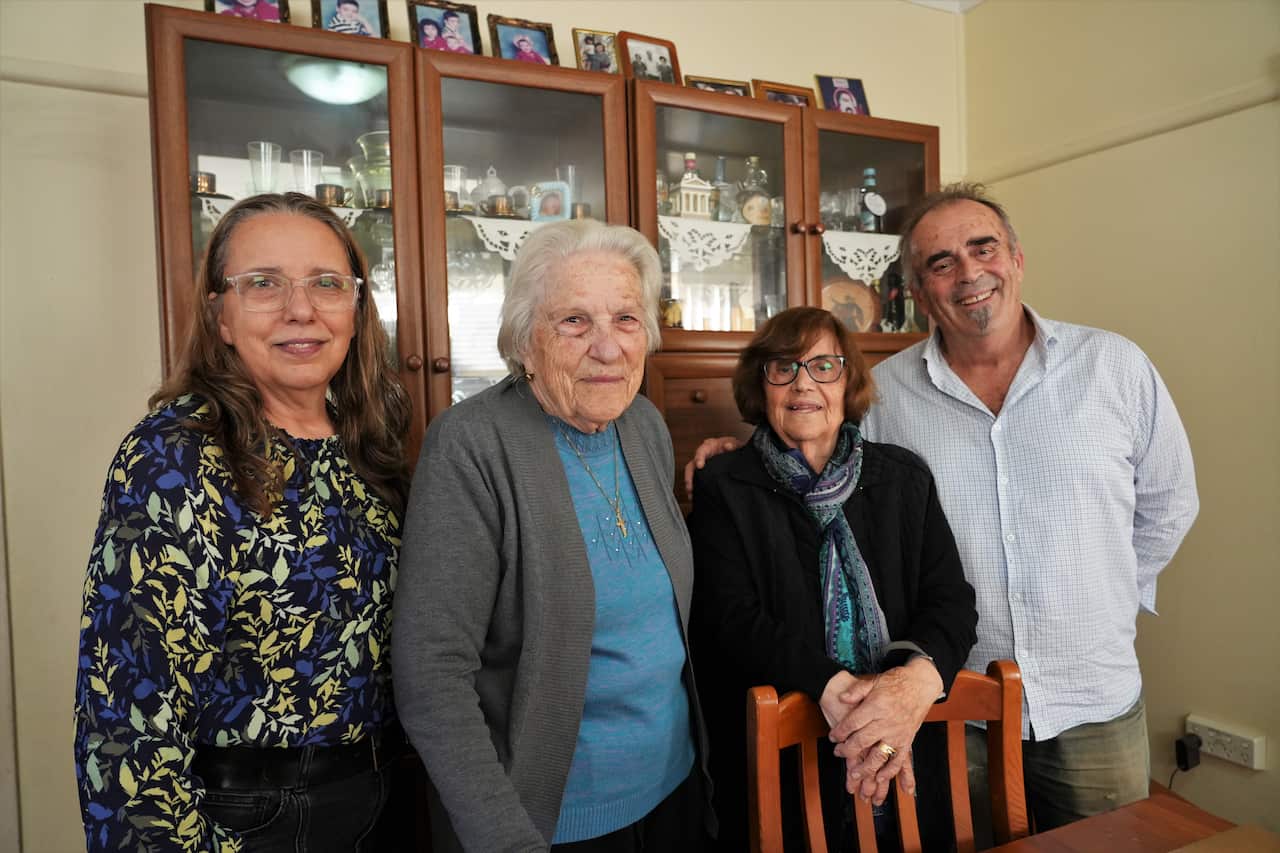
Now both great-grandmothers — yiayias — embrace warmly in Maria's living room in Padstow in Sydney's west.
"What are they doing to us?" Eleni exclaims with a cheeky, slightly exasperated grin.
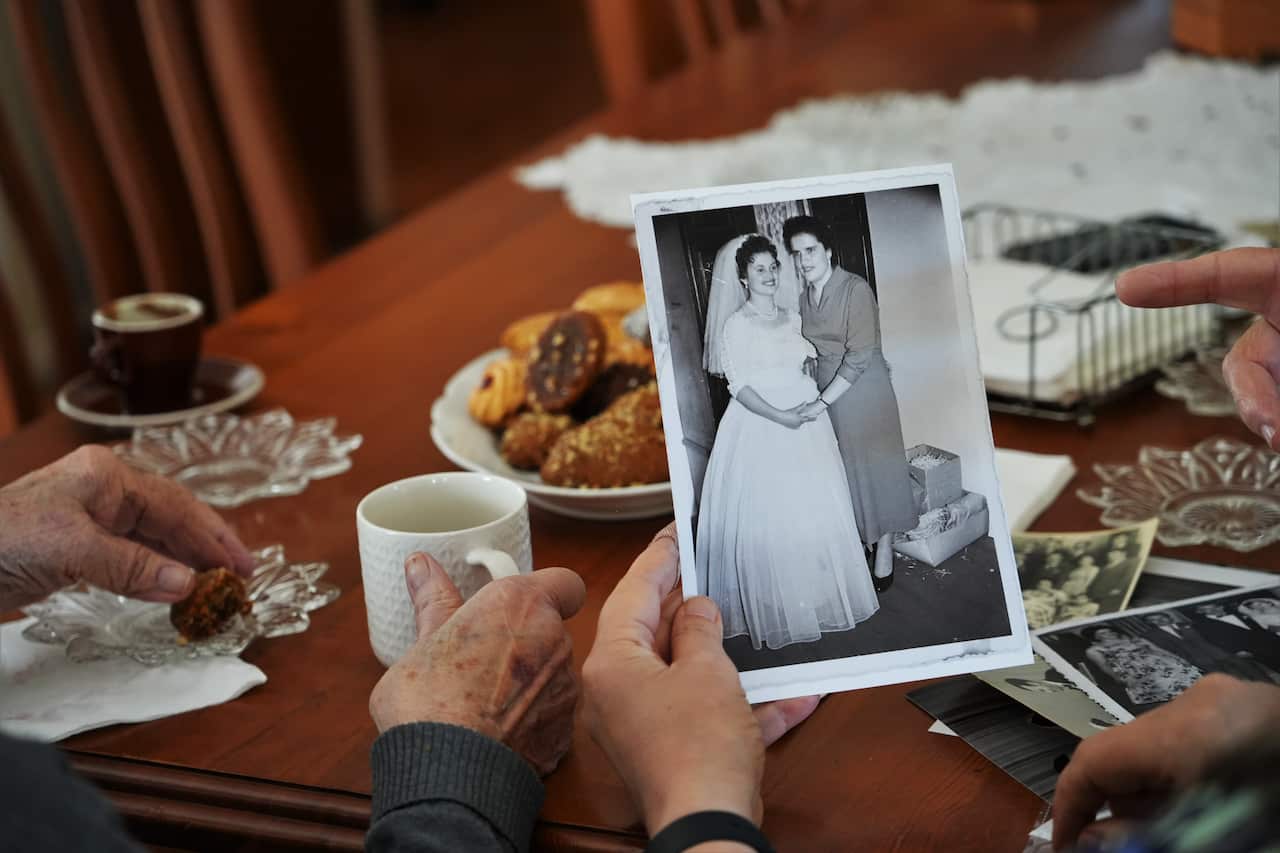
The 92-year-old gestures to her son, George, and Maria's daughter Effy, who have brought them together to reminisce.
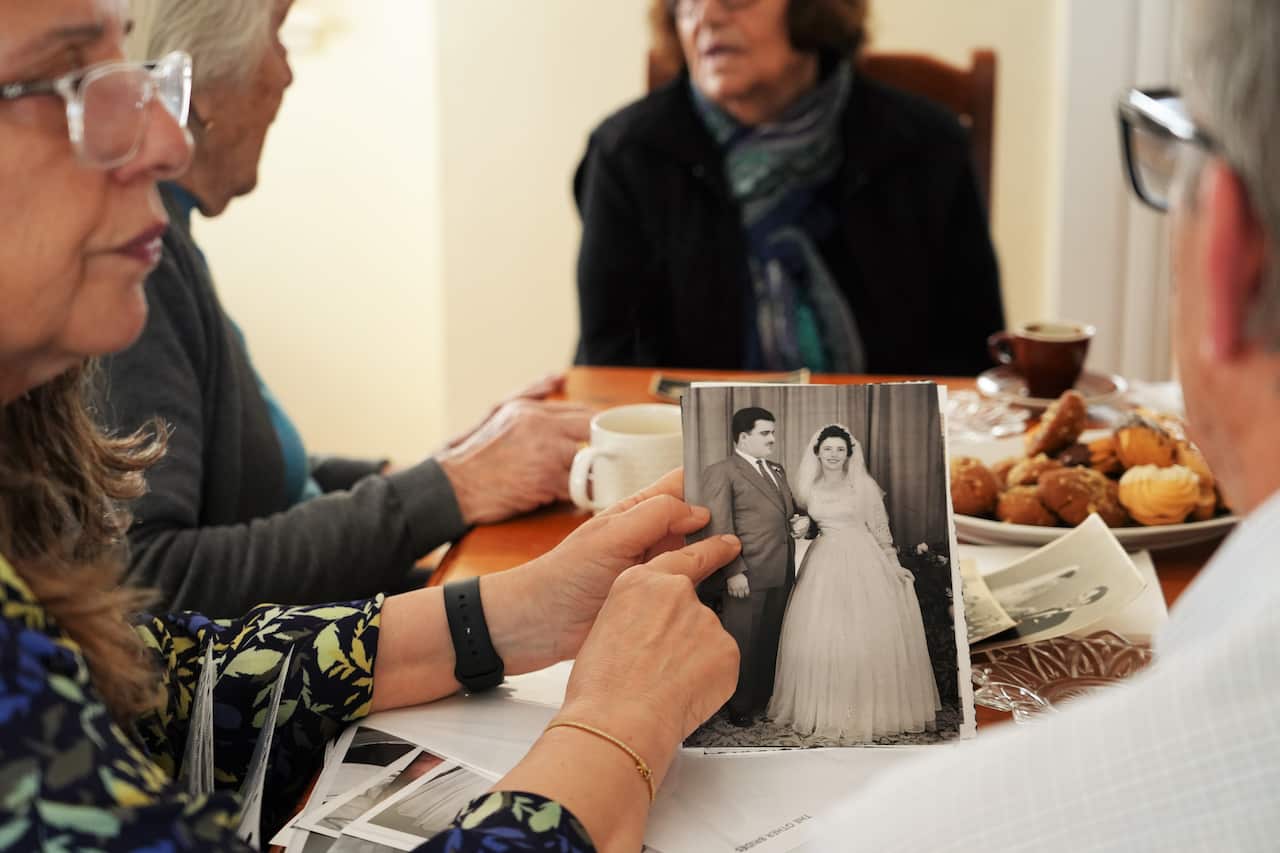
Chattering rapidly in Greek about how the years have passed, the two women sit at the dining table, which quickly fills with coffee cups, sweets, and a sprawling collection of black-and-white photos.
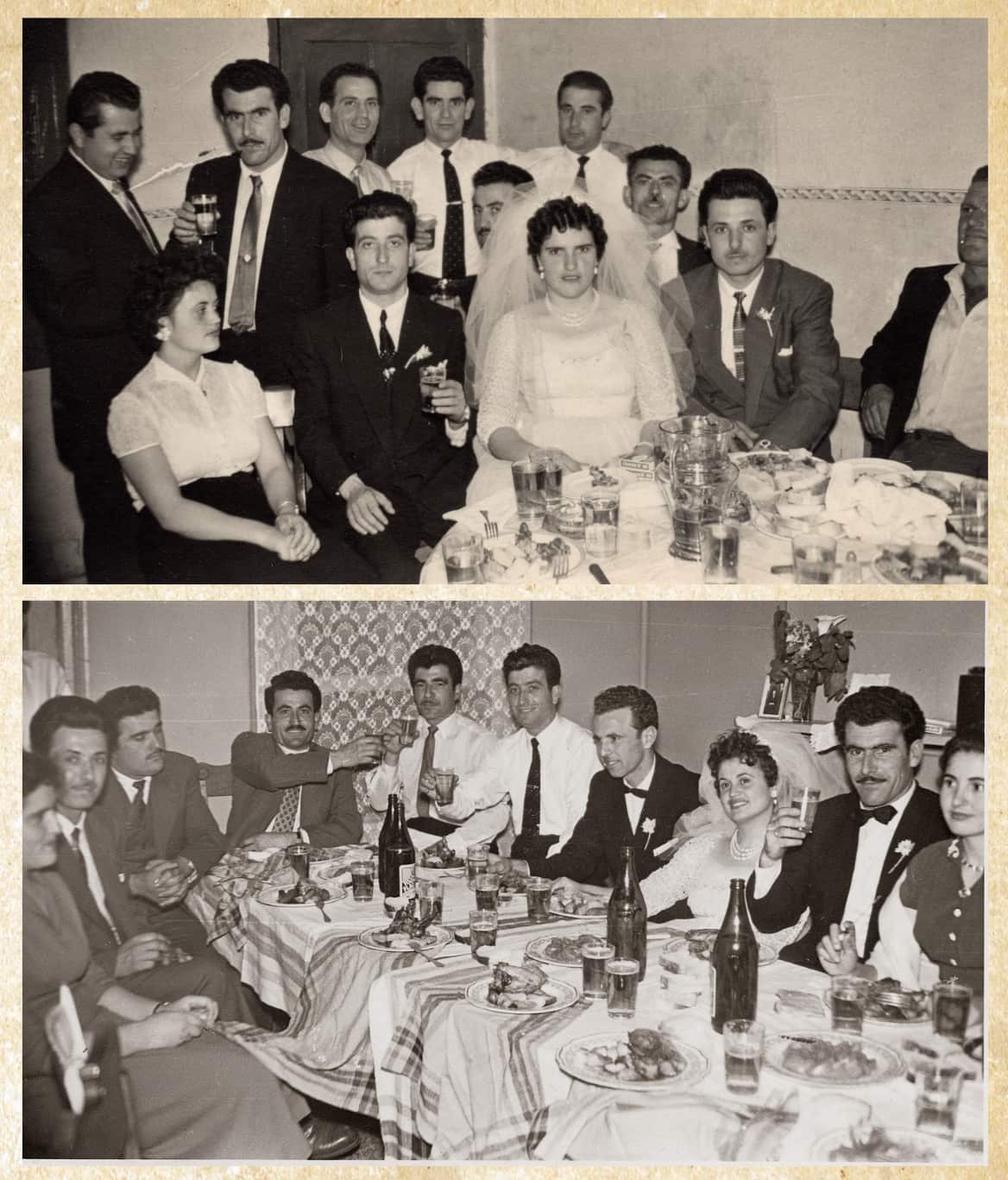
Dozens of images of their younger selves and old friends, at weddings, dancing and holding babies; snapshots of women starting new lives in Australia after leaving Greece.
Carefully, they pull out their stefana — Greek Orthodox wedding crowns — which they've both kept for 70 years.
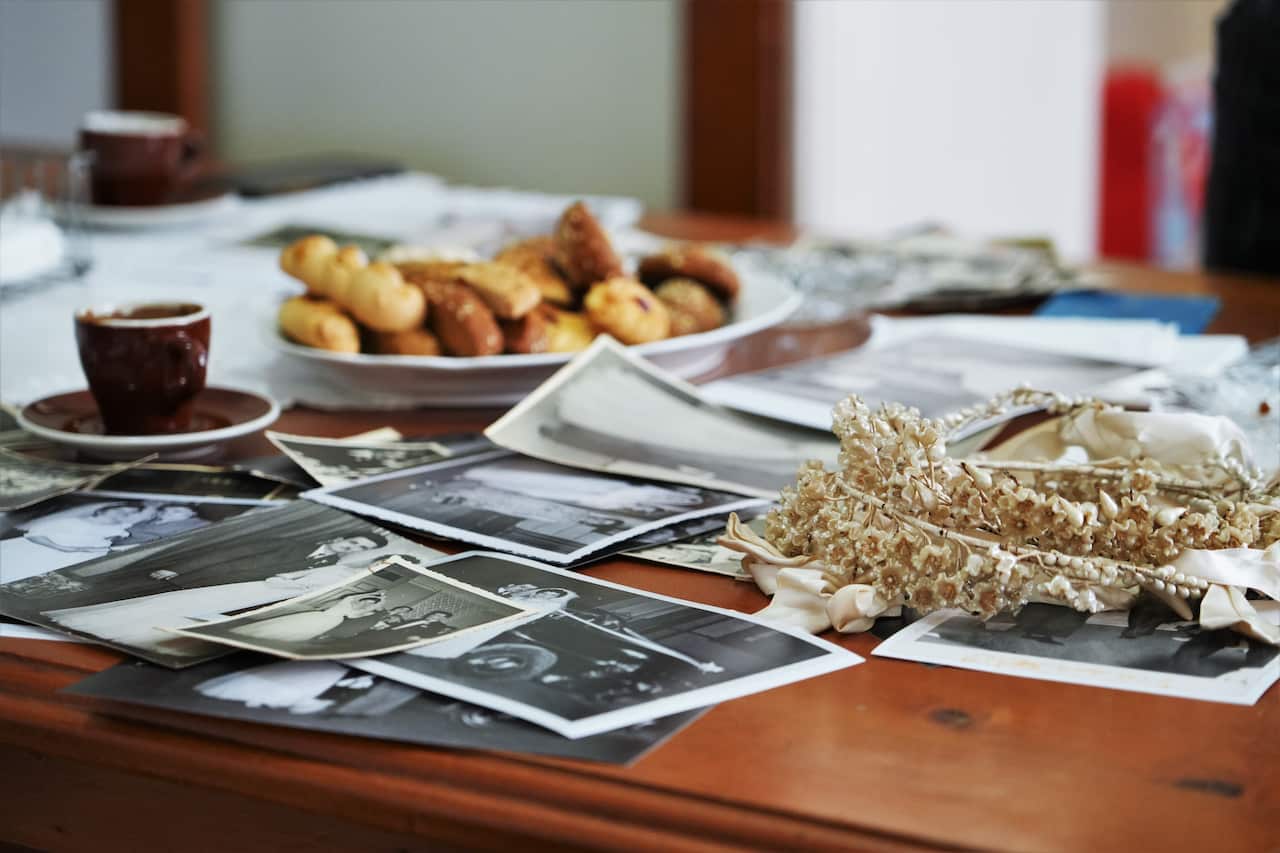
"When they do this in the church," Eleni tells SBS News, holding her stefana and crossing her arms together.
It means you're stuck with him all your life!
Maria and Eleni's stories also offer a window into a little-known chapter of post-war Greek migration to Australia and the women who left behind family and familiarity, travelling thousands of kilometres to marry men they barely knew.
The 'travelling' wedding dress
A closer look at the family photos revealed a surprising detail in a familiar story.
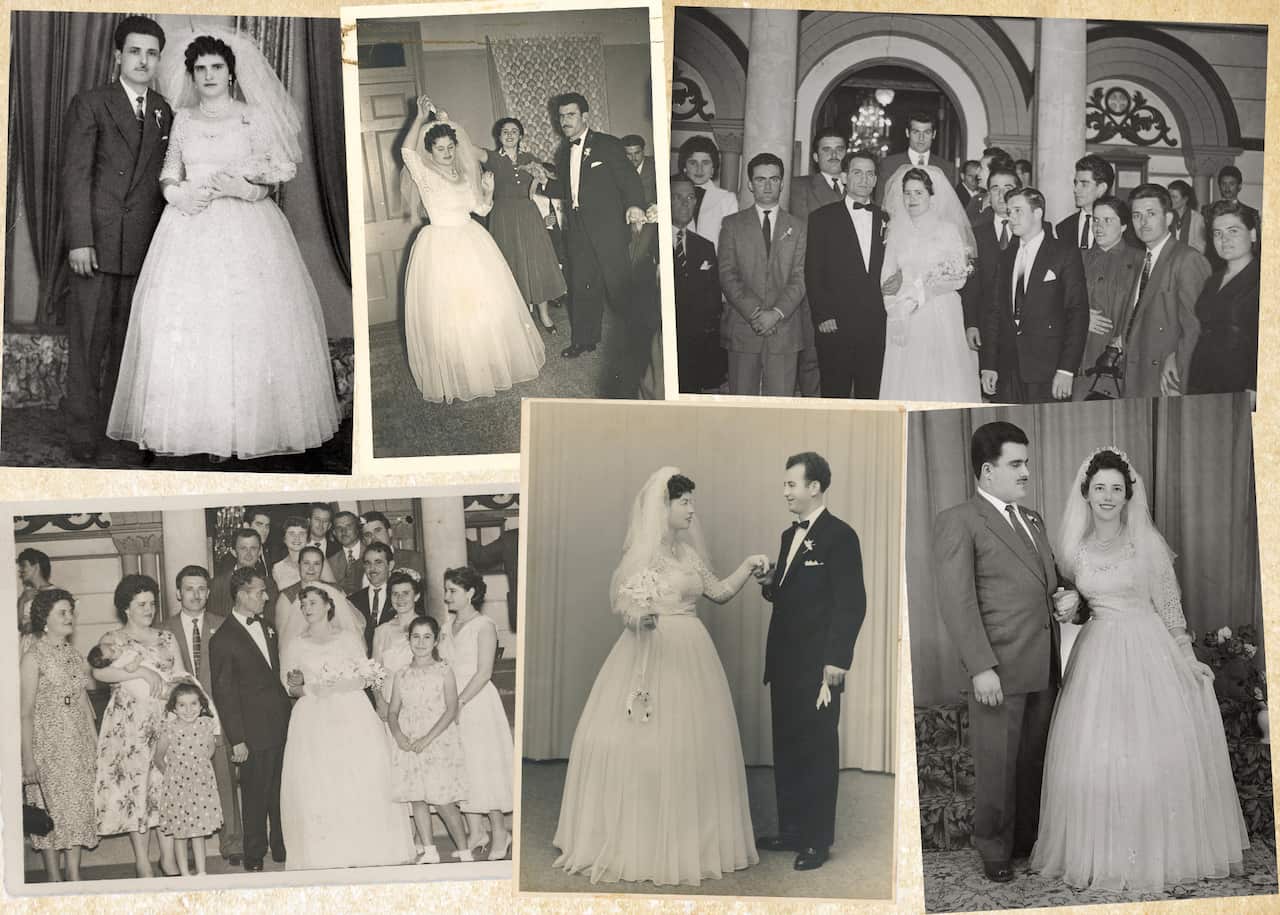
Maria's daughter Effy, a renowned photographer who has spent her career documenting Greek Australian migrant stories with her partner, historian Leonard Janiszewski, discovered wedding photos of different women wearing the same dress.
"I love nothing more than going through photos, especially our old family photos," Effy tells SBS News.
"I was going through these with my mum … and I saw there were two or three photos of brides wearing a similar dress.
Lace top, three-quarter sleeves, tulle on the bottom. It was really pretty.
"And mum said, 'Oh, yes, we all wore the same dress' and I thought, 'Oh, I had no idea'."
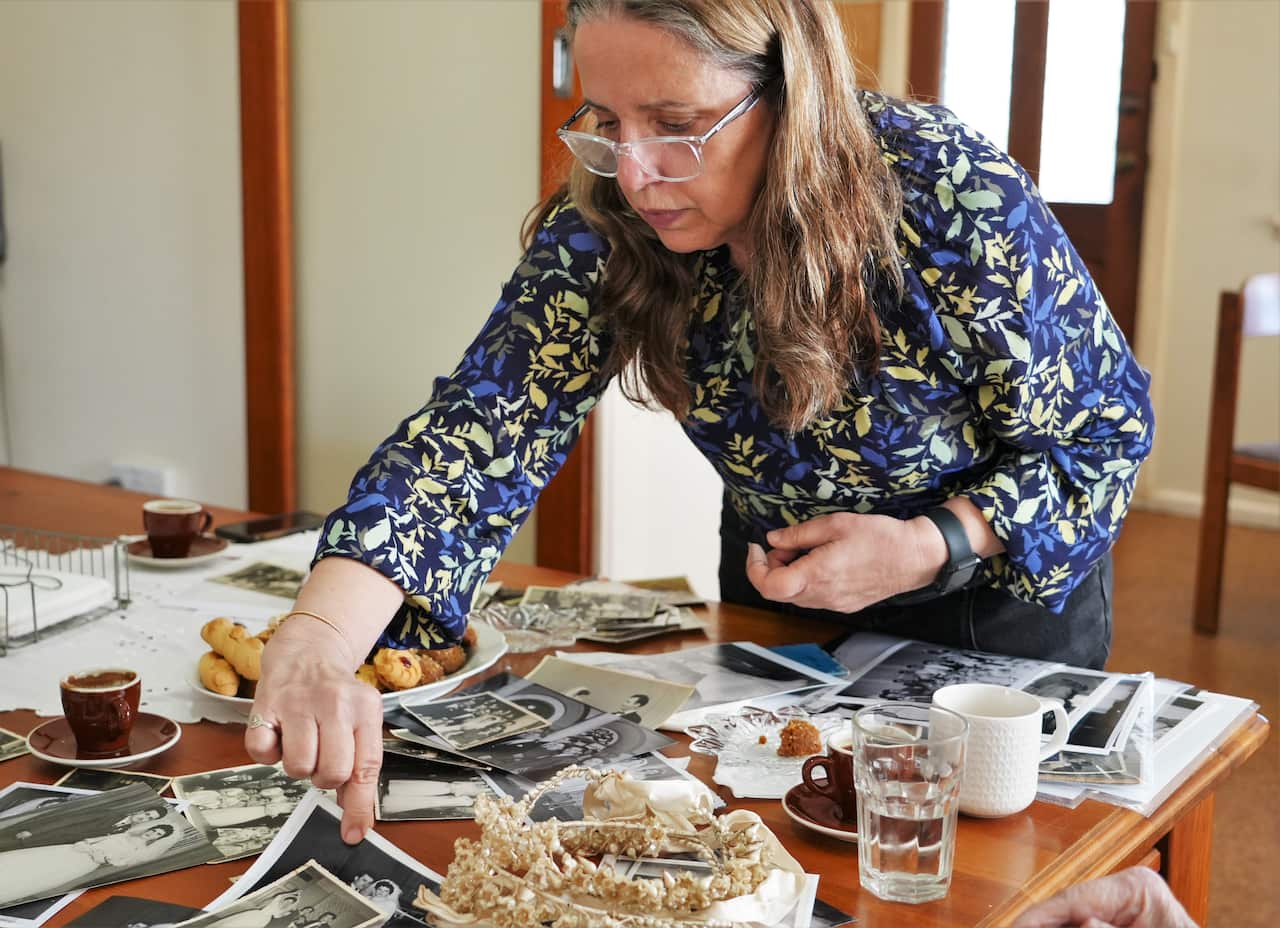
That discovery prompted Effy to trace the dress through photographs, family memories, and other records.
After two years of research, she managed to track down four other women who wore the same dress.
She says three brides, including Maria and Eleni, are still alive.
Neither woman remembers where the dress was bought. They do know that Maria's brother bought it and believe it may have come from David Jones or Mark Foy's Department Store.
"At that time, we didn't have any money," Maria says.
"Most of the people rented [their wedding dresses], but because I had [a dress], we could give it to others for free.
Each dollar we saved was something. Because we all come out here with nothing.
Eleni says she felt lucky to wear it too.
"We had the opportunity to wear it ... to wear something beautiful."
History of the 'bride ships'
Australia's post-war "populate or perish" policy encouraged migration from European countries, including Italy and Greece, with Greek migrants arriving in the 1950s and 1960s seeking opportunities to escape the economic hardship and disruption caused by the Greek Civil War.
Many of the early Greek migrants were men who came to Australia for work. As communities grew, family reunions and marriage became an important part of longer-term settlement.
"My father came in 1954. They had to work for two years, and then at that time, if you wanted to stay in Australia, you wanted to have a family," Effy says.
"So, to stop them going back to Greece, the government said you can bring a bride here."
As more Greek men settled in Australia, women's migration became an important part of growing families and communities. Their journeys were shaped by a mix of migration policy, family connections and community networks.
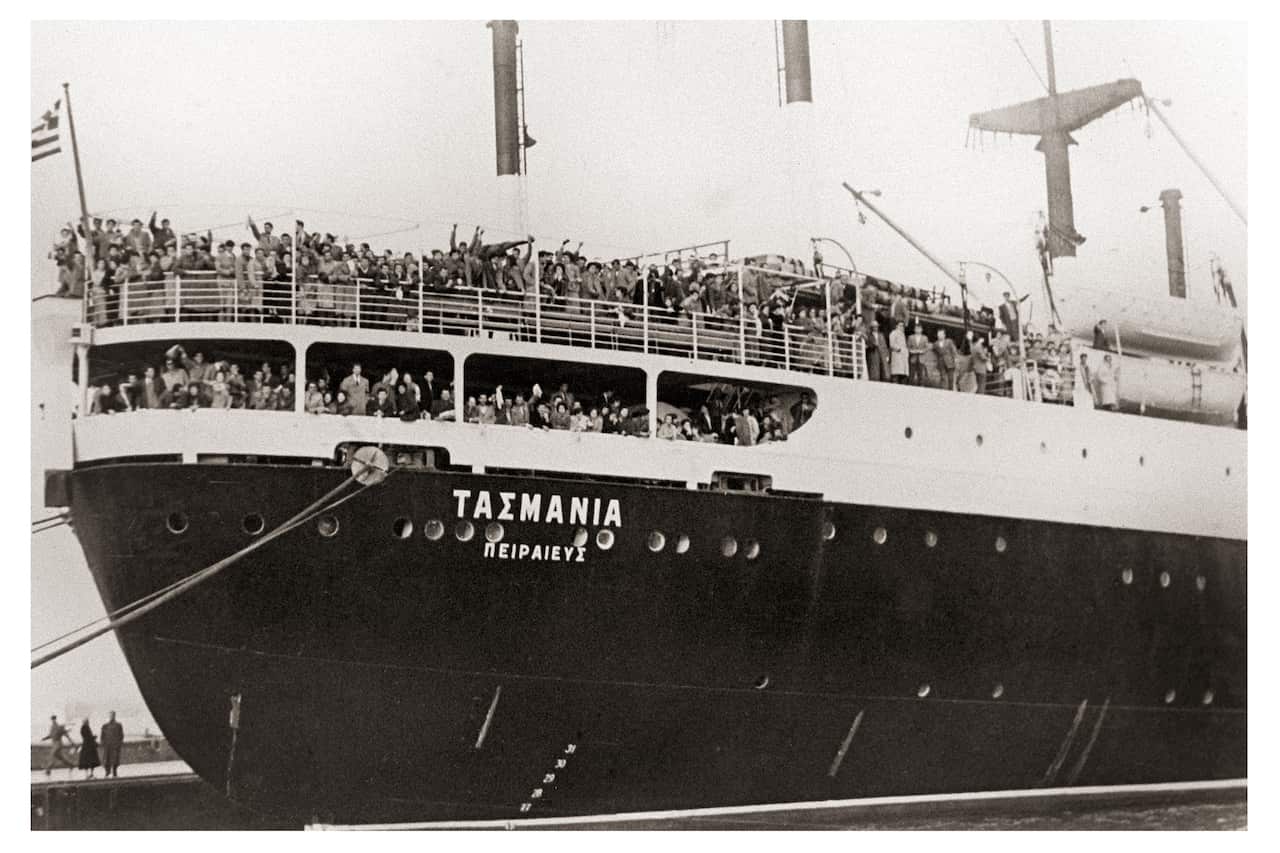
In the 1950s, ships including the Begona, the Tasmania and the Castel Felice carried groups of Greek women to Australia.
Many were "'proxy brides'", and Eleni says their circumstances varied considerably.
Some had already met their future husbands in Greece, while others exchanged letters or saw photographs before travelling. Others met their prospective husbands for the first time in Australia.
She tells a story of one girl on board with her and Maria who had never met her betrothed.
"She came off the ship with her suitcase, but when she met her husband-to-be, he was very old!" she says.
"He had sent a picture to her from when he was young.
"She went to the captain and said, 'I want to go back to Greece!'"
Both women laugh as they remember the man waiting in Melbourne with a bunch of flowers, which they say ended up in the ocean.
They say he travelled to Sydney when the ship docked there, hoping to persuade her to change her mind.
Newspaper clippings, photos and footage of the ships arriving tell the story of huge, sometimes chaotic crowds of men, relatives and community members waiting at ports in Melbourne and Sydney.
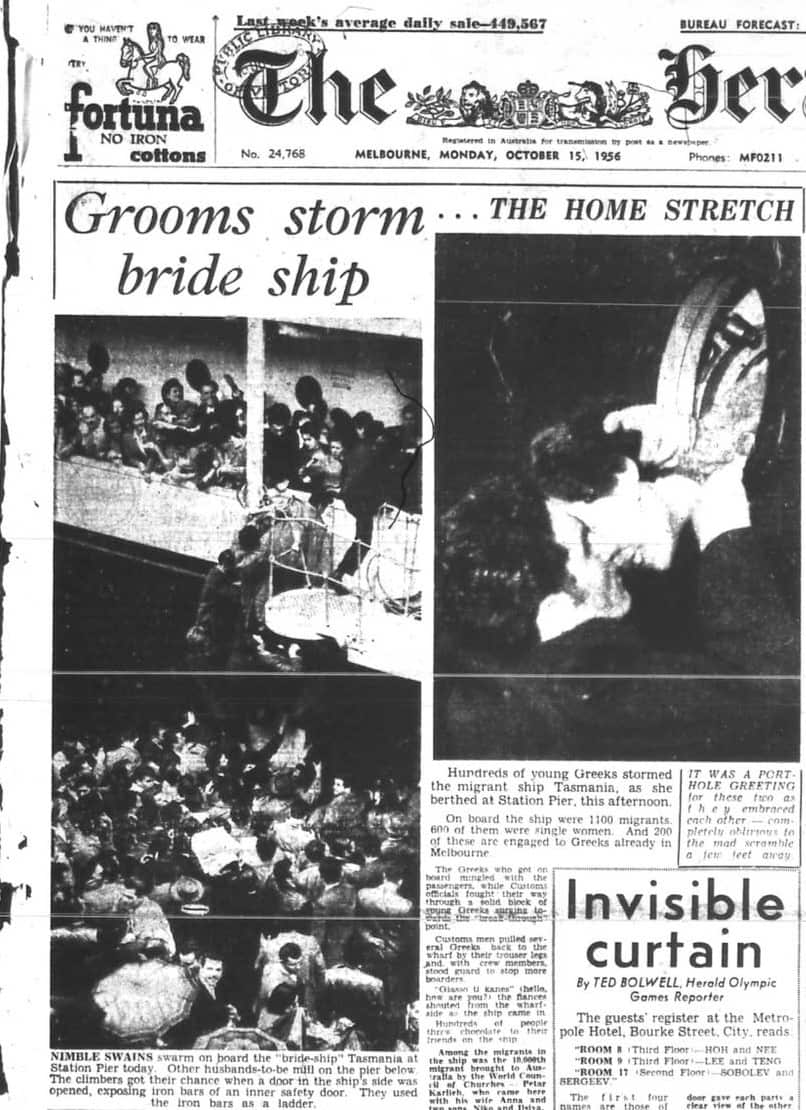
Some men were even photographed boarding the MS Tasmania when it arrived in Melbourne on 15 October 1956.
The women behind the 'bride ships'
Effy has spent recent years documenting and celebrating the strength, struggles, and achievements of post-war Greek migrant women.
Her work sits alongside that of Greek Australian historians and researchers who have documented the experiences of women who migrated during this period, including Panayota Nazou, author of the book Promised Brides.
"[Nazou] did a book of oral histories where she interviewed about 30 brides that came, and there were some happy, and some sad stories," Effy says.
Maria says she felt lucky to have known her husband at least a little before she arrived in Australia.
"I knew him from my village. We were neighbours and he was a friend of my brother," she says.
"He made the papers for me to come here."
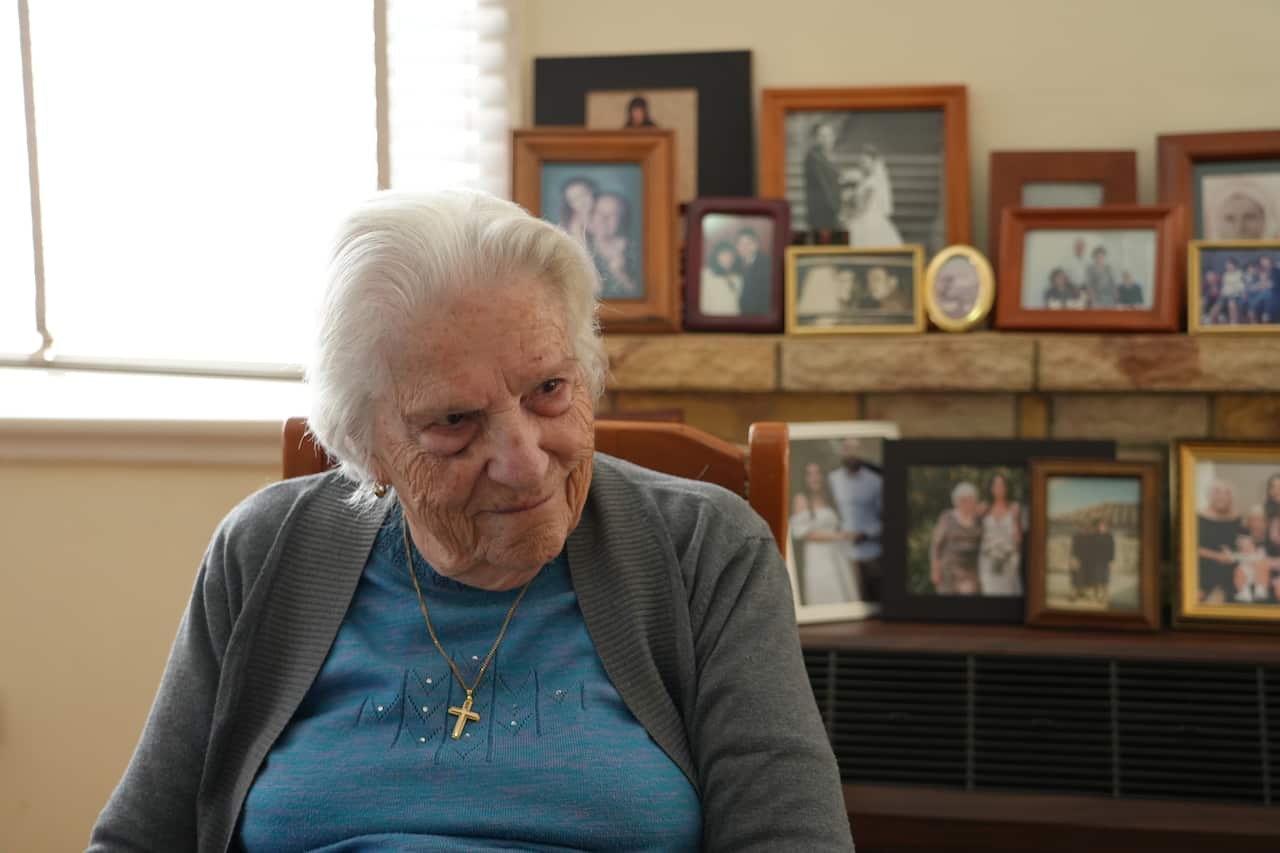
Maria says Spiro was waiting for her when the ship arrived in Sydney on 18 October 1956.
He was a familiar face, but it was nevertheless a daunting experience, as she had not seen him in many years, and he was 10 years her senior.
"[I was] a little bit embarrassed, a little bit shy. But I knew my husband. If I didn't know [him], it was much different," she says.
Eleni had also met her husband and exchanged letters with him before she came to Australia.
"Each girl had her own story. Some were coming here because it was their husband, married very recently. Others with photographs," she says.
"It was a little difficult. Everyone had their own story."
I was young, I was going for a better future in Australia, but I still didn't really understand where I was coming, what I would encounter.
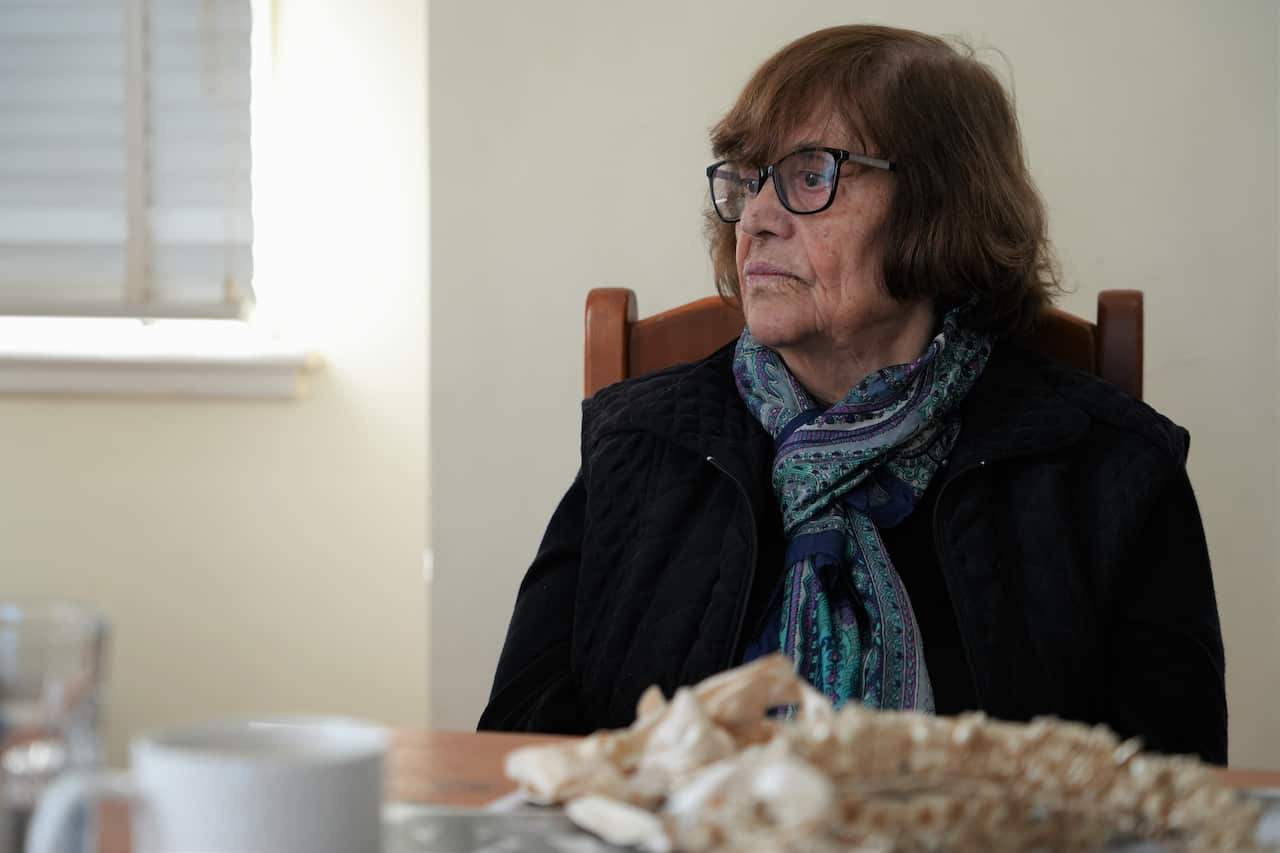
While Eleni recalls having a "good time" on the journey to Australia with Maria, and her brother who was a steward on the ship, her betrothed wasn't waiting for her at the dock as she had expected.
"We came and found him, the groom, at the house. From there the difficult things began," she says, reflecting on feeling alone without family. She was soon married in a ceremony that was "small" by Greek standards.
"It was a very small wedding. I didn't know anyone else. Nobody. My husband had only a few friends, so at most there were 20 people at the wedding," she says.
That was the most difficult thing. A few friends, but no family.
"The biggest difficulty for me was when my brother left … That's when I understood, I realised that I am here abroad and I don't have anyone."
Eleni says her feelings of isolation and homesickness softened with the arrival of her first child, George, though she adds pregnancy and the birth were "very lonely" experiences.
"I said, 'That's it, Eleni, this is life now. You brought a child into the world, devote yourself to your child.'"
There are also stories, Effy says, of women who were left behind.
"What happened in Greece, you know, a whole village was sometimes devastated because all the young people left," she says.
"Our very first book we interviewed people … and met a few old women who never had anyone to sponsor them.
"So, they remained unmarried, isolated in villages because they did not know anyone that could have brought them here and gave them an opportunity to leave like the rest of their people in the village did."
The legacy of the wedding dress
Nobody knows where the "travelling" wedding dress ended up.
After passing from one bride to another, it eventually disappeared — its final whereabouts lost to the 70 years since it was first worn.
But as they try to piece together its journey, Effy says something else has resurfaced.
"They've reignited their memories," she says.
Maria and Eleni can no longer recall some details, but other memories have returned through conversations and old photographs.
"They can't remember going to the shop to buy something as significant as their wedding dress, but they can remember making the food for the [wedding] party that they had," she says.
"But they've remembered so many things together that I didn't know about before, like the dress being too low-cut so the seamstress added a bit [of fabric] on top."
Unless we get their stories now, they will disappear.
Eleni's son George has witnessed that process firsthand.
"It's very enlightening, hearing stories about their early years and life in Australia … and you learn so much more about your parents and what they did and went through to get here," he tells SBS News.
For George, finding the dress would be a bonus rather than the point of the story.
"Why ruin a good story?" he says, adding that if it does turn up, "that will be serendipity".
Effy, however, still hopes it might.
"I would love to see this dress," she says.
"It's a magic dress, I started calling it because my mother called herself very slim, but she was solid compared to all the other brides and somehow this dress fitted all of them."
"I'd love [to find it]. Maybe my daughter can get married in it."
For Maria and Eleni, the dress belongs in the past, but their story, friendship and families live on.
For the latest from SBS News, download our app and subscribe to our newsletter.







