
Kunzang Dorgi has never lived near the ocean, so he doesn't know what to expect as the first cyclone of the season approaches northern Australia, prompting a warning for destructive winds.
He only moved to Darwin three months ago, his first time overseas.
"When I hear about the cyclone, I feel a bit nervous because I don't really know what a cyclone is because in (Bhutan) we don't have oceans and seas. We got a small stream and river," he told SBS while making a delivery for a family preparing for Cyclone Fina.
Dorgi, 35, doesn't have a full-time job at the moment, so he works casually making online deliveries and as a packer at the chemist.
News that makes sense
Your trusted source for staying up-to-date with the world around you. Get free daily news updates and analysis, straight to your inbox.
He lives with his wife and 14-month-old daughter and said he's made preparations at his own home for Cyclone Fina.
Other residents told SBS they're used to cyclone season in Darwin, but this young family isn't sure what to expect.
"So we very much panic about what a cyclone would be and what type of tragedy or casualty would happen to us."
He says he and his wife are worried "because we are far from our family", he told SBS.
Darwin in a 'warning zone' amid warnings system could escalate
The NT government has been offered federal help as it prepares for Cyclone Fina, which weakened to a category one system overnight.
Darwin has been placed in a "warning zone" amid fears the system could intensify into a destructive category three system later on Friday.
"What I would say to Northern Territory communities right now is your fellow Australians are with you," federal Emergency Management Minister Kristy McBain told reporters in Canberra on Friday.
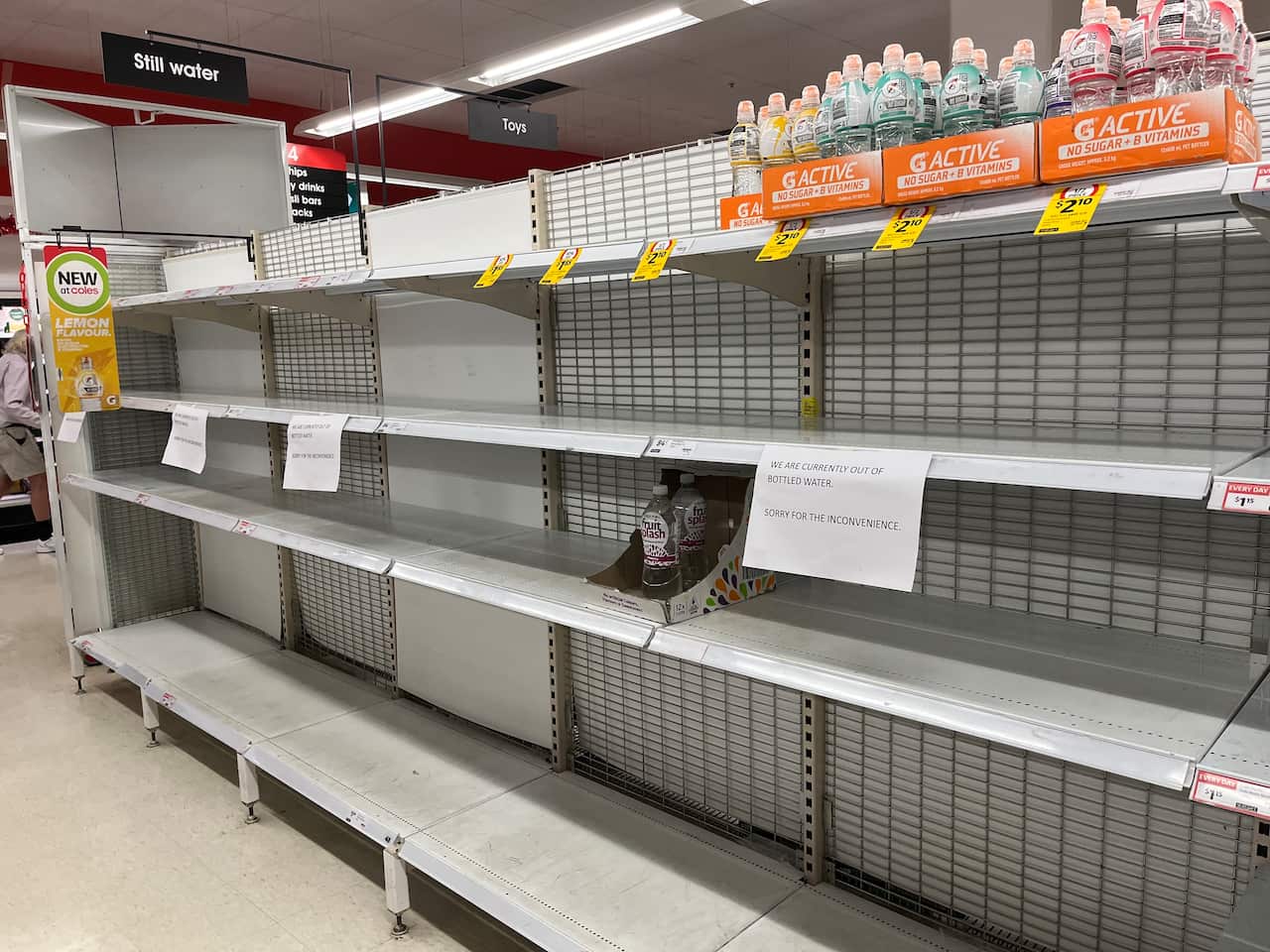
Top End residents have been stocking up on basics, with bottled water, bread, canned goods and other household supplies flying off supermarket shelves.
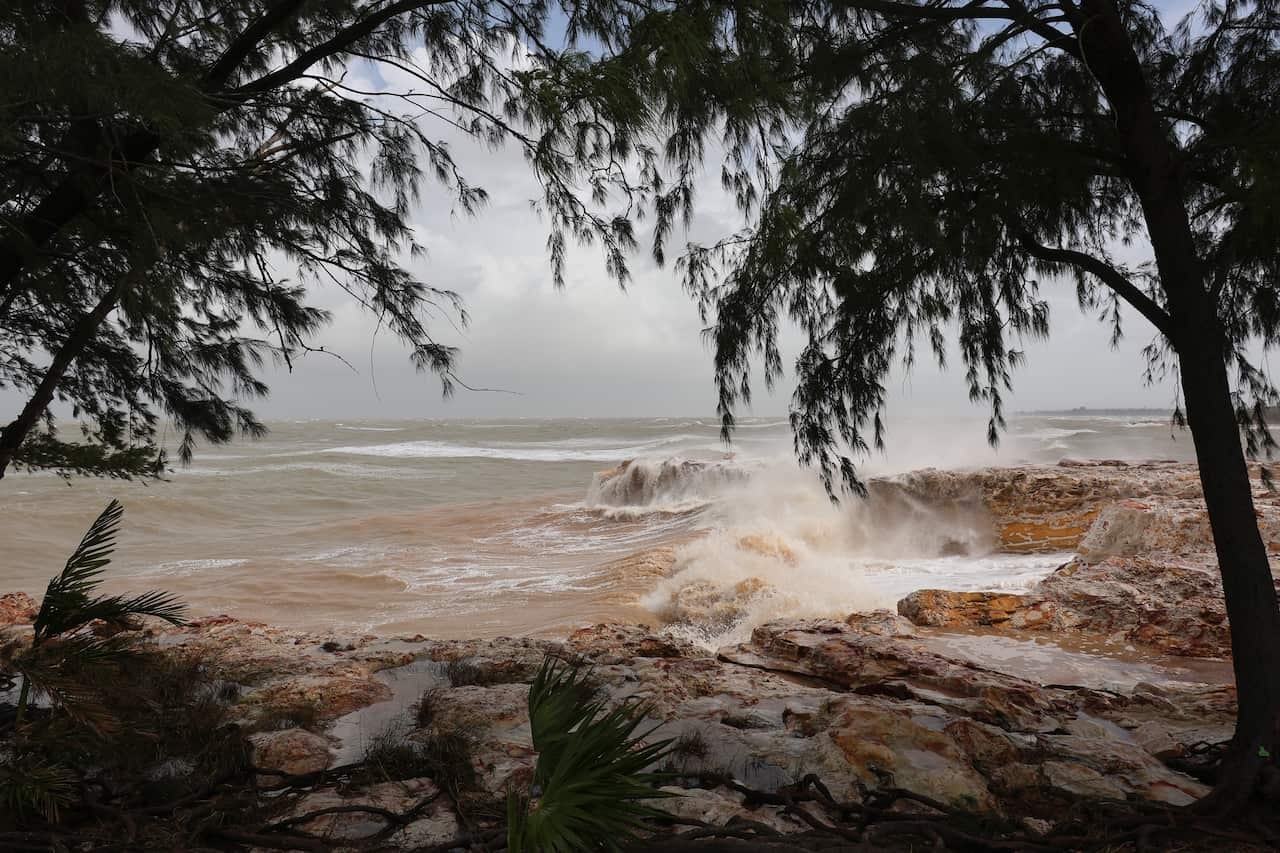
Darwin locals have been warned to brace for winds that could damage houses and vehicles, fell trees and cut power while "throwing around the outdoor furniture".
Early on Friday, Cyclone Fina was sustaining winds near the centre of 75km/h, with gusts up to 100km/h, and was about 335km north-east of Darwin, moving slowly.
The system could intensify into a category 2 while tracking south-west on Friday and approaching the Cobourg Peninsula and Tiwi Islands.
It is set to continue south-west through the Van Diemen Gulf on Saturday, heading just to the north of Darwin.
There was a chance it could reach category 3 intensity late on Friday or early Saturday as it moved into the Gulf, the Bureau of Meteorology said.
A warning zone was in place early on Friday for Darwin, the Tiwi Islands and Cape Hotham to Warruwi, including the Cobourg Peninsula, Minjilang and Gunbalanya.
Strong winds are expected to extend further west, including the Tiwi Islands, late on Friday, and Darwin on Saturday.
Destructive wind gusts up to 155km/h may develop between Cape Don and Warruwi on Friday as the system nears the coast, extending to the Tiwi Islands early on Saturday and possibly to Darwin later in the day.
The bureau warned heavy rain could cause flash flooding in coastal areas between the Tiwis and Warruwi from Friday, extending to the coast and nearby inland areas, including Darwin, on Saturday.
Coastal residents on the Tiwis and between Cape Hotham and Warruwi are warned of a dangerous storm tide.
Top End residents have been stocking up on basics with bottled water, bread, canned goods and other household supplies flying off supermarket shelves.
Multiple weekend sports and entertainment events have also been cancelled.
Senior meteorologist Angus Hines said Darwin residents could expect potentially damaging winds on Saturday from lunchtime.
"Those very strong winds could bring down trees, cause damage to vehicles and houses and it could lead to power outages, throwing around the outdoor furniture, fences and roof panels," he said.
Rain will also intensify across Darwin on Saturday, leading to potential flash flooding.
By late Sunday, conditions in the Top End will start to ease as Fina moves into Western Australia.
The cyclone should no longer impact NT by Wednesday, Hines said.
Darwin residents have been urged to ensure they have an emergency plan and to shelter at home, with most buildings made to withstand cyclones.
Cyclone Tracy was the most devastating system to hit Darwin, killing 66 people and either destroying or seriously damaging eight in 10 of the city's buildings on Christmas Day in 1974.
— With additional reporting by the Australian Associated Press
For the latest from SBS News, download our app and subscribe to our newsletter.







