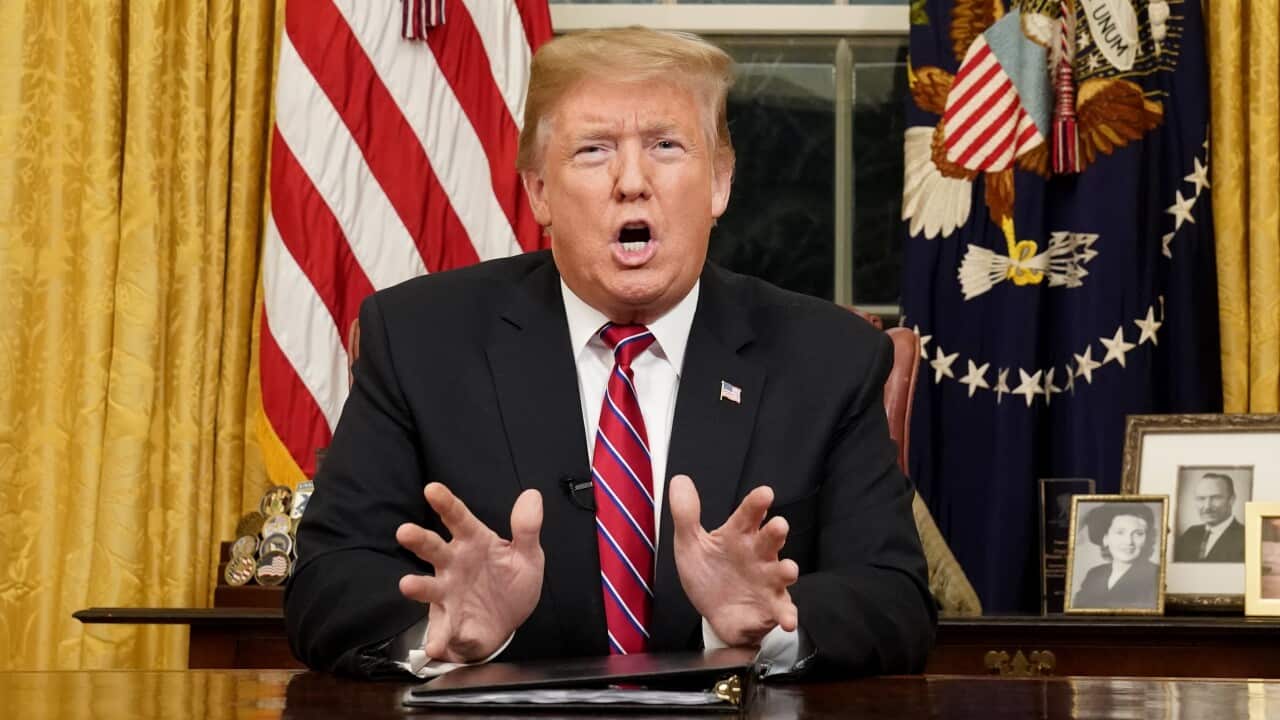
President Donald Trump has told Americans in a prime-time speech Tuesday that the US-Mexico border is a "crisis of the soul" and Congress must approve construction of a wall to end a government shutdown now in its 18th day.
After weeks of lashing out at Democratic opponents, mostly via Twitter and impromptu press conferences, Trump deployed the presidency's biggest PR gun: a formal address to the nation on live television from the White House Oval Office.
"This is a humanitarian crisis, a crisis of the heart and a crisis of the soul," he told the US.
Rehashing most of his recent comments regarding the need for border security, Mr Trump likened the steel barrier to residential fences.
"Some have suggested a barrier is immoral. Then why do politicians build walls, fences and gates around their homes?" he continued.
News that makes sense
Your trusted source for staying up-to-date with the world around you. Get free daily news updates and analysis, straight to your inbox.
"They don't do it because they hate the people on the outside. But because they love the people on the inside. The only thing that is immoral is the politicians who do nothing and continue to allow more innocent people to be so horribly victimised."
Top congressional Democrats pushed back sternly, warning that the US president was holding Americans "hostage" by refusing to fund shuttered government agencies.
"President Trump must stop holding the American people hostage, must stop manufacturing a crisis, and must re-open the government," Speaker of the House Nancy Pelosi said in a curt rebuttal to Trump's address to the nation.
Earlier, Vice President Mike Pence told ABC television that Mr Trump would lay out the "real humanitarian and security crisis at our southern border."
There was speculation whether Mr Trump would declare a national emergency allowing him to bypass Congress and order his controversial wall project to go ahead using military resources - a move that would have sent already heated political temperatures to boiling point.
But the president stopped short of any declaration.
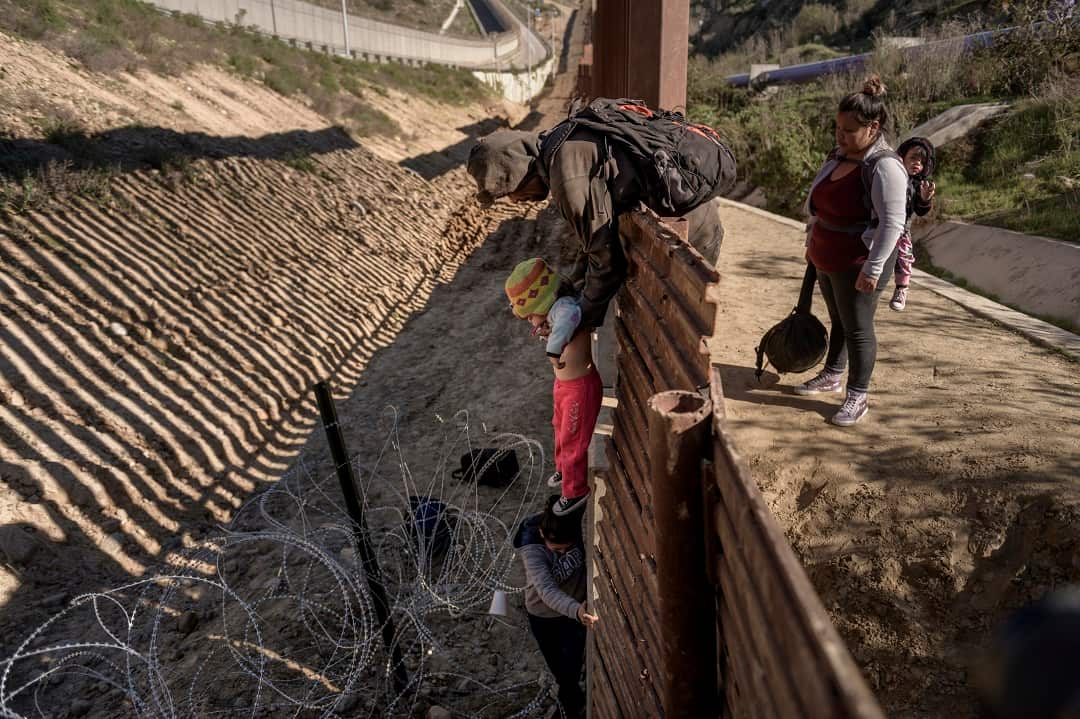
Mr Trump wants $5.7 billion to build a wall or fence along the Mexican border. Democrats in Congress have refused, saying he is hyping up immigration issues to appeal to his right-wing base.
In retaliation, Trump has refused to sign off on a broader spending bill, leaving some 800,000 federal employees and many more contractors without pay.
That partial government shutdown has brought Washington's partisan dysfunction into ordinary Americans' homes across the country, raising the stakes for lawmakers who must face their voters as the chaos drags on.
Historic stage
Mr Trump will follow up with a rare trip to the Mexico border itself on Thursday.
But with many Americans far from sold on Trump's lurid claims about illegal immigrants, criminals and terrorists overwhelming the border, the speech faced its own high barrier: credibility.
"I think the best thing the president can do for the Republican Party is to make a persuasive case of why he wants more money, of why it's a crisis," Republican Senator Lindsey Graham, a close Trump ally, told reporters.
"The better he does with that, the better it helps us to get to where we need to go."
Democrats, who ended the Trump presidency's dominance of domestic politics when they seized the House of Representatives from his Republicans in November, cried foul before a word was spoken.
"If his past statements are an indication, (the speech) will be full of malice and misinformation," House Speaker Nancy Pelosi and the senior Democrat in the Senate, Chuck Schumer, said in a statement.
Presidential overreach?
The big question was whether Trump would use the occasion to declare a national emergency at the border, giving himself considerable new powers and sidestepping Congress's control of the purse strings.
Some argue that this was a way out of the impasse, as it could free Mr Trump to build the wall and therefore to lift his blocking of the wider government funding.
Democrats have said the move would at a minimum mean presidential overreach, sparking court challenges to block the powers. But even if blocked, Mr Trump could claim to his base that he had done what he could, while ending the damaging government shutdown.
Some Republicans voiced doubts about the tactic, with Senator John Boozman telling AFP there was "some controversy" over Trump's authority to declare an emergency.
"I think it would probably end up in a lawsuit, so I'm not sure how productive it would be," Senator John Cornyn said.







