In brief
- Hundreds of people have been killed in Lebanon since a nominal ceasefire was announced in April.
- Hezbollah has not been a party to the negotiations for a lasting deal.
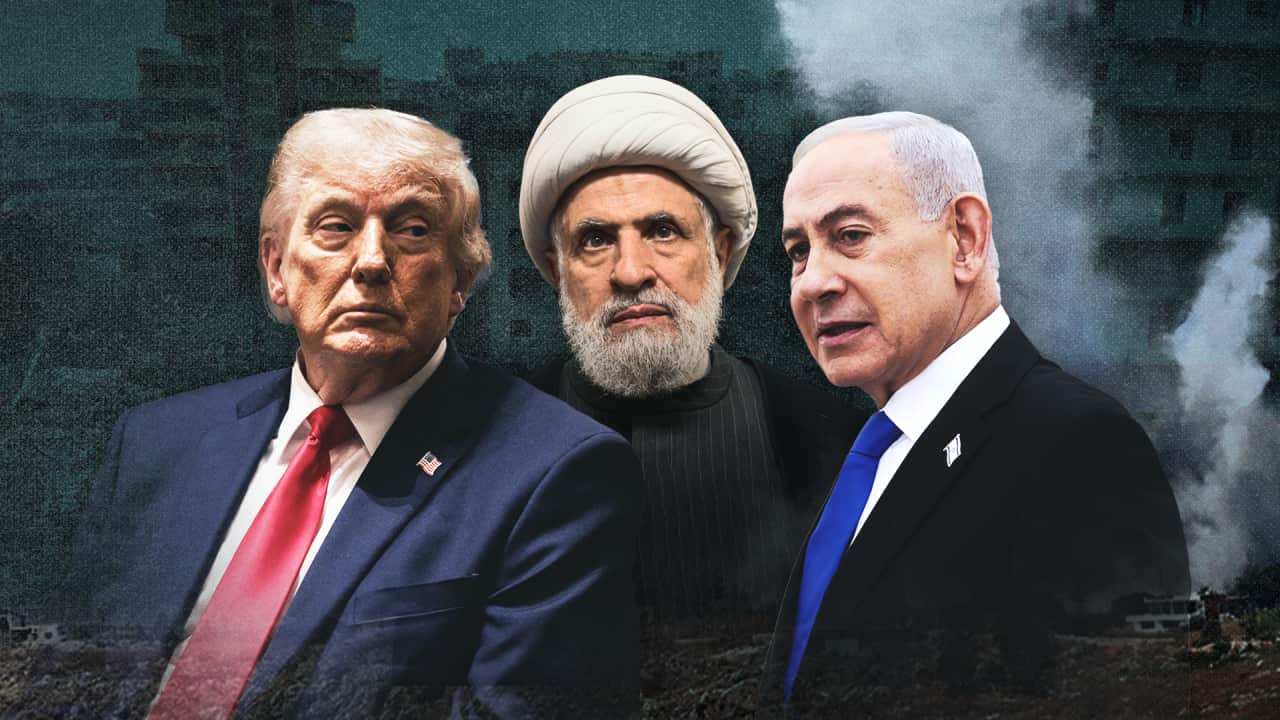
Never before has a US president before spoken with Hezbollah — the Lebanese militant group that is listed as a terrorist organisation in the United States.
That is until, he says, Donald Trump.
Overnight, the US president announced his talks with the Iran's Lebanese ally through intermediaries, and that he secured a pledge that it would not attack Israel.
"I had a very productive call with Prime Minister Bibi Netanyahu, of Israel, and there will be no Troops going to Beirut, and any Troops that are on their way, have already been turned back," Trump said in a post on Truth Social.
"Likewise, through highly placed Representatives, I had a very good call with Hezbollah, and they agreed that all shooting will stop."
News that makes sense
Your trusted source for staying up-to-date with the world around you. Get free daily news updates and analysis, straight to your inbox.
What Trump's call means for the future of the war in Lebanon — and whether Hezbollah will now form part of peace negotiations — remains unclear, but experts say it's an extraordinary development.
Why did Donald Trump speak to Hezbollah?
It's not clear exactly who he spoke to — Trump's suggestion of "highly-placed representatives" makes it unclear whether it was as high in the group's pecking order as its leader-in-hiding, Naim Qassem, or other intermediaries such as Nabih Berri, the speaker of the Lebanese parliament.
No US president has even spoken to Hezbollah intermediaries before.
A day earlier, Berri, who has close links to Hezbollah, had indicated it was ready for a lasting ceasefire.
"It might have been through him, but in any case, that's far more direct than you would usually expect for a US president," David Smith, an associate professor in American Politics and Foreign Policy at the University of Sydney, told SBS News.
Smith said the phone call was "very unusual" given the US' designation of Hezbollah, which formed in 1982 in response to Israel's invasion of southern Lebanon. Its name means "Party of God" in Arabic.
Hezbollah has not been a party to negotiations for a lasting peace deal.
A nominal ceasefire was introduced in mid-April seeking to halt the latest conflict between Israel and Hezbollah that started on 2 March, when Hezbollah fired rockets at Israel in response to Iran's supreme leader being killed by US-Israeli strikes on Iran.
More than 1.2 million Lebanese have been displaced by Israeli strikes and evacuation orders since March 2, as Israeli strikes have pummeled Lebanon's south, east and its capital Beirut, killing more than 3,200 people, according to Lebanon's health ministry.
Since the April deal was announced, more than 600 people have been killed in Lebanon, according to the Norwegian Refugee Council and the Lebanese Health Ministry.
The Israeli military reports 10 of its soldiers being killed during the same time, six by Hezbollah drones.
In the meantime, Israel has occupied a further several kilometres into southern Lebanon, describing it as a "buffer zone" between the country and Hezbollah.
Why Trump went directly to Hezbollah this time could point to a number of things — among them, desperation with the trajectory of the war, or Trump's usual deal-making approach to foreign policy.
"There are other people in the US who would probably quietly agree that it's the right approach that when you have a party that's involved in a conflict that you want to end, that you should talk to them, even if you have previously regarded them as illegitimate and out of bounds," Smith said.
Smith says Trump has "great faith" in his ability to negotiate deals — pointing to Trump's approach to North Korean leader Kim Jong-un and his desire for talks with Taiwan's leader.
"Now, in the real world, we've seen his deal-making ability actually has some pretty serious limitations, as we can see at the moment in the Strait of Hormuz, but at the same time he sometimes has been able to to get results by picking up the phone in this very direct way," he said.
"We can see sometimes he's able to stop Netanyahu from doing things."
Gus McLachlan, a retired major general in the Australian Army, said it was "really quite extraordinary" for a US government to be speaking to Hezbollah.
"What it shows is just how desperate Mr Trump is for an off–ramp," he told ABC News.
"He wants this war to end, he wants some sort of victory narrative and having the Israeli forces and Netanyahu pushing all out back towards Beirut and points north was not playing into that narrative.
"How long those two – the prime minister and the president – remain aligned remains to be seen."
US news outlet Axios, citing two US sources on the conversation between Trump and Netanyahu, reported on Tuesday that the president was "furious" during his call with the Israeli prime minister. One official, summarising Trump's alleged comments, said: "You’d be in prison if it weren’t for me. I'm saving your ass. Everybody hates you now. Everybody hates Israel because of this."
Smith said, given Axios is a US news source that Republicans often leak to, there's "good reason" to believe the report.
"What he keeps seeing in Gaza and in Lebanon, is that the war just doesn't finish. He keeps announcing the end of it, and then it keeps going, and he's increasingly blaming Netanyahu for this."
It's also interfering with negotiations for a permanent end to the US-Israeli war on Iran, he said.
"He keeps promising that ... the war with Iran is very close to its end, but it's clear that these increasing Israeli attacks on Lebanon are a major sticking point in any possible ceasefire," Smith said.
What does the Hezbollah call indicate for the future of the war in Lebanon?
However, Ali Mamouri, a research fellow of Middle East studies at Deakin University, said it's broadly not unusual for contacts between Western governments and Hezbollah, though they've been done indirectly through intermediaries because of the political and security sensitivities involved.
What makes the phone call significant is that Trump chose to publicly associate himself with the communication, he said.
"Whether the contact was direct or indirect, publicly presenting it in this manner effectively acknowledges Hezbollah as a central actor in the conflict and a necessary party in any serious discussion about ending it," Mamouri told SBS News.
"In political terms, that gives Hezbollah a degree of recognition and reinforces the perception that it remains a key player whose position cannot be ignored and any ceasefire or reduction of the risk of a broader regional war would not be possible without it."
But he said this does not mean a lasting ceasefire is imminent, and that the underlying political and security disputes remain substantial.
"The practical reality is that no ceasefire in Lebanon can be implemented without Hezbollah’s approval. The group is one of the principal military actors in the conflict, and any agreement reached without its consent would be extremely difficult to enforce," he said.
"Whether Hezbollah eventually gains a more formal role depends on the evolution of the conflict and the willingness of international actors to publicly acknowledge what has long been true in practice: that any sustainable ceasefire or long-term settlement requires Hezbollah's active participation and agreement."
Smith said if these talks with Hezbollah don't amount to anything, "people will be very sceptical" of such an approach.
Despite Trump's characterisation of the extent of what he achieved in calls to both Hezbollah and Netanyahu, it seems the reality is much more limited.
"Netanyahu is saying that Hezbollah has agreed not to attack northern Israel anymore, and Israel has agreed not to attack Beirut anymore, but it still seems likely that there's going to be fighting going on in southern Lebanon," Smith said.
"At this point it's hard to tell exactly what kind of, what kind of effect this (call) will have on the talks, but it does seem that Hezbollah is going to be more involved than they have been."
For the latest from SBS News, download our app and subscribe to our newsletter.







