In brief
- China has criticised the US naval blockade of the Strait of Hormuz, while calling for a permanent ceasefire.
- US President Donald Trump hinted talks with Iran about ending the war in the Middle East could resume in the coming days.
China's foreign ministry has described the United States military blockade of the Strait of Hormuz as a "dangerous and irresponsible" move, which would only escalate tensions and undermine a fragile temporary ceasefire with Iran.
The comments come as US President Donald Trump told the New York Post that peace talks with Iran could resume in Pakistan in the coming days.
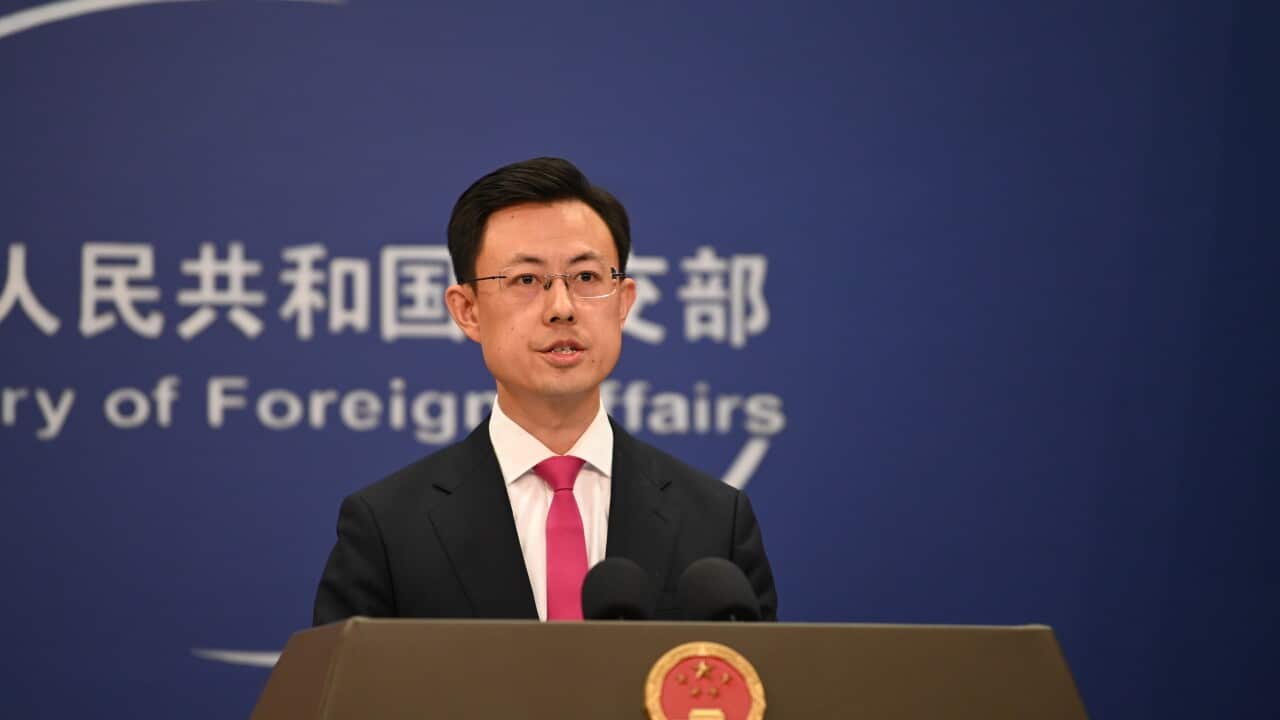
On Tuesday, Chinese foreign ministry spokesperson Guo Jiakun said only a complete ceasefire could lead to a lasting peace, while criticising the blockade, which the US announced after peace talks with Iran ended without a deal.
"[The blockade] will only aggravate confrontation, escalate tension, undermine the already fragile ceasefire and further jeopardise safe passage through the Strait of Hormuz. It is a dangerous and irresponsible move," Jiakun said.
The US Central Command has claimed more than 10,000 military personnel, more than a dozen warships and dozens of aircraft are involved in the blockade, which came into effect at midnight Tuesday AEST.
News that makes sense
Your trusted source for staying up-to-date with the world around you. Get free daily news updates and analysis, straight to your inbox.
"During the first 24 hours, no ships made it past the US blockade and 6 merchant vessels complied with direction from US forces to turn around to re-enter an Iranian port on the Gulf of Oman," the command said in a statement.
"The blockade is being enforced impartially against vessels of all nations entering or departing Iranian ports and coastal areas, including all Iranian ports on the Arabian Gulf and Gulf of Oman.
"US forces are supporting freedom of navigation for vessels transiting the Strait of Hormuz to and from non-Iranian ports."
It comes as Trump said talks with Iran could resume in the next two days, according to an interview with the New York Post.
"You should stay there, really, because something could be happening over the next two days, and we're more inclined to go there," Trump told the newspaper.
Trump said Pakistan's army chief, Field Marshal Asim Munir, was doing a "great job" on the talks.
"He's fantastic, and therefore it's more likely that we go back there," Trump said.
The initial round of talks over the weekend ended without an agreement on Iran's nuclear ambitions, which the White House said was a central sticking point.
Reuters, citing an unnamed source involved in the talks, on Tuesday reported that Iran and the US could return to the Pakistani capital as early as the end of this week, and that a proposal had been shared with both sides to resend their delegations.
"No firm date has been set, with the delegations keeping Friday through Sunday open," a senior Iranian source said.
— With reporting by the Associated Press.
For the latest from SBS News, download our app and subscribe to our newsletter.







