in brief
- Donald Trump's sudden plans to meet Kim Jong-un have unsettled Asia-Pacific allies.
- Regional partners like Australia, South Korea, and Japan are forced to strengthen ties and increase military spending.
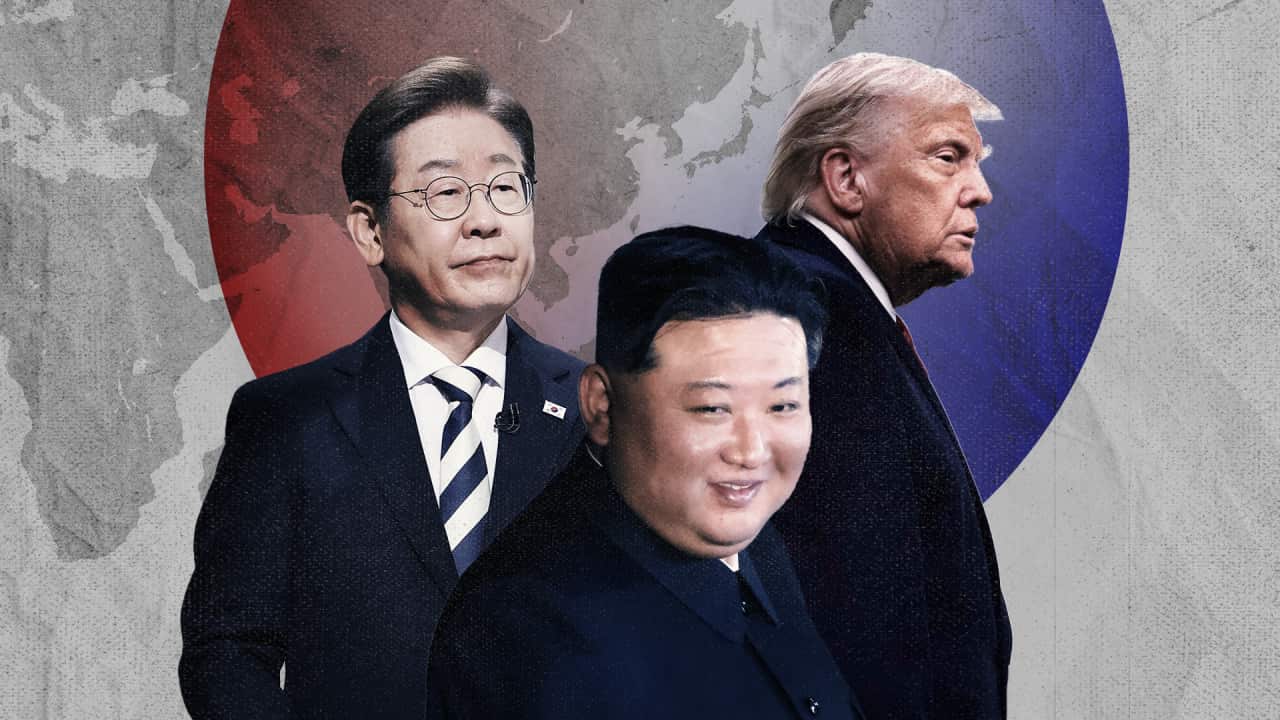
Donald Trump's recent appeals to the reclusive North Korean dictator Kim Jong-un have cast doubt on the United States' commitment to its allies in Asia and the Pacific — potentially adding to regional instability, experts worry.
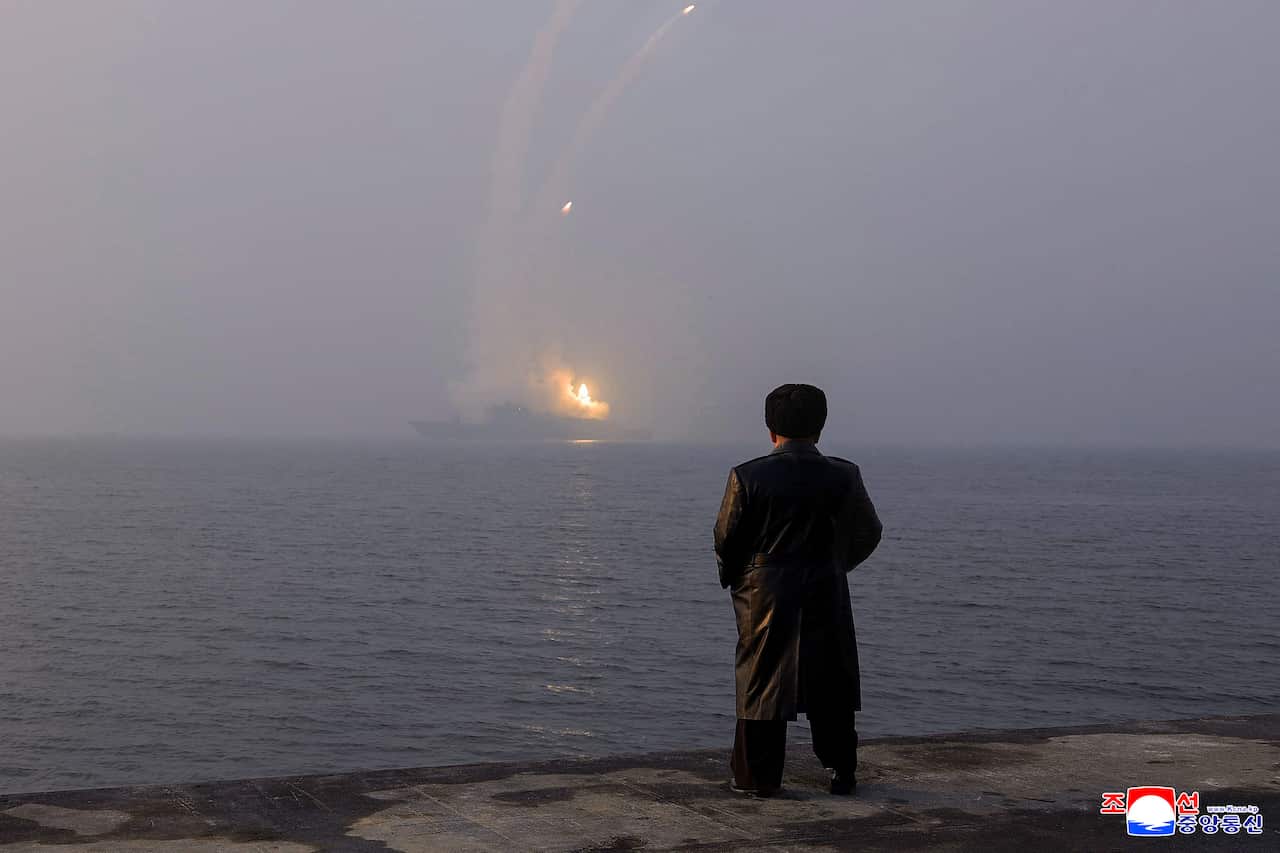
Trump has also reignited fears about North Korea's nuclear test program and whether the US would ever back down on opposing the nation's weapons, which would have broad ramifications.
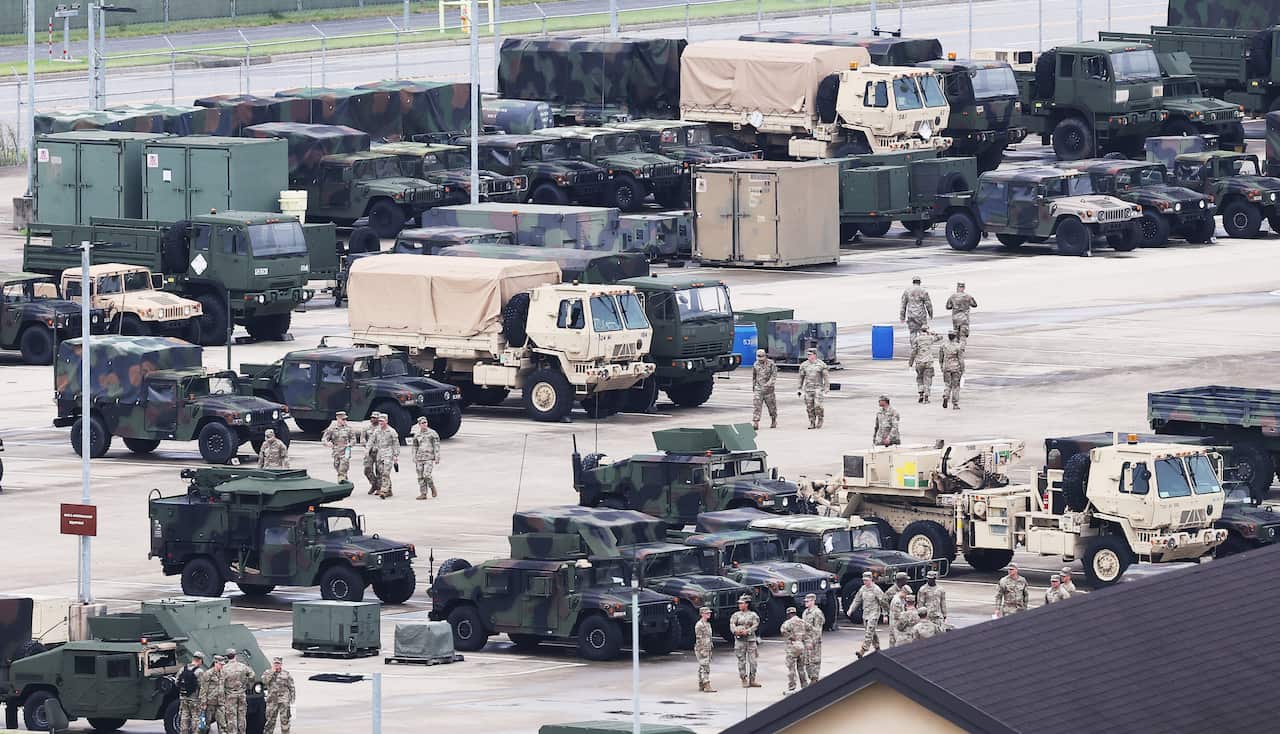
A decision by the US on Monday to "substantially reduce" the scope of ongoing joint military exercises with South Korea and Japan may have sent a ripple of doubt about the strength of the many interlinked defence ties in the region, and caught some off guard.
Trump announced the decision on social media, saying the exercises were costly and "send a signal that is totally inappropriate and hostile" to North Korea. The totalitarian state had previously complained about the joint military drills, saying they would respond with a new level of deterrence.
But the decision, which came somewhat out of the blue, was made at the same time as Trump is signalling plans to meet with the North Korean leader, raising questions about where their unusual relationship actually sits.
News that makes sense
Your trusted source for staying up-to-date with the world around you. Get free daily news updates and analysis, straight to your inbox.
South Korean president Lee Jae Myung said on Wednesday he recognised Trump's "will and efforts to create conditions for dialogue" with North Korea through the reduction of the exercise.
"President Trump's message this time feels like a major decision made with careful consideration to create peace on the Korean Peninsula, moving beyond hostility and confrontation," he wrote on social media.
Joshua Kurlantzick, senior fellow for Southeast Asia and South Asia at the US think tank the Council on Foreign Relations, told SBS News the US decision was in one way unsurprising, given its stated foreign policy shift away from global hegemony and toward influence over the "Western hemisphere" alone.
However, he said it was another significant step toward the potential "fading" of the US defence umbrella as allies "no longer feel" that umbrella is as "reliable as it used to be".
"As a result, and this includes Australia, they are taking various measures." He said this includes strengthening regional defence ties and increasing military spending.
That said, United States Studies Centre CEO and former National Security Council director for Asia, Michael Green, told SBS News that "the hub-and-spoke" US regional strategic alliance network "survives" the Trump administration as there's "no other option".
He said the multi-layered "networking of these traditional US allies is necessary" to counter the risks of a rising China and a loss of US maritime dominance in the Pacific.
"That alone explains 80 or 90 per cent of why you have the Quad [the security alliance between Australia, India, Japan and the US], why you have AUKUS, why you have the US-Japan-Australia trilateral," he said.
Why Trump wants to meet Kim
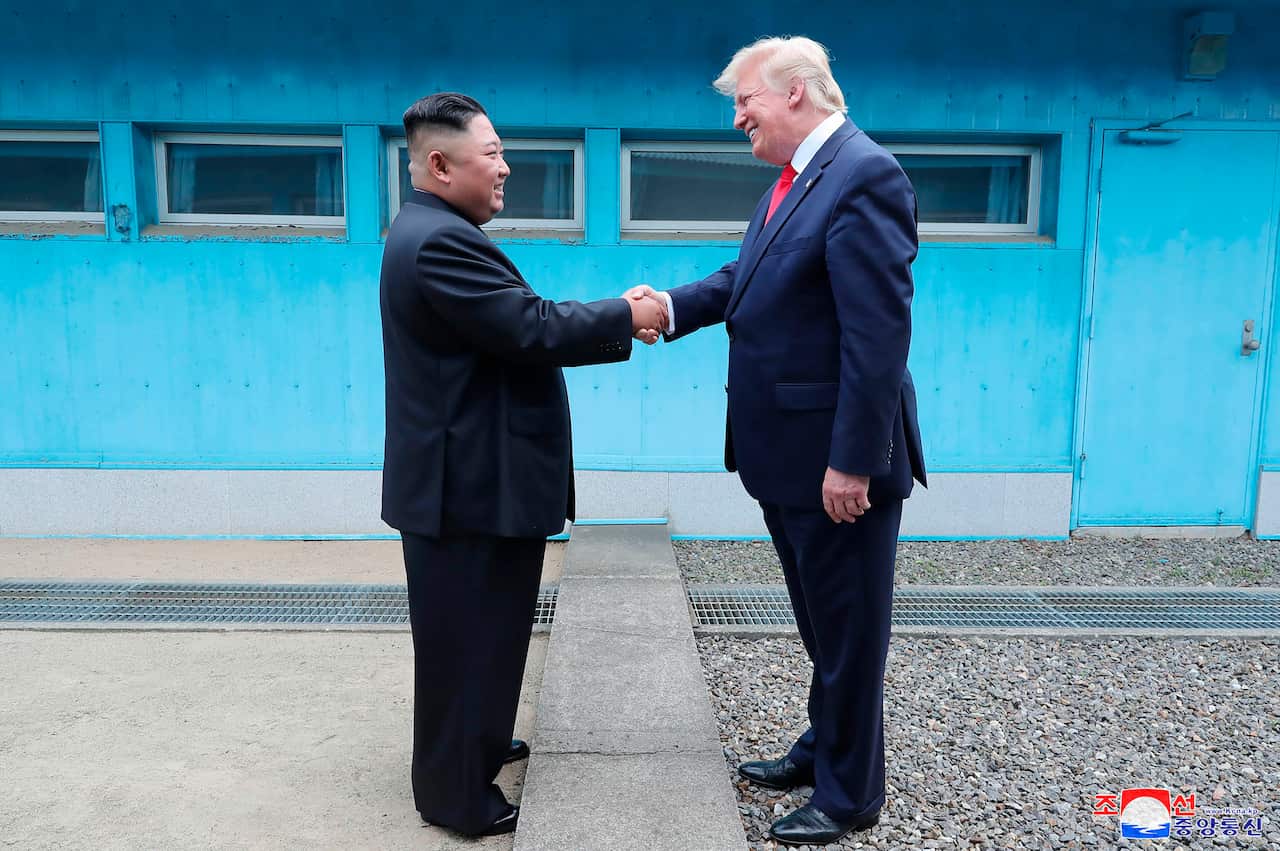
During his first term in office, Trump made history as the first sitting US president to meet Kim Jong-un and visit North Korea.
Despite their tumultuous relationship — Kim had previously described Trump as "mentally deranged" while Trump branded him "little rocket man" — the US president later said the pair "fell in love".
Their three meetings across 2018 and 2019 yielded little, with Trump refusing to accept Kim's demands for total sanctions relief in exchange for partial denuclearisation.
Relations between the two nations iced over during the Biden presidency, and Trump has had little to do with North Korea during his second term until now.
On Wednesday, Trump announced he would be meeting with Kim later in the year — potentially in November during the APEC summit in Shenzhen, China — but has yet to announce any specific details or goals for such a meeting.
On social media, Trump noted that joint military exercises are expensive and that South Korea has not supported the US in seeking to open the Iran-blockaded Strait of Hormuz as motivation for his sudden change of heart.
"Kim Jong-un has always treated me with great respect and we met on numerous occasions, actually, two primary occasions, spoken and spent time. I understand him. He understands me," Trump said on Monday as he alluded to the idea that the pair have been communicating.
Professor in international relations and comparative politics at the University of Sydney, Justin Hastings, told SBS News that he would "struggle to think" what the "point" of a meeting between the two would be, but said North Korea was likely to come out of it better off than the US.
In discussing his relationship with Kim, Trump said that North Korea "has 57 very powerful nuclear weapons" and that, while he "should have never allowed it... he's got them".
"I get along with him very well. I can't let Iran have a nuclear weapon. And I know Kim Jong-un very well. And he's going to be fine," Trump said.
The comments further normalise North Korea's claims to nuclear weapons, in a significant break from US historic policy, which is to demand North Korea give them up.
"If you're in a situation where the US actually does drop denuclearisation as a policy goal, this will have long-term ramifications for regional security without North Korea actually giving up anything in return," Hastings said.
Green, however, does not believe that Trump is focused on any short-term political ambition but is instead "looking for legacy".
"Trump was very successful as a television performer, as a businessman, and as a politician by dominating the news cycle," he said.
"Part of the answer is; his political fortunes are failing, he's stuck with the war in the Middle East, he's not able to tackle inflation, economists anticipate that prices won't go down before the midterms, so he's going back to a playbook he knows well, which is just keep changing the subject.
"It's worked before ... But it's going to have no impact on the politics right now in the US, and probably no positive impact in world diplomacy."
For North Korea, circumstances are also vastly different from what they were in 2018. Green argued Kim "doesn't need Trump as much" now, because North Korea is getting "robust support from Russia and China". In recent years, the country has strengthened ties with its neighbours and has deployed tens of thousands of troops in the war in Ukraine.
What could happen
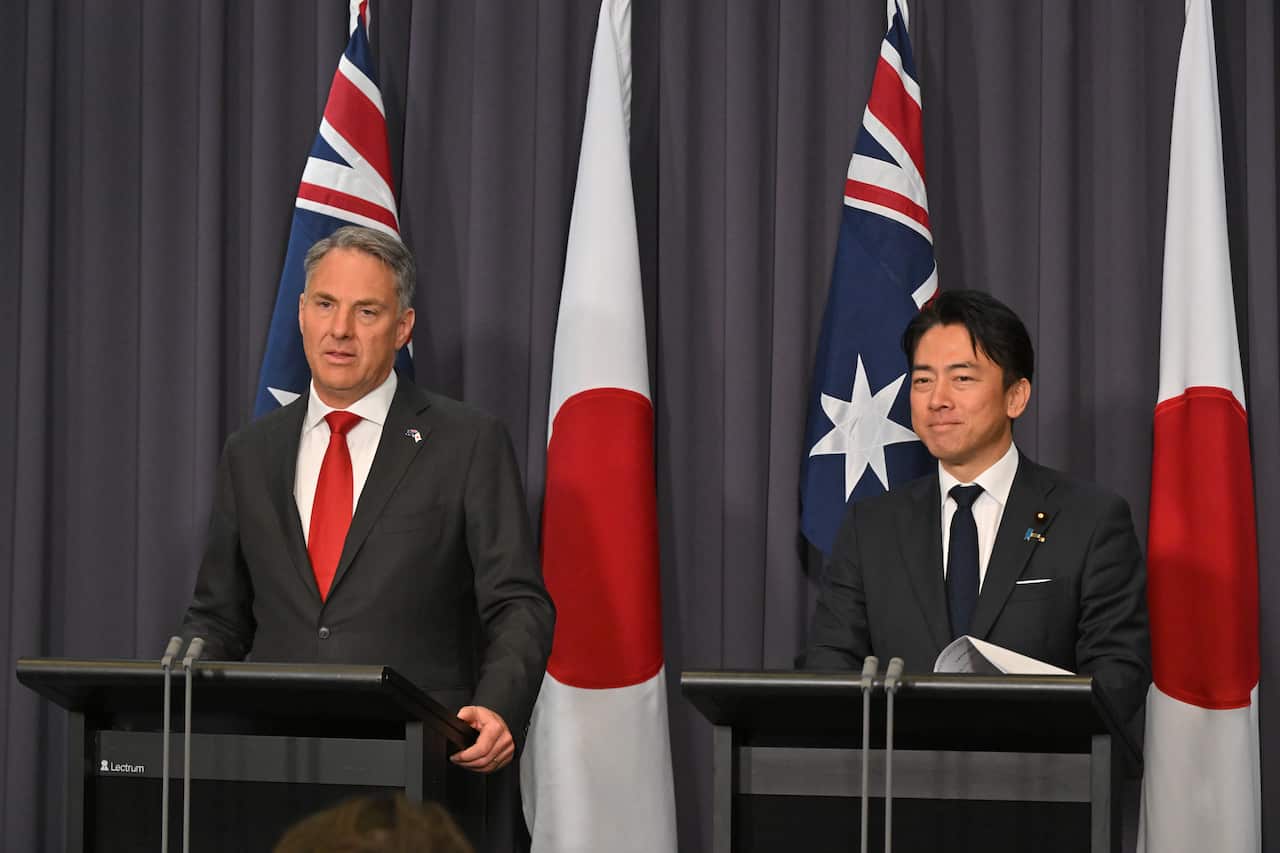
On Tuesday, Defence Minister Richard Marles said Australia remains "very concerned" about the North Korean nuclear weapons program and that missile tests are a huge issue for the country, even if they appear less so to the United States.
"Australia is very concerned about North Korea’s nuclear program, as well as its missile program," Marles said at a press conference with Japanese defence minister Koizumi Shinjiro. He added that South Korea remained "critically important" for both Australian and Japanese trilateral security.
Former South Korean ambassador Lee Baek-soon recently wrote that the US-led world order — the "Pax Americana" system — is "at a tipping point" following the war in Iran, and that South Korea and Australia should strengthen ties as a result.
"While one can put all one’s eggs in one basket during periods of stable order, it is wise to put one's eggs in multiple baskets during times of great rupture," he wrote. "Rather than rely on the power of others for their survival, nations must rely on their own power and the power of solidarity."
Whether or not Trump and Kim will meet remains uncertain. On Thursday, Kim's sister cast doubt over talks, denying that there had been any communication between her brother and Trump.
Kim Yo-jong did, however, say that the pair's relationship is "still excellent" and that Kim still has "good memories" of the US president.
Kurlantzick said that, at the most extreme end, the US shift could hasten nuclear weapons proliferation throughout Asia and could result in Japan and South Korea having atomic bombs.
"There's already strong South Korean support for greater homegrown defence capacities," Kurlantzick said. "This is only going to help that more."
"If Japan and South Korea, which are wealthy countries with the ability to produce nuclear weapons in a relatively short period of time, move towards producing nuclear weapons, it would be incredibly destabilising ... but isn't out of the question."
US midterm elections
However, he also believes that the upcoming midterm elections could shift support back toward a more globally-looking US, depending on their outcome.
"Congress, in the last few years, has handed over a lot of powers to president Trump and has been pretty compliant," he said. "That could change after the 2026 midterm elections; there's a lot of support in Congress for the policy of supporting US partners in Asia and that includes Australia."
Hastings said US allies like Australia were being forced into hedging their bets: increasing defence spend in a way that is consistent with US demands while building regional partnerships in the belief that the US might not follow through when needed.
"We're entering a period where there's a great deal more uncertainty, and it's one where countries would benefit by finding other sources of security in addition to continuing to rely, to a certain extent, on what the US is willing to provide."
Green, who served on the US National Security Council and negotiated with North Korea under the Bush administration while advising the US during the 2018 negotiations, said that the US has shocked Asia in the past but that relationships are often quickly patched up.
Opinion polling for US support, including one released by the Lowy Institute in June, shows that trust in the US is the lowest it has been in decades across the globe. However, as Green points out, support for military alliances with the US is "at record highs" in Japan, South Korea, and the Philippines while remaining "pretty steady" in Australia.
"Trump is unpopular around the world," Green said, but structural support "is quite robust".
"The worrisome part is, as his political power weakens, his disposition to do things like this South Korea game ... might increase.
"His way of doing things is, when the going gets tough, go out there and get publicity and do something shocking. That could get even more wild in the in the next year or so."
For the latest from SBS News, download our app and subscribe to our newsletter.







