In brief
- US President Donald Trump once again suggested talks were underway with Iran following days of violence.
- Iran has denied having held any direct talks with the US but said it may have received messages from mediators.
United States President Donald Trump has voiced optimism at the prospect of a negotiated peace deal with Iran, as the two sides held their fire for a third consecutive day.
Fighting between the longtime foes has been paused since Saturday after 13 nights of renewed US strikes on the Islamic republic sparked by a breakdown in diplomacy over Iran's blockade of the Strait of Hormuz.
But the US leader expressed hope on Tuesday that renewed diplomacy could bring an end to the war that began in late February with a wave of US-Israeli strikes, rattling both the region and the global economy.
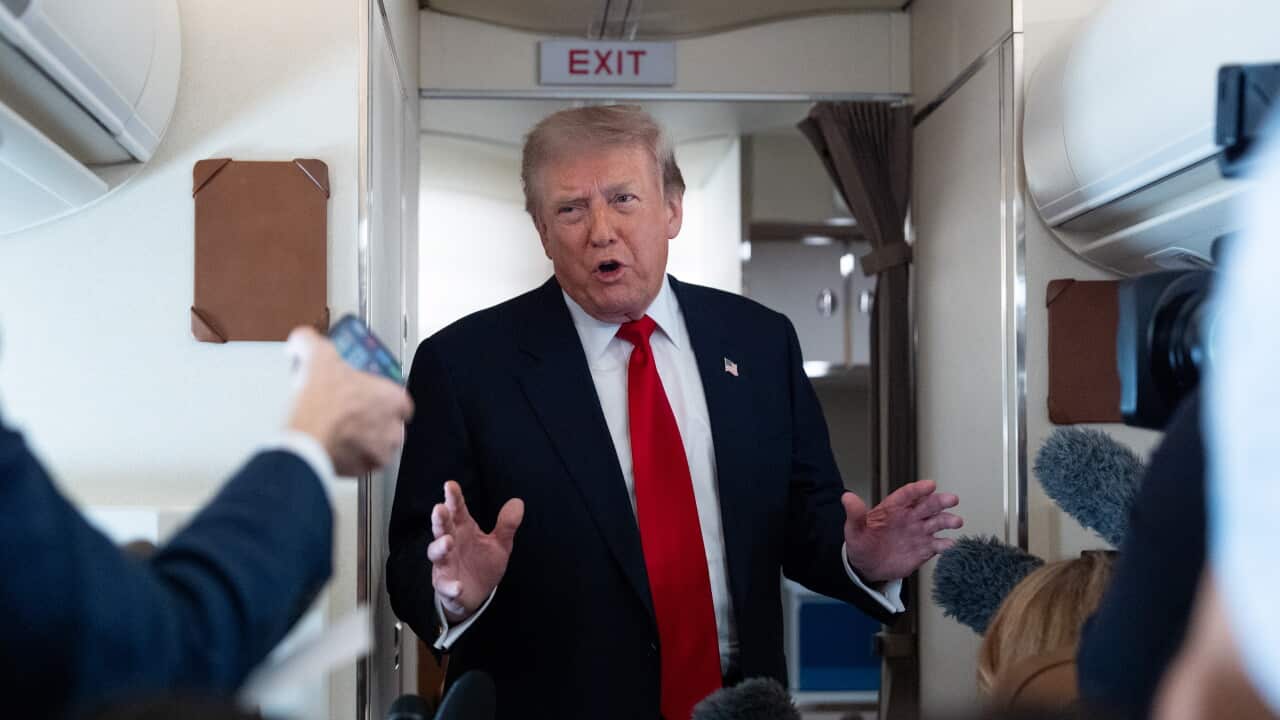
"I have a lot of patience ... We'll see what happens," he said aboard Air Force One.
"I think there is a good chance that something could happen."
News that makes sense
Your trusted source for staying up-to-date with the world around you. Get free daily news updates and analysis, straight to your inbox.
Iran had earlier denied that there were any direct talks with the US to end the conflict.
"Mediators may convey messages from the American side to us regarding current developments in the region. But at present, we are not engaged in any negotiations with the United States," said Iranian foreign ministry spokesman Esmaeil Baqaei.
Trump told the US news outlet Axios that mediating countries had asked him to hold fire to give diplomacy a chance, adding: "We are in very deep talks with Iran."
Aboard Air Force One, he said that if the new efforts failed, "we go back to doing what we were doing" before the pause in fighting.
On that subject, he dismissed concerns that US ammunition stockpiles were running low nearly five months after war broke out.
"We have a lot of ammunition. We have a lot of the mid-level stuff too, more than we could ever use no matter what," he said.
Saudi Arabia attacked
Despite the recent lull, Saudi Arabia came under attack on Monday, with its defence ministry saying it had intercepted several drones fired by Iran-linked groups in Iraq targeting oil facilities.
No group claimed responsibility, but the Saudis called on Baghdad to prevent such attacks from being launched from its territory.
Pakistan, which has been mediating a resolution to the Middle East war, condemned the drone attacks, saying they "pose a grave threat to peace and stability" in the region.
Yemen's Iran-backed Houthi rebels also said they launched drone attacks on Saudi Arabian oil infrastructure in response to incursions by the kingdom's drones. Saudi Arabia is yet to comment on the claim.
Saudi Arabia and other Gulf nations accused pro-Iran militias in Iraq of launching waves of attacks on their territory during the conflict's earlier phase, but the groups haven't claimed any attacks in the region since the resumption of hostilities.
Elsewhere, the Israeli military, which has not joined the recent fighting, said it had intercepted two drones near the Jordanian border and was investigating where they had been launched from.
Global stock markets meanwhile rallied, and oil prices tumbled on Monday after the pause in strikes between the US and Iran.
It came as respite for Gulf shipping and the oil industry, with international benchmark Brent dropping 6 per cent to around US$86 (AU$123) a barrel.
'Mafia gang'
Control of the Strait of Hormuz remains a hurdle to any peaceful resolution, and Iran insists on managing the crucial conduit for oil and gas.
Its powerful Revolutionary Guards have been stopping vessels trying to transit the trade route in recent days, including six that state television on Tuesday said had sailed outside Iran's designated route.
Iran says it has held talks in recent days with Oman, which also borders the strait, on "common principles and operational mechanisms" to ensure the safe passage of shipping.
In June, Oman and Iran said they would discuss imposing service fees, a move the US opposes.
But Oman also angered Iran after saying vessels could transit the Strait of Hormuz via its waters, with Iran responding by attacking ships.
Iran's foreign ministry on Monday said the US was not involved in the recent discussions with Oman.
Instead, Baqaei criticised the US, saying its conduct in recent years has "resembled that of a mafia gang that adheres to no rules or laws".
"So long as such behaviour by the United States continues, we cannot be hopeful about the emergence of a reasonable process," he said.
For the latest from SBS News, download our app and subscribe to our newsletter.







