In brief
- The US and Saudi Arabia have signed a landmark nuclear cooperation agreement.
- Experts are concerned the move could lead to more nuclear proliferation in the Middle East.
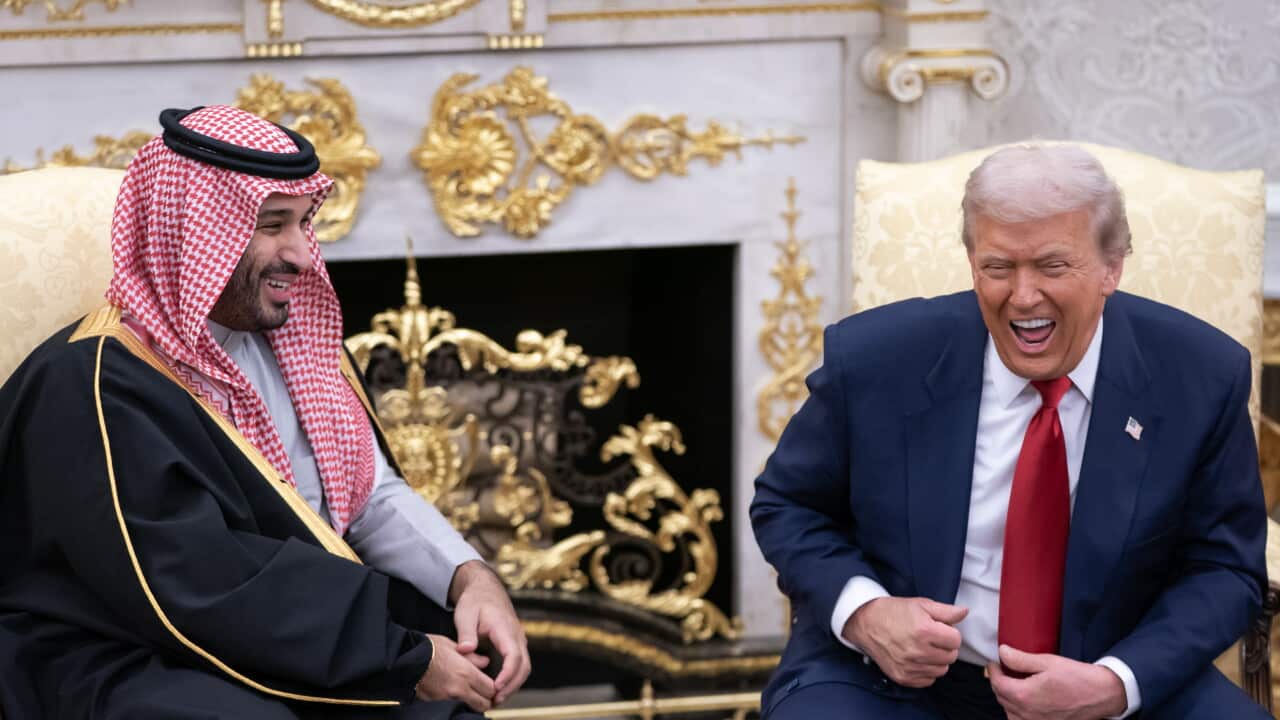
United States President Donald Trump has signed a landmark agreement with Saudi Arabia that will allow the kingdom to build reactors using American technology and to enrich uranium.
The deal, signed on Thursday, is expected to last 30 years and will allow US companies to run commercial power plants in Saudi Arabia.
But experts are concerned the move could open the door for nuclear proliferation — which refers to both the spread of nuclear weapons to more countries and the advancement or stockpiling of nuclear weapons — despite assurances from the US that adequate safeguards are in place.
The agreement comes amid the backdrop of the US' war with Iran, where the US has expressed concern over Iran's nuclear program — an issue that remains a key point of contention during now-stalled peace talks.
What's in the deal?
News that makes sense
Your trusted source for staying up-to-date with the world around you. Get free daily news updates and analysis, straight to your inbox.
Two agreements were signed — one on "peaceful nuclear cooperation", known as a 123 agreement, and another on "bilateral safeguards".
The text of the deals was not immediately made public, except for a statement by the US energy department.
"US Secretary of Energy Chris Wright and Saudi Minister of Energy His Royal Highness (HRH) Prince Abdulaziz bin Salman signed a peaceful nuclear cooperation agreement, commonly known as a 123 agreement, alongside an accompanying bilateral safeguards agreement," the announcement read.
"Together, these two agreements lay the legal foundation for a decades-long, multi-billion-dollar partnership that advances several priority economic and strategic objectives, including nuclear nonproliferation."
The department said the deal would benefit "American industry, workers and supply chains" and help "meet Saudi energy needs".
Potential pathways to nuclear weapons
A key point of concern is that the deal could allow Saudi Arabia to enrich uranium and reprocess nuclear waste, both of which are potential pathways to making a nuclear weapon.
The United Arab Emirates (UAE) agreed to forgo both of those when it signed a similar deal with the US in 2009.
Discussions of a civil nuclear deal with Saudi Arabia have been in the works for years — under both Trump's first administration and Joe Biden's — but no deal came together before now, in part because of warnings from nonproliferation groups that it could offer Saudi Arabia a path to develop a nuclear weapon.
Unlike the Biden plan, the current deal does not include a so-called Additional Protocol that allows the UN's International Atomic Energy Agency to carry out intrusive snap inspections.
Wright insisted the agreement includes strong safeguards.
"Rest assured, these agreements uphold the highest standards of nuclear safety and nonproliferation, while relying on the world’s best nuclear technology and scientists, designed right here in the United States," he said in a statement.
Saudi Crown Prince Mohammed bin Salman has repeatedly said he does not want the kingdom to build a nuclear weapon — but it would if Iran did, raising concerns about potential proliferation.
Allison Minor from the Atlantic Council's Rafik Hariri Center for the Middle East said the deal had been in the works before the Iran war, but that the war likely added political urgency.
"By securing a 123 agreement that appears to have more preferable terms than the United Arab Emirates and dozens of other US partners have committed to, Riyadh also signals its role as a major global player, even if it is not among the ranks of nuclear-armed nations," she said.
"It is possible that the Iran war lent greater political urgency to the negotiations, as Washington has sought to reassure a partner that is increasingly wary of US security commitments and frustrated by the lack of consultation."
"We should read the announcement as part of Riyadh’s broader strategy to managing the shockwaves of the Iran war."
Why experts are concerned
The energy department said the deal now goes to US Congress.
Unless Congress raises votes to object to the deal within 90 session days, it automatically takes effect — and overriding a presidential veto would require a two-thirds majority.
Some nuclear experts called on Congress to vote down the deal.
"We urge all members of Congress on both sides of the aisle to recognise the risks and to exercise their power to reject or modify Trump’s proposed nuclear deal with Saudi Arabia so as not to open the door for nuclear proliferation in the Middle East even wider," said Kelsey Davenport, director for nonproliferation policy at the Arms Control Association.
Rosemary Kelanic, director of the Middle East program at Defense Priorities, said "giving Saudi Arabia uranium enrichment technology is a terrible idea on many counts".
"But it’s especially idiotic to do it *in the middle of a war over Iran’s nuclear program*," she wrote on X.
Matthew Kroening of the Atlantic Council said, ahead of the formal announcement, that it would be a "mistake to allow Saudi Arabia the capability for enrichment", adding: "Washington is right to strengthen its relationship with Riyadh, but it should not do so at the expense of its effective nuclear weapons nonproliferation standards."
Ahead of the announcement, secretary of state Marco Rubio said the US would not "reach any agreement with any country in the world that leads to the risk of proliferation".
Senator Jim Risch, a Republican, said he agrees with the kingdom's crown prince that the deal stands to benefit both countries.
But several Democratic politicians have warned that the deal could start an arms race in the Middle East as the US-Israeli war on Iran grinds on.
"They are allowing Saudi Arabia, a belligerent and authoritarian nation, to develop nuclear weapons technologies while starting a war with Iran under the guise of preventing an Iranian nuclear bomb," said Democrat senator Edward Markey.
"This deal would make us all less safe."
Californian Democrat Brad Sherman said Congress should approve the deal only if it carries the same "gold-standard" safeguards the US required of the UAE, adding that "a President waging war to prevent nuclear proliferation in the Middle East should not facilitate proliferation just because US companies stand to make a profit".
— With additional reporting by Reuters and Agence France-Presse.
For the latest from SBS News, download our app and subscribe to our newsletter.







