In brief
- Iran's Revolutionary Guards say they have targeted United States facilities in the region.
- The US says it hit air defences, coastal radars, and small boats.
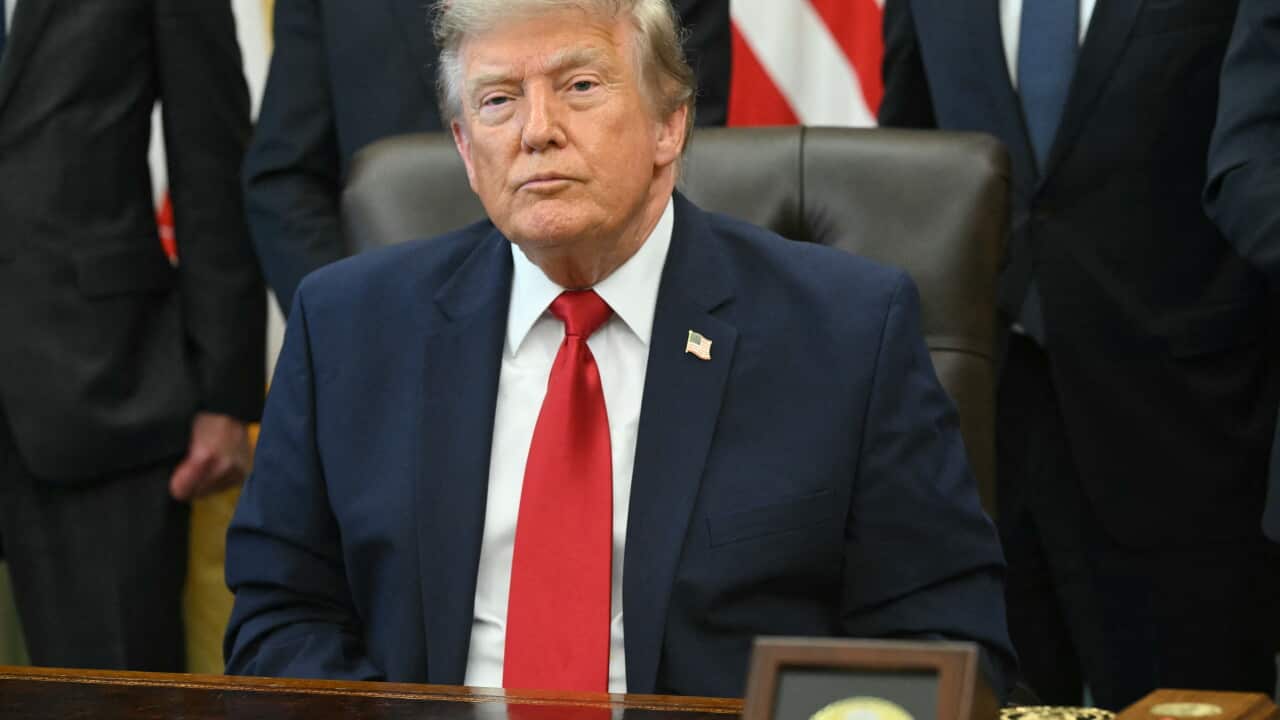
The United States launched a third night of strikes on Iran as US President Donald Trump planned to reimpose a blockade on Iranian ports and floated a 20 per cent fee on cargo in the vital Strait of Hormuz.
The US military said its five-hour mission hit targets across Iran, including coastal Bushehr and Bandar Abbas, to "degrade Iran's ability to attack commercial shipping".
After the strikes, Iran's Revolutionary Guards announced they had in turn fired missiles and drones on Bahrain, targeting a residential building for US forces and other facilities.
US Central Command said it began strikes at Trump's direction just after he told a US radio show that Iran would be hit "very hard tonight, and we're going to hit them hard tomorrow. And there's not a damn thing they can do about it."
He later told reporters at the White House that the US was attacking Iranian capabilities in the strait.
News that makes sense
Your trusted source for staying up-to-date with the world around you. Get free daily news updates and analysis, straight to your inbox.
Soon after, the United Arab Emirates defence ministry said Iranian cruise missiles struck two Emirati oil tankers, the Mombasa and Al Bahiyah, while transiting the southern lane of the strait in Omani territorial waters, killing one crew member and injuring eight others.
The United Kingdom Maritime Trade Operations (UKMTO) agency said a tanker had been hit by an unknown projectile while travelling 40 nautical miles north-east of Oman's Qalhat and that all crew were safe.
Reuters could not immediately verify whether the UKMTO report referred to the same incident as the one reported by the UAE's defence ministry. Iran has not commented on the latest attacks.
"The Hormuz Strait is OPEN, and will remain OPEN, with or without Iran. We are reinstating THE IRANIAN BLOCKADE," Trump had said earlier on Monday on Truth Social.
"The USA will be, from this point forward, known as 'THE GUARDIAN OF THE HORMUZ STRAIT', but as such, and as a matter of FAIRNESS, will be reimbursed, at the rate of 20% on all cargo shipped."
Iran's top joint military command said the US had no role in determining the future of Hormuz and would not be allowed to intervene. Iranian foreign minister Abbas Araghchi said in a post on X that his country was the guardian of the strait and would remain so "forever", adding in response to Trump's comments that: "20% is of course too much. We will be fair."
The UN's shipping agency pushed back against Trump's proposal, saying it opposes any fees for straits used in international navigation and stressing that there is no legal basis for introducing mandatory tolls on strait transits.
Trump has previously suggested the US could charge tolls on shipping through the strait, but it has so far not done so and it was unclear if it would follow through on Trump's declaration this time.
The US Navy-led Joint Maritime Information Center said the blockade would take effect at 8pm GMT on Tuesday (6am Wednesday AEST) and apply to all vessel traffic regardless of flag, covering the entire Iranian coastline including ports and oil terminals.
It said the measure would not impede neutral transit passage through the strait to or from non-Iranian destinations, and that humanitarian shipments would be permitted subject to inspection.
Before the conflict began in February, around a fifth of the world's oil and gas traffic passed through Hormuz daily, delivering more than 15 million barrels of fuel to global markets worth at least US$1.2 billion ($1.73 billion). If the US were to impose a 20per cent fee, it could generate around US$250 million a day ($361.5 million).
Iran has sought to establish a permanent fee and permit system of its own for vessels using the waterway.
At least 25 killed in latest US strikes
At least 25 people have been killed in Iran since hostilities resumed on Wednesday, according to a tally by the Agence France-Presse news agency based on Iranian announcements.
At least four explosions were heard on Monday east of Bandar Abbas, which sits on the Strait of Hormuz, Iranian state media reported, citing a reporter in the port city's province.
On Monday, United Nations secretary-general António Guterres expressed "deep concern" at the regional escalation, including attacks by both sides.
Iran's Revolutionary Guards said they had struck US military targets and bases in Jordan, Bahrain and Kuwait, state media reported.
Air raid alerts sounded in Bahrain, where the military said it shot down a number of Iranian projectiles, while Kuwait's army said its forces were intercepting "hostile aerial targets".
Jordan's army said it had intercepted four Iranian missiles.
Iran insists it only targets US interests in the Gulf, but the spokesman for its military command said any collaboration by Gulf countries with the US would be considered "an act of war".
The latest exchanges mark an escalation over the past week, throwing into question the interim US-Iran agreement signed last month to reopen the Strait and halt hostilities.
Trump says he thinks a deal is still possible
Despite all signs to the contrary, Trump said that a deal with Iran to end the Middle East war was still possible.
"Yeah, I think a deal is possible. Sure, I do," Trump told reporters in the Oval Office. "We had a deal with them two days ago and then they said 'Oh we can't make that deal. We have to negotiate it further.'"
Iran's foreign ministry spokesperson Esmaeil Baqaei said earlier on Monday that the June memorandum of understanding that formed the basis for the negotiations and lifted the US blockade was "in crisis".
Baqaei said Iran would ignore its obligations under the deal if the US did the same, but added that Iran was continuing talks with mediators from Qatar, Pakistan and Oman to prevent further escalation.
Analyst Bader Al-Saif said the escalating attacks would merely delay a permanent agreement.
"Both sides want to end the impasse on their own terms, and they are increasingly finding it difficult to do so. Hence the return to and increase in the scale of attacks," said Al-Saif, an associate fellow at Chatham House.
The war launched by the United States and Israel against Iran on 28 February has destabilised the Gulf and spread across the region, with Iran attacking US bases in multiple countries.
Yemen's Houthi movement fired missiles at Saudi Arabia after accusing the kingdom of bombing an airport under its control on Monday, breaking a four-year truce between Riyadh and the Iran-aligned group.
Oil prices jump
Driven by fears of further disruption in the strait, oil prices jumped more than 9 per cent on Monday, with Brent futures posting their biggest single-day dollar gain since 2 April, and highest settlement since 12 June. US crude futures made their largest daily gain since 29 April to settle at their highest since 15 June.
Higher energy prices, particularly gasoline costs, are politically sensitive for Trump before congressional elections in November.
Iran's Revolutionary Guards said in a statement on Monday that the only way to restore regular shipping traffic was to end US military interventions in the waterway.
The US, which revoked a licence waiving sanctions on Iranian crude sales last week after earlier attacks on shipping, said its forces were positioned to safeguard freedom of navigation.
US officials said around 20 vessels had been escorted through the strait in the previous 24 hours, although ship-tracking data showed little traffic moving. MarineTraffic said on Monday that vessel activity through the strait declined by about 52per cent over 10 July to 12 compared to the previous week.
For the latest from SBS News, download our app and subscribe to our newsletter.







