
In Brief
- The Houthis have once again emerged, raising fears of further disruptions to shipping routes.
- Experts say they are also looking to deter a US ground invasion and could create pain for Donald Trump.
A key proxy of Iran has begun launching attacks on Israel in a move that could divide the United States’ military efforts and prolong the war in the Middle East, experts say.
Yemen’s Iran-aligned Houthis joined the conflict on Saturday, launching their first attacks on Israel and raising the prospect they could target and block a second key Middle East shipping route, the Bab al-Mandab Strait.
Oil markets are already in turmoil as the Strait of Hormuz — the vital shipping lane on Iran's southern border through which roughly one-fifth of the world's oil and gas normally flows — has effectively been choked off.
This latest attack comes after years of back-and-forth attacks between the Houthis and the US, which emerged as the Hamas-Israel war escalated on 7 October 2023, when the group targeted ships linked to Israel in support of Palestinians.
This strategy of disruption grew with the Houthis, who then expanded to target shipping in the Red Sea more broadly.
News that makes sense
Your trusted source for staying up-to-date with the world around you. Get free daily news updates and analysis, straight to your inbox.
The US, at times helped by the UK, responded with naval defence and airstrikes, leading to an ongoing tit-for-tat conflict.
A ceasefire between the Houthis and the US, brokered by Oman in May last year brought an end to nearly two years of attacks on ships.
A separate Houthi ceasefire with Israel, agreed in October after Israel agreed to a ceasefire with Hamas, now appears to be shattered.
The Houthis have once again emerged, raising fears of further disruptions to shipping routes and complicating the ongoing conflict and tenuous peace deals in the region.
Israeli authorities said on Sunday that they had intercepted two drones launched from Yemen.
Who are the Houthis?
The Houthis are a "powerful ally" of Iran, and their founding movement, consisting of political and military arms, started in the 1990s.
Three decades on, the rebel group-turned-governing force — now holding swathes of Northern Yemen — is deeply involved in long-running conflicts with regional and global implications.
Historically, the Houthi’s primary point of conflict has been with Yemen's internationally recognised government, which it seeks to overthrow. The ongoing civil war between the two parties, alongside a gradually escalating conflict between the Houthis and Saudi Arabia, has fuelled one of the world’s largest humanitarian crises in Yemen.
The group was designated as a terrorist organisation by the Australian government in 2024 after a series of attacks on ships in the Red Sea.
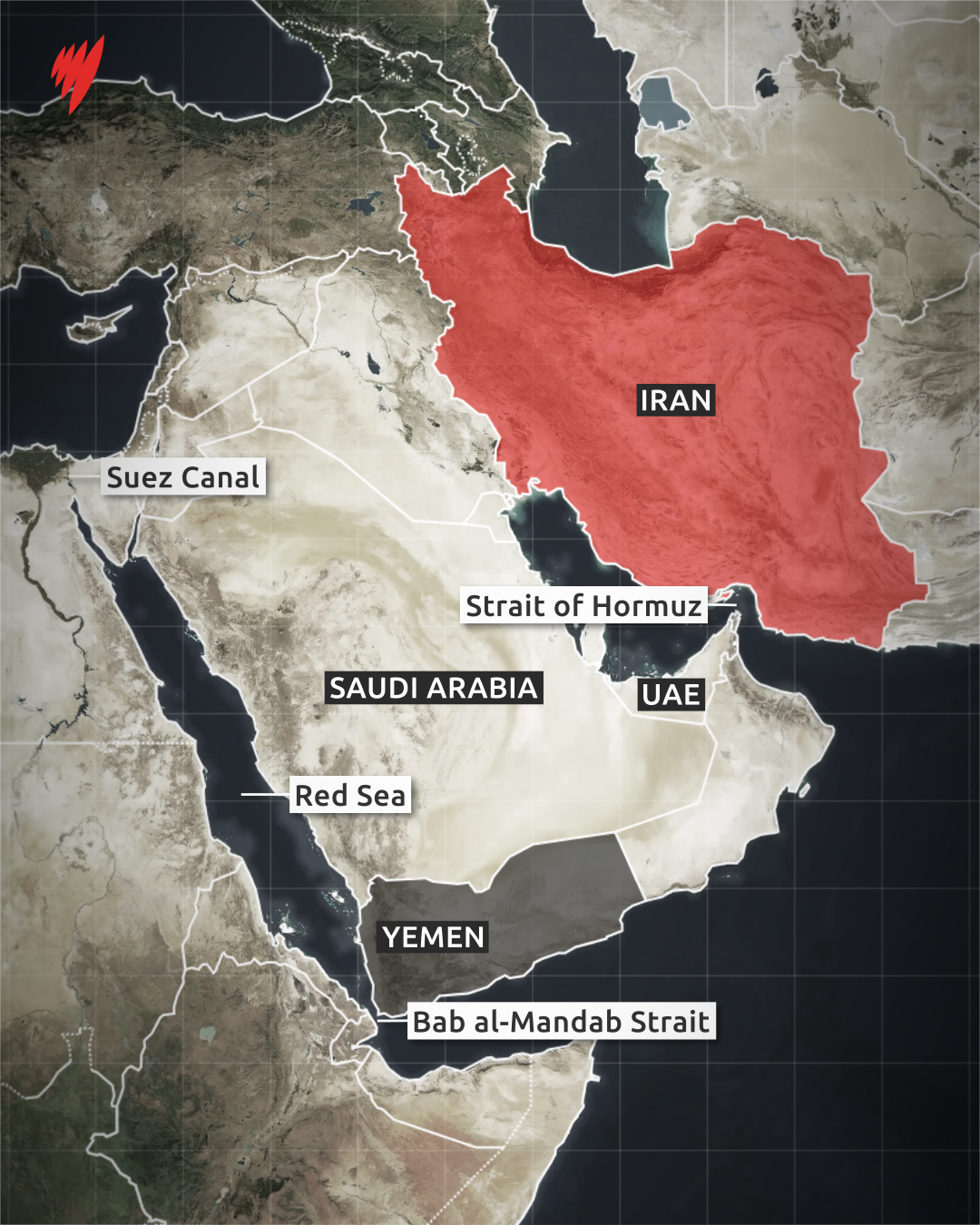
Since October 2023, they’ve also been involved in attacks on shipping in the Red Sea, which Hisham Al-Omeisy, a senior Yemen advisor at the European Institute of Peace, said was perhaps their most effective destabilising strategy in the region.
"Since they were last attacked, the Houthis have had time to regroup and rebuild their stockpiles, now they’re back and they are ready to fight," he told ABC radio on Monday morning.
"By attacking the Bab al-Mandab Strait, they would create a second front in the war. They haven’t shut down the Strait yet, but that could be the next escalatory step."
The Strait acts as the southern entry/exit point for the Red Sea, leading directly to the Suez Canal, making it essential for trade between Europe, Asia, and the Middle East.
A high volume of petroleum and natural gas travels through this strait, making it one of the world's most significant oil transit chokepoints.
This economic traffic makes it a desirable target for the Houthis, Al-Omeisy said, as the "powerful ally of Iran" looks to deter further US and Israeli attacks in the region.
While it's not immediately clear how badly their conflict with the US and Israel depleted the Houthis, Israel killed a dozen members of their senior leadership.
In August, Israel killed the Houthi prime minister, the chief of staff and several cabinet ministers in an airstrike, but Abdul Malik Al-Houthi, the movement’s leader, was not there.
Why get involved now?
The Houthis' weekend strike against Israel marked four weeks of conflict since the US and Israel attacked Iran on 28 February.
Al-Omeisy said their decision to enter the war would be "carefully and strategically" timed and would be looking to achieve two goals.
Firstly, they want to retaliate against Israel in support of Iran and the "broader Muslim cause", he explained, noting the Houthis have links to Shia Islam.
They are also looking to deter a US invasion.
"They are also wary that the US has threatened to put boots on the ground in Iran, so firing rockets at Israel signals they are willing to disrupt global trade and oil shipments if they choose to shut down the Strait," he said.
The Washington Post reported on Sunday that the Pentagon is preparing for weeks of ground operations in Iran. The plans could involve raids by special operations and conventional infantry troops, the Post reported, citing US officials.
Washington has dispatched thousands of marines to the Middle East, with the first of two contingents arriving on Friday aboard an amphibious assault ship, the US military has said.
Director of Middle East Studies Forum at Deakin University, Shahram Akbarzadeh, said the Houthis' attack on Israel could "significantly expand the conflict".
"Iran had already tried to regionalise the war to put pressure on the United States through economic pain," he told SBS News.
"Now, if [the] Houthis also enter the war, that will seriously affect the flow of oil through the Red Sea, and that will triple the amount of pressure on [US President Donald] Trump to end the war."
Long-term effects
While the Houthis were willing to attack Israel, Akbarzadeh suspected that the group would not follow Iran’s strategy of attacking neighbouring Gulf states.
Since 28 February, Iran has attacked several of its neighbouring countries, disrupting air travel and putting pressure on other governments to intercede in the ongoing conflict.
"The Houthis, however, are likely to target US assets, like military bases throughout the region, and to hit ships in the Red Sea," he said.
"That will significantly increase pressure on Trump to address the financial implications, consequences, and the rise in oil prices that is affecting the global economy, and it's affecting Trump's home base."
Akbarzedah said that this would further pressure Trump to withdraw from the Middle East and to "end the war quickly".
"He can simply declare victory and say he has achieved his objectives and walk away from the war," he said.
"He has destroyed Iran's Navy, Iran's Air Force, and he has decapitated Iranian leadership; he can list those as evidence of his success and victory that they have achieved on the battlefield."
Al-Omeisy said Trump would likely threaten the Houthis, as in years past, and attempt to wipe them out through military action rather than retreat.
But the group’s leadership structure is "robust" and could withstand even the military might of the US.
"They've (the Houthis) have had these plans in place for the longest time, being a militia," he said.
"They understand that the leadership can be taken out at any given time, and that's why they have a succession plan in place that goes seven layers deep."
For the latest from SBS News, download our app and subscribe to our newsletter.







