IN BRIEF
- Iran has targeted Gulf states and US bases in its retaliation, while a new front has opened in Lebanon.
- A proposed US deal and Iran's counteroffer remain far apart, with both sides showing little sign of backing down.
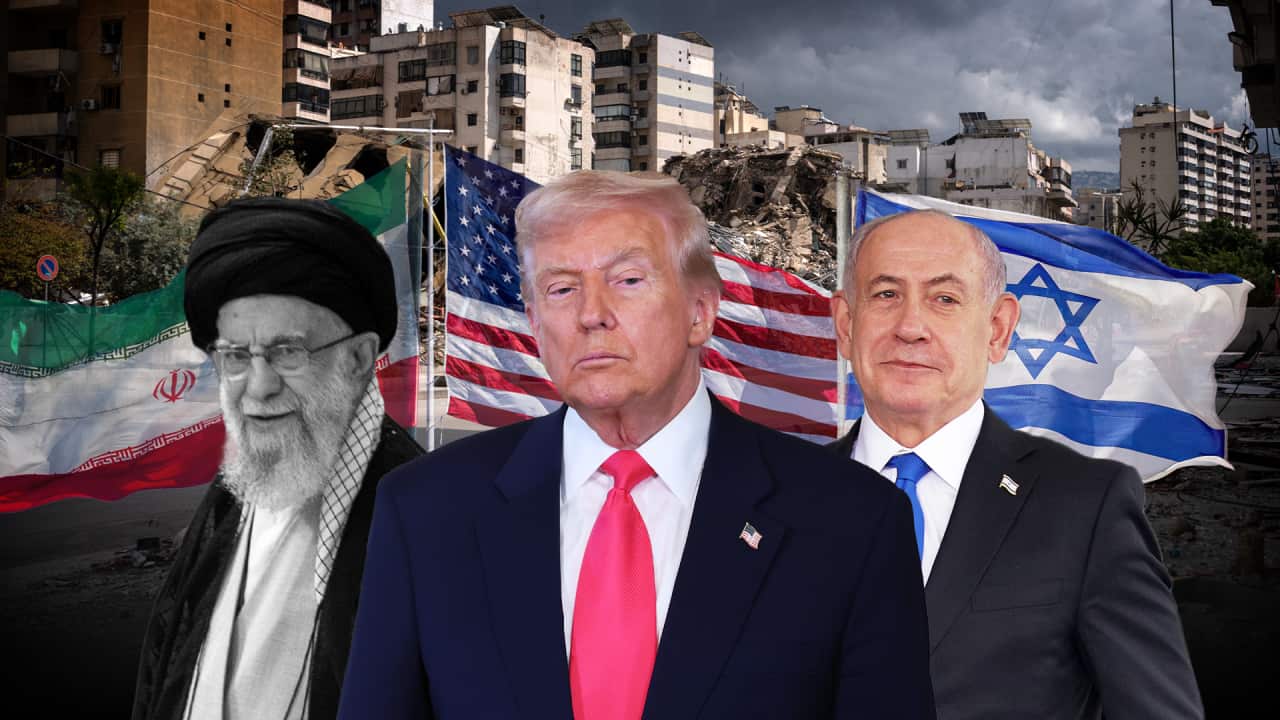
When United States President Donald Trump ordered strikes against Iran, he threatened that the country's leadership, army and navy would be swiftly smashed by overwhelming force.
But four weeks after the US-Israeli strikes in late February, Iran has proven itself more resilient and disruptive than anticipated, retaliating in force.
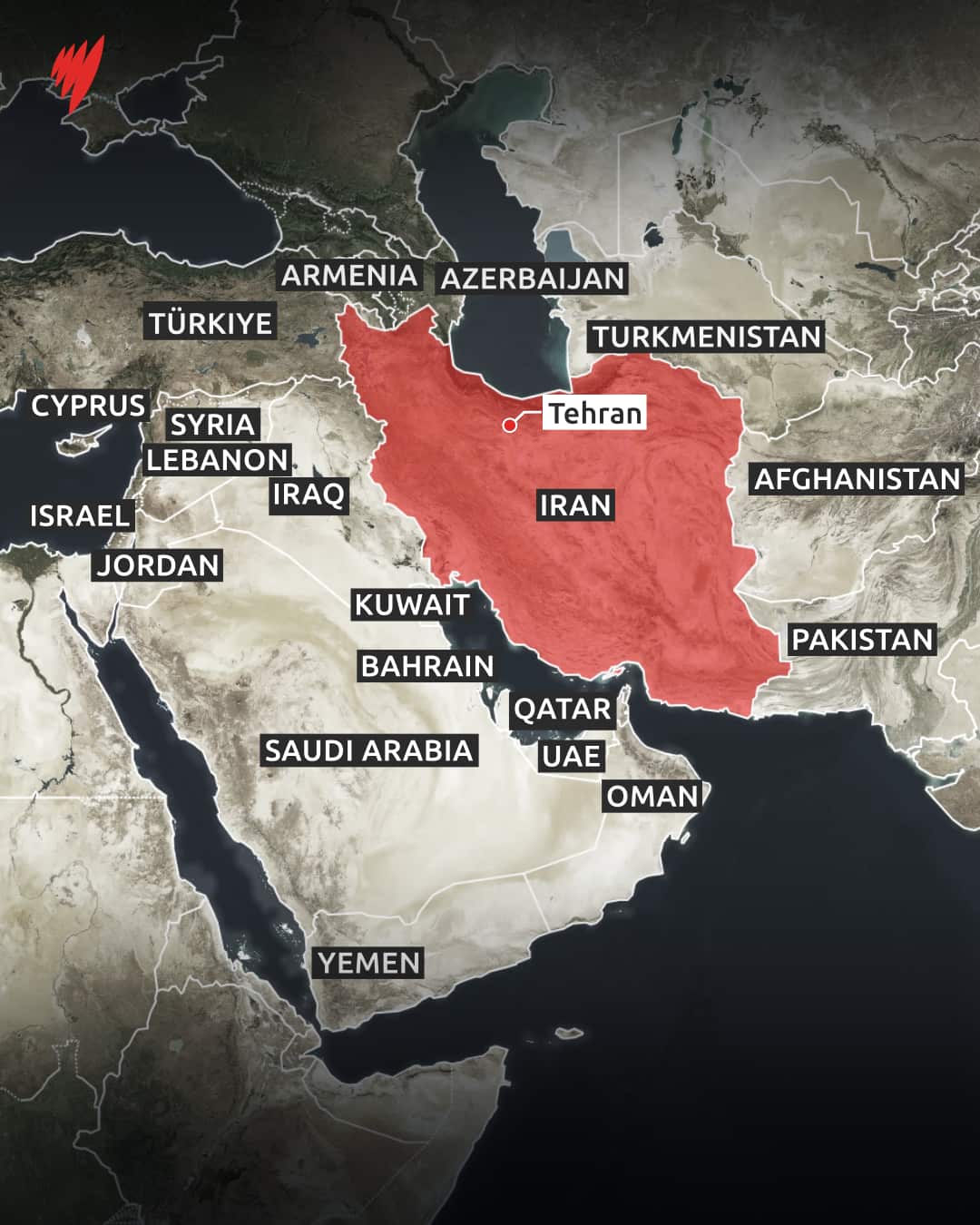
It has choked a vital waterway, the Strait of Hormuz, targeted neighbouring Gulf states allied with the US, and American military bases in the Middle East.
A new front has also opened in Lebanon after Iran-aligned Hezbollah, a Lebanese political and militant group, launched strikes against Israel after Iran's supreme leader, Ayatollah Ali Khamenei, was confirmed to have been killed in the US-Israeli strikes.
Since the conflict erupted, thousands of people have been killed across the Middle East, including 3,300 people in Iran — 1,464 of whom were civilians, according to the US-based Human Rights Activist News Agency.
News that makes sense
Your trusted source for staying up-to-date with the world around you. Get free daily news updates and analysis, straight to your inbox.
SBS News is unable to independently verify these figures.
The war has also caused global economic pain, with rattled energy markets sending fuel prices soaring. There have also been mass air travel disruptions.
"Unexpected" factors have been at play in this first month of fighting, experts told SBS News, and predicting when it could end is becoming increasingly "murky."
The limits of overwhelming force
Some experts have described the US and Israel's goals in Iran as scattered, and others have said Iran is pursuing a regime survival strategy.
"Iran's government has proved to be more entrenched and resilient than had been expected, and it is pushing for its regime to survive at all costs," said Amin Saikal, an emeritus professor of Middle Eastern studies at the Australian National University.
"Israel's Prime Minister Benjamin Netanyahu wants not only to destroy the Iranian government, but also to degrade the Iranian state, making sure that Iran is not capable of standing on its own as a rival in the region."
The US, however, has been operating on a more "ad hoc" basis, according to Saikal, with Trump threatening total destruction of Iranian leadership, then this week pushing for a peace deal with the Iran.
He later insisted he was not "desperate" to make a deal, rejecting reports he was looking for an exit.
"The US has shifted its objective just about every day, ranging from helping the oppressed people of Iran to degrading Iran's military capability — more specifically, its missile capability — and destroying its nuclear facilities," Saikal said.
Jessica Genauer, an expert in international conflict at the University of New South Wales, said the nature of the conflict — that of a strong military power aiming to eliminate an apparently weaker force — is relatively common in history.
"You can look to Israel and Hamas (the political and military group that rules Gaza), for instance, where the former has a much stronger military, but the latter is still holding out," she told SBS News.
"It's been historically difficult for countries with significant military capability to fully eliminate enemy actors."
Examples include US-led operations in Afghanistan and Iraq, where prolonged military efforts failed to decisively eliminate insurgent groups or establish lasting stability, and the US ultimately withdrew.
Genauer said that in these cases and others, the US could never fully control the insurgencies fighting against its forces.
Iran, therefore, doesn't need to defeat the US in combat but rather needs to outlast its willingness to continue its assaults on the region and the subsequent economic costs.
A war with global consequences
Both Saikal and Genauer said the current conflict has been more disruptive to the world than most wars this century in terms of economic security.
The war has not only triggered one of the most significant energy crises in decades but also disrupted the flow of fertiliser, creating concerns for Australian food production and local food security.
"The closure of the Strait of Hormuz by Iran is the critical piece here, and the longer this conflict goes on, the world is essentially going to face a kind of COVID-19 moment," Genauer said.
"In terms of supply chains, in terms of fuel prices, in terms of international travel, we're actually going to see a complete restructuring of those large and critical components, not only of the global economy, but elements that really affect everyday citizens in their day-to-day life."
The flow-on effects of the conflict have been "very immediate" and for many people "probably quite unexpected", she added.
Saikal said the Strait's closure demonstrates the world's dependency on the Middle East for energy.
"If the current conflict continues for longer, let's say for another two weeks or a month, I think the impact of that in terms of the shortage of energy, as well as rising inflation, would become a lot more acute," he said.
The ongoing fighting has also impacted travel and tourism, and sparked repatriation efforts to bring home thousands stranded across the region.
Australians have been told not to travel to a number of countries in the Middle East, including Israel, Lebanon, Bahrain, Kuwait, Qatar and the United Arab Emirates.
The war's uncertain trajectory
Looking beyond the toll on human life and the global economy and asking when the conflict could end leads to uncertain answers.
Genauer said that despite its relatively weak military, Iran can deploy cost-effective counterinsurgency tactics to prolong the war to its advantage.
She said that the nature of warfare has evolved, and countries now have access to relatively "cheap military assets", like drones, light attack craft and midget submarines.
Iran can use these assets to cause chaos in the Middle East and control the Strait of Hormuz, eroding the US' willpower to continue fighting.
"When the greater military capability starts to use their military force in more indiscriminate ways, the more that they actually lose the support, both of their own domestic populations, but also the populations within the country they're attacking," she explained.
Not only does this threaten Trump's popularity among US voters, but it also threatens his relationships with Gulf states and the rest of the world.
Duelling peace proposals
How much longer the war will last is in the hands of Trump, Saikal said, who has begun to push for a peace deal, after initially ruling out negotiations with Iran.
The US' 15-point proposal, sent through Pakistan, calls for removing Iran's stocks of highly enriched uranium, halting enrichment, curbing its ballistic missile program and cutting off funding for regional allies, according to three Israeli cabinet sources familiar with the plan.
Iranian foreign minister Abbas Araghchi said Iran has no intention of holding talks with the US, saying communication with the US through third parties "does not mean negotiation with the US" is taking place.
Iran has submitted its own five-point plan calling for an end to the fighting, no further assassinations of its officials, a guarantee that no other war is started against it, reparations for the current conflict, and Iranian control over the Strait of Hormuz.
Iran is unlikely to agree to a peace deal, according to Saikal and appears "determined" to continue the war.
"The US proposal amounts to Iran essentially surrendering, which they will not do," he said.
"The regime made a promise before the war that if it was attacked by the US and Israel, it would fight back."
He said that Israel is also resolved to continue the conflict and has announced it will take control of southern Lebanon.
Israel's defence minister, Israel Katz, said on Tuesday that Israeli forces would move to control a security zone in Lebanon up to the Litani, a river 30km north of the Lebanon-Israel border.
"We still don’t know what the US is willing to do in pursuit of this war, and therefore, the situation at the moment is incredibly murky, and it's hard to be terribly optimistic that the crisis will end any time soon," Saikal said.
For the latest from SBS News, download our app and subscribe to our newsletter.







