In brief
- Remote fuel prices have topped $4 per litre, driving pantry staples like coffee beyond $100 in parts of WA.
- Advocacy groups demand an increase to the Remote Area Allowance — which has gone unrevised for 25 years.
In Western Australia's Kimberley region, fuel is not running out — but it is pricing people out.
Locals in Djarindjin, a coastal town 170km north of Broome, have told SBS News fuel remains available, but diesel is holding at 284 cents a litre after a 20 cent jump in a week, while nearby towns have already pushed past $3.
Some of Australia's most far-flung communities are experiencing unique impacts as fuel costs surge around the country, with the dual problems of rising prices and supply fears mounting.
For Nathan McIver, Chief Executive Officer of the Djarindjin Aboriginal Corporation (DAC), the real pressure is in how those costs ripple outward.
News that makes sense
Your trusted source for staying up-to-date with the world around you. Get free daily news updates and analysis, straight to your inbox.
"The flow-on effect with diesel going up; it goes into freight. You've got 30 per cent fuel levy on top of that," he said.
Across remote Western Australia, food travels thousands of kilometres from Perth, Adelaide and the east coast. Each increase in fuel compounds along that journey, with freight companies passing rising costs directly onto consumers.
"By the time you get your food into your town or into your little community, the cost of goods is much higher than what it would have been anywhere else in Australia," McIver said.
The result for some communities is that basic pantry staples have become prohibitively expensive. Locals have reported that in some of WA's inland desert areas, a 1kg container of instant coffee has skyrocketed beyond $100.
In Djarindjin, those pressures are partially absorbed by the community itself. The local supermarket — owned and operated by DAC as a social enterprise — is not designed to make a profit, but instead prioritises affordability for residents.
"Our supermarket; we already subsidise for the community," McIver said. "Fresh produce is sold at comparable prices to … a town like Broome."
But that buffer is limited. "We will do what we can to subsidise the fuel for our community until such time we can't do it anymore," he said.
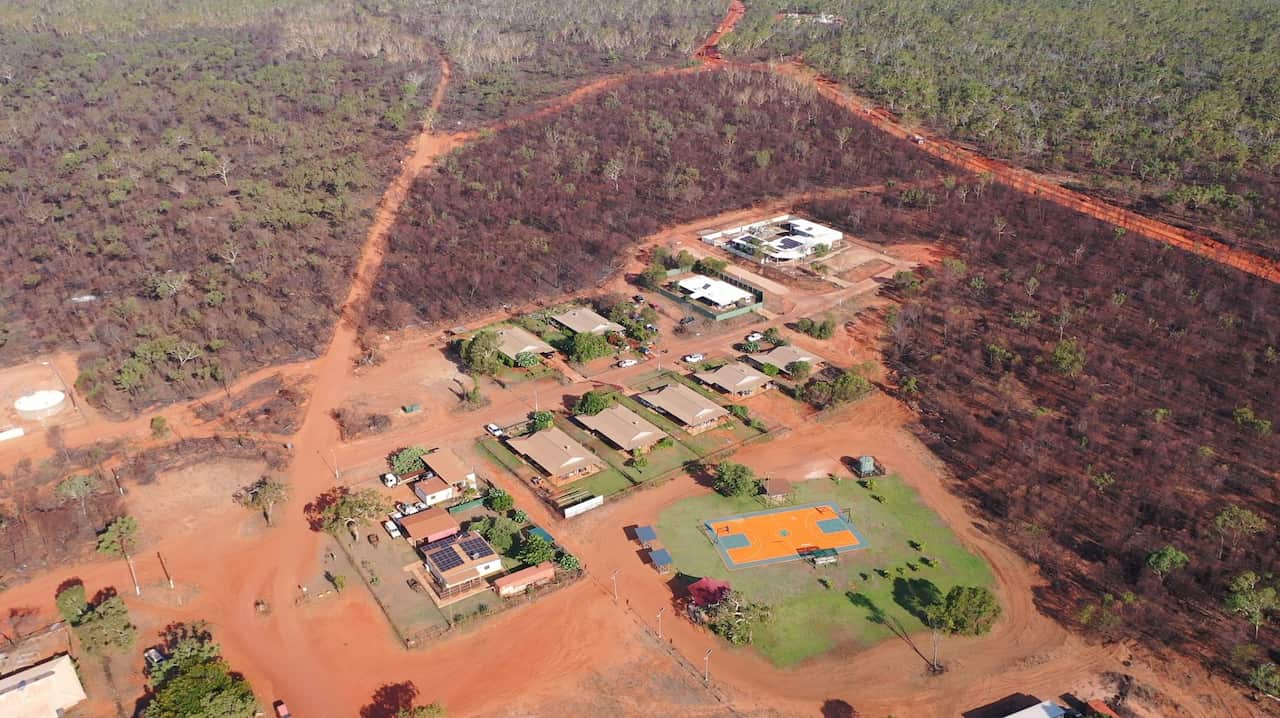
In communities powered by diesel generators, those costs extend well beyond groceries. Rising fuel prices drive up electricity costs, leaving households to make difficult trade-offs.
"You end up having communities and people in the community making a decision between whether they have power in 40-degree heat or whether they have food," McIver said.
"You don't have power, you don't have water because you need power for the water to work … and if you don't have food, you've got no sustenance — everything's connected."
Allowance lag
Central Land Council (CLC) — the statutory authority representing Aboriginal rights and interests in the southern half of the Northern Territory — has warned that rising fuel costs are intensifying pressures that remote communities were already struggling to absorb.
In a statement released Monday, it said higher fuel prices are driving up the cost of essentials and "deepening cost of living pressures out bush", with some communities already paying up to twice as much as those in cities.
Executive director of policy, Josie Douglas, told SBS News diesel prices have reached as high as $4 a litre in parts of the Northern Territory.
"This uncertainty and the increase at the fuel bowser will mean that rising fuel costs will wipe out some of the schemes against by pushing up the price of food and other essentials," she said.
Those increases are eroding the impact of existing government support, she said, including the low-cost essentials subsidy scheme for remote stores.
"Without a meaningful increase in Centrelink income, there is no buffer against this inevitable surge in the cost of living," Douglas said.
CLC is calling for an urgent increase to the Remote Area Allowance — a supplementary payment to assist income support recipients with the higher costs of living in remote areas of Australia. It has not been raised in more than 25 years and is not indexed to inflation.
In a statement to SBS News, a Department of Social Services spokesperson said: "The Australian Government understands the additional cost‑of‑living pressures faced by Australians living in remote and very remote locations. This includes challenges related to food security and increasing fuel prices."
It added that: "The government continues to consider ways to support households in these regions."
"Recipients of Remote Area Allowance have benefited from increases to their primary income support payment or other supplementary payments, the latest of which started on Friday.
"For example, since the government was elected, the typical rate of JobSeeker Payment for a single person without dependent children has increased by $166 a fortnight. It is an increase of 25.5 per cent in almost four years, providing over $4,300 in additional support each year."
On the ground, McIver said pressures are most acutely felt in communities with limited economic activity, where many residents are already living on the poverty line.
"There's a lot of remote communities in Australia that don't have any economic development … a lot of welfare dependent communities," he said.
"With the prices that are so high, you've got people already sitting on the poverty line that can't afford those normal grocery items."
Fixed supply chains
Beyond the mainland, fuel pricing is shaped by infrequent bulk deliveries rather than daily market movement.
On Christmas Island and the Cocos (Keeling) Islands, Australia's Indian Ocean territories, fuel is shipped annually, creating a system where prices remain largely fixed between deliveries. The result is not volatility, but consistently high costs driven by freight, storage and global fuel prices at the time of shipment.
Fuel Watch Indian Ocean Territories data, published on 13 March shows petrol at $2.96 a litre and diesel at $3.02 a litre on the Cocos (Keeling) Islands. Similarly, petrol is $3.02 a litre and diesel $2.96 a litre on nearby Christmas Island — unchanged since 16 January.
That system is now under additional strain, however.
Zentner Shipping — the only regular freight service to the islands — introduced an emergency surcharge in March in response to global fuel price hikes linked to the Iran war. The impact is yet to be seen.
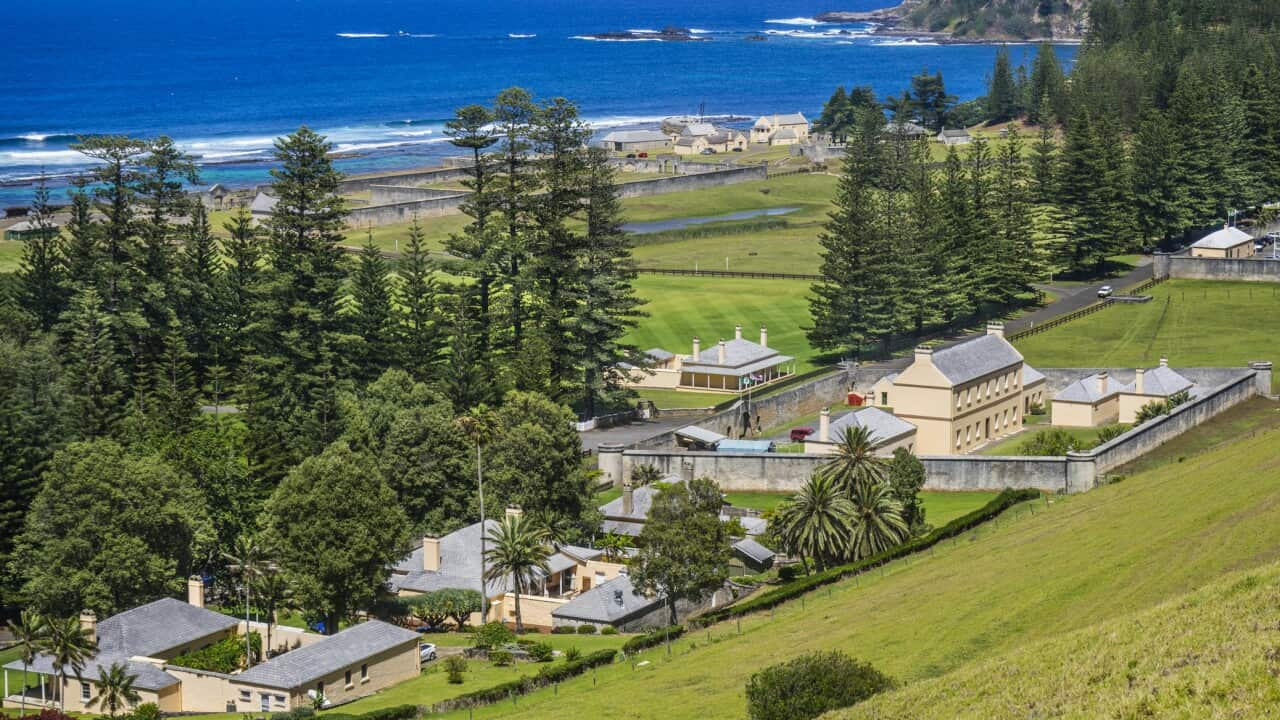
On Norfolk Island, in the South Pacific Ocean, fuel is similarly imported in bulk through contracted suppliers, with deliveries planned months in advance. Acting general manager of the regional council Nick Mostardo said fuel is sourced via international routes.
"It comes out of Singapore via Fiji for our fuel and again it's delivered … by tanker," he said.
"It pulls up to an area of the island where we have our bulk fuel storage tanks and it pumps from the tanker, into the tanks, and from there, it is managed by an on-island company."
While supply remains stable, Mostardo said the concern is the broader economic impact.
"What does concern me though is obviously the flow on effect of consumers when it comes to what they're paying at the pump, particularly if the impacts of the conflict are felt long term" he said.
For the latest from SBS News, download our app and subscribe to our newsletter.







