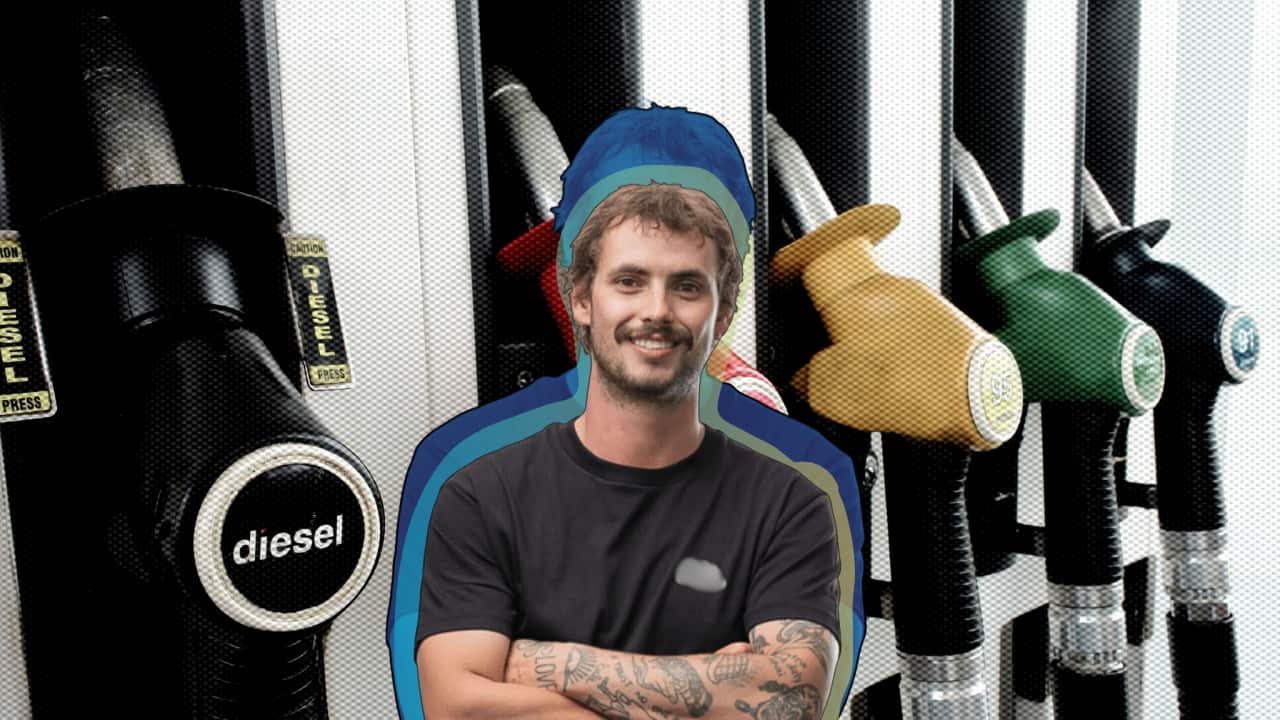
In Brief
- To combat fuel shortages, the IEA has recommended people work from home, consider public transport, and reduce highway speeds.
- But for thousands of workers, the option simply doesn't exist — and they're feeling the pressure.
For 26-year-old carpentry apprentice Jordan Mulvaney, who earns just under $1,000 a week after tax, advice to work from home to combat fuel shortages has missed the mark.
He drives to work every day — not by choice, but by necessity.
"I'd love to be able to work from home," Jordan told SBS News. "I literally don't have any choice but to work onsite."
"I have to bring all my tools to site and we go to multiple sites a day — so I can't take public transport or ride a bike either."
News that makes sense
Your trusted source for staying up-to-date with the world around you. Get free daily news updates and analysis, straight to your inbox.
Sites change constantly, sometimes taking him as far as an hour and a half from home. A tank of fuel is currently lasting him about a week and a half — less when sites are further away.
"My last fill was around $130 for 50 litres," he said. "I can't afford an electric car either — and I don't have anywhere to charge it, being a renter."
Advice based on 'years of experience'
Energy Minister Chris Bowen said this week it would be "sensible" to work from home where possible to ease pressure on fuel supply — a move proposed by the International Energy Agency, whose executive director Fatih Birol has warned that the current crisis was more serious than the oil shocks of 1973 and 1979, plus the gas crisis triggered by Russia's invasion of Ukraine combined.
"This crisis, as it stands now, [is] two oil crises and one gas crash put all together," Birol told the National Press Club on Monday.
The IEA's recommendations — which include encouraging working from home, considering public transport, and reducing highway speeds by 10km/hour — were drawn from "years of experience", Birol said, pointing to European countries that adopted similar measures after Russia's invasion of Ukraine.
Minister for Social Services Tanya Plibersek said working from home would be "helpful", but stopped short of making it a directive.
"We’re not telling people that they must work from home," she told Sunrise on Monday. "The most helpful thing people could do is just buy the fuel they need and no more."
But NSW Premier Chris Minns was blunt about the limits of the work-from-home push, saying it "wouldn't make much of a difference" for his workforce.
"Most of our employees are nurses, paramedics, police officers, firefighters. We just can't issue that order," he told a press conference on Monday.
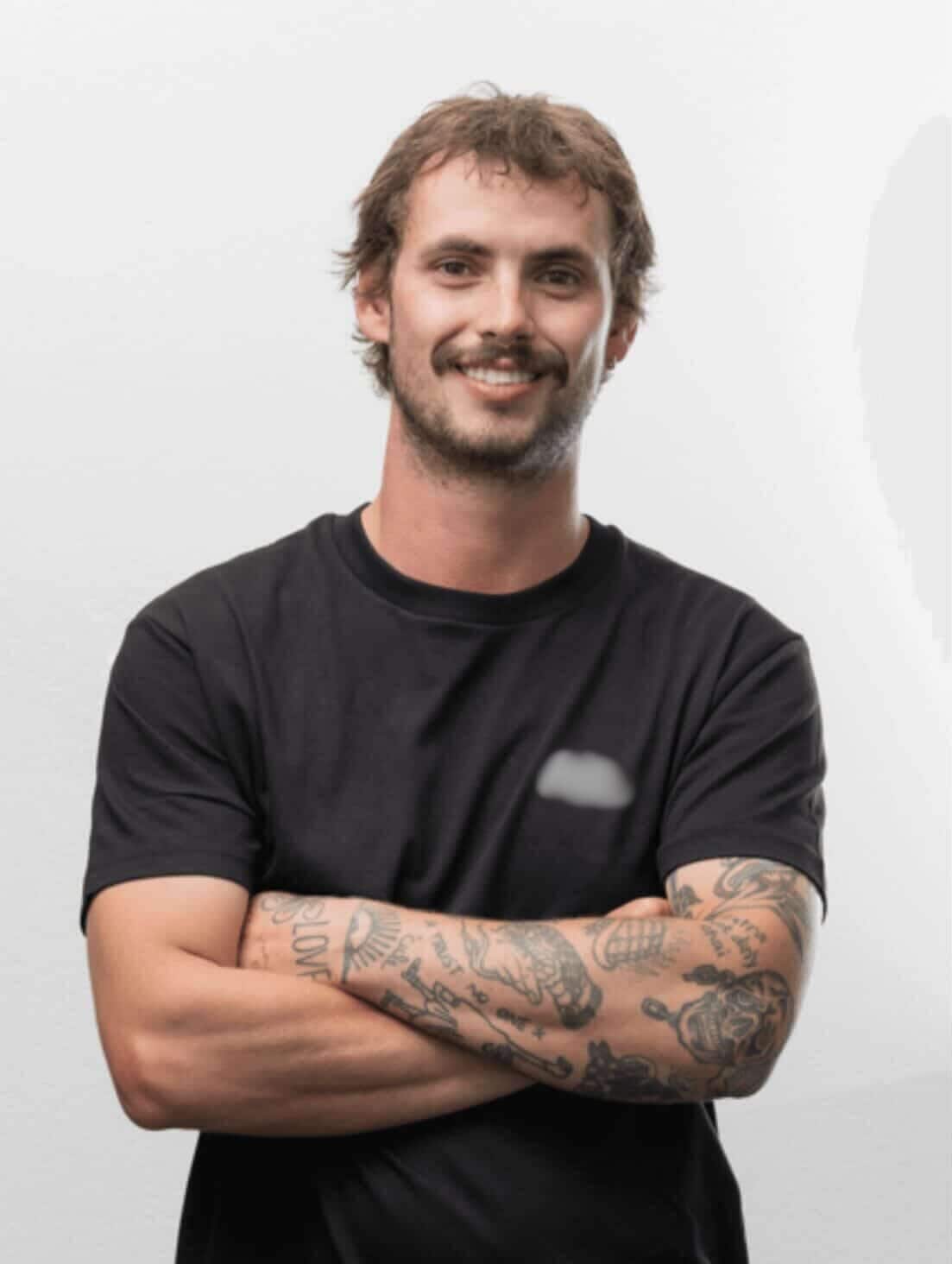
But for Jordan, and thousands of essential workers, the option simply doesn't exist — and it's putting him under real pressure.
He considers himself fortunate — a friend is letting him and his partner live rent-free. Without that, he estimates that rent, fuel and living costs could swallow up to 80 per cent of his wage.
"It's getting quite expensive. On an apprentice wage, it's quite difficult," he said. "It's a very scary thing to be staring down the barrel."
He also believes more needs to be done to tackle price gouging and that speaking out against fuel retailers isn't enough.
"The government should have more powers to stop price gouging," he said. "Do something about it."
The federal government has announced it will double penalties to a maximum of $100 million for service stations found to be deliberately price gouging customers.
'No way I can work from home'
Rosie, who asked to be identified by her first name only, is a casual primary school teacher on NSW's Central Coast. The nature of casual work means she rarely knows which school she'll be at each day — and most of the schools in her area aren't accessible by public transport from where she lives, and can be over an hour away.
"There's no way working from home would ever work," she told SBS News.
"The nature of being a casual teacher is you don't really know where you're going to be each day — you don't get much of a choice. If you want the work, you have to just suck it up."

She's been putting off filling up since prices spiked. She's down to a quarter tank, and the numbers are stark — she expects a full tank of premium 95 that used to cost around $90 to now set her back upwards of $160.
"I filled half a tank last time and it cost me what a full tank usually costs," she said.
"It's really eating into any of our spare cash that we could use to get ahead on our mortgage."
Working from home a 'social responsibility'
The crisis has already begun rippling beyond the bowser.
The government has commissioned a National Food Supply Chain Assessment, with Agriculture Minister Julie Collins saying it will focus on diesel supply chains first, followed by crop protection and fertilisers.
Associate professor Timothy Bednall, an organisational psychology expert at Swinburne University of Technology, says remote work should be considered a "social responsibility" carried by everyone rather than simply a workplace perk — but acknowledges the picture is more complicated for workers who can't stay home.
"There are going to be some jobs where it's not going to be possible to make them remote," he told SBS News. For those workers, Bednall says employers should look at alternatives in the interim — including facilitating carpooling and hybrid arrangements where possible.
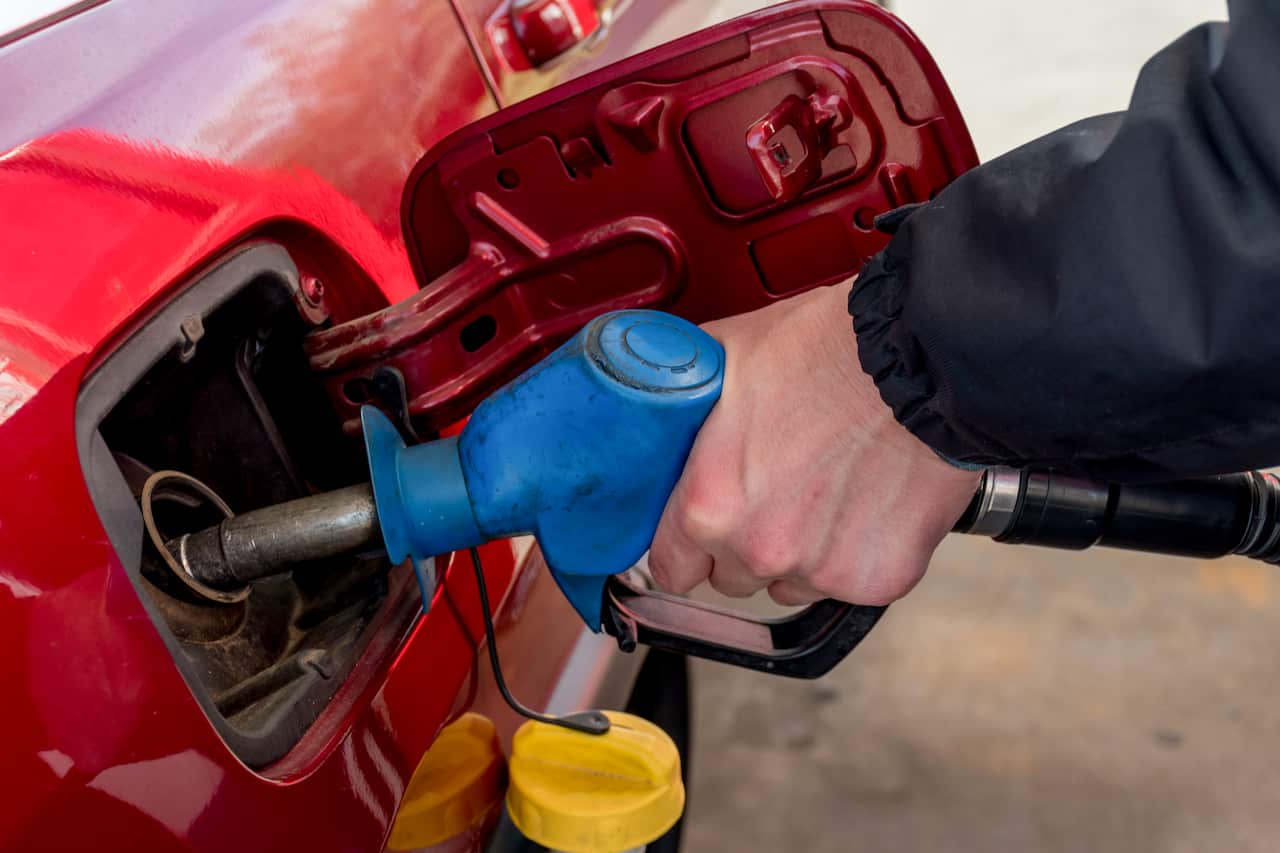
"Australia cannot afford to waste fuel on avoidable commuting," he said. "If we want petrol and diesel available for the people and sectors that genuinely need them, businesses should treat remote work not as a perk, but as a social responsibility."
Bednall said flexible work was a "practical, tested energy security measure", pointing to COVID as proof of its effectiveness. If the crisis deepens, he says the conversation may have to shift from cultural expectation to formal policy — potentially including restrictions on who can buy fuel, and the prioritisation of essential industries.
Deputy Liberal leader Jane Hume was less convinced, describing the proposal as "COVID-style restrictions".
"It doesn't help small businesses. It certainly doesn't help the truckers and the fishers and the farmers and the manufacturers and the miners that are relying on fuel supply," she told ABC News Breakfast on Monday.
But Rosie doesn't feel that essential workers who have to commute are being considered in the government's response.
"There's a whole lot of us," she said. "We do obviously essential jobs and typically essential workers are not the most well paid in society."
She'd like to see some form of subsidy or tax relief for essential workers who have no choice but to commute — though she acknowledges there's no simple fix.
"I don't know that there's a specific answer, but I do know that it is really difficult at the moment," she said.
For the latest from SBS News, download our app and subscribe to our newsletter.







