Across the country, the price of fuel has risen sharply since the outbreak of war in the Middle East, as panic buying continues to strain supply.
For remote First Nations communities, the price of fuel can often be double that of the major cities.
Now there are fears the latest increases will see many go without essential goods and services.
"They miss out on health appointments, they miss out on being able to get to funerals and other things," Djarindjin Aboriginal Corporation CEO Nathan McIvor told NITV.
Djarindjin sits about 170 kilometres north of Broome on the Dampier Peninsula in Western Australia's Kimberley region.
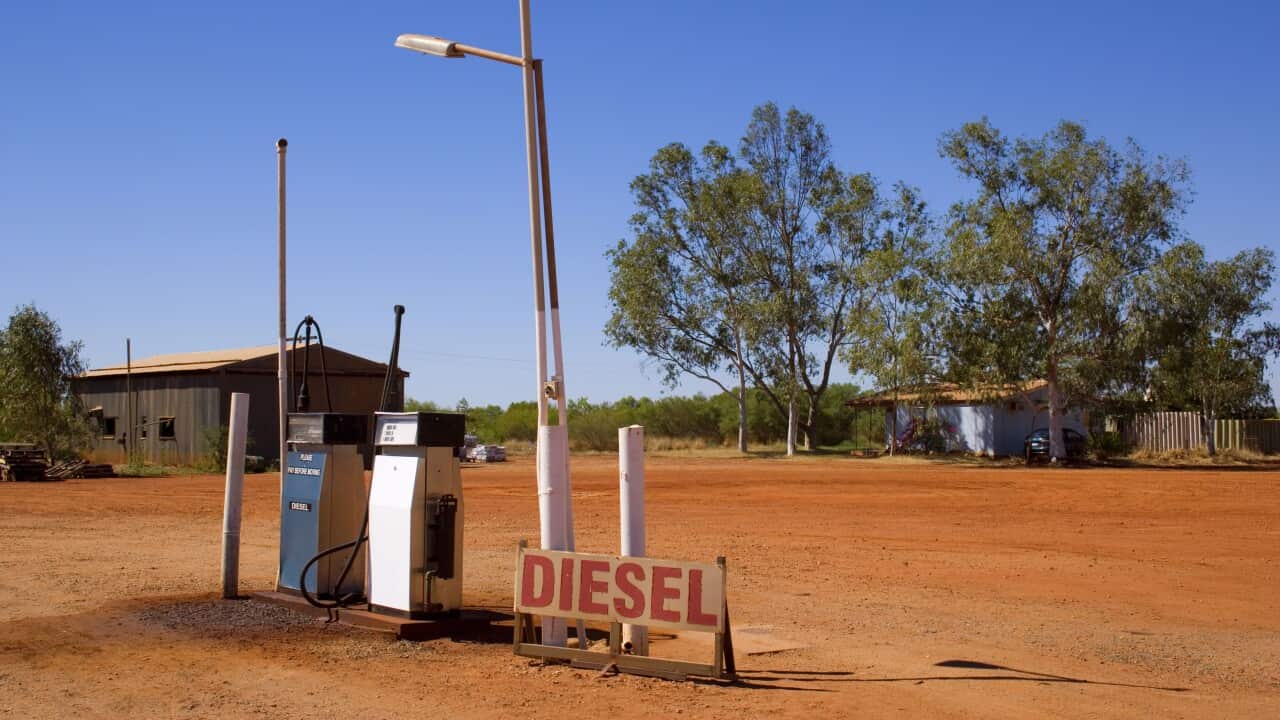
Djarindjin Aboriginal Corporation own and operate the only petrol bowser in the community.
Currently they subsidise the cost to keep it in line with urban areas, but Mr McIvor says they won't be able to keep costs down amid the current crisis.
"Most people living in remote communities are already living on the poverty line," he said.
"We try to subsidies as much as we possibly can ... but the bottom line is we have to be good stewards of the money we've got and we have to take care of our businesses."
Mr McIver says beyond affecting transport in the community, fuel insecurities could also impact freight, and other essential services.
"It comes back to remote communities not being able to have any buffers in this space," he said.
"There are no contingencies in place to make sure the community is strong and healthy when something like this happens."
Why is there a national fuel crisis?
Iran has closed one of the world's most important oil corridors, the Strait of Hormuz, in response to the US-Israel war on the country.
This has led to a spike in oil prices, sending unleaded petrol in Australia's major cities above $2.20 a litre, and diesel to more than $2.60 a litre.
Energy Minister Chris Bowen says fuel standards will be relaxed for two months to allow more supply to combat shortages.
This will bring an extra 100 million litres a month, the equivalent of about two days' worth of supply.
Motoring groups and the federal government have urged Australians to stop panic buying and stockpiling fuel, which they say is currently a key driver of the crisis.
"The only reason that we are aware of that we have these shortages is because of stockpiling," NRMA media spokesperson Peter Khoury said.
"Don't do it, we are seeing the affects of that."
James Reynolds is the founder of Mirabou Energy, and has more than 23 years' experience in Australia's energy markets.
Mr Reynolds told NITV that government interventions are needed to ensure remote communities don't bear the brunt of fuel insecurities.
"If this goes on for a long time those sorts of things are going to have to be thought through," the Waanyi Gangalidda man told NITV.
"Put in place some interventions that actually do something to the cost but also do something to make sure the availability is there for these discrete communities."