
The war in the Middle East, and the effective closure of the Strait of Hormuz, has triggered what experts describe as one of the most significant energy crises in decades. But oil and gas are not the only vital resources that are impacted. The war has also severely disrupted the flow of fertiliser from the Middle East, triggering concerns over the impacts on local food production and food security.
Listen to Australian and world news and follow trending topics with SBS News Podcasts.
TRANSCRIPT
The war in the Middle East, and the effective closure of the Strait of Hormuz, has triggered what experts have described as the most significant energy crisis in more than 50 years.
As Dmitry Zhdannikov, Energy and Commodities Editor at Reuters explains, the stranglehold on oil through the Strait, coupled with damage to oil facilities in the region, is triggering substantial economic shock-waves around the globe.
"The main problem for the markets is that Iran has closed the Strait of Hormuz, through which 20% of global oil is transiting. But it's more than this; on top of that, there's been extensive damage to oil facilities in Saudi Arabia, in Qatar, in Kuwait, in the UAE. And even if the Strait of Hormuz reopens tomorrow, it will take much longer to resume normal supplies."
The resulting surge in fuel prices is generating significant concern here in Australia -- a concern particularly acute for farmers who rely on fuel for planting and transport.
Andrew Henderson is a mixed livestock farmer, and the Principal of AgSecure, which works to protect Australia's agriculture sector and food system.
He's now leading a new National Food Chain Supply Assessment announced by the Albanese government, set up to provide advice to government on strengthening the country's response to disruptions to food production and supply chains.
He previously told SBS it's important to recognise oil is not the only vital commodity impacted by the closure of the Strait of Hormuz.
"So if we think about the types of things that are going to be impacted, we're looking at liquid fuels first and foremost, obviously with regards to the region that's being disrupted. And then we're going to look at things like fertilisers and the upward pressure that that's going to put on the price of fertilisers, but also the availability of fertiliser for our farmers."
The Middle East is a key global supplier of fertiliser, exporting around 45% of the world's supply.
David Ubilava, Associate Professor of Economics at the University of Sydney, says the closure of the Strait is essentially choking these exports.
"And through exactly the same channels as it affects oil, a lot of fertiliser. In fact, probably larger share of global fertiliser exports go through that straight. And Australia is particularly exposed to that because we import half, probably two thirds of our fertiliser from the region."
One of the key commodities impacted is urea – a crucial nitrogen fertiliser used in agricultural farming.
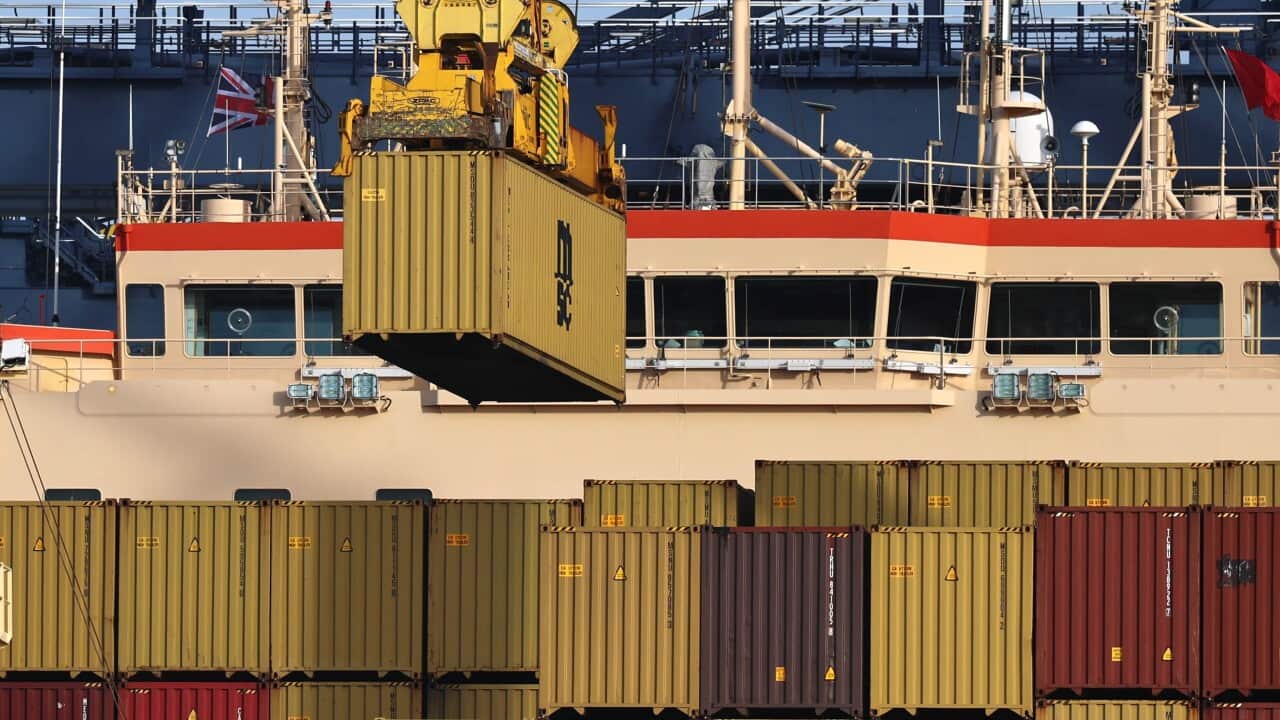
Trade data from the Australian Bureau of Statistics shows Australia imported 64 per cent of its urea from the Middle East in 2025.
The closure of the Strait of Hormuz has seen global prices of urea surge by about 25 per cent.
With virtually no domestic production, Mr Ubilava says the rising global cost of the fertiliser is leaving Australian farmers particularly vulnerable.
"In Australia, much of it is applied to three key commodities, which is wheat, barley, and canola. And we are exporters in all three areas, which is good. But what it means is that a fairly large portion of our farmers are exposed to this shock, which is in addition to the fuel market disruptions that they are facing. "
Mr Henderson says rising costs of fuel and fertiliser have come at an especially bad time for farmers.
"We're moving into a period of time where our production sector, particularly our farmers are getting ready to plant their winter crops. So that means an increase in demand for things like liquid fuels and particularly fertilisers as well... There'll be an increased demand from those farmers as well off the back of widespread rain recently. So really the timing of this conflict is not great for us."
Mr Ubilava says while fertiliser imports from the Middle East are largely now blocked, there are alternate fertiliser exporters Australia can turn to, including Southeast Asia which already provides about a third of Australia's urea.
While this means there's no immediate supply shortage, he says this could change if the war draws on.
"So at the moment, I think it's a bigger issue is price more so than supply. But if the war conflict goes and the markets remain disrupted, then shortage will become an issue. A bigger issue will be if they are willing to pay a premium, but they cannot find the fertiliser. And I don't think we are in that stage yet, and then I don't think that's a likely scenario, but then it all will depend how long will this conflict and market disruption linger."
The question that many are asking is what does this all mean for the cost of groceries?
Mr Ubilava says short-term price hikes on imports, like we're currently seeing, don't tend to directly impact food costs for consumers at the supermarket in Australia.
He says in high-income countries such as Australia, the price of food is largely determined by the cost of processing, packaging and marketing – rather than the prices paid to farmers.
But Mr Henderson says there are concerns that if the conflict is prolonged, and commodities like fuel and fertiliser continue to be impacted, food insecurity could worsen in Australia.
"If we haven't figured out those fundamentals and this conflict drags on and on and we start to see a real pressure on the supply of those liquid fuels, then of course that means that our ability to be able to distribute food and get it to where it needs to be becomes more and more limited. Now that has a pressure. And we saw on COVID what happened with people when they couldn't access toilet paper. Imagine what's going to happen when people really have problems accessing food on the supermarket shelves. Now we don't want it to get to that, but we need to take a very calm and methodical approach to planning to mitigate that risk. "
Last year, the Australian Government committed $3.5 million to develop a national food security strategy, acknowledging the nation's food system is under increasing pressure from a range of challenges, including climate change, economic shocks, supply chain disruptions, and geopolitical factors.
Mr Henderson says the mounting pressures the war in the Middle East is placing on vital supply chains makes clear the need for a new approach-- one which is far less reliant on shipments from increasingly contested markets.
He says until Australia changes tack, our food system will remain vulnerable.
"This conflict in the Middle East is yet another case study of why we need a national food security strategy that takes into account the security of very basic things that we take for granted like liquid fuels. We're going to see an increase in price, absolutely. But if it drags on, we're going to see a decrease in supply potentially that'll have flow on impacts. Now we have to have contingencies for that, of which there are some in place, but I don't think they're there to the extent that we require in order to be able to maintain the basic continuity of the food system."