
Lebanon has long been a flashpoint in the Middle East — particularly its south.
As Israel expands its war beyond Gaza, southern Lebanon is once again at the centre of a rapidly shifting regional conflict, where intensifying military operations are colliding with increasingly explicit political ambitions.
In a video statement on Monday, Israeli Prime Minister Benjamin Netanyahu said there would be no letting up of attacks on Lebanon and Iran any time soon, claiming Israel is "smashing" Iran's nuclear program and delivering "severe blows" to the regime's Lebanese ally, Hezbollah.
The Iran-backed group — designated a terrorist organisation under Australian law — has been firing rockets into northern Israel since early March, citing both alleged breaches of a November 2024 ceasefire and the killing of Iran's Supreme Leader Ali Khamenei as justification.
On the ground and in its public statements, Israel is becoming more systematic — and brazen.
News that makes sense
Your trusted source for staying up-to-date with the world around you. Get free daily news updates and analysis, straight to your inbox.
Earlier this month, ground troops were deployed to Lebanon's south and are now poised to seize control of the area. More than a million civilians have been displaced so far, as fears of a large-scale ground invasion inch closer to reality.
In recent days, Israeli defence minister Israel Katz has ordered the demolition of Lebanese homes near the country's southern border with Israel to be fast-tracked, along with strikes on bridges and infrastructure connecting areas in the north, actions he claims are aimed at restricting Hezbollah's movement. He also flagged the creation of a buffer zone, saying displaced residents would not be allowed to return south until northern Israel is secure.
Analysts warn that such a move raises complex legal, political and humanitarian questions.
Michael Milshtein, head of the Palestinian Studies Forum at the Moshe Dayan Center for Middle Eastern and African Studies at Tel-Aviv University, describes the buffer zone proposal as "one big dilemma".
"I'm not speaking only about international legitimacy and about the fury of our world, but also the question of what will happen with maybe hundreds of thousands of Lebanese who live in this area," Milshtein tells SBS News.
"Who will take care of them? Who will be the one who will supply them water, electricity, relief, education, health, everything?"
Within Israel's leadership, some are pushing its stated objectives further still. Far-right finance minister Bezalel Smotrich has called for the annexation of southern Lebanon, arguing the war should end with a fundamental redrawing of Israel's borders — a move that would breach international law.
"The new Israeli border must be the Litani," he said on Monday, referring to the Litani River, which separates north from south Lebanon.
His comments, along with Katz's, have been met with alarm from human rights groups and allies of both Israel and the United States, including Australia. Foreign Affairs Minister Penny Wong was among those to voice grave concerns this week over the rising threat to Lebanon's sovereignty.
For many Lebanese people, the current situation is familiar: the country has been drawn into wider regional conflicts many times before.
But analysts say the stakes are now higher. With Israel signalling broader strategic goals, and Hezbollah deeply embedded in Iran's regional network, Lebanon is no longer just a flashpoint — it is becoming the 'other front' in an expanding war.
Lebanon as the 'other front'
Lebanon was pulled directly into the conflict on 2 March, when Hezbollah fired rockets into northern Israel, opening a second front as the regional war intensified. There has been a steady escalation since, with near-daily exchanges of rockets, airstrikes and drone attacks along the border.
Israel initially responded with a wave of strikes across southern Lebanon and the southern suburbs of the capital, Beirut — areas it describes as Hezbollah strongholds. In recent weeks, the offensive has broadened to include the destruction of homes, bridges and key infrastructure. At the same time, evacuation orders have been issued for civilians living south of the Litani River, which Israel increasingly treats as an active combat zone.
For Israel's leadership, establishing this northern front is not only about retaliatory rocket fire. Officials have framed Hezbollah as part of a wider Iran-aligned network, which the Israel Defence Forces (IDF) are now attacking across multiple fronts. Netanyahu has positioned IDF operations in Lebanon alongside joint US strikes on Iran, as part of a broader effort to shift the regional balance of power.
Hezbollah maintains its attacks are defensive; a response to ongoing Israeli operations and wider regional developments, including the killing of Khamenei and what it calls repeated ceasefire breaches. The group has continued to fire rockets into Israel, similarly warning it will not scale back under pressure.
Meanwhile, the human toll is mounting. At least 1,072 people have been killed in Israeli attacks, including 121 children and 42 health workers, according to Lebanon's health ministry. Nearly 1.3 million people have been displaced, deepening an already severe humanitarian crisis.
The escalation is also exposing Lebanon's domestic tensions. The government has said it wants to disarm Hezbollah, but has ruled out using force, warning that doing so could trigger internal conflict. The newly elected Lebanese President Joseph Aoun has cautioned that Israeli strikes could be a "prelude to a ground invasion", underscoring the limits of state control.Bassel Doueik, a Lebanon researcher at the conflict monitor ACLED, says the crisis is testing the state's authority over decisions of war.
"The Lebanese state has repeatedly asserted that it retains authority over decisions related to the use of force, including whether the country enters a war. However, Hezbollah's actions undermine state authority and complicate its position vis-à-vis international actors, many of whom had hoped the government could effectively contain or control the group," he tells SBS News.
Heiko Wimmen, a Beirut-based analyst who heads the International Crisis Group's Iraq/Syria/Lebanon project, says Israel's military posture suggests a more deliberate, phased approach to "pressure" Lebanon to act against Hezbollah.
"Recently, they have started a campaign to destroy bridges across the Litani, suggesting that a push for the river may be imminent," he tells SBS News, noting that operations could accelerate as pressure on other fronts eases.
"The Israeli leadership may also hasten invasion plans if and when negotiations with Iran are imminent, to increase leverage in case both theatres are put on the table."
Why Lebanon matters to Israel
Israel's incursions into Lebanon stretch back decades.
The first time the IDF invaded was in 1978, aiming to expel the Palestine Liberation Organization, which then had a stronghold in the south. It invaded a second time in 1982 for the same reason, triggering a three-month-long war and years of protracted conflict.
Israel's subsequent 18-year-long occupation of southern Lebanon, which lasted until 2000 and included two further military incursions, also coincided with Lebanon's Civil War (1975 - 1990). The power vacuum that emerged following the IDF's withdrawal in 2000, coupled with social fracturing borne of years of occupation, helped give rise to Hezbollah.
By 2006, the group had developed into a disciplined and well-armed force. War broke out again — this time, between Hezbollah and Israel and lasting 34 days. From that point on, Hezbollah became a central pillar of the so-called 'axis of resistance' — Iran-backed state and non-state militant groups, including Hamas and the Palestinian Islamic Jihad in Gaza, several militias in Iraq and the Houthis in Yemen — and Israel's most significant non-state threat on its northern border.
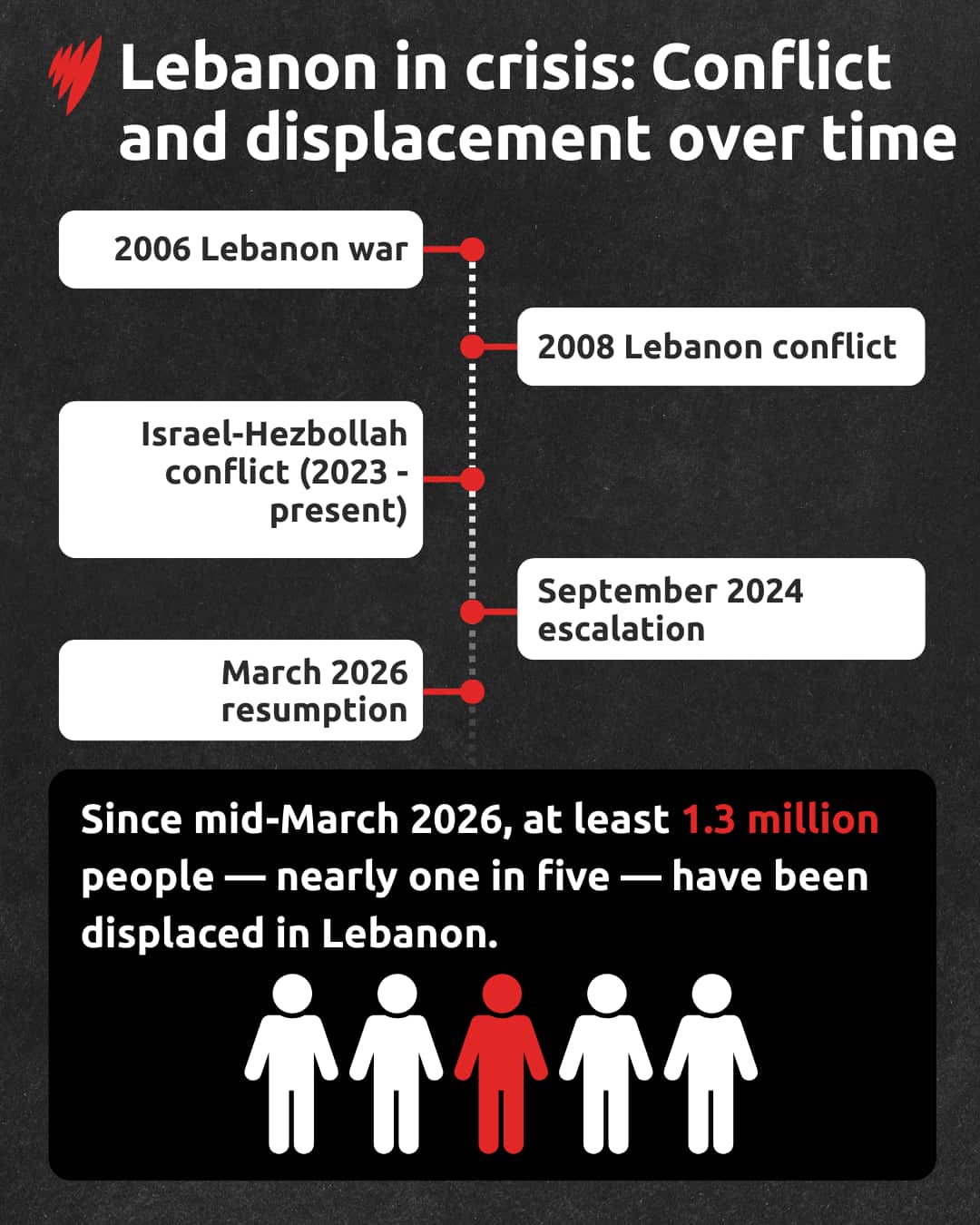
But that power balance has shifted since the October 7 attacks in 2023. Hezbollah entered the conflict in support of the Palestinian militant group Hamas, believing the risk of a wider war would hold Israel.
Instead, a major escalation in conflict took place in late 2024, with Israel launching a major offensive with strikes and targeted killings significantly weakening the group’s military capacity.
A ceasefire followed, reflecting parts of United Nations Security Council Resolution 1701, including renewed calls for Hezbollah's disarmament.
Israel's newly proposed expansion could mark its seventh invasion of Lebanon in five decades.
Lebanon's current government, formed in early 2025, has pledged to reassert state authority over Hezbollah. But experts say the limits of that ambition are clear.
Milshtein says it is unrealistic to expect Hezbollah to be dismantled entirely.
"You can speak about erasing the military power of Hezbollah in several areas, mainly in the southern parts of Lebanon, south of the Litani River and this will really be a realistic objective," he says.
"[But] you cannot really speak about erasing Hezbollah … Hezbollah is not only a military organisation. They also have civil, cultural [and] social activities."
Even after heavy losses, Milshtein says, the group endures.
"They suffered dramatic damage, but they will not be vanished."
What's Israel's plan with Lebanon?
Katz's plan for the IDF to take control of southern Lebanon would involve military occupation from the Israeli border — known as the Blue Line — up to the Litani River, mirroring Israel's invasion zone dating back to 1978.
He has said the intention is to create a "security zone" to prevent Hezbollah from operating near the border.
"The principle is clear: there is terror and missiles, there will be no homes and residents and the IDF will be inside."
The approach mirrors Israel's strategy in Rafah and Beit Hanoun — major population centres in Gaza that have been decimated by airstrikes and remain under Israeli military control.
"We will not allow a return to the situation of October 7. We promised to bring security to residents of the north, and that is exactly what we will do," Katz said in his briefing with defence chiefs on Tuesday.
But experts have raised concerns that this planned buffer zone could facilitate a return to long-term occupation.
Mariam Farida, a lecturer in terrorism studies at Macquarie University who specialises in Middle East politics, says Israel's move reflects its stated objective of dismantling Hezbollah, warning it may result in a sustained occupation of southern Lebanon.
"That 30km buffer zone evidently shows the Israeli army will be staying there as an occupying force, similar to what had happened back in the 80s. We're just seeing it under a different pretext and under different circumstances now," she says.
Meanwhile, Hezbollah says it is prepared to fight to prevent Israel from establishing control in the south.
"We have no choice but to confront this aggression and cling to this land," senior official Hassan Fadlallah told the Reuters news agency.
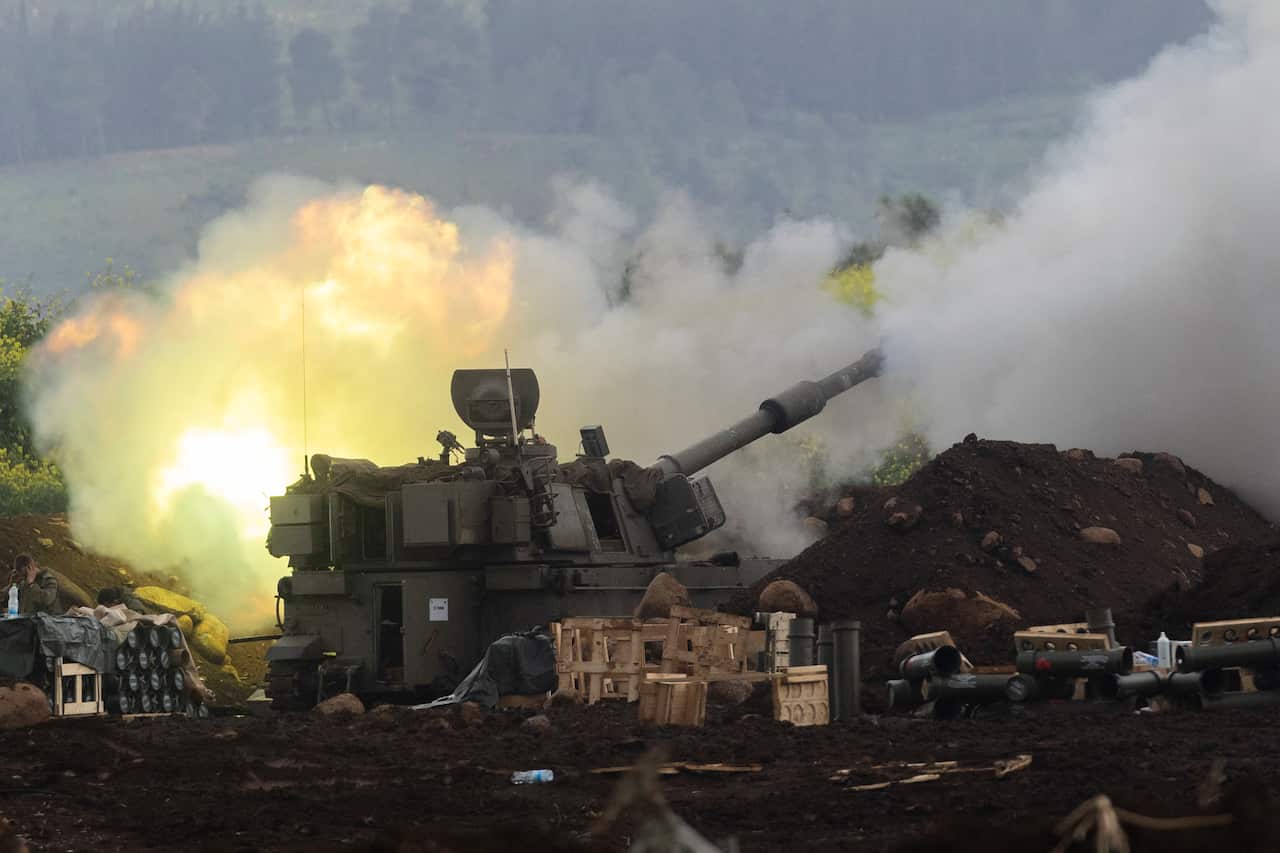
The central question now is whether Israel's actions in Lebanon are defensive in nature or part of a broader effort to reshape power in the region.
Some analysts say the goal is limited to weakening Hezbollah, while others believe it represents a coordinated effort to push back against Iran's network, pointing to Israeli strikes in Syria, along with its ongoing occupation of Gaza.
Even so, how the conflict unfolds may not be determined solely by Israel.
Milshtein suggests the outcome could depend heavily on the United States and, in particular, its president, Donald Trump.
"It seems that actually Israel is not the one who decides … the one who will really decide about it is, as always, Donald Trump … we are still waiting to see what will be their policy."
A ground invasion could compound domestic tensions
Experts say the prospect of a ground invasion into southern Lebanon remains one of the most dangerous scenarios.
Militarily, it would likely aim to push Hezbollah away from the border and establish a buffer zone, as indicated by Katz. But the terrain and Hezbollah's entrenched positions would make any advance costly.
The humanitarian impact would be immediate, fuelling a worsening displacement crisis in an already fragile country.
"In a worst-case scenario, the country could face a complete state fracture, reminiscent of the onset of the Lebanese Civil War in 1975 and Israel's invasion in 1982," Doueik from ACLED says.
Lebanon's internal pressures are also reaching a critical juncture.
The country is in the grip of a deep economic crisis. Currency collapse, political paralysis and widespread poverty have eroded trust in state institutions.
In that vacuum, Hezbollah operates as both a military force and a political actor, effectively a parallel power structure. Longstanding sectarian divisions — a defining feature of Lebanese politics — also risk being reignited under the strain of war.
Doueik warns public anger is already building and increasingly directed inwards.
"There is an immediate risk of civil unrest. A significant portion of Lebanese citizens are increasingly blaming Hezbollah for the current escalation, arguing that Lebanon has repeatedly borne the cost of regional conflicts, particularly those tied to Iran-Israel tensions," he says.
That frustration is no longer confined to political circles, he says, but is spreading across society.
"This sentiment has become more pronounced amid the latest developments, with public frustration rising over civilian casualties, displacement, and infrastructure damage … segments of the population are openly questioning Hezbollah's role in drawing Lebanon into a broader regional confrontation."
What could happen next in Lebanon?
In towns near the Israel-Lebanon border, uncertainty is now a constant. Analysts say the coming weeks could unfold in several ways, each with significant consequences.
One scenario is a contained escalation. Cross-border exchanges could continue without tipping into full-scale war, maintaining a fragile and volatile status quo. But military developments on the ground suggest the risk of something more sustained.
Wimmen from the International Crisis Group says the current positioning suggests a different kind of conflict if a full-scale ground invasion begins.
"The Israeli troop build-up suggests an initially massive push, and Hezbollah's strategy seems geared to exact maximum cost from such an invading force, so we are probably looking at extended guerrilla, partisan-type warfare rather than a direct confrontation," he says.
He says the war is already regional in nature, with Lebanon now "a secondary theatre".
"It appears unlikely that an escalation in Lebanon would trigger a new conflict in the region or draw in other countries."
That leaves Lebanon in a precarious position, central to the conflict's trajectory, but with limited control over how it unfolds.
For the latest from SBS News, download our app and subscribe to our newsletter.







