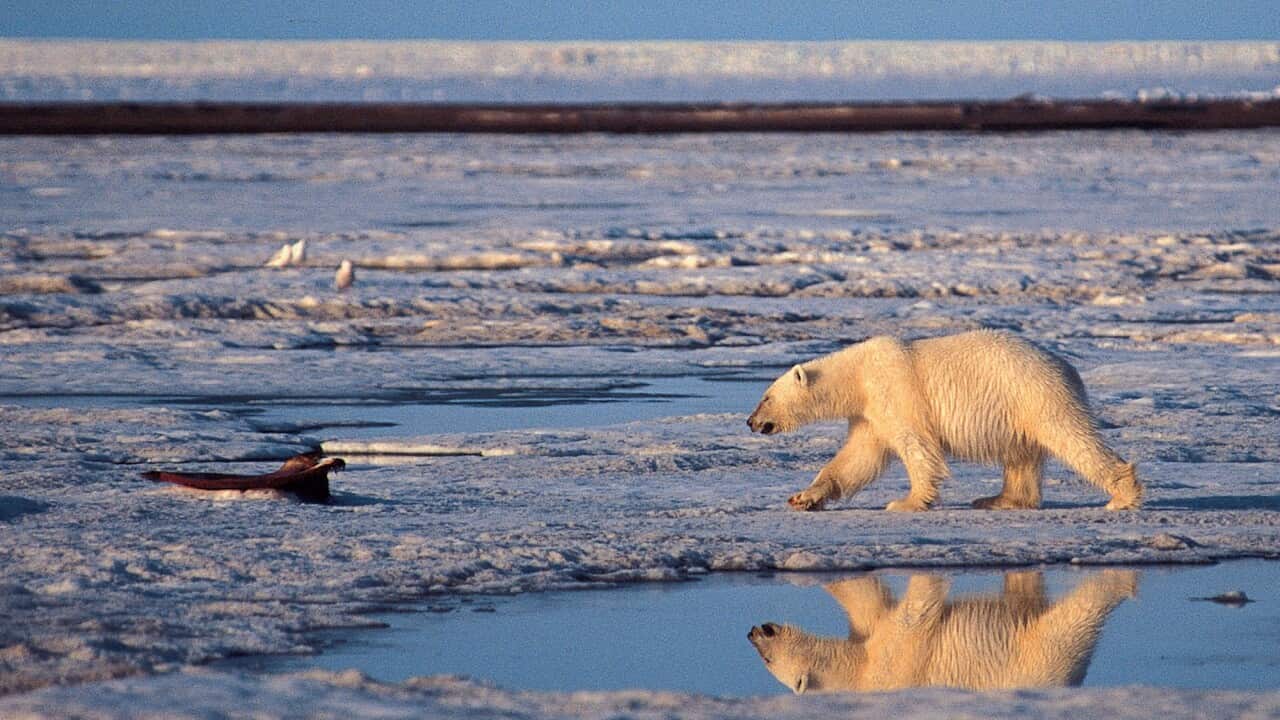
The Arctic National Wildlife Refuge (ANWR) sits at the northeast corner of the US state of Alaska.
Sprawling about 19 million acres, it is the largest national wildlife refuge in the country, and is home to polar bears and grizzlies, fish and marine animals, and hundreds of species of bird.
Alaskan politicians have been trying to open the reserve for years for drilling for oil and gas, arguing it would make the United States less dependent on overseas resources and create thousands of jobs.
A 1998 US Geological Survey estimated there are in excess of 10 billion barrels of recoverable crude in an area known as 1002 alone.
News that makes sense
Your trusted source for staying up-to-date with the world around you. Get free daily news updates and analysis, straight to your inbox.
Now the 1.5 million acre patch may soon be up for sale, with a tax bill passed by US Congress and supported by President Donald Trump to hold two lease sales.
Alaskan Republican Senator Lisa Murkowski pushed for the provision to be added to the legislation, despite it having little to do with the tax system.
Wearing a Hulk scarf in honour of late Senator Ted Stevens – who was known to wear a Hulk tie whenever he attempted to get drilling in the ANWR approved – she welcomed the bill's passing, saying it would create new economic opportunities and allow for "responsible energy development".
Speaking before a cabinet meeting, Mr Trump admitted he was unaware other Republicans had been working to get drilling approved.
"A friend of mine who is in the oil business said, 'I can't believe it. ANWR, they've been trying to get it for 40 years'," he said.
'Why would we destroy this?'
Despite the bill's passing, Time magazine says it could be a decade or longer before any actual drilling takes place, with environmentalists and further legal red tape - including extensive reviews and public involvement, likely to delay proceedings.
Vocal opponent Democratic Senator Maria Cantwell has already vowed to continue the fight to stop any oil and gas exploration from going ahead.
She has used Twitter to accuse the government of using a "sham process" to get the bill passed and says it requires the ANWR land "be managed as a petroleum reserve".
Environmental lawyers have also promised to closely scrutinise all applications by energy companies to work in the region.
One of their successes includes uncovering a law in 2015 limiting the number of drilling wells, putting an end to Royal Dutch Shell's hopes of finding offshore oil reserves in Alaska.
Despite the excitement, Senator Cantwell has suggested that the oil and gas industry may actually not be all that interested in ANWR, telling Politico magazine it’s not "excited" about the prospect.
"In 50 years…[we] are going to be dead and the only thing that's going to matter is whether we've preserved a place as unique as this," she said.
At a recent lease sale for Arctic Alaskan land, less than one per cent of the 10.3 million acres available attracted bids.







