
As White House officials in the US defend the country's violent crackdown on immigration at the hands of its Immigration and Customs Enforcement (ICE) agency, experts are warning against the covert use of surveillance tools by ICE officers.
Beneath the masks and bulletproof gear is an array of technologies, including facial recognition and hacking tools built by Israeli tech company Paragon, which allow agents to take control of phones or remotely access messages and location data.
With a budget larger than most militaries, ICE also has access to state-of-the-art biometric trackers and looser restrictions on their use, enabling the tracking of not only undocumented immigrants but also citizens protesting against immigration raids.
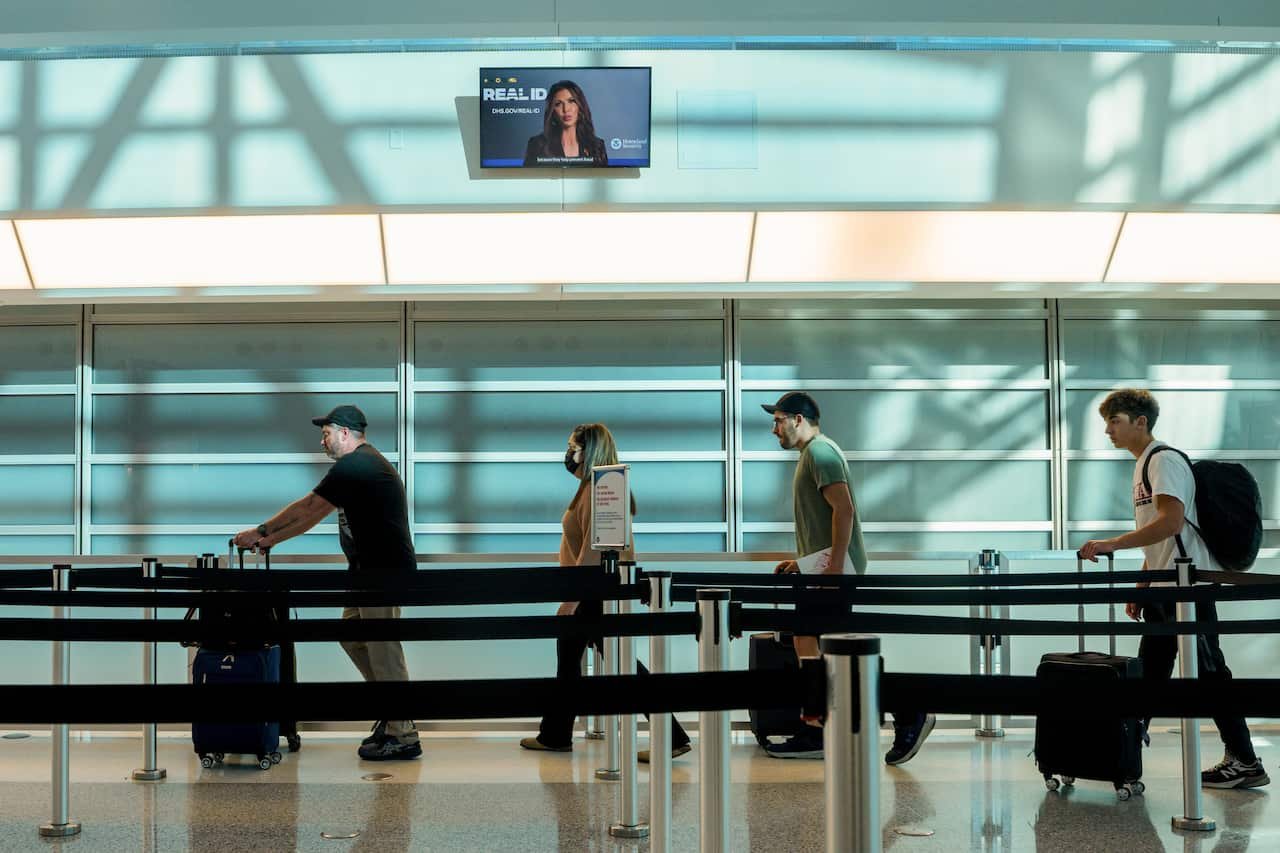
Now, reports are emerging that the Australian government may be compelled to share Australians' biometric data and other information with the US and its agencies, including ICE, as part of a compliance measure to vet travellers entering the country under its Visa Waiver Program (VWP).
The Australian government, via the Department of Home Affairs, has so far declined to confirm whether it is currently complying with the demands or has plans to negotiate a data-sharing agreement. That’s despite the US setting a deadline of 31 December for finalising agreements with countries participating in its visa-free travel arrangement, including Australia.
News that makes sense
Your trusted source for staying up-to-date with the world around you. Get free daily news updates and analysis, straight to your inbox.
If enacted, the changes would allow US agencies to access the personal data of any Australian travelling to the US — including their passport and ID information, facial images, fingerprints and police and immigration records. Some experts have warned that it may also extend to non-travellers.
What is biometric data, and why does the US want it?
Under the Migration Act, the Department of Home Affairs is permitted to capture biometric data from travellers who apply for certain visa subclasses — namely those that are either part of its biometrics program or issued by a country or jurisdiction that is subject to it.
This typically includes fingerprints and facial images.
Biometric data is useful because it captures traits that "cannot realistically be replaced", explains Tess Rooney, a lecturer focused on AI and data governance at the University of Canberra.
"So, unlike a credit card or password — once that's compromised, it can be changed."
Biometric data can also expose and infer a broad range of details about a person, Rooney says.
"Certain biometrics can expose health information, genetic traits, inferences about racial or ethnic origin, disability, sometimes even emotional state.
It's categorised as sensitive information for that reason.
The proposed changes to the US' vetting processes would primarily affect Australians eligible for the ESTA visa waiver program, which allows travellers from 42 countries to visit the US for up to 90 days visa-free, provided they first obtain an electronic travel authorisation.
Reporting by Crikey this month noted that the changes could also enable US agencies to access data on Australians who are not seeking to travel to the US and those who have interactions with immigration or law enforcement.
Sherwin Noorian, an Australian-based US immigration lawyer, tells SBS News the reports are concerning.
"It's important to note that there is already a level of information-sharing between the Australian government and the US government," he says.
"But this seems to be a new system where the US is approaching various different countries... So it remains to be seen exactly what they're looking for, but it sounds like at the negotiations, they're coming in looking for pretty much all they can get, and then it's up to the two countries to negotiate what they will indeed offer in this scheme."
Expanded sharing agreement
The changes to the VWP were first announced in 2022 by then-US President Joe Biden, who said countries participating in the program would have to agree to an Enhanced Border Security Partnership (EBSP), under which the US would be granted access to countries' biometric and ID databases.
In 2025, ahead of the December deadline set for all EBSPs to be finalised, the Trump administration expanded the scope of the partnership.
As well as extensive biometric data, including DNA, the proposal requests that inbound travellers to the US provide five years of social media history, five years of personal and work contact details, extensive personal information on family members, and even the IP address and metadata of any photos uploaded as part of their application.
So far, the United Kingdom has signed onto the agreement, and the European Union is in negotiations.
SBS News reached out to the Department of Home Affairs to ask whether such negotiations are underway in Australia, but a spokesperson declined to confirm, saying: "The Australian Government does not comment on matters specific to United States Government policy and we respect the sovereign jurisdiction of the US Government."
The spokesperson did not address SBS News' specific questions about whether US agencies would have a right to access Australian databases with or without an EBPS in place or whether the government is already facilitating access to such databases. They also declined to comment on whether Australia would be forced to opt out of visa-free travel with the US if an EBPS is not negotiated before the deadline.
"Visa requirements and policies are a matter for the countries that issue them," the spokesperson said.
What are the risks in sharing biometric data?
While the proposed data sharing is intended for vetting purposes, Rooney says it could be accessed by US agencies for other reasons.
"While the official justification for the EBSP is pre-travel vetting, the reality is that once Australian biometric data is in US systems, it becomes accessible for a much broader range of enforcement purposes," she says.
"The political context matters here. We're seeing a significant expansion of ICE and Border Patrol operations under the Trump administration, and that may be circumventing a whole range of protections, both Australian and American.
"So when we think about what they want the data for, there's that stated purpose, securing the Visa Waiver Program, and then there's the operational reality of how biometric data actually gets used once it's in the system."
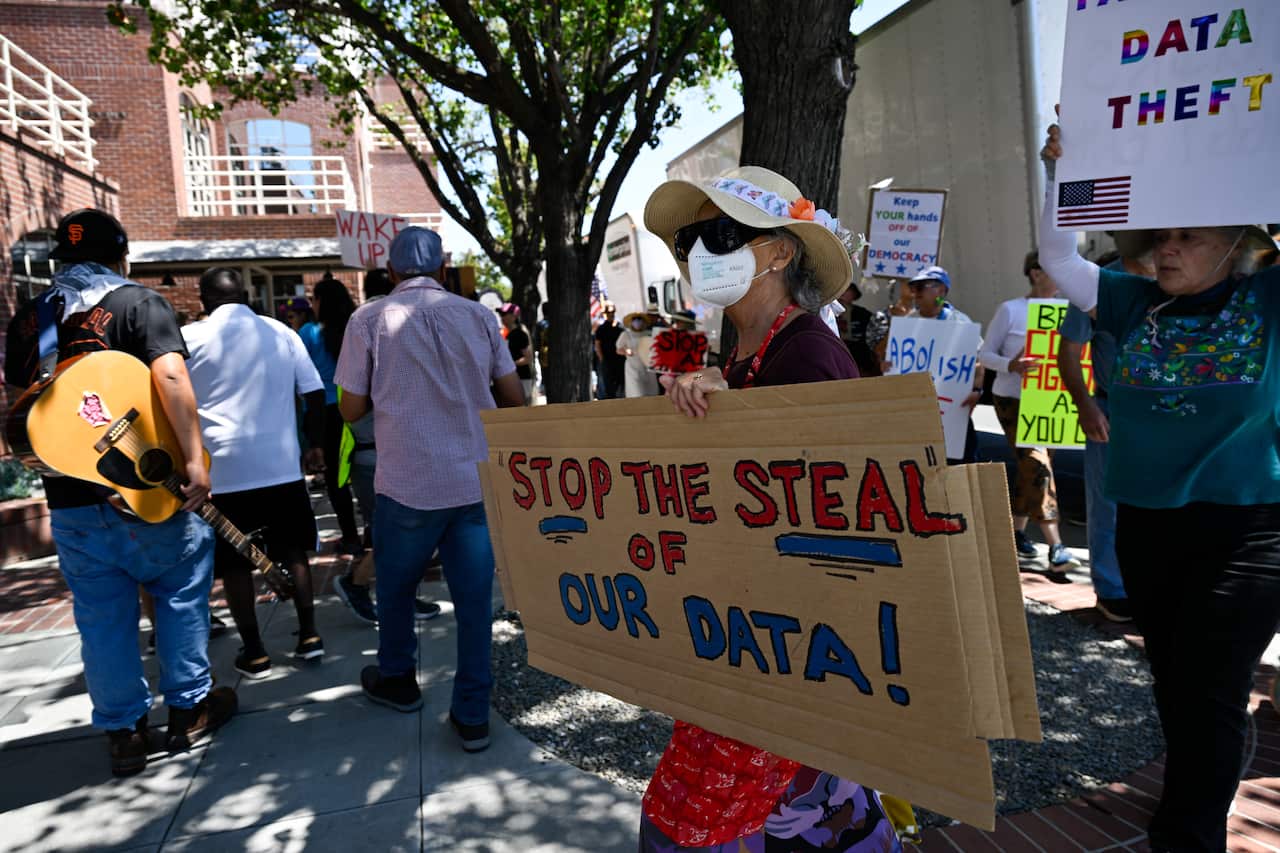
With no clear guardrails in place, Rooney says this agreement could see Australians' personal data — including that of those not travelling to the US — enter the databases of the US government departments and agencies, such as ICE.
"Databases get hacked on an almost regular basis," she says.
There's a fundamental privacy right here for people to control and maintain their own data, particularly when it's biometric data.
According to Noorian, there could also be financial consequences for travellers who may be knocked back during the vetting process.
"The risk is to travellers who may be planning holidays to the US at considerable cost to themselves, and then something pops up when they go to apply for that ESTA," he says.
"We don't know if that's going to include political views or not, or if it's simply criminal histories and watch lists, things like that.
"But something could pop up that would result in their ESTA being denied, and then, all of a sudden, they need to go and apply for a visa and get more clarity."
Rooney says that, however the data is used, the Australian government remains accountable for it.
"Under the Privacy Act, unless a clear exemption applies, the Australian government remains accountable for how those US agencies choose to use that data."
For the latest from SBS News, download our app and subscribe to our newsletter.







