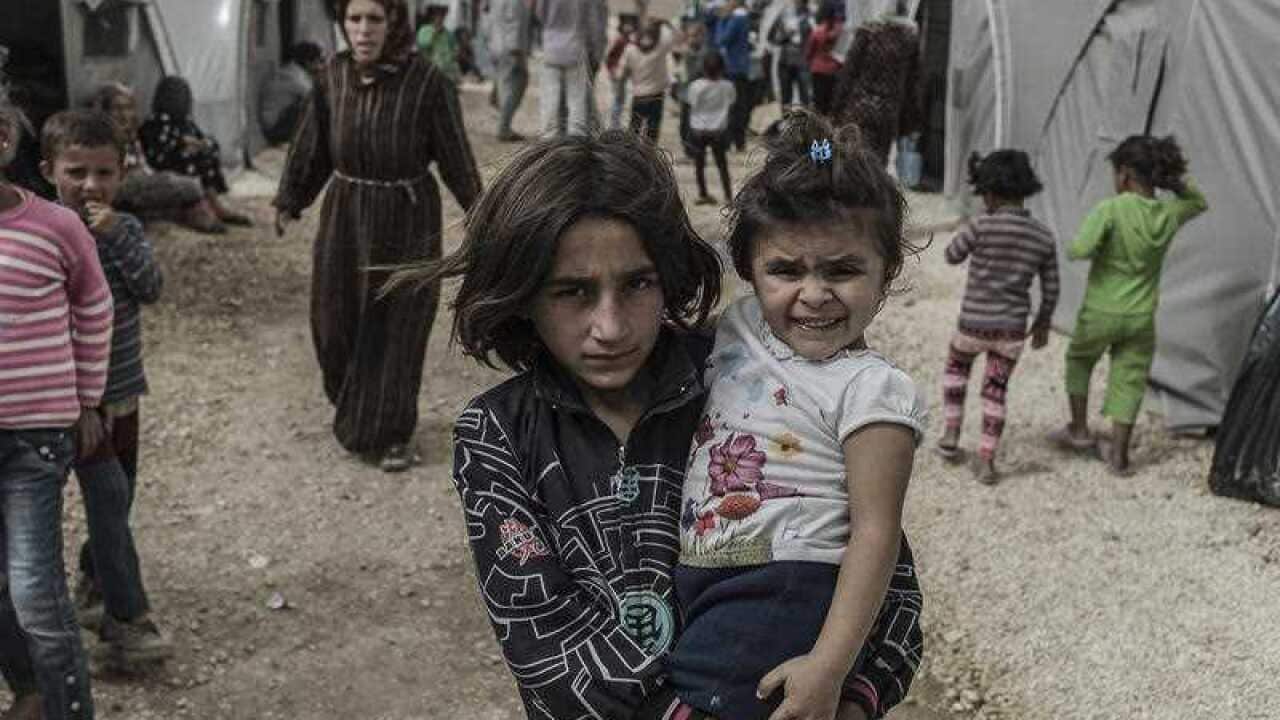
Hosting close to two million refugees from Syria at a cost of more than $5 billion, Turkey has been praised internationally for its humanitarian response to the four-year conflict on its border.
But with the vast majority of those fleeing war eking out a living outside well equipped refugee camps, the aid effort becomes more complicated.
Turkey meanwhile faces a stubborn unemployment rate of almost 10 percent and a slowing economy, and has repeatedly bemoaned Europe's reluctance to take its share of the refugee burden.
Currently those under temporary protection can work within the refugee community in Turkey, for example as doctors or teachers in camps, but Faruk Celik, Minister of Work and Social
Security of Turkey, told Reuters there were no plans to grant work permits under a general programme.
"There cannot be a general measure to provide them with work permits because we already have our workforce ... we are trying to educate and train our unemployed so they can get jobs in Turkey," he said.
"It would be unfair to take away their jobs and give them to refugees," Celik said, adding that other countries should help solve the refugee problem if the conflict persists.
The minister said the government is studying how best to deal with the problem of informal labour.
Business groups and unions have called on the government to formalise the arrangement so working Syrians pay taxes and are protected from exploitation.
According to ORSAM (Center for Middle Eastern Strategic Studies) and TESEV (Turkish Economic and Social Studies Foundation) research, 200,000 Syrians are working in Turkey.
Communities in the border areas, where the migrants are concentrated, have complained that Syrians working illegally accept lower wages and push Turks out of the labour market, resulting in animosity and sometimes violence between the communities.
However, the ORSAM/TESEV study of January 2015 found that Syrians are generally employed in areas that locals are not willing to work in and that they meet a demand for unskilled labour.
Under a Turkish and US plan to provide air cover for Syrian rebels and sweep Islamic State from a patch in northern Syria, Turkish President Tayyip Erdogan said earlier that a "secure zone" would pave the way for the return of refugees.
But the United Nations cautioned against calling the area a "safe zone" unless there is a guarantee of protection.
Share


