
Two Liberal MPs, John Alexander and Bridget Archer, have sided with a crossbench call for politics to be set aside in efforts to establish a federal anti-corruption commission.
Attorney-General Michaelia Cash earlier this week confirmed the federal government would not go ahead with its proposed anti-corruption commission before the federal election, which is due by the end of May.
The admission means the government is expected to break an election promise to legislate the model, after initially making a commitment to legislate a national integrity commission in 2018.
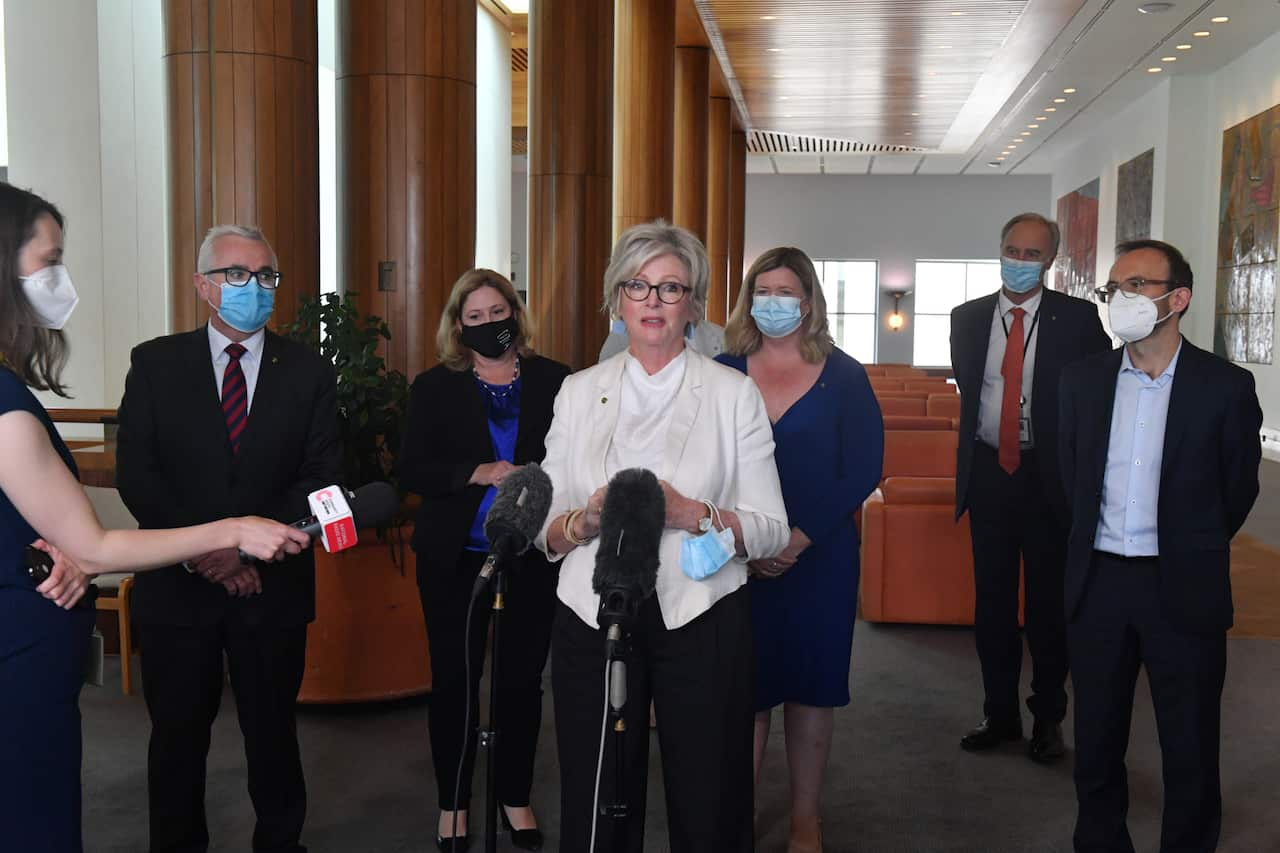
During debate in parliament on Thursday alongside crossbench members, Mr Alexander and Ms Archer renewed calls over the need for a federal integrity watchdog.
News that makes sense
Your trusted source for staying up-to-date with the world around you. Get free daily news updates and analysis, straight to your inbox.
The group later fronted a press conference together to show their solidarity on the issue.
Mr Alexander said political divisions needed to be set aside to overcome the current impasse over the commission, which risked undermining faith in politicians.
“My view is there is not enough goodwill and good faith between the parties to engage with each other honestly,” he told reporters.
“[We need to] set politics aside and work on getting something that will serve the Australian people better.”
Senator Cash earlier this week had claimed its response was because of a lack of support for its proposed model, expressing an unwillingness to engage with the Opposition and crossbench’s push for reforms to the plan.
Mr Alexander said politicians needed to work together to deliver on an integrity commission.
“We should see that our leaders are absolutely trustworthy,” he said.
Ms Archer accepted the government had broken a promise on its commitment to enshrine an integrity commission.
“The reality is we haven’t delivered an integrity commission in this term of parliament,” she said.
“Until we can take the politics out of it [and it stops being] we can’t do it because it was your idea, it will never happen.”
Ms Archer crossed the floor last year to bring on debate on a proposal from independent MP Helen Haines for an integrity commission to be legislated.
Ms Haines had earlier told parliament the government had failed Australians by not delivering on its commitment.
"The legislation of a federal integrity commission was a character test for this prime minister and he has failed," she said.
Opposition spokesperson Mark Dreyfus said Labor would establish a "powerful, transparent and independent national anti-corruption commission" as a priority if elected.
Labor is promising a National Anti-Corruption Commission (NACC) with the power to hold public hearings and the ability to issue findings of fact and findings of corrupt conduct in public reports.
In contrast, the Morrison government has proposed a commission with two divisions – one for public officials and one for politicians - which it has released for public consultation.
But critics have raised concerns it would not hold public hearings for investigations into politicians, and would not be able to launch its own inquiries or act on anonymous tips from the public.
The Centre for Public Integrity - a group of former judges and prosecutors - is among those to reject the Commonwealth Integrity Commission (CIC) consultation draft as not fit for purpose.
Prime Minister Scott Morrison has rejected calls for it to introduce a tougher model, including criticising "shameful attacks" against former NSW Premier Gladys Berejiklian by her state's corruption commission.
There are limited sitting days remaining before an election is held by May, including just two left in the upper house to formally pass legislation.







