Recreational boaties could be making a meal of reef fish without dropping a line in the water.
A new study has found noise from two-stroke engines can prevent fish from responding to predatory activity around them, putting them at greater risk of being eaten.
James Cook University scientists found a marked difference in the behaviour of fish exposed to the loud rattle of two-stroke engines, compared with the quieter hum of four-stroke models.
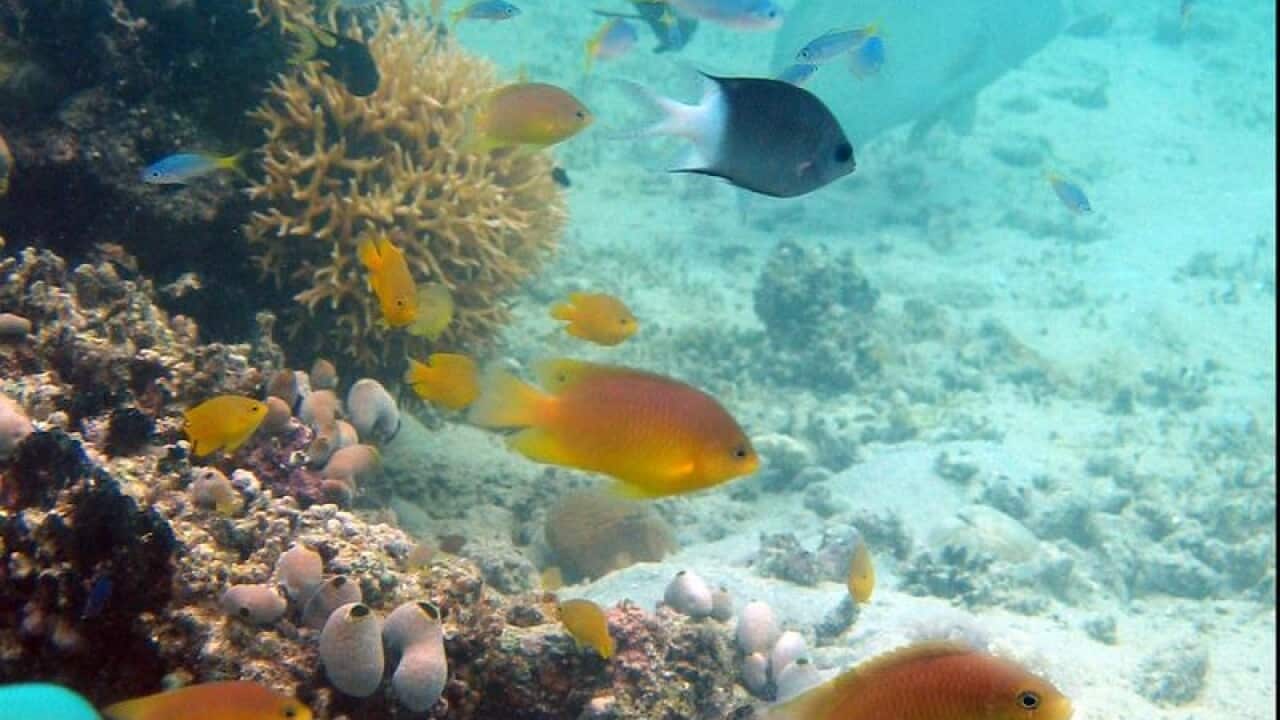
The two-stroke rattle appears to distract damselfish and stop them from responding to "chemical alarm odours" other fish emit when they're being eaten.
"These alarm odours drift onto other fish who may not have seen the incident, and the other fish are innately scared of those odours," Professor Mark McCormick says.
News that makes sense
Your trusted source for staying up-to-date with the world around you. Get free daily news updates and analysis, straight to your inbox.
"The two-stroke noise seems to distract the damselfish ... so they can't use those odours to work out if there's a threat around."
The same effect was not seen in fish exposed to four-stroke engine noise.
The study advances limited knowledge about the effects of noise on reef life, at a time when marine traffic is increasing dramatically on the Great Barrier Reef.
"Marine animals, whether they are invertebrates, fishes or whales, use sound to communicate and inform their decisions," Prof McCormick says.
"By understanding how marine organisms are affected by boat noise we hope to inform the development and adoption of engines that have a low impact on reef animals."







