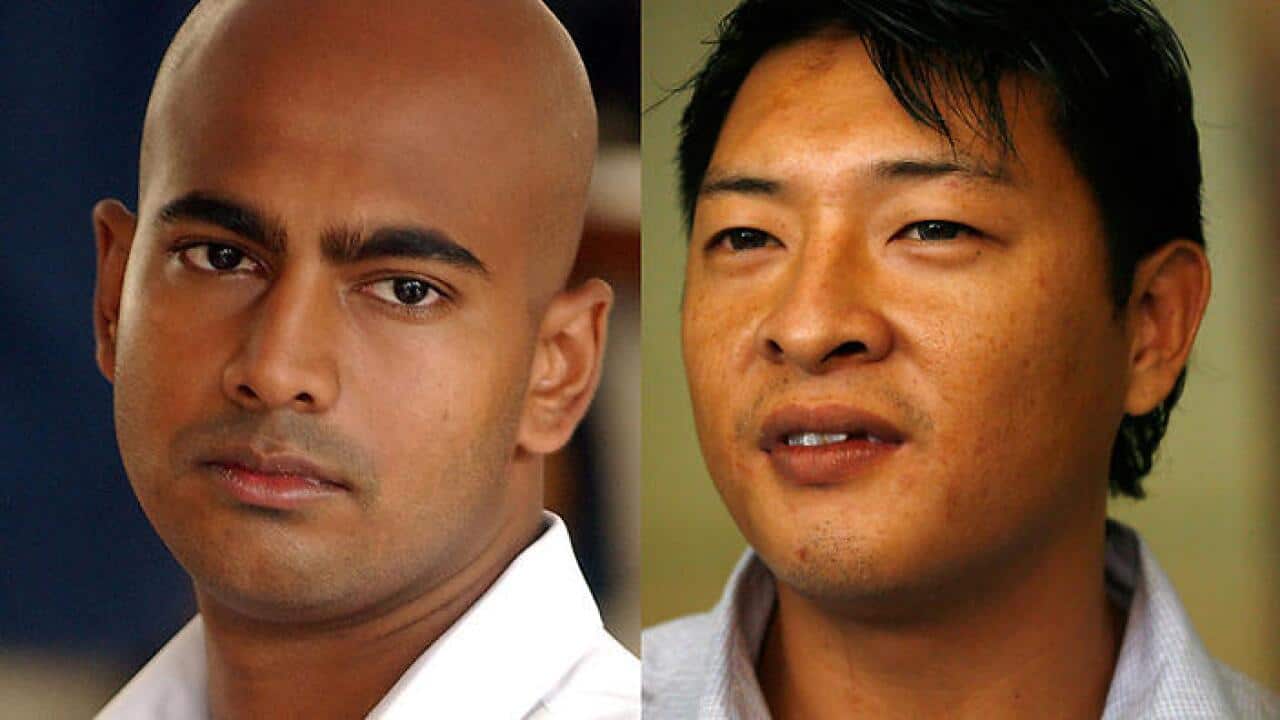
Andrew Chan and Myuran Sukumaran were arrested for their respective roles in attempting to smuggle just over eight kilograms of heroin out of Indonesia on 17 April 2005.
Images of drugs being peeled from their bodies were beamed across the country well before they’d been near a courtroom.
The so-called ring leaders initially denied knowledge of the plot.
READ MORE

Key dates in the Bali Nine saga
Myuran Sukumaran was dubbed “the enforcer” – courtesy of a few months spent training in martial arts – and Andrew Chan the “Godfather.” He'd later scoff at the title pointing out he was 21 and lived with his parents in suburban Sydney.
But it didn’t stop Indonesia’s legal system metering out the death penalty. The other seven members of the group seven remain in prison serving terms of between 20 years and life.
Australia’s Federal Police (AFP) played a pivotal role in the Indonesian case against the nine.
Lee Rush, the father of the youngest member Scott rang a lawyer after finding out his unemployed son had bought a ticket to Bali. He suspected the worst, but the AFP allowed the then-19-year old to continue on the trip exposing him and eight accomplices to Indonesia’s draconian legal system. To this day, the police defend the decision.
For the best part of a decade, the Bali Nine has been in and out of the Australian media. There have been books written, reports of fracturing within the group, appealed sentences, jail-house rehabilitation and unsuccessful pleas for clemency from the highest offices in Australia.
On Wednesday 29 April, 2015, Andrew Chan and Myuran Sukumaran were executed by firing squad on the Indonesian prison island of Nusakambangan.
Share


